Category Archives: military news

Time to think strategically, Mr. POTUS

Donald Trump needs to start crafting a strategic thought pattern as it regards Syria.

In a major hurry.

The U.S. ambassador to the United Nations has declared that Syrian dictator Bashar al Assad’s presence in power eliminates any “political solution” to the crisis and the bloodshed. So, what does Nikki Haley recommend to remove Assad?

She isn’t saying, given that it’s not her call.

That decision needs to come from the president of United States. Moreover, it needs to be made with a complete understanding of what will happen if we manage to implement “regime change” in Syria.

This situation is getting more than a little scary. Sure, we launched some Tomahawk missiles at a military target in response to Syria’s use of chemical gas on civilians. The result of that strike is mixed … at best.

What is the next course of action? What is the president planning and what will be the consequence? Will he consult with Congress, which Republican leaders used to demand of President Obama whenever he sought to take military action against the Islamic State or al-Qaeda? For that matter, where are the demands for congressional approval now that Trump is president?

Do we go in with guns blazing?

Trump used to think it was in our national interest to stay out of Syria. Let the Russians handle ISIS, he once said. Let the Syrian government root out the terrorists, he added.

No more.

Now that we have entered the fight — even in this limited fashion — there needs to be some thought given to an “end game” if we choose to escalate this military intervention.

Think strategically, Mr. President, if you are able.

How can Trump deny Syrian refugees?

Donald J. Trump expressed appropriate outrage over the Syrian government’s use of chemical weapons against civilians — including children.

The president is right. Syrian dictator Bashar al Assad has committed war crimes and crimes against humanity. And I do support the decision to launch Tomahawk cruise missiles at military bases believed to be where the Syrians launched the chemical weapons against their fellow citizens.

However …

How does the president justify his decision to ban refugees fleeing the civil war in Syria because they happen to originate from a Muslim-majority nation?

His statement condemning the casualties inflicted on children seems to fly directly against his heartless decision to ban refugees.

How do you balance one against the other, Mr. President?

Here’s a thought: Go after Assad’s house

U.S. military forces tonight launched a few dozen Tomahawk cruise missiles at Syrian military targets.

Donald Trump ordered the strikes in retaliation for Syrian government forces’ use of chemical weapons on civilians, killing dozens of them, including children.

It was a reprehensible act. The thought occurs to me: The strikes hit military targets, but why not zero in on where the dictator, Bashar al-Assad, hangs his hat?

It’s not unprecedented. I recall when the Persian Gulf War started in late 1990. The first weapon was a Tomahawk cruise missile launched from the USS Wisconsin, the World War II-era battleship that had been brought back into active duty. The ship’s target? Saddam Hussein’s palace in Baghdad!

Saddam commanded the Iraqi military that had invaded Kuwait. He served two roles in Iraq: head of state and the supreme commander of the Iraqi military. President George H.W. Bush, thus, considered Saddam to be a military target.

Assad is just as ham-handed a dictator as Saddam Hussein had become. He also has a tight rein on his military forces. Therefore, he is a military — as well as a political — figure.

We should hit Syrian military targets. What the Syrian government has done is reprehensible in the extreme.

It does nothing, though, without the approval of the dictator who is in charge.

Make the dictator a target, too.

Trump makes sound national security move … finally!

I have been highly critical of Donald J. Trump’s assembling of his national security team.

But then — what do you know? — the president does something that makes eminent sense. He has removed his political hack/senior adviser Steve Bannon from the National Security Council and has elevated two men who should have been seated on the NSC’s principals committee in the first place.

Good call, Mr. President. May it be the first of many.

Bannon had no business serving on the principals committee. He is the former Breitbart News editor. He has the president’s ear on all matters political. His national security experience is next to zero.

Trump also demoted his homeland security adviser, Tom Bossert, and elevated Director of National Intelligence Dan Coats and Joint Chiefs of Staff Chairman Gen. Joseph Dunford. They now will be regular attendees of the principal committee.

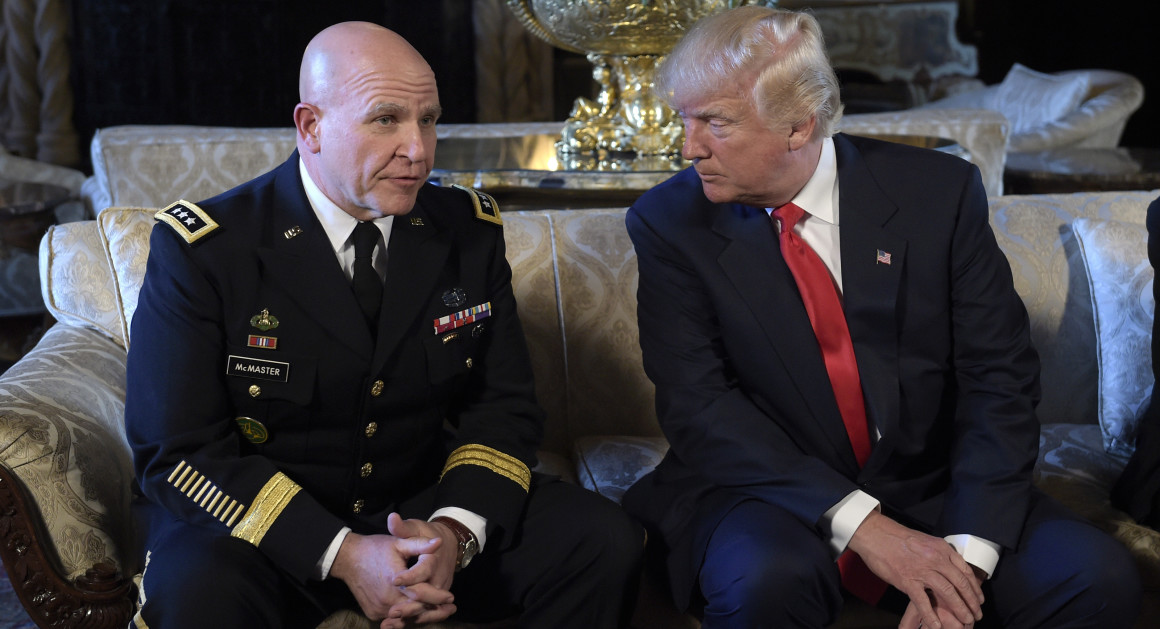
Oh, there’s more. National security adviser H.R. McMaster has received full authority to set the agendas for meetings of the principals committee.

Someone got hold of the president’s ear and advised him in the strongest language possible of the folly of seeming to politicize the NSC’s principals committee — which is what Bannon’s presence on the committee did.

If there’s any aspect of a president’s duties that demands non-political consideration, it must be matters dealing with national security.

Donald Trump is entitled to have a top-drawer political hand giving him political advice. That adviser doesn’t need to be anywhere near where national security concerns are discussed.

Whether to grant immunity to Gen. Flynn

The word is out: Former national security adviser Michael Flynn is trying to obtain immunity from criminal prosecution in exchange for what he knows about the Donald Trump presidential campaign and its possible relationship with Russian government officials.

The retired Army lieutenant general and his lawyers are dickering with congressional intelligence committees — in the House and the Senate — over an immunity deal.

Hmmm. Whether to grant it or not. My gut tells me that will depend on what he has to tell senators and House members and their investigators.

Flynn was forced to resign as national security adviser after he admitted to lying to Vice President Mike Pence and others about whether he talked to Russian officials during the 2016 presidential campaign.

At issue is whether Russian officials hacked into our electoral process seeking to influence the outcome in Trump’s favor — and whether the Trump campaign colluded with the Russians in any way, shape or form.

The story doesn’t end there. It is now threatening to swallow up the president himself.

Flynn’s request for immunity might suggest — at least it does to me — that he might be able to tell congressional investigators some highly valuable information about what the president knew, when he knew and how he reacted to whatever he might have learned.

Flynn could turn out to be a tiny minnow in a net full of much bigger fish if he gets the immunity he is requesting.

I find it fascinating to the max that he has been so quiet for so long after leaving the Trump administration just 24 days on the job as the president’s main man on national security.

He’s gone. Then again, he might return in a major way if House and Senate committee chairmen decide to grant him immunity.

Talk to us, Gen. Flynn. Many millions of us are waiting to know the truth about your former boss — given that he won’t tell us himself.

War with no end goes on and on and on

Brian Castner calls it a Forever War.

The man knows war when he sees it. He is former explosive ordnance disposal officer who has written a provocative and thoughtful op-ed article for the New York Times.

Here it is.

Indeed, Castner tells a sad tale of Americans who are likely going to die or suffer grievous wounds in a war being fought in multiple countries, on multiple fronts, against multiple enemies who likely cannot be eradicated.

This war began, for all intents, on that glorious Tuesday morning, Sept. 11, 2001. Terrorists flew airplanes into the World Trade Center in New York, into the Pentagon in Washington, D.C., and fought with passengers aboard a third jetliner before it crashed into a Pennsylvania field.

President Bush gathered his national security team and in short order sent military forces into Afghanistan to kill the individuals responsible for that heinous act.

The war was on.

Many of us worried at the time — while supporting the president’s decision to retaliate — about whether there ever could be a way to win this war. Could we ever declare victory and then bring all our troops home? Many of us are old enough to remember when the late, great Republican senator from Vermont, George Aiken, thought we could do just that in Vietnam: “Let’s just declare victory and go home,” Sen. Aiken said.

The answer, nearly 16 years later, is “no.” We cannot make such a declaration about the Forever War.

Castner’s essay centers on the death of a 42-year-old sailor, Scott Dayton, who became the first American to die in combat in Syria. Castner’s Forever War has now expanded to that country, where we are working with Syrian resistance forces against the government of Bashar al Assad and against the Islamic State.

Castner writes: “The longest conflict in American history — from Afghanistan to Iraq, to high-value target missions throughout Africa and the Middle East — has resulted in the nation’s first sustained use of the all-volunteer military, wounding and killing more and more service members who resemble Scotty: parents, spouses, career men and women.”

Then he writes: “The Forever War is unlikely to end soon, and for those not in the military, continued voluntary service in this perpetual conflict can be hard to understand. Popular explanations — poor outside job prospects, educational enticements, the brashness of youth — don’t hold up under scrutiny.”

I would challenge only this: A war that lasts “forever” not only won’t “end soon,” it will never end.

We have taken a long march down the road to a sort of “new normal” when it comes to modern warfare. President Bush’s decision to go to war in Afghanistan was righteous, given what al-Qaeda — based in that desolate nation — had done to us. Then he expanded that fight into Iraq, a nation that had nothing to do with the 9/11 attacks; the president and his team concocted some scenario about weapons of mass destruction. They were tragically, horribly wrong.

Barack Obama continued the fight and has handed it off to Donald Trump.

This interminable war has expanded now to several nations. How does it end? How do we know when we’ve killed the last bad guy?

Think of it as our nation’s internal fight against hate groups such as the Ku Klux Klan. How do we remove the last Klansman? How do we persuade the KKK to give up its hate, to stop intimidating Americans?

Accordingly, how do we know when the last international terrorist who’ll ever pick up arms against us has been taken down? We cannot know any of it.

Yet this Forever War continues.

And I fear that it will continue … forever.

McCain: Prove it or drop it, Mr. President

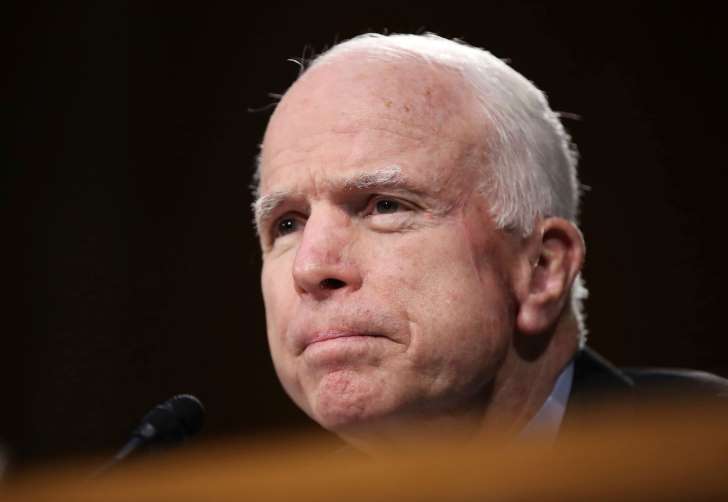
John McCain is demonstrating yet again that he still might be angry at Donald J. Trump’s insulting assertion during the 2016 campaign that the former Navy pilot is a “war hero only because he was captured” by the enemy during the Vietnam War.

Whatever the motive, the Arizona Republican U.S. senator is on point with this declaration: Either provide proof that former President Obama wiretapped your offices during the 2016 campaign or retract it.

The president has done nothing to suggest he has a shred of evidence to back up his scurrilous contention that Obama ordered a wiretap. He has essentially defamed his predecessor by accusing him of committing a felony.

Trump has all the intelligence capabilities available to him to deliver the goods. He hasn’t. Absent any “goods,” he needs to take it all back, admit what many of us know already — that he sought to divert attention from the Russia election-meddling matter.

But, wait! The two things — allegations of Russian meddling and the wiretap allegation — are related!

Hey, what about Bannon and the NSC?

It’s almost impossible to keep up with all the stories that pass through the light of intense publicity only to disappear into the darkness … as it relates to Donald John Trump’s administration.

Remember the story about Steve Bannon, the former Breitbart.com executive, alleged white nationalist, political adviser becoming a member of the principals committee on the National Security Council?

Bannon is still on the NSC. He’s still getting the regular briefings, sitting in a chair that should be filled by the Joint Chiefs of Staff chairman and the director of national intelligence. Trump demoted those two military and intelligence leaders in favor of partisan political animals such as Bannon.

He’s a political hack who serves on one of the most ostensibly non-political bodies in our massive federal government.

Why is this guy still there? Why is the new national security adviser, Army Lt. Gen. H.R. McMaster sitting or standing still for this travesty?

Bannon doesn’t belong on the principals committee. He now serves as chief political adviser for the president. He fulfills an entirely different role, vastly separate from anything that the National Security Council does. The NSC’s role is to provide the president with keen, sharp and non-political analysis of national security threats. The national security adviser essentially is the chief administrative official of the NSC. From all that I’ve read and heard about Lt. Gen. McMaster, he appears to be a scholar with a superb military mind.

Bannon status as political hack in chief ought to disqualify him from such his posting as a member of the principals committee.

Yet this story stays hidden in the background.

What kind of advice does Bannon give the president when, say, a Middle East nation moves on another one? What kind of advice does he offer when North Korea lobs a missile into Seoul, South Korea? Or when Hamas starts firing ordnance from Gaza into neighborhoods in southern Israel?

Bannon offers no national security credibility. There he is, though. He’s perched among the other “principals” offering advice to the president of the United States.

This guy frightens the crap out of me.

In Trump World: Buck stops … somewhere else

Commanders in chief are supposed to know a fundamental truth about sitting atop a large and complex military chain of command.

They are allowed to take some of the credit for success, but they also must take responsibility when missions don’t go according to plan.

Donald J. Trump signed off on a mission to kill or capture some top al-Qaeda leaders, to collect some intelligence on the terror network and, presumably, to return all the men assigned to carry out the mission back home.

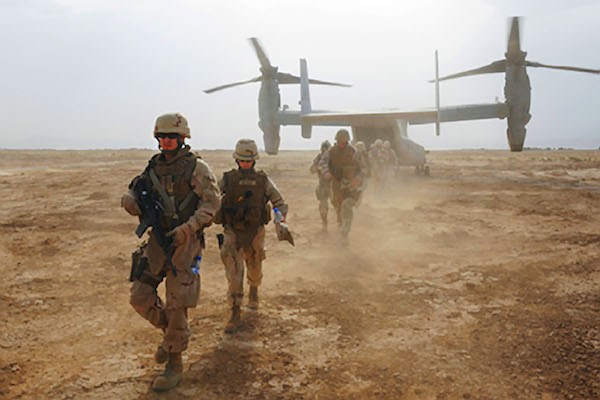
The mission that occurred in Yemen in late January. A Navy SEAL, Chief Petty Officer William “Ryan” Owens died in the fire fight. A state-of-the-art Osprey V-22 tiltrotor aircraft was lost. Some al-Qaeda leaders died in the battle. So did some civilians, including at least one child.

Military and national security officials are still trying to assess the value of the intelligence collected. We keep hearing conflicting assessments. The president, of course, says it is of high value.

But the current commander in chief has done something that is quite extraordinary — and inexcusable. He is laying the blame for Petty Officer Owens’ death on the military planners. “They” lost the SEAL, Trump has said.

Wait a flippin’ minute, Mr. President! The buck is supposed to stop at your desk. One of your predecessors, President Truman, famously posted the sign on his Oval Office desk that said “The Buck Stops Here.” President Kennedy once declared that “victory has a thousand fathers, while defeat is an orphan” after the failed Bay of Pigs operation shortly after he became president.

Trump’s response? He has declared that the planning for the Yemen raid was done by President Obama’s national security team. They crafted the plan that failed, Trump has implied. It’s their fault, too!

This is not what commanders in chief do. Under any other circumstance, presidents stand up and take the heat when things go badly. They do not blame others — namely the military brass or their predecessors. JFK’s failed mission in Cuba was actually conceived by his predecessor, President Eisenhower, but the new guy took the hickey, accepted full responsibility for the mission’s failure.

A military man who just a few years later would become commander in chief himself, devised a strategy to liberate Europe from Nazi Germany. Army Gen. Dwight Eisenhower — supreme commander of Allied Forces — launched the D-Day invasion of Normandy, France in June 1944. The mission succeeded, Europe would be liberated.

But Ike had written an alternative announcement he would have read over the radio had the mission failed. In the message that was never broadcast, he took full responsibility for its failure.

That is what leaders do.

I am not going to wander into the muck over whether the Yemen raid was a success or failure. The president’s assertion that the generals were to blame for the death of a brave young SEAL suggests to me that he has doubts about the mission’s overall success.

Whatever the case, the event occurred on the commander in chief’s watch and it is that person — no one else — who should be held fully accountable.

McMaster: right man for national security adviser

Some of us thought Michael Flynn was a bad choice for national security adviser from the get-go.

He had called Islam a “cancer” and that Americans’ fear of Muslims was justified. Then the retired Army lieutenant general reportedly lied to the vice president about the nature of some talks he had with Russian government agents during the 2016 presidential campaign.

If you’ll forgive the chest-thumping, here’s what I wrote in early December.

https://highplainsblogger.com/2016/12/get-rid-of-flynn-as-national-security-adviser/

He got the boot from the president.

Now we have another Army three-star, H.R. McMaster, coming in to be the national security adviser. He’s a renowned military scholar and deep thinker who says, among other things, that Russia is a pre-eminent threat and that our war against terror shouldn’t morph into a war against Islam.

I feel significantly better about this guy than I did about his immediate predecessor.

I believe Donald Trump has chosen well in filling this highly critical staff post.

Even critics of the president, such as Senate Armed Services Committee Chairman John McCain, speak highly of McMaster. Indeed, McCain speaks well of the president’s national security team. McCain added that he “could not imagine a better, more capable national security team than the one we have right now.”

The question I will continue to have is whether the new national security adviser will be able to provide unfettered, unfiltered and unambiguous advice to Trump — without the influence of senior political strategist Steve Bannon, who Trump has installed as a member of the National Security Council principals committee.

A lot of sharp military minds believe Bannon’s role on that panel is a huge mistake. One of them, former Joint Chiefs Chairman Mike Mullen, said the NSC’s principals committee must be absolutely clear of politics; Bannon’s presence there, Mullen said, politicizes it egregiously.

McMaster reportedly received assurances from the president that he’ll be able to hire the staff he wants and will be allowed to proceed in the manner in which the adviser must proceed. He will have full and complete access to the president and will be able to give him the assessment he needs about national security threats.

The Flynn story is far from over.

However, the national security team now appears to have added a valuable new member to help protect Americans against our nation’s enemies.