Category Archives: media news

About the Constitution’s ‘simplicity’

The Amarillo Globe-News published a brief editorial this morning. Two elements contained within it compel me to respond. Here’s the editorial:

Sunday was Constitution Day — the day set aside for celebrating the anniversary of the U.S. Constitution.

Allow us to present a few facts about the U.S. Constitution, which more than likely are not in history books.

The phrase “separation of church and state” is not in the U.S. Constitution.

The concept of marriage is not mentioned in the U.S. Constitution, much less the authority of government to require marriage licenses.

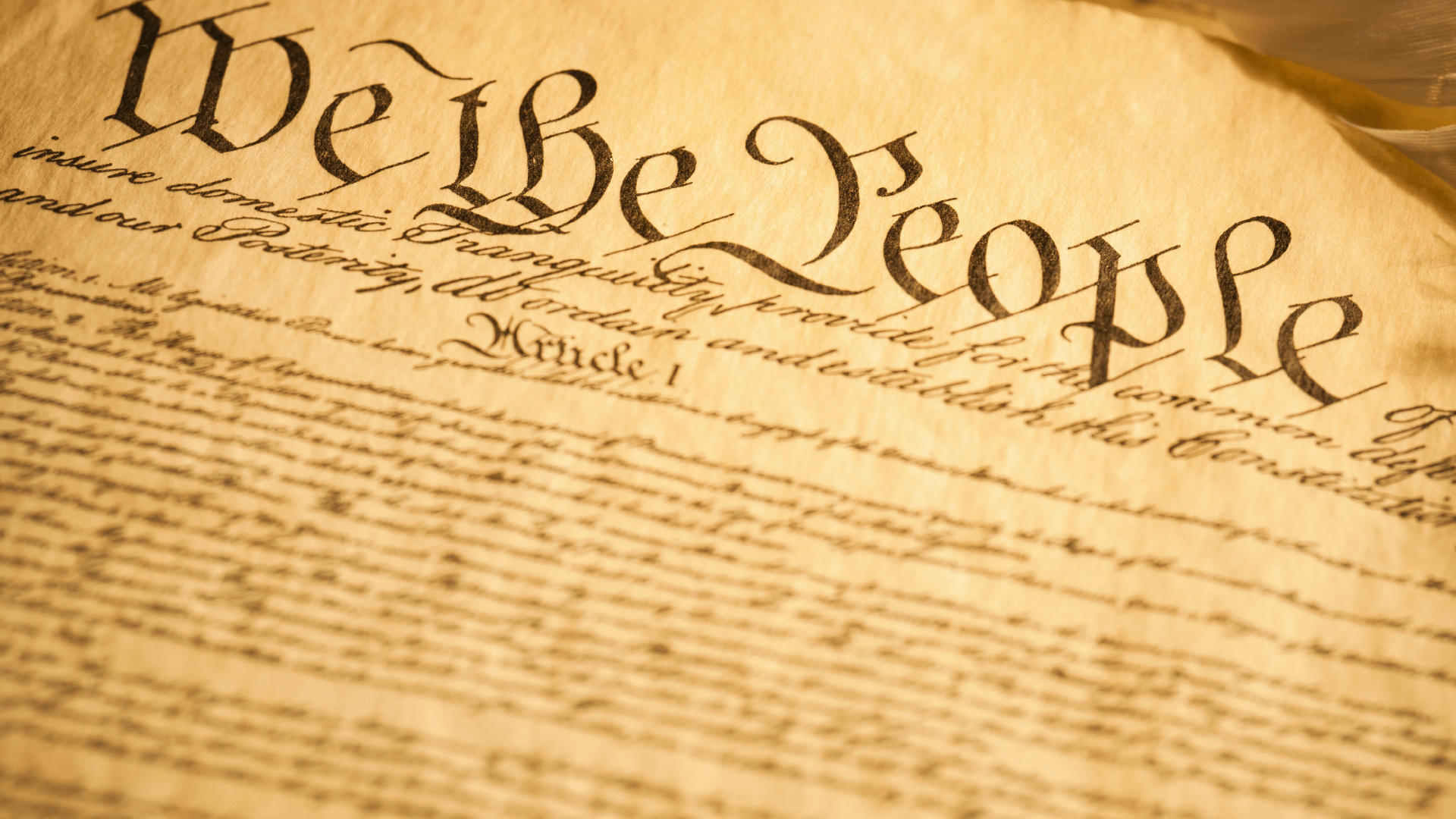
The U.S. Constitution is the oldest and shortest of written, national constitutions. There is probably a reason for this — simplicity. The document was written in clear and concise language.

It is too bad these facts about the U.S. Constitution are forgotten — or ignored — today.

I love the U.S. Constitution as much as the next guy. Maybe more so. Allow me this brief rejoinder.

The Constitution doesn’t need to use the phrase “separation of church and state” to make this point abundantly clear. The First Amendment says “Congress shall make no law respecting the establishment of religion.” Is that clear enough? I believe the intent in that clause is to separate church from the state.

Nor does the Constitution need to insert the term “marriage,” either. I am guessing the G-N is suggesting that same-sex marriage, which the U.S. Supreme Court has sanctioned, isn’t covered by the nation’s founding governing document; the G-N opposes the court’s decision. You see, the 14th Amendment provides “equal protection under the law” for all Americans. That includes marriage, by golly.

If we’re going to parse the Constitution’s language, let’s also note that it doesn’t mention the words “murder,” or “extortion” “bank robbery,” let alone does it say specifically that those activities should be deemed illegal.

I do agree that the founders wrote a fairly simple and declarative document when they created the United States of America. They didn’t need to clutter it up with a lot of do’s and don’ts to make clear what’s allowed.


Trump shows more juvenile petulance

The nation’s juvenile delinquent in chief just keeps demonstrating his unfitness for a job that requires a huge measure of dignity.

Donald John Trump Sr. fired up his Twitter finger to retweet an animated image of the president hitting Hillary Rodham Clinton with a golf ball.

Pretty funny, huh? Oh, not at all!

But that’s the president of the United States of America for you. He just cannot stop insulting his political foes and critics. He just cannot resist the temptation to illustrate why so many of his fellow Americans detest the notion of his occupying the White House.

It goes without saying that heads of state need to conduct themselves with dignity and decorum. Trump doesn’t understand the tradition that accompanies the office he won in 2016, defeating Clinton in one of the most raucous and divisive elections in our nation’s history.

Trump’s Twitter tirades need to stop. They won’t, of course. The president will continue to denigrate others through this social medium for as long as his base of supporters keep cheering him on.

What the heck. He’s pandering to his base on many levels, forsaking the rest of the country that didn’t support his election in the first place.

Adam Schiff, the ranking member of the U.S. House Intelligence Committee, calls it “distressing that we have a president who will tweet and retweet things as juvenile as that.”

I’ll add another word: disgraceful.

However, the president is going to “make America great again.”

Aren’t you proud of him? Neither am I.

Events give media chance to shine brightly

I never got the chance to serve on a Pulitzer Prize jury, to select winners in print journalism’s top prizes.

This year is going to produce a Pulitzer juror’s “nightmare,” if you want to call it such. The media, namely the folks who work in the print end of it, have distinguished themselves grandly while covering compelling issues of the day.

Were it not for the media, we wouldn’t know about the various crises threatening to swallow the Donald J. Trump administration whole. Many of print journalism’s top guns — at the Wall Street Journal, The New York Times, and Washington Post — have been distinguishing themselves with top-drawer reporting that would give Pulitzer jurors fits. It’s interesting in the extreme to me that so many of the cable news outlets keep referencing stories that have been broken first by print organizations.

Then something else happened this summer.

Two killer hurricanes boiled up out of the warm water offshore and delivered death and destruction, first to the Texas Gulf Coast and then to the Caribbean and to all of Florida.

Reporters, photographers and their editors all have worked very long days and nights trying to cover the story of human misery. Newspapers from the Coastal Bend, Houston and then to the Golden Triangle have answered the call. Indeed, one of my former employers — the Beaumont Enterprise — has called at least one of its veteran former reporters out of retirement to assist in telling the community’s story as it seeks to recover from Hurricane Harvey’s savage wrath.

The story of media intrepidity is being repeated now in Florida as that state struggles to regain its footing in the wake of Hurricane Irma’s own brand of immense savagery.

There you have it: severe political tumult and potential constitutional crises and Mother Nature’s unimaginable power have combined to create circumstances that make the media answer the call to duty.

To think, as well, that the president of the United States refers to these dedicated men and women as “the enemy of the American people.” Donald Trump knows nothing about the dedication to their craft — and in many instances the heroism — they exhibit in trying to report important issues to a public that wants to know what’s happening in their world.

Good luck, Pulitzer jury, as you seek to find winners in this most eventual period in history.

To my former colleagues, I am immensely proud of you.

Get over the media criticism, will ya White House?

Donald J. Trump’s White House press operation has developed as thin a skin as the boss.

Someone on the media pops off stupidly and the White House gets all over this reporter’s case. Then it launches a dual-front campaign accusing a cable network of practicing a double standard: one for conservative commentators and another one for liberals.

Get over it, White House!

ESPN talking head Jemele Hill popped off the other day about the president, calling him a white supremacist who surrounds himself with other white supremacists. I’ll just state here that Hill’s comments were stupid and had no place coming from someone who has made a name for herself commenting on matters that have nothing to do with the president of the United States and his alleged political tendencies.

White House press secretary Sarah Huckabee Sanders is ratcheting up the White House attacks on ESPN. C’mon, young lady. Don’t you know about that First Amendment thing in the U.S. Constitution, the one that protects the media from government pressure? Sanders has said ESPN should have fired Hill. She made the statement while conducting a White House press briefing; her suggestion, thus, becomes something of a government policy statement relating to the conduct of a “free press.”

The president himself takes great joy — or so it seems — in blasting what he keeps calling “fake news” outlets. He calls the media “the enemy of the American people.” He singles out individual reporters at press events, criticizing their character and their organization’s integrity.

Now his press flack has joined that chorus.

I agree that Jemele Hill shouldn’t have said what she said, using her standing as an ESPN talking head to make her point. She has apologized. ESPN said it won’t punish her any further.

The president has much bigger fish to fry than this. I can think of, oh, North Korea, DACA legislation, tax reform … you know, those sorts of things. Media criticism? Set it aside and let other media — and even some bloggers out here in the heartland — take the talking head offenders to task.

‘Enemy of the people’ are here to serve

“There are three kinds of people who run toward disaster, not away: cops, firemen and reporters.”

The above quotation comes from the Newseum, an exhibit in Washington, D.C., put together years ago by the Poynter Institute, a first-rate umbrella media organization. A young friend of mine — who happens to be a former colleague who’s still in the print journalism business — posted this today on Facebook.

Interesting, don’t you think? I do. Now I shall explain briefly why.

Donald J. Trump spares no opportunity to denigrate those who report the news to the public. The president of the United States came to Texas recently to tour damage done by Hurricane Harvey and decided to say that the “first responders” go places the media won’t go, “unless there’s a good story.”

The idiot in chief misses the point. He whiffs. He fans, man.

The media answer the call to serve the public. No, they don’t necessarily put themselves in harm’s way to the extent that firefighters, police officers and emergency medical personnel do. They are there, however, to report to the public what is happening to our communities and to our fellow Americans.

I said that media reps don’t “necessarily” endanger themselves. That’s not entirely true, of course. Reporters — broadcast, print and photojournalists — do step in to offer aid. They lend comfort to stricken victims. They perform rescues. They act, shall we say, quite heroically.

For the president to continually denigrate these individuals and the organizations they represent is disgraceful on its face. For him to refer to the media as “the enemy of the American people,” furthermore, defames the vast array of professionals who do what they are trained to do: report the news and deliver it to an audience that is thirsting for information.

I am proud to have been a member of a noble craft. What’s more, I continue to swell with pride in the job many of my friends and former colleagues continue to do.

Vietnam vets still tend to talk about ‘their’ war

One of the traits one often hears about World War II veterans is that they don’t talk much about their combat experience.

They answered the call after Pearl Harbor; they shipped out to the Pacific Theater or to Europe and went about joining other Allied forces in defeating the forces of tyranny.

They came home after that great conflict, shed their uniforms and cobbled their lives together. They moved on.

The Korean War came a few years later. That one didn’t end with an all-out victory and unconditional surrender of our enemy. Indeed, Korea is still in a “state of war”; they only signed a cease-fire. Korean War veterans became part of what’s been called “the forgotten war.” They aren’t known either to talk much about their years in hell.

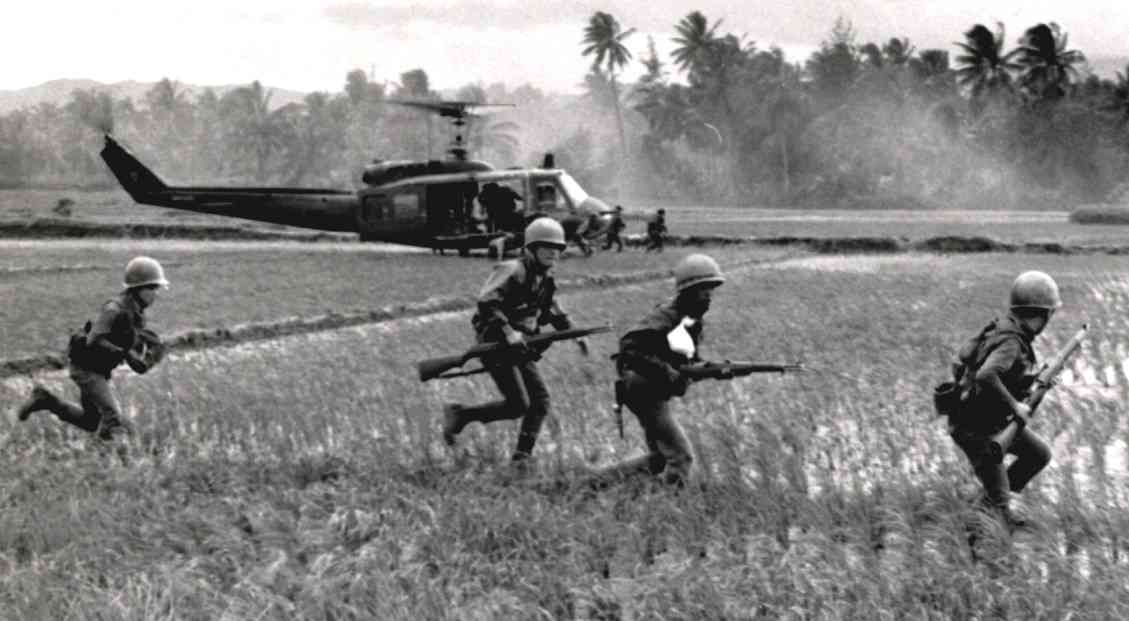
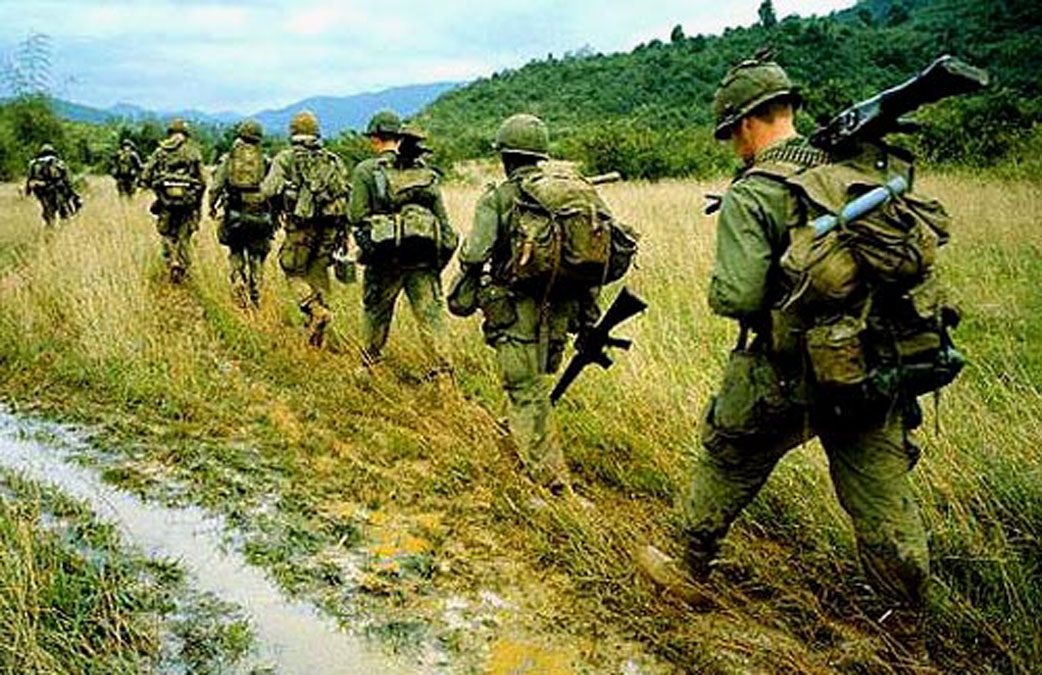
Then came Vietnam. The Vietnam War ended in a stinging political “defeat” for the United States. It still hurts. Those who feel the pain the most likely are those who served there. Roughly 3 million Americans suited up for that war. I was among them. I’ll get back to that in a moment.

Vietnam veterans are more likely to talk about their experiences than those who remain from World War II or Korea. It must be a generational thing. It also must be a bit of a hangover of sorts from the crappy treatment many of those young Americans got when they returned home.

Thankfully, that treatment is receding farther into our national memory. Americans woke up to the reality that the young men who participated in that war did so solely out of duty. They were ordered to go. They went. They did their job. They came back.

Perhaps their willingness to talk about it is a function of their search for affirmation that they weren’t the villains that many of their countrymen and women perceived them to be in real time as they were coming home.

I have no particular need to discuss my service during the Vietnam War. My contribution to that effort was so insignificant, I don’t have the need that many Vietnam vets have — even as we all have advanced into “senior citizenhood.”

In one week, PBS is going to premiere the broadcast of a truly landmark television event. “The Vietnam War” will run over 10 days, covering 18 hours of what I am certain will be a riveting documentary on the nation’s most divisive and emotionally crippling conflict.

One of the outcomes of this documentary, assembled by the great documentary filmmaker Ken Burns and Lynn Novick, should be to spark more national conversation about Vietnam, the war, its aftermath and how we have made the journey from back then to the present day.

***

The first five episodes will air nightly on Panhandle PBS from Sunday, Sept. 17, through Thursday, Sept. 21, and the final five episodes will air nightly from Sunday, Sept. 24, through Thursday, Sept. 28. Each episode will premiere at 7 p.m. with a repeat broadcast immediately following the premiere.

Sexual harassment: the ‘norm’ at Fox News?

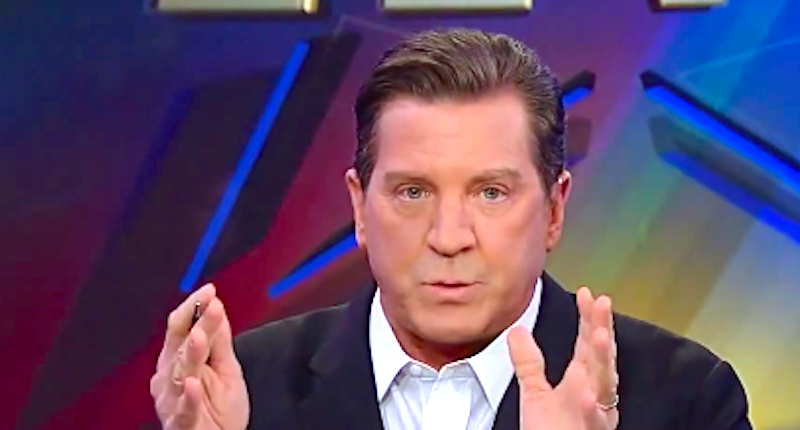
Eric Bolling has joined a growing list of Fox News talking heads to take a fall because of sexual harassment allegations.

I believe it’s a fair point to ask here what others in other forums have asked already: Is there some kind of corporate culture at Fox that promotes  — or perhaps condones — this kind of thing?

I’m going to go easy on Bolling, whose son has just died suddenly. The man is hurting.

But we’ve had the late Roger Ailes resign as the head man at Fox News in the wake of sexual harassment charges brought against him by the likes of former anchor Gretchan Carlson.

Then the big fish got caught on the sexual harassment hook: Bill O’Reilly was shown the door, again after sexual harassment charges were leveled against the prime-time star. Bill O denied any wrongdoing, even though he — and Fox — shelled out tens of millions of dollars in out-of-court settlements.

I don’t watch Fox as a rule, not because of the sexual harassment allegations, but because of its right-wing political slant, which I find objectionable.

However, I am a fan of at least a couple of the network’s shining stars: Chris Wallace and Shepard Smith both manage to seek and tell the truth reasonably and without outward bias.

I also used to be a huge fan of the late Tony Snow, with whom I was acquainted. I loved a story that Snow once told me about his “mission every Sunday” while he hosted “Fox News Sunday” was to get commentators Brit Hume and Juan Williams — who Snow described as his best friend at the network — to “get into a fight” on the air.

Well, that was then.

The here and now has the network reeling from yet another high-profile talking head tumbling out the door.

Sad, man. Sad.

Blog creates a form of separation anxiety

You know already that I suffer no separation anxiety from my working life. Retirement is good, man!

It’s not the case with this blog. High Plains Blogger occupies a good bit of my time these days. People ask me about it. “I write daily, usually several times each day,” I respond. “It’s therapy. It’s what I do. It’s a big part of my new life.”

Then there are those days when I am away from the computer for extended periods of time. Such as today. It’s now mid-evening and this is the first item I’ve posted all day.

I am suffering acute separation anxiety from High Plains Blogger. This single post will go a long way toward ridding me of it.

I’ve long believed that empty-next syndrome is overrated. Our sons left home after high school and never looked back. We’re glad they remain independent and have established themselves in their chosen professions.

My retirement came when I wasn’t expected it — entirely. Once it did, I didn’t look back either. Nor did my wife when her time to call it a career arrived.

Separation anxiety from work? Forget about it!

My “work” these days is this blog. I do it not just for pleasure, but also to release pent-up emotions; I do so to rant when the spirit moves me; I write these posts to share some life experience, not that mine are unique or anything out of the ordinary.

When I cannot write these posts regularly during the course of a day, I suffer from a bit of blogging withdrawal.

I’m getting past it, however, at this very moment.

Vietnam taught us tough, but needed lessons

The Vietnam War remains an open sore, a wound that’s still healing.

A landmark documentary is set to premier on PBS soon. I am anticipating its opening. “The Vietnam War” is a collaborative effort by the acclaimed filmmaker Ken Burns and Lynn Novick, who isn’t as well-known as Burns, but likely will be once this series runs its course.

The series well might help us heal from those wounds of a long-ago war. That’s my hope, anyway.

I took part for a brief period in that conflict. I got my orders and reported for duty as an Army aircraft mechanic. I arrived at Marble Mountain, Da Nang, in the spring of 1969. I served my time and came home.

I’ve told you already about the emotional baggage I shed when I was able to return to that place in 1989. A lot of Vietnam vets have done much the same thing. Many of them had damn heavy loads to release; they were combat vets. I was not one of them, but the baggage was real.

The nation learned many valuable lessons about itself during that war and in its immediate aftermath. I want to look briefly at two of those lessons, which I hope the Burns-Novick film will discuss in detail beginning Sept. 17 (on Panhandle PBS).

We learned how to lose a war. The United States didn’t “lose” this conflict in the traditional sense. The enemy didn’t defeat us on the battlefield. Indeed, our armed forces were able to declare victory in virtually every major conflict we entered against the Viet Cong and the North Vietnamese military.

We inflicted more casualties on them than they did on our side. We captured more of their fighters than they did of ours. We won the fight on the field.

We lost the fight politically. We lacked the stomach to stay in the fight “for the duration.” The Vietnamese were fighting on their turf, fighting for their cities and villages. They were fighting to protect their land.

They had the will to keep fighting. And they did. We lost our will and came home in early 1973. Two years later, left to fend for themselves, the South Vietnamese armed forces were overrun by the North. On April 30, 1975, the shooting stopped.

We didn’t win that fight and it has stuck in our national craw ever since.

I’ve made peace with that fact over the years. I get how it went down. I trust “The Vietnam War” will explain it to those Americans who still wonder: How did we win all those battles but lose the war?

We mistreated our returning warriors. This might be the most shameful aspect of the war, at least in my mind.

I didn’t get spit on. No one called me names. I never once was disrespected outwardly and openly when I wore my uniform while at home upon my return. Too many of my colleagues, though, did receive such mistreatment. It was disgraceful in the extreme.

It is amazing today to listen to left-leaning commentators extol the heroism of our fighting men and women engaged in war in Afghanistan and Iraq. Think about that for a moment. Fifty years ago, those same leftish pundits might excoriate the returning warriors. There might be veiled references to the “atrocities” they committed. They likely would be treated with far less respect and dignity than they are today.

These days, I like wearing my Vietnam vet ball cap when I’m out and about and, yes, I welcome the occasional expressions of “thank your for your service” greetings I get from strangers. That would not have occurred in 1970.

We have turned an important corner in our national upbringing, and it warms my heart to know that we no longer condemn the fighting men and women for doing their duty to their country, just like we did during the Vietnam War.

Ken Burns and Lynn Novick have taken on a profoundly important project with this series on that long-ago, but never-forgotten war. It taught us many lessons about ourselves as a nation — and as individual Americans.

Their documentary is a landmark event in every meaningful sense of the term.

***

The first five episodes will air nightly on Panhandle PBS from Sunday, Sept. 17, through Thursday, Sept. 21, and the final five episodes will air nightly from Sunday, Sept. 24, through Thursday, Sept. 28. Each episode will premiere at 7 p.m. with a repeat broadcast immediately following the premiere.


Waiting anxiously for a landmark event

I don’t believe it’s an overstatement to call Ken Burns and Lynn Novick’s upcoming PBS documentary special a “landmark television event.”

They’re going to chronicle an event that shaped a generation of Americans. It made a lot of young Americans grow up in a major hurry. “The Vietnam War” airs beginning Sept. 17 over 10 days; it comprises 18 hours of viewing.

Burns told AARP magazine: “We have a kind of historical amnesia about Vietnam.” He said it is “like an amputated limb that still itches, still aches. If we as Americans want to get over the divisions we feel today so prominently, it’s important to understand the place where they began.”

AARP calls Burns and Novick’s project a “doozy.” Boy, howdy. Is it ever.

***

Millions of Americans are going to watch this event with a special interest. These are those who reported for duty at some time during the Vietnam War. They were affected by it openly and viscerally. The war brought them pain, which many of them brought home with them.

I was fortunate in that regard. I didn’t suffer physical pain as a result of my service there. I’ve noted already that I was what grunts called a REMF, a “rear-echelon motherf*****.” I worked on Army airplanes and later scrambled missions at the I Corps Tactical Ops Center in Da Nang.

But in November 1989, I had the rare honor of returning to Vietnam, 20 years after I reported for duty at Marble Mountain. I went back to Marble Mountain at the tail end of a three-week fact-finding trip I took with 20 other journalists, members of the National Conference of Editorial Writers. We toured Cambodia, Thailand and Vietnam. At the end of that “official” journey,” two colleagues and I flew north from Saigon to Da Nang as part of a personal sojourn.

We arrived in Da Nang and then took a car out to Marble Mountain. We strolled along the sandy terrain where I had walked as a young soldier. Our guide was explaining to us how the Vietnamese had absorbed our physical presence at Marble Mountain, how they had taken possession of all we had left behind. They put it to use for their own purposes, she said.

That’s when it happened. I broke down in tears. I began sobbing. I cried like a little child. Our guide, Mai, stopped talking. My friends backed away. I was alone with my emotions for, oh, just a few moments. Then it stopped. I wiped the tears off my face. Took a deep breath.

At that moment, I was cleansed of some unknown pain. I felt a sense of relief. I had shed a load of emotional baggage I never even knew I had been lugging around since my departure from the war zone two decades earlier.

I was a happy man. That “amputated limb” no longer “aches.”

I have told Vietnam veterans since my return from that marvelous journey that they, too, need to return. I get mixed reactions from them. I don’t press the issue; it’s for them to decide.

Ken Burns is an acclaimed documentary filmmaker with a huge body of work that’s been broadcast for decades on PBS. His collaboration with Novick is highly anticipated.

It will be a landmark event. I also am quite certain a lot of Vietnam vets will learn something about a critical chapter in their lives. They also might learn something about themselves.

Does it get any better than that?