Category Archives: media news

Feeling more ‘retired’ these days

whyretire

This is the latest in an occasional series of blogs commenting on upcoming retirement.

I’ve mentioned already that I have assumed a new status at one of the four part-time jobs I’ve been working during the past year.

The new on-call/as-needed status means that I’m spending more time at home working my three other jobs, all of which allow me to work from my study.

One of them does require that I leave the house to interview subjects for news stories I write.

But here’s what I’ve discovered about this new phase of my life as I inch toward full retirement: I like the untethered feeling.

What’s more, I’m getting more comfortable with it.

Yes, I have errands to run and things to do around the house. I get to keep posting items on this blog, which gives me great joy as I’m able to comment on this and that.

These days, though, my wife and I spend a good deal of time talking to each other about our future. The conversations almost always involve spending more time with grandchildren, traveling in our recreational vehicle, sprucing up our home and just feeling good these days about our lot in life.

I’m not yet ready to jettison the rest of my jobs. They all involve journalism, which for decades — while I was working full time for The Man — defined me to my friends and acquaintances. It doesn’t define me that much these days, which is the way I want it to be. Still, my work with two TV stations in Amarillo and a weekly newspaper in New Mexico give me great pleasure.

My former career is getting much smaller in that proverbial rear-view mirror. That’s all right, too.

Life is good.


The case against primary endorsements

newspapers

I re-read the New York Times editorial endorsements this morning regarding the Republican and Democratic party presidential primaries.

The Times is backing Democrat Hillary Rodham Clinton (no surprise there) and Republican John Kasich. The Clinton nod is full of kudos for the former U.S. senator from New York; the Kasich endorsement contains a lot of, well, he’s the best of a bad bunch.

The paper’s tandem endorsements brought to mind a policy I used to follow back in the day, before I got “reorganized” out of my 36-year print journalism career in the summer of 2012.

It was that we didn’t make endorsements — which we preferred to call “recommendations” — in contested two-party primaries.

Why not?

Well, for starters, I always was a bit uncomfortable recommending candidates running for a partisan position. We did it for many election cycles here in Amarillo and in Beaumont before that. Then it dawned on me that it was best left to each major party to manage the selection process. The media need not get involved in what essentially was a partisan effort.

We would make recommendations, of course, for those single-party primary contests. In Amarillo, that usually meant the Republicans would have a contested primary, but there wouldn’t be any Democrats on the ballot for a particular office.

In those cases, the primary becomes tantamount to election. So, we’d state our case — knowing full well that whatever we said would mean diddly squat in the minds of most voters, whose minds were made up already.

I have no clue what my former paper here in Amarillo is going to do with this primary election. The Texas primary occurs on March 1 and it’s a good bet there’ll be plenty of Republicans still in the hunt for the GOP presidential nomination, not to mention at least two Democrats seeking their party’s nod for the presidency.

Nor will I offer an opinion of what the newspaper’s editorialist should do.

There no doubt will be push back from those who (a) demand the paper make endorsements in the primary, as it is their duty and (b) those who believe newspaper endorsements no longer are relevant in the current political climate.

Indeed, the Internet has taken away much of people’s reliance on what newspaper editorial boards think anyway.

Good luck, media moguls, as you ponder these things.

Negativity dominates the GOP primary campaign

John-Kasich-Reuters-e1435699402254

The New York Times’ Sunday editorial endorsement in this year’s Republican Party primary campaign illustrates quite graphically the nature of this election cycle.

It took the Times six paragraphs to mention the candidate the paper prefers to win the Republican nomination this year.

That would be Ohio Gov. John Kasich.

Kasich’s name got mentioned for the first time in the sixth paragraph after the Times spent the first five lengthy paragraphs trashing the frontrunners for the party’s nomination fight.

Donald Trump and Ted Cruz took broadside after (deserved) broadside from the Times editorial board.

When the paper’s editors got down to Kasich, they extolled his virtue as a proven government executive and a legislator with a record of accomplishment.

I happen to agree with the Times’ assessment of Kasich . . . and of Trump and Cruz. The Times did manage a few words of encouragement regarding Kasich, declaring: “Still, as a veteran of partisan fights and bipartisan deals during nearly two decades in the House, he has been capable of compromise and believes in the ability of government to improve lives.”

The Times didn’t mention it, but I have noted before that in my view, Kasich’s main selling point is his work with the Democrats in Congress and with the Democrat in the White House — President Bill Clinton — to balance the federal budget in the late 1990s. It is fair to suggest that Gov. Kasich could bring that good will with him were he to become the next president of the United States.

But the nature of this entire Republican campaign has been one of extreme negativity. The leader of the naysaying chorus, of course, is Donald Trump himself.

And as the tone of the Times’ editorial suggests, he has succeeded in taking the media down that path right along with him.


C-SPAN worked miracles with this spot

cspan_bus

I want to share a moment regarding my one direct contact with the Cable-Satellite Public Affairs Network . . . aka C-SPAN.

I’ve already sung the praises of Brian Lamb, the founder of the one national network that covers politics and policy without a hint of bias.

Take another look.

But the folks who put together their video presentations are masters of editing, cutting, pasting and making subjects look a whole lot smarter than they really are. In my case, that’s not all that difficult.

I arrived in the Texas Panhandle in January 1995 to take my post as editorial page editor of the Amarillo Globe-News.

That spring, C-SPAN embarked on a project called the “School Bus Tour.” It was sending a yellow bus to every congressional district in the United States. All 435 of them would get a visit from the C-SPAN school bus. Its intent was to educate viewers on the members of Congress representing their constituents living in each of those districts.

The 1991 Texas Legislature had gerrymandered the congressional map in Texas to give Amarillo two House members. The 13th Congressional District comprised the northern portion of the city; the 19th District comprised the southern portion.

The lines were drawn that way to protect the Democrat — Bill Sarpalius — who represented the 13th District. Democrats controlled the Legislature back then, so they sought to rig the lineup to protect their own. The tactic worked until the 1994 election, when Republican Mac Thornberry upset Sarpalius.

But the 19th District remained strongly Republican and was represented by U.S. Rep. Larry Combest of Lubbock.

C-SPAN called one day and wanted to know if I would be willing to be interviewed by the network about the 19th District. I was to talk about Combest and the district he had represented for the past decade.

Holy crap! I thought. I didn’t know much about the district, or about Combest. I was brand new here. I’d lived for the 11 previous years in the Golden Triangle region of Texas, which was represented in the House by Democrats Jack Brooks of Beaumont and Charlie Wilson of Lufkin.

I accepted the offer, then cracked the books to learn more about the 19th Congressional District and about Rep. Combest.

C-SPAN’s school bus crew met me at the newspaper office one Saturday morning and I talked for about 30 minutes or so with a camera rolling. I stuttered, stammered, paused, stopped-and-started my way through it. Hey, I’m not a TV guy.

I was frightened by the prospect of how it would look on TV. The producer assured me, “Don’t worry. You did just fine. We’ll take good care of you.”

Well, they shot their B-roll video, showing scenes of feed lots, ranch land, wind mills and such from around the sprawling district, which stretched from Amarillo all the way to Lubbock, about 120 miles south of us.

They told me when the segment would air.

I waited for it. Sure enough, they managed to make me sound a whole lot more polished than I really am.

What’s more — and this is the real beauty of this kind of skill — they preserved the essence of every comment I made. There was not a single phrase that was aired during the three-minute segment that was out of context or didn’t convey my intended message.

I would have a similar experience later, during the 2008 presidential campaign, with National Public Radio. NPR wanted to interview two journalists about the state of that campaign between Barack Obama and John McCain. I learned once again about the talent and skill it takes to edit someone’s spoken words while preserving the integrity of what one says.

Believe me, it’s a remarkable skill, indeed.


Take a bow, Brian Lamb

maxresdefault

Brian Lamb is a genius.

He might the smartest journalist in America. Why do I say that? He founded a network that has managed — through all the revolutions and incarnations of other media outlets — to keep the organization he founded free of the partisanship that has poisoned the dissemination of news.

Lamb founded C-SPAN — which is an acronym for Cable-Satellite Public Affairs Network.

C-SPAN tweeted out a message with some testimonials from those who appreciate the contribution it makes to informing the public about politics and policy.

Count me as a huge fan.

Has anyone ever guessed the political leanings of Lamb and the team of reporters and talking heads he employs at the network?

Lamb has made it his policy to ensure that such questions never come up. When you listen to his interviews with public officials, you never know where he leans. Left or right? Doesn’t matter. It’s hidden.

Unlike the other cable networks — whether it’s Fox on the right or MSNBC on the left — viewers get a taste of the bias that spews from the commentators/pundits/talking heads.

They have bored me for years.

Lamb invented pure-bred public affairs programming when he launched C-SPAN in the early 1980s. He persuaded Congress to let his network televise the floor speeches from senators and House members and immediately the public learned a dirty little secret about both legislative chambers: Members quite often pontificate before an empty room. We didn’t need the C-SPAN staffers to tell us; they just broadcast it, without comment.

So it has been with C-SPAN. Brian Lamb’s creation has enlightened us simply by allowing us to look inside these institutions, hear our elected representatives speak for themselves and then giving us a chance to decide whether they’re full of wisdom . . .  or something that stinks to high heaven.


Trump wins by not showing up

150915_POL_RepublicanDebate2.jpg.CROP.promo-xlarge2

And the winner of last night’s Republican Party presidential debate is . . . ?

The guy who wasn’t there.

That would be Donald J. Trump.

Why did he win? Because he’s the individual most of American political pundit class is talking about this morning.

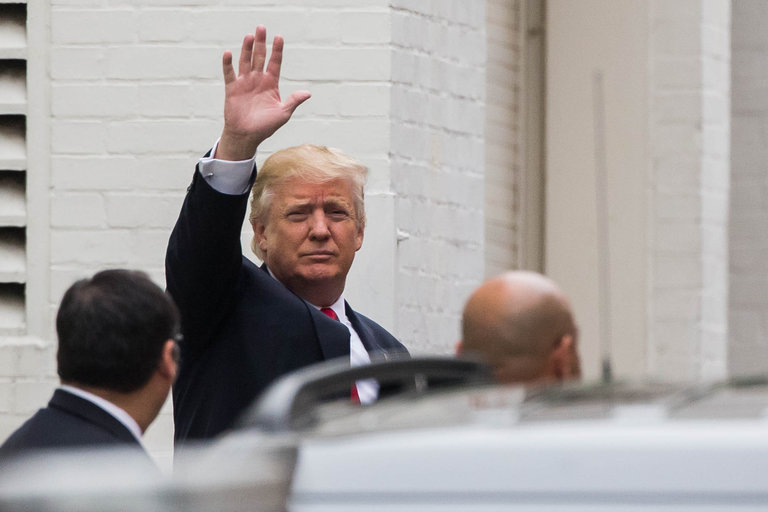
This individual’s ability to manipulate the media, those in the know, the public is simply astonishing. It’s the sole reason he remains the Republican frontrunner for the party’s presidential nomination.

His ability to control the media narrative, of course, has not a single thing to do with any single idea he’s put forth. Trump’s showmanship is beyond belief.

He staged a rally for veterans while the rest of the GOP field was bashing each others’ brains in. Trump even lured a couple of his rivals from the “undercard” debate — Mike Huckabee and Rick Santorum — to the vets rally to yammer about how they, too, were going to be faithful to veterans’ concerns and needs.

The veterans rally, of course, was a plug for Trump and had little to do, really, with the issue of veterans care. Every American already wants to do all they can to care for the veterans who are returning home from war. It has become a mantra — as it should.

Trump’s manipulation of this event, though, is what is so astonishing and is what gives this guy his political staying power.

The record is full of events that would have doomed a candidate who didn’t have Trump’s self-promotion skill set. The insults he has hurled at his foes, at media representatives, at foreign leaders, at voters themselves would have sent any other candidate to the proverbial showers long ago.

Not Trump.

He’s still standing at the head of the line. He boycotted a GOP debate because he’s feuding with one of the moderators.

But we’re still talking about him.

The guy’s a genius at one thing . . . and it has nothing at all to do with becoming president of the United States of America.


In other news, Challenger blew up 30 years ago today

31734.ngsversion.1422031299027.adapt.768.1

Republican presidential candidates are debating at this very moment.

I’m a bit weary from listening to it all, so I’ll recall a tragic moment in U.S. history.

Thirty years ago today, the phone rang on my desk at the Beaumont Enterprise. I answered it. It was my wife, who worked down the street in downtown Beaumont, Texas.

“What’s going on? I just heard the shuttle blew up,” she said.

I turned to my computer, punched up the wire and saw the bulletin: “Challenger explodes.”

I blurted out a curse word and told her “I gotta go!”

I turned on the TV. The video was horrific.

Seventy-three seconds into a flight the shuttle Challenger blew up and seven astronauts were dead . . . in an instant.

We were stunned at our newspaper. We stood there, transfixed by what was transpiring. We heard over and over the radio communication to the Challenger, “Go at throttle up.” Then came the blast. It was followed by silence before the communicator told the world, “Obviously a major malfunction.”

I wouldn’t feel that kind of shock until, oh, the 9/11 attacks 15 years later.

But what happened next at our newspaper was that we would plan to do something the paper hadn’t done since the attack on Pearl Harbor. We decided to publish an “Extra.”

It contained eight pages of text and photos from that ghastly event. It contained an editorial page, which I cobbled together rapidly. I wrote a “hot” editorial commenting on the grief the nation was feeling at that very moment.

We went to press about noon that day and we put the paper in the hands of hawkers our circulation department brought in to sell the paper on the street. It went into news racks all over the city.

Through it all the tragedy reminded us — as if we needed reminding — of how dangerous it is to fly a rocket into Earth orbit.

Of course, it would be determined that a faulty gasket malfunctioned in the cold that morning in Florida. The shuttle fleet would be grounded for a couple of years while NASA figured out a way to prevent such tragedy from happening in the future.

We would feel intense national pain, of course, in February 2003 when the shuttle Columbia would disintegrate upon re-entry over Texas, killing that crew as well — including the mission commander, Amarillo’s very own Air Force Col. Rick Husband.

They both brought intense pain to our nation.

Challenger’s sudden and shocking end, though, remains one of those events where we all remember where we were and what we were doing when we heard the news.

And to think that some Americans actually thought those space flights were “routine.”


Media need an intervention for poll addiction

polls

Frank Bruni has it right.

The New York Times columnist has declared that the American media are addicted to polls. They can’t report on them enough. The issues driving the Democratic and Republican presidential primary campaigns? Who needs ’em!

We need to write about polls.

Broadcast outlets lead with them. Print media report on them constantly.

Bruni noted that during the Christmas-to-New Year break, Iowa voters were polled 11 times about their presidential preferences. The media reported on those polls dutifully.

The most hilarious element of all this is how media types keep bemoaning the fact that the media cover these campaigns like “horse races.”

I’ll admit that I am one of those who become fixated occasionally by polls.

Some of them are quite ridiculous, actually. National polls showing voter preferences between party primary candidates present one example. I’ve noted in this blog before how meaningless those polls are, given that the candidates — say, Hillary Clinton and Bernie Sanders — won’t face each other nationally; they are running state by state.

But hey, let’s poll voters nationally anyway.

Perhaps we can lay some of the blame for this fixation on Donald J. Trump, the leading GOP candidate for president. He loves polls. They’re huuuuge, as he says often . . . especially when they place him in the lead. Polls that place him behind someone else? Meaningless. They don’t count. Who cares about ’em?

Bruni notes in his essay, though, that Trump often starts his stump speeches off with results from the latest polls.

The media then report it.

I hope to hear it from a major newspaper newsroom or a broadcast/cable TV studio: Stop us before we report on polls again!

Trump to skip debate because . . . of moderator

b3df42a8bb48ad237e0f6a7067003b68_c0-0-3452-2012_s885x516

What in the name of all that is petulant do we make of this latest development in one of the strangest political campaigns in anyone’s memory?

Donald J. Trump, the frontrunner for the Republican Party’s presidential nominating campaign, is going to skip a GOP debate coming up Thursday, according to his campaign manager.

Why? He doesn’t like the moderator. He doesn’t think the moderator, Fox News’s Megyn Kelly, will treat him fairly.

It’s all about the moderator.

Trump is demonstrating a level of narcissism that, frankly, takes my breath away.

During the first GOP debate, Kelly started the questioning by asking Trump about some statements he’d made about women. It went downhill from there. In a hurry!

And it hasn’t gotten any better.

Trump now is sounding like a candidate who actually fears a journalist who — during that first debate — was just doing her job.

OK, Trump won’t say he fears Kelly. It just looks that way.

This is astonishing in the extreme. A man who says he wants to become commander in chief of the world’s most powerful military establishment, who wants to become head of state of the world’s most exceptional nation, who wants to tackle the most difficult problems any human being ever can confront is now going to boycott a debate because he doesn’t like the moderator.

Amazing.

I am done projecting that the latest Trump stunt spells the end of his campaign. I thought that moment had come many times before, only to be proven wrong by those poll numbers and the so-called “loyalty” of Trump’s supporters.

They have confounded almost everyone with an interest in this presidential campaign.

Me included.

Trump is fond of calling his opponents and critics “losers.”

He now wears that label himself. My guess is that he’s so very proud of himself. For what? For chickening out of facing difficult questions from a broadcast journalist.


Newspaper endorsements: do they matter?

newspapers

Near the end of my career in daily print journalism, I began to question the value of newspaper “endorsements.”

We didn’t really even like to refer to them out loud as endorsements. We preferred the term “recommendations.” We’d recommend a candidate of our choice while understanding that voters are independent thinkers — or so they say — and wouldn’t take whatever the newspaper said as gospel.

These days I’m beginning to wonder about voters’ independence. The plethora of social media and big-money advertising are having the kind of influence on voters’ thought process that, well, newspaper endorsements might have had a half-century or longer ago.

Former Texas Gov. Rick Perry perhaps demonstrated better than anyone in recent times how newspaper editorial endorsements’ value has diminished.

When he ran for re-election in 2010, Perry announced he wouldn’t even talk to newspaper editorial boards. He’d go straight to the voters. He didn’t need no stinkin’ newspaper editors’ approval.

How did Gov. Perry do at the ballot box that year? He thumped Republican primary opponent Kay Bailey Hutchison — no slouch as a Texas politician herself — and then clobbered Democratic nominee Bill White that fall. White, by the way, garnered virtually every newspaper endorsement there was to get in Texas — including from the Amarillo Globe-News, where I worked as editorial page editor; it did him virtually no good at all.

So now, in this presidential election cycle, newspapers are weighing in. The “influential” Des Moines Register endorsed Republican Marco Rubio and Democrat Hillary Clinton in advance of the Iowa caucuses. Over the weekend, the Boston Globe endorsed Clinton as the neighboring New Hampshire primary approaches.

There will be others coming along as the campaigns proceed along the long and winding road toward the parties’ conventions. Newspaper editors and publishers will extend the invitation for the candidates to make their cases. Some of them will accept; others will follow the Perry model.

In the end, however, none of these endorsements — or recommendations — likely will be decisive.

Voters are getting their heads filled by ideologues on both sides of the divide. Their minds are made up.

What’s more, during the more than three decades I practiced my craft in daily journalism, I never heard first-hand any voter say they changed their mind on an election based on a newspaper endorsement.

Maybe they’re out there.

Back to my initial question: Do these endorsements really matter?