Don’t choke on texting-ban bill, Gov. Abbott

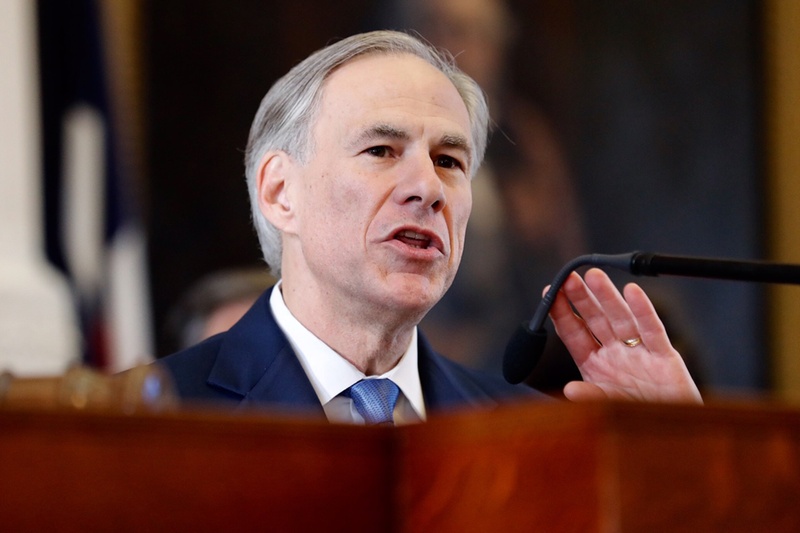
Listen to me, Gov. Greg Abbott. Read my lips: Sign House Bill 62 into law, the one that makes texting while driving illegal throughout the state of Texas!

Do it! Don’t waffle because of technicalities. The Texas Tribune reports — which I am sure you’ve read already — that you believe texting while driving a motor vehicle poses a grave danger to Texans.

HB 62 is on your desk, as I also am sure you know. It’s there along with a lot of other bills approved by the Legislature.

Your immediate predecessor as governor, Rick Perry, never should have vetoed a similar bill in 2011. Remember how he called it a “government effort to micromanage the behavior of adults.” I mean, good grief, man. If you follow that logic, then such micromanagement means we shouldn’t have laws prohibiting drinking while driving, either; hey, let’s take down all the speed limit signs and let Texas push their pedals to the metal whenever and wherever they feel like it.

I hear you’re concerned that HB 62 doesn’t do enough to pre-empt local ordinances. Your spokesman, John Wittman, told the Tribune: “One thing Governor Abbott wanted in a texting while driving ban was a pre-emption of the patchwork quilt of local regulations across the state, and he’s looking forward to digging into the details of HB 62.”

OK, I get it.

Indeed, a statewide ban would bring much-needed continuity to Texas’ rules of the road. Visitors to the state need to know that operating a hand-held device while driving a motor vehicle is illegal anywhere within the state’s borders. Post signs at every highway entry point into Texas telling motorists to put their texting devices away as they enter the state. Texas residents might not need reminding; visitors from out of state, though, do need it.

Gov. Abbott, you’ve got a chance to exercise some needed executive authority by signing a necessary bill into law. House Bill 62 does something that should have been done when these texting devices became so damn ubiquitous. They’re everywhere, but there ought to be some limitations on when human beings should be allowed to operate them.

Driving a motor vehicle at high speeds through traffic and among pedestrians is one of those instances.

Sign the bill, Gov. Abbott.
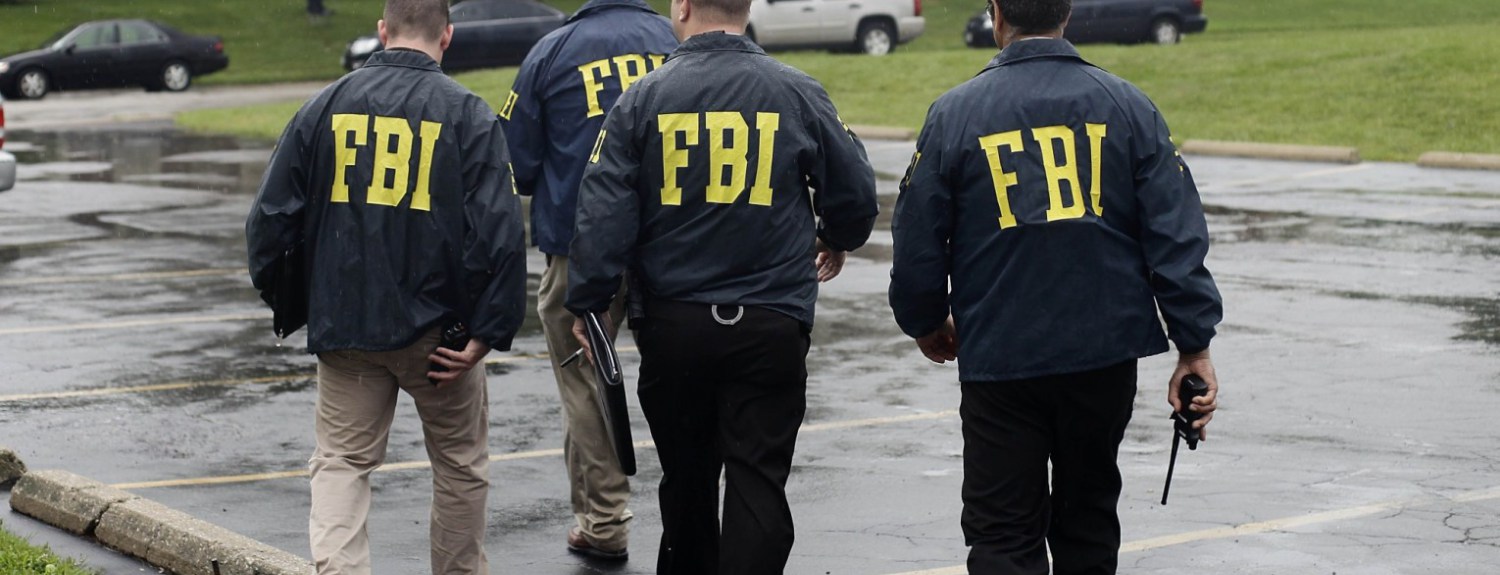
Can’t we find a law enforcement pro to lead FBI?

We live in a gigantic country that is full of qualified patriots who are steeped in law enforcement experience.

One of them, somewhere, ought to be able lead the FBI. Don’t you think? One of them ought to be tough enough to withstand the pressure of leading an organization under intense fire at the moment as it probes questions about the president of the United States.

I mention this because a leading politician, former Democratic U.S. Sen. Joe Lieberman, announced that he no longer wants to be considered for the FBI directorship.

Lieberman had received a lot of pushback from U.S. Senate Democrats who, I reckon, haven’t forgiven him for backing Republican Sen. John McCain in the 2008 presidential election. Lieberman ended up leaving the Democratic Party and served for a time as an independent in the Senate.

In reality, though, Lieberman would have been a terrible choice. Why? He’s a politician. He’s got decades of political experience in Connecticut and in Washington. He’s not a bad guy. He came within just a few votes of being elected vice president in 2000 as Al Gore’s running mate.

The FBI — which has been reeling since Donald J. Trump fired former director James Comey — needs a pro to serve as director. It needs an inherently non-political figure. It needs someone whose integrity cannot be questioned by anyone on either side of the partisan aisle. It needs a director who can withstand the heat that is sure to come as the FBI probe into Donald J. Trump’s Russia connection gets closer to its conclusion.

Who would that person be? I haven’t the faintest idea.

As one of more than 300 million American citizens, I am absolutely certain that someone lives in this great country of ours who fits the bill perfectly.

‘Scrutiny’ brings more pressure to Trump

My handy-dandy American Heritage dictionary defines “scrutiny” this way: A close, careful examination.

So, what does that mean for Donald J. Trump son-in-law, Jared Kushner, who is now under “scrutiny” by the FBI?

It means the feds are going to look closely and carefully at what his contacts with the Russian government might have meant to his father-in-law’s presidential campaign and the presidency to which he was elected.

This is a serious development in the still-burgeoning controversies that are threatening to swallow whole the Trump administration.

Media are reporting tonight that the FBI is looking at Kushner’s role in the Trump administration. Does “scrutiny” mean the FBI suspects Kushner of doing something wrong? No. It does mean that the FBI thinks he might have pertinent information to the investigation that is underway at many levels.

The Russia relationship is baffling in the extreme. Donald Trump cannot bring himself to speak negatively of Vladimir Putin. He trashes political foes here at home; he is understandably quick to pull the verbal trigger on assorted international bad guys — such as the Islamic State and al-Qaeda.

Russia and Putin, though, remain ensconced in a no-criticism zone. Kushner appears to be as close to the “Russia thing” as anyone associated with the president’s inner circle.

I would hate to be anyone close to Donald Trump at this moment. He got the news while overseas, where he is the middle of a moderately successful series of meetings with friendly heads of state.

The president is going to come home, though, to a spate of even more bad news. I believe the FBI scrutiny of Jared Kushner is going to keep the president up at night.

Trump shows bad manners at NATO

There’s no need to belabor this particular bit of news from the NATO summit in Brussels.

It’s still worth a mention.

Donald J. Trump was seen shoving aside Dusko Markovic, the prime minister of Montenegro, the newest member of the North Atlantic Treaty Organization. Trump pushed Markovic away while seeking to be photographed along with other leaders.

http://www.msn.com/en-us/news/world/trump-shoves-a-fellow-world-leader-at-nato/ar-BBBwCkm

Markovic reportedly seemed a bit surprised by the bull-in-china-shop approach from Trump. Then he smiled and patted the president on the back.

Hey, I get that the United States is the big dog. We’re the world’s greatest nation. But it brings to mind this question: Is this what Trump means by “putting America first”?

Trump runs smack into long memories

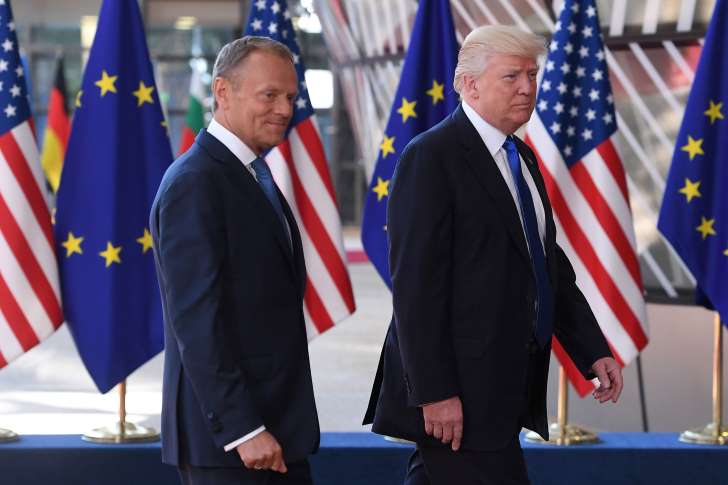
Donald J. Trump has now met most of his European colleagues on their turf.

My understanding is that the leaders of the North Atlantic Treaty Organization weren’t exactly opening their arms in a warm embrace of the president of the United States.

They have long memories of the things he said while campaigning for the presidency.

http://www.msn.com/en-us/news/world/trump-gets-frosty-greeting-from-eu-leaders/ar-BBBwFBZ?li=BBnb7Kz

Trump called NATO “obsolete,” but has taken it back; he demanded the NATO member nations pay more for their defense; he said he wants to tear up the climate change accord signed this past year in Paris, but now says he United States is still undecided.

I guess I ought to mention, too, that NATO doesn’t trust that big neighbor to its east, Russia, which Trump seems unable to criticize with quite the fervor he expends on the Islamic State and other enemies of the United States.

NATO, which sits at Russia’s front porch, isn’t so, um, tolerant of Vladimir Putin’s motives or the tactics he has employed.

U.S. intelligence agencies already have concluded his government interfered in our election this past year. The Russians have done the same in France and are doing it yet again in Germany. Every leader in Europe knows it; so do our intelligence analysts. The only significant person on Planet Earth who’s denying it — other than Putin and his minions — is the president of the United States.

Is it any wonder that NATO — meeting in Brussels, a city Trump once called a “hellhole” — would be less than chummy with Donald Trump?

Hey, Mr. President. These folks are our allies. They are our friends. They are posted on the front line of defense against Russia, which is neither an ally or a friend.

Trump simply shouldn’t have said what he did about NATO. He might not remember it, or understand the implications of his remarks, but his NATO colleagues damn sure do.

Early voting hazards? I rest my case

Montana voters are casting their ballots today. Many other Big Sky residents, though, have done so already.

At stake? The state’s at-large congressional seat once held by Ryan Zinke, who’s now interior secretary in the Trump administration.

If ever was there a case to be made against early voting, I present to you this one — involving a Republican candidate for the office.

Greg Gianforte just this week decided to take his anger at the media out on a reporter for the Guardian newspaper who had the nerve — the nerve, I tell ya — to ask Gianforte about the Republican alternative to the Affordable Care Act.

Gianforte responded to the question by allegedly body-slamming the reporter, Ben Jacobs, to the floor, while yelling “get the hell out of here!” at him.

Early voting in Montana had expired. The ballots were cast. Many voters perhaps at this very moment are regretting their decision to support a candidate for Congress who’s been charged with assault. To be candid, many other Montana voters well might be cheering the guy on.

This case provides the clearest example I have seen in some time of the hazards of casting one’s vote early. You know how I feel about it.

Gianforte’s opponent in this special election is Democrat Rob Quist, who’s been so very quiet about it all in the past 24 hours or so. Hey, there’s no need to say a thing, Mr. Quist.

Early voting carries enormous risk for those who cast their votes before Election Day — and who cannot take them back.

Dear reader, I rest my case.

Suddenly, Montana election looms as a referendum of sorts

Quite suddenly, and unexpectedly, thanks to a reported outburst from a politician seeking election to Congress, a special election might loom as a referendum for the nation.

Republican Greg Gianforte is running against Democrat Rob Quist for Montana’s at-large congressional district; they are seeking to succeed Ryan Zinke, who now serves as Interior secretary in the Trump administration.

Then something happened to potentially place this election on the national stage. Gianforte “body slammed” a reporter, Ben Jacobs, who was questioning him about the Republican health care alternative to the Affordable Care Act. Gianforte reportedly attacked Jacobs, busting the young man’s eyeglasses and possibly injuring one of the Jacobs’ elbows.

Here’s what we ought to look for: Gianforte’s alleged outburst could produce one of two results. Voters could be so outraged that he would assault a reporter that they’ll elect Quist; or they’ll cheer the politician’s outburst against a so-called “liberal reporter” seeking to upend the political equilibrium in a state that voted overwhelmingly for Donald J. Trump in the 2016 presidential election.

This special election was supposed to be a slam-dunk for Republicans in Montana. It doesn’t look like one tonight.

Then again …

I think we should watch the returns come in Thursday night under the Big Sky.

POTUS said what? To whom?

Whoa, Mr. President!

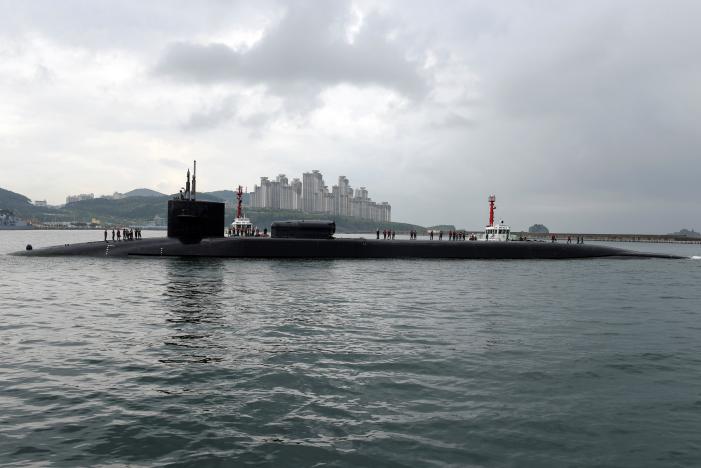
Did I hear this right? The New York Times is reporting that the president of the United States told the leader of The Philippines that we have deployed two nuclear submarines off the Korean Peninsula.

Philippines President Rodrigo Duterte isn’t your ordinary head of state. He’s a despot, strongman, dictator who has just declared martial law in his country. He appears to be Donald J. Trump’s kind of guy. Tough dude. Strong leader.

But hold on here.

The location of our strategic nuclear arsenal is supposed to be, um, highly classified. It’s a state secret. We never disclose the location of these weapons of war. That’s why we deploy them to travel underwater, they are out of sight, they are intended to sneak up on our potential enemies.

Do you get my drift here?

http://www.reuters.com/article/us-northkorea-missiles-submarines-idUSKBN18K15Y

What in the name of modern warfare is our commander in chief thinking — if that’s what you want to call it? The president reportedly bragged to the Russian foreign minister about the “great intel” he gets and then revealed some classified information to the Russians about our fight against the Islamic State. Now he gets on the telephone in late April with the president of The Philippines and blabs about the location of two nuclear submarines.

Good grief, dude! Do you think there might have been someone out there listening — perhaps, maybe, could be — to what you were telling your pal in Manila?

Hey, do you remember all the questions and concerns about giving this fellow, Trump, the nuclear launch codes?

Are you concerned — now?

Did this politician attack a media ‘enemy’?

Just how testy is the political climate getting in these United States of America?

Let’s consider this for a moment: A Republican candidate for Montana’s at-large congressional seat allegedly assaulted a reporter, “body slamming” him, breaking his eyeglasses and possibly inflicting some injury to one of the reporter’s elbow.

Montanans are going to vote Thursday to decide who should replace Interior Secretary Ryan Zinke in the U.S. House of Representatives. The GOP candidate is Greg Gianforte; the Democrat is Rob Quist.

A reporter for the Guardian, Ben Jacobs, wanted to question Gianforte at an event in Bozeman, Mont., about the Congressional Budget Office scoring of the GOP health care overhaul legislation. Gianforte didn’t want to talk to Jacobs, which is when he assaulted him, according to eyewitnesses, telling Jacobs to “get the hell out of here!”

https://www.theguardian.com/us-news/2017/may/24/greg-gianforte-bodyslams-reporter-ben-jacobs-montana

I worked in daily journalism for nearly 37 years. I had my share of strained relationships with news sources over that time. They included individuals of both political parties. They were members of Congress, judges, county commissioners, city council members, school board trustees. We would have strained exchanges caused by some difficult questions I would ask them.

No one ever, not a single time, ever so much as threatened to attack me — even though I once angered a Texas state district judge enough that he looked for more than a year for a way to sue me for libel; he came up empty when he couldn’t find a lawyer to represent him. For the life of me, this apparent encounter between a congressional candidate and a member of the media seems to suggest that the coarsening of media-politician relations has reached some sort of undefined level of hostility.

What do you suppose is the source of this intense anger? I’ll venture a guess. It might be a result of the kind of atmosphere prevalent at Donald J. Trump’s presidential campaign rallies in 2016. You’ll recall the kind of response Trump would elicit from crowds when he spoke of the media, which he labeled “dishonest.”

Once elected, the president then referred to the media as the “enemy of the American people.”

Might this have been the response of an American politician lashing out at an “enemy”?

EPA boss seeks to boost oil allies … but at what cost?

It might be that two decades ago, I would be committing heresy by espousing energy development that does not emphasize oil and natural gas.

Not so these days. The Texas Panhandle — indeed much of West Texas — is sprouting wind farms faster than spring dandelions. Wind is a clean source of renewable energy. Yes, it’s expensive to produce, but those who produce it must find ways to keep the turbines turning at a price they can afford.

That all said, the Environmental Protection Agency is being run by a guy who is in the hip pocket of fossil fuel producers. EPA Administrator Scott Pruitt once served as Oklahoma attorney general; he sued the daylights out of the EPA whenever he could.

Now he runs the agency.

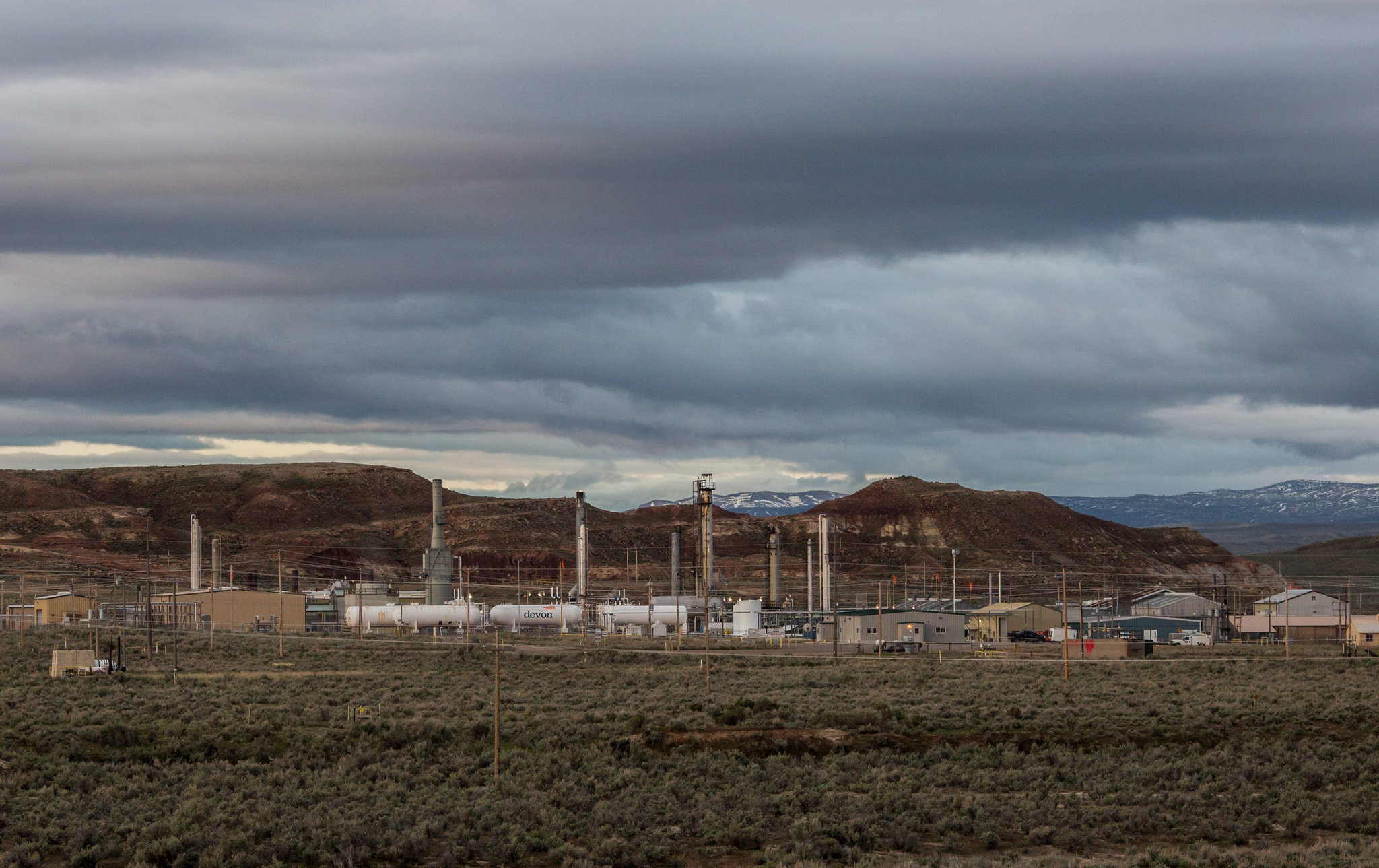
A lengthy New York Times story published Sunday detailed how Pruitt’s work as AG benefitted companies such as Devon Energy, an Oklahoma-based fossil fuel producer.

Pruitt is overseeing a rolling back of EPA rules and regulations that are helping his good friends at Devon, according to the Times.

Here’s what I do not get: How is it that oil supposedly supersedes the production of clean energy alternatives? Pruitt seems to think the EPA needs to roll back regulations intended to mandate more fuel-efficiency, cleaner production of fuels that protect our air and water, and development of cleaner alternatives to coal and oil.

Pruitt and Donald Trump both bemoan what they insist is a “disastrous” energy policy. Is it? The United States has become the world’s leading producer of oil; the nation has reduced dramatically its dependence on imported oil; meanwhile, we have invested over the past eight years into development of wind and solar energy.

I must declare that I also support nuclear power as an alternative to oil production. Utility companies have gone many miles in the development of safer nuclear technology. Yes, disposal of nuclear waste is an issue, but its disposal can be done in an environmentally responsible manner.

The president’s Cabinet-level appointments have been, to say the very least, a mixed bag. I think he has more clunkers than winners in his Cabinet, although I do think a great deal of Defense Secretary James “Mad Dog” Mattis and Homeland Security Secretary John Kelly; national security adviser H.R. McMaster also is a keeper.

EPA boss Pruitt, though, remains among the worst of Trump’s picks.

As the Times reported: “Mr. Trump and his team believe that loosening the regulatory grip on business will help the economy, create jobs and allow Americans ‘to share in the riches,’ as he said during the campaign. But in the energy field, environmentalists, Democrats and even some in the industry fear the efforts will backfire, harming health and safety without creating much economic benefit.”

Doesn’t the EPA boss know that the very title of the agency he leads requires him to “protect” the environment?

Commentary on politics, current events and life experience