How we do know when we have ‘won’?

Donald Trump sought to offer a new strategy for the Afghan War.

The president told us he intends to base our strategy on “conditions” rather than on “time.” We’re going to fight the Afghan War until conditions on the ground tell us we can disengage and that we’re no longer going to give our enemies advance notice of when we intend to stop shooting.

Fine, Mr. President.

I need to ask him, though, a question that has nagged me ever since we entered this war back in 2001: How are we going to know when we have “won” this conflict?

The war against international terrorism has established an entirely new benchmark from which our military strategists must work. They cannot keep beating the enemy on the battlefield and then simply declare victory. Terrorists have this way of receding into the darkness and then striking when we least expect it.

The Afghan War is being waged against Taliban and Islamic State terrorists who continue to resist at every turn. Al-Qaeda has been effectively wiped out in Afghanistan; indeed, it was al-Qaeda’s attack on this country on 9/11 that launched the war. Although that terrorist organization has been decimated in Afghanistan, it has plenty of other locations that will give it “safe haven” from which it can strike back — eventually.

The president has indicated that more troops are heading into Afghanistan. We’re going to send fighting men and women directly onto the battlefield, where they will work closely with Afghan troops.

The president was more correct in his assessment of the fight while he was running for office. He called it a hopeless and futile endeavor. I won’t agree with that entirely. My version of a better outcome would involve stepping up our training capability to ensure that the Afghan armed forces can defend their country effectively — without further on-site help from Americans.

Does this mean we stop fighting? Does it mean we simply give up, surrender and return Afghanistan to the bad guys? No. This fight is as complicated and complex as it gets. I am simply leery of any notion that we’ll ever know for certain when and how we can declare victory.

Get ready … for the ‘other’ Donald Trump

Americans got a good look tonight at a president of the United States who is capable of sounding like one.

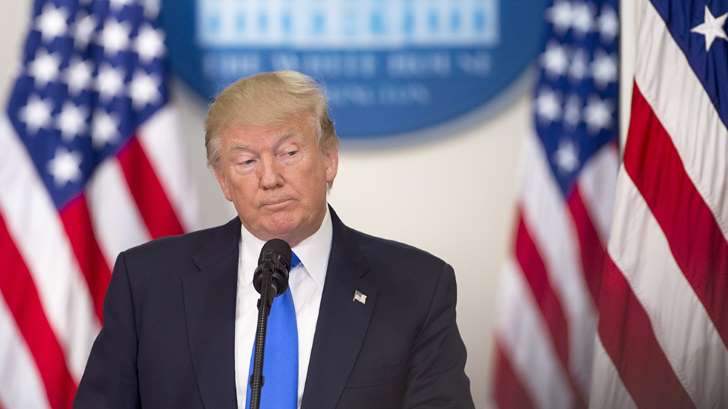
Donald Trump’s speech a roomful of soldiers at Fort Myer, Va., was sober, a bit somber and serious. He talked about changes in war strategy in Afghanistan and scolded our allies in Pakistan for not doing enough to fight terror.

I generally don’t agree with Trump’s policy, but I’ll give him credit for looking and sounding like someone who occupies the most powerful and important office on Earth.

Tomorrow, though, is another day. The president will get on Air Force One and fly to Phoenix, Ariz., to deliver a campaign-style rally speech.

I am quite certain we’re going to see another Donald Trump. We’re going to see and hear someone who’s likely to sound like the clown who attached a sort of moral equivalence between the Nazis/Klansmen and those who opposed them in that Charlottesville, Va., riot.

Oh, and then the man who tonight said our troops fighting in Afghanistan need to return home to a nation of love and tolerance well might issue a pardon to one of law enforcement’s most divisive and cantankerous lawmen. I refer to former Maricopa County Sheriff Joe Arpaio, who’ll attend that Phoenix rally alongside the president.

Arpaio has been convicted of violating the civil rights of illegal immigrants and faces a prison term. Unless, of course, the president pardons him, which he has said he is “seriously considering.”

How do you think that’s going to play as the nation is still reeling from the Charlottesville chaos?

Which of these Trumps is the real one? The serious and sober man who spoke tonight? Or is it the one who’ll get his base all worked up with fiery and furious rhetoric?

I’m thinking the real Donald Trump will show up in Phoenix.

Trump throws down on Pakistan

There’s quite a bit to parse about Donald Trump speech tonight about a change of strategy in our nation’s ongoing war in Afghanistan and its military policies regarding South Asia.

Let’s look briefly at Pakistan

The president has declared that Pakistan has to step up and become a significant U.S. ally in the fight against the Taliban, ISIS and al-Qaeda in Afghanistan.

I actually agree with the president’s view on Pakistan, a nation I never have trusted fully to be a valuable partner in that struggle. You’ll recall that in May 2011 our SEAL and CIA commandos killed Osama bin Laden in a compound where he lived for years inside of Pakistan. No one has yet produced evidence that the Pakistanis were totally ignorant of bin Laden’s presence inside their country.

So, yes, the Pakistanis have to demonstrate their commitment to fighting the terrorists in Afghanistan.

Then the president reached across Pakistan and tapped its arch-rival India to play a larger role in this effort. Can there be a more stinging slap in the Pakistanis’ face than that?

The strategy change as delivered tonight lacks detail. Trump’s decision to wage war until circumstances dictate a possible end creates the potential for an open-ended conflict. Are we ready for that?

He also laid down a marker at the feet of the Afghan government. Trump wants to see “real results” in an effort to end corruption. He wants to see the Afghans demonstrate a military capability that prevents the Taliban from return to power.

The president talked for quite a long time before running for office that the Afghan War was a foolish contest. Then he took his seat behind the Oval Office desk, he said tonight, and saw things differently. I’m glad he recognized how perspectives change when you obtain power.

Something is gnawing at my gut that we’ve just heard the president of the United States commit this country to continuing fighting a war that still seems to lack a strategy for winning.

U.S. forces won far more battles in Vietnam than they lost. Conventional wisdom held that we should have actually won that war. We didn’t. The Vietnamese outlasted us. We left and the enemy we “defeated” on the battlefield took control of the government we sought to protect and preserve.

Is there a similar outcome awaiting us in Afghanistan?

GOP silence is getting louder

You can understand that Democrats are angry with Donald J. Trump.

The president won an election he was supposed to lose to the Democratic Party nominee. Congressional Democrats haven’t gotten over it … yet!

Republicans, though, are demonstrating their angst and anger at Trump differently than their colleagues on the other side of the chasm.

They are staying quiet. More or less. A few congressional Republicans are speaking against the president, namely over his stated reaction to the Charlottesville mayhem. However, except for a few on the far right wing of the party, one is hearing damn little comment that even remotely resembles support for the president’s equating of Nazis and Klansmen to those who protested their march in Charlottesville.

If I were Donald Trump — and I am so glad to be far away from this guy — I would be worried to the max about the GOP silence. Trump has demonstrated already he doesn’t give a damn about Democrats; nor do Democrats, to be fair, give a damn about him. Now, though, he is providing evidence that he doesn’t care about Republicans, either; the GOP silence suggests to me the feeling is increasingly mutual.

Trump has gone after the Senate majority leader; he’s attacked GOP Sens. John McCain and Jeff Flake of Arizona; he lashes out at Sen. Lindsey Graham, R-S.C.; he even attacked Attorney General Jeff Sessions, a former senator from Alabama, and a good friend of many in the Senate — on both sides of the aisle.

GOP Sen. Susan Collins of Maine now says she isn’t even sure Trump will be the party’s presidential nominee in 2020.

The Republican Party’s relative silence may deliver more damage to the president than the howling we’re getting from the other side.

Now, a good word for Teleprompters

I stand before you in defense of Teleprompters.

They are a commonly used device. Politicians use them all the time. They’ve been in use for decades. Speechwriters prepare the text that pols deliver and put them on these devices. Then the pol reads the remarks from a screen at eye level, which is meant to give the audience the illusion of extemporaneous speech.

It ain’t.

Donald J. Trump is going to read a speech tonight. He’ll talk about his strategy in Afghanistan and perhaps reveal how he intends to fight the 16-year-long Afghan War. I’ve heard the president’s critics say all day about how he’s going to read a speech written by someone else. These critics intend to diminish the words the president will say.

C’mon, folks.

We heard much of the same sort of criticism leveled at Barack Obama when he was president. His critics would demean his statements that he would read from a Teleprompter. “He gives a good speech,” they say, “but he doesn’t mean it. He’s speaking someone else’s words.”

Every single president dating back to, oh, Dwight Eisenhower have read speeches from Teleprompters; Ike was the first president to use the device to deliver a State of the Union speech. Some are more graceful using the device than others. Donald Trump clearly needs practice using the Teleprompter. When you watch him stand in front of the Teleprompter, you end up anticipating when he’s going to launch into one of those nonsensical, unscripted riffs.

His reading of the text often sounds painful; some folks have described his Teleprompter performances as sounding as if he is being held hostage.

Have you ever watched Dr. Martin Luther King Jr.’s “I Have a Dream” speech? Of course you have. Dr. King started reading the prepared text; I believe he had a Teleprompter. His prepared remarks were fine. Then he veered into the ad-lib portion that has become legendary. “I have a dream,” he would repeat. He tossed out the prepared remarks and finished with “Thank God Almighty, I am free at last!”

So, let’s stop obsessing over whether the president uses a Teleprompter. Of course he does! As he should.

What’s with this new talking-head cliche, ‘full stop’?

I guess I need to brush up more frequently on talking-head jargon.

I’ll admit, for starters, that I do watch a lot of news and commentary during the day. Retirement has freed me up to do these things. Thus, I hear a lot of contemporary jargon flying out of the mouths of pundits/contributors/commentators.

You’ve all heard ’em: Kick the can down the road; at the end of the day; all that being said; boots on the ground; going forward … blah, blah, blah.

Here’s a new one that well might replace “at the end of the day” as my least favorite, most annoying cliché.

“Full stop.”

What the hell?

I think I first heard that term used in a “Star Trek” movie. Capt. Kirk ordered the Starship Enterprise to come to a “full stop.” My response then was to giggle a bit. “Full stop? Does that mean something other than simply ‘stop’?”

Now it’s taking its place in geopolitical discussion. The chattering class in Washington is now using “full stop,” I reckon, to emphasize that their disagreement with a public policy issue.

“That issue just won’t resonate with the American people. Full stop.” Is that how they use it?

I’ll continue to watch the news, absorb what the talking heads are telling me. I just will have to ignore one more annoying cliché as I listen to the “experts” offer their take on the day’s prevailing issue.

Maybe I just am getting more curmudgeonly.

I’ll make a vow never to use any of those clichés in this blog. I’ll refer instead to what the United Press International style guide said about them: Avoid them like the plague.

Will the president recognize his Afghan reversal?

Donald John Trump is preparing to speak to the nation tonight about Afghanistan. The word that’s being reported is that the president is planning to announce the addition of several thousand more troops to the conflict that’s been raging for the past 16 years.

The president is getting high marks for recognizing the difference between campaigning and governing. Indeed, President Barack Obama campaigned for office pledging to close the terrorist internment camp at Guantanamo Bay, Cuba; the camp is still open.

Trump has been a huuuuge critic of the Afghan War. He tweeted repeatedly prior to and during his presidential campaign that the war is a lost cause, that we shouldn’t shed any more American blood in Afghanistan.

Now he’s the commander in chief. He’s expected now to say something quite different from what he said while campaigning for the job.

Will the president take a moment tonight to acknowledge that maybe — just maybe — he might have been incorrect in his prior world view? Might he concede finally that he didn’t see the picture as completely as he does now?

That’s what grownups do. They atone for previous statements.

What’s more, my hope — if not my expectation — is that the president will accept responsibility for any potential setbacks that occur once the troops are deployed to Afghanistan. Will he, as commander in chief, realize that he is ultimately responsible for any result stemming from the decisions he makes — be they good or bad?

The record to this point doesn’t portend much maturity coming from the president.

I hope I am wrong.

Sun eclipses all our troubles … for one glorious day

I love moments like these, days like these.

Cable and broadcast TV networks have pre-empted all other discussion about things that at the moment seem strangely irrelevant.

That crackpot in North Korea who keeps threatening to hit us with nukes? The aftermath of the Charlottesville riot? The “Russia thing” and the investigation that is under way in D.C.? The president’s idiotic tweet tirades?

They’ve all been, um, eclipsed by the sun and the moon.

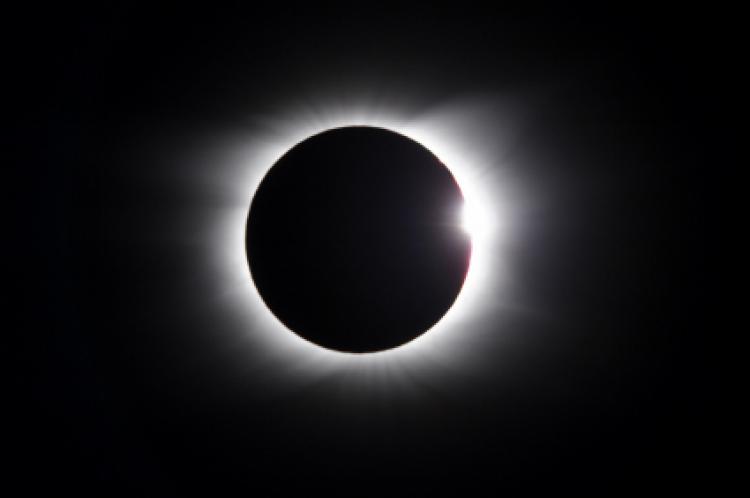
Citizens of the world’s most powerful nation have been transfixed by the sight — or the prospect of the sight — of a total solar eclipse. The moon passed in front of the sun and in many places across a large swath of the nation, the sky went dark.

Crowds of thousands cheered. Newsmen and women were acting like children in their excitement as they reported the “totality” of the eclipse. CBS News has been playing The Beatles’ classic, “Here Comes the Sun.” Does it get any cooler than that?

In Amarillo, where we live, we didn’t get the total eclipse. The moon covered a good bit of the sun, but it didn’t get terribly dark here.

It didn’t matter. We waited with breathless anticipation.

I’ve seen one of these eclipses already. I watched the 1979 eclipse from my hometown of Portland, Ore. It was cloudy that day, as I recall, but the sky went black. Zoo animals freaked out.

That was then. Today is a special day.

The sun and the moon allowed many of us to forget temporarily the issues that have caused such concern.

Alas, tomorrow is just around the corner.

49 years later, the day remains as vivid as ever

Forty-nine years ago today, I said so long to my father, piled into a car with my mother and drove into downtown Portland, Ore., to begin two of the most important years of my life.

I was about to be inducted into the U.S. Army. I kissed Mom goodbye and reported to the induction station near the Greyhound bus stop. I took the oath, gathered my belongings and rode about three hours north to Fort Lewis, Wash.

I completed basic training nine weeks later and got my orders for where I would report for my advanced individual training: Fort Eustis, Va., where the Army would turn me into an aircraft mechanic.

We boarded a plane after graduation from basic and flew to Richmond, Va. En route from Boeing Field to Richmond, I chatted with one of the flight attendants.

“You must dread these flights with a bunch of military guys,” I said to her. “Oh, you guys are angels,” she replied. “The last military charter flight I worked carried a plane full of sailors who’d been on a submarine for six months.” I got the picture.

Sixteen weeks after arriving in Fort Eustis, I completed by training and then awaited my orders: Vietnam.

This is my segue into my discussion topic for the next brief period: The Ken Burns-Lynn Novick documentary film on “The Vietnam War” that will air on Panhandle PBS beginning Sept. 17. It’s a must-watch TV event. At least it is for me.

***

I arrived in-country at Bien Hoa Air Base, South Vietnam in the spring of 1969 and was bused immediately to Long Binh, the huge logistics center near Saigon. I was there only for about four days before I got my orders for Marble Mountain, a secure base just south of Da Nang. While at Long Binh, though, I had to perform some of the usual duties assigned to newly arrived soldiers, such as burning fecal matter from the latrines scattered throughout the sprawling compound.

I flew to Da Nang aboard a C-130 transport plane and reported for duty.

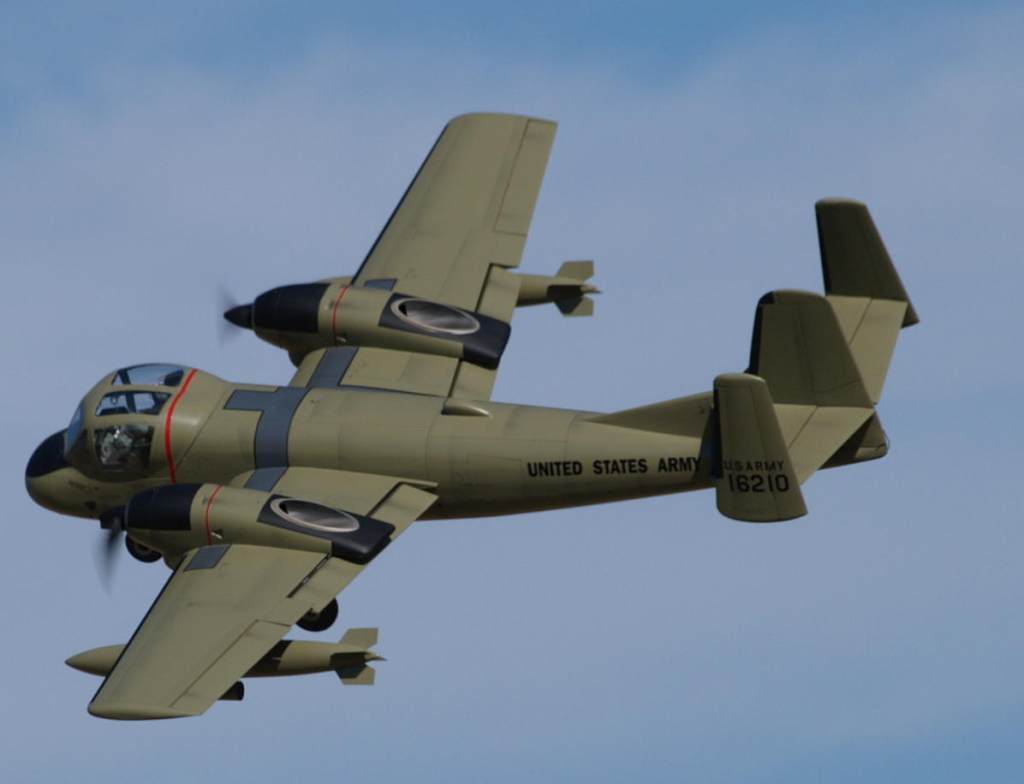
I was what the grunts called a REMF, which stood for “rear echelon mother-f*****.” I didn’t take it personally. I knew we were doing important work there. Our task was to keep OV-1 Mohawk reconnaissance planes in flying condition to perform their duty. Later, I would be assigned to another station at the I Corps Tactical Operations Center, where I became a “flight operations specialist”; my task there was to communicate with aircraft — and to scramble missions on an as-needed basis.

My time in Vietnam was largely uneventful, although we weren’t entirely immune from occasional mortar and rocket barrages from the bad guys camped inside Marble Mountain.

I served and then came home. I remained somewhat confused about a couple of aspects of that conflict in which I participated.

What were we doing there? And for what purpose?

The PBS documentary I hope helps resolve some of that confusion for me. That’s my goal in my plan to watch every single moment of it. I suspect as well that many millions of other fellows my age will want to understand that period of our nation’s history.

I hope Burns and Novick provide us all with the understanding we want — and which some of us need.

The Vietnam War will be told through rare archival film, interviews with those on both sides of the conflict — and through some of the coolest music ever recorded.

I am waiting with bated breath.

How many more ‘worst weeks’ can POTUS endure?

It’s been said over the past couple of days that Donald J. Trump’s list of “worst weeks of his presidency” has become too numerous to count. Suffice to say that the week just past likely qualifies as his last “worst week.”

They rioted in Charlottesville, Va., over a Confederate statue. A young woman — someone who was there to protest the neo-Nazi/Klan/white supremacists who objected to the removal of the statue — was run over in what has been called an act of “domestic terrorism.” The president first blamed “many sides” for the violence; then he blamed the KKK and neo-Nazis for it; then he blamed “both sides” and accused the “alt-left” of provoking an angry response from the Nazis/KKK.

It got real crappy for the president.

A new week is about to convene for the commander in chief and he’s got a chance — or so it appears — to do something right. He’s going to speak to the nation at 8 p.m. (CDT) Monday to announce a new “strategy for Afghanistan and South Asia.”

We’ve been at war in Afghanistan for 16 years, the longest stretch of open warfare in the nation’s history. The 9/11 terrorists declared war on the United States and President Bush responded quickly. The war continued through his two terms and through two terms of Barack Obama’s presidency.

What is the current president going to tell us? Defense Secretary James “Mad Dog” Mattis would reveal it. He chose wisely to leave it to the president to make his own announcement.

What should Trump do? My sincere hope was that we could end the contest in Afghanistan. That won’t happen. The war we’ve fought there hasn’t produced the ironclad strength in the government we installed when we threw the Taliban out of power in 2001.

The nation will wait to hear from the president about how he intends to continue prosecuting this war. That’s his call.

I’ll just ask one favor: Please, Mr. President, stick to the issue at hand and spare us yet another boasting of how smart you are, how rich you are, how many “really smart people” surround you, and how you won the presidency against all odds.

We’ve got young Americans in harm’s way, Mr. President, and now is the time to present yourself as a commander in chief who knows what the hell he’s doing.

Commentary on politics, current events and life experience