Who’s he calling a ‘moron’?

Well now, that’s as clear as mud. Isn’t it?

Secretary of State Rex Tillerson reportedly was so mad at the president of the United States that he threatened to quit. In July, media outlets have reported, he referred to Donald J. Trump as a “moron.”

Today, though, the secretary of state stood before reporters to say (a) that he never considered quitting and (b) that he doesn’t deal in “petty” matters, such as name-calling.

Yet another Trump mystery emerges

So, which is it? Did he threaten to quit or not? And did he call the president a “moron”?

According to Politico: NBC News reported Wednesday that Tillerson had referred to Trump as a “moron” after a meeting at the Pentagon last July with members of the president’s national security team. Citing multiple unnamed sources, the network reported that the secretary of state was close to resigning in the wake of the president’s controversial, political speech at a Boy Scouts of America jamboree and only remained in his job after discussions with Vice President Mike Pence and other administration officials.

Tillerson, by the way, once led the Boy Scouts of America, which I guess means he took the president’s quite inappropriate remarks — which were full of politically charged rhetoric — so very personally.

Trump recently undercut Tillerson, who is trying to negotiate some sort of agreement with North Korea over its nuclear missile program, to quit “wasting your time” by talking to the North Koreans. That bit of diplomatic sabotage reportedly heightened tensions between the men who, I should add, had never met before Trump appointed Tillerson to become the nation’s top diplomat.

Chaos … anyone?

Is this how a school trustee should behave?

I’ll get right to the point on this blog post.

John Betancourt should resign his seat on the Amarillo Independent School District Board of Trustees.

I say this without knowing this fellow personally. But when I read that he’s had two alcohol-related infractions, including a drunken driving citation issued just recently, I believe it is time for someone who is elected to an important public office to call it quits.

Betancourt helps set education policy for a public school district comprising 30,000-plus students. As an AISD “trustee,” moreover, he is entrusted with setting a good example for the students — and their parents — who are affected by the policies he sets.

Call me a prude if you wish. I don’t mind. I find it unacceptable that someone who holds an elected public office can serve in such a capacity when he or she breaks the law. Driving a motor vehicle while impaired by consuming too much alcohol is a serious matter, to my way of thinking.

Betancourt told the Amarillo Globe-News that the DWI arrest in 2015 is “old news.” Uh, no. It isn’t. It reflects badly on the individual who commits the infraction. More importantly, it also reflects badly on the publicly funded institution he was elected to serve.

APD returns to community policing

Terry Childers didn’t exactly distinguish himself during the year or so he served as Amarillo’s interim city manager.

Childers did, however, make one stellar personnel decision in 2016: hiring Ed Drain — an assistant police chief in Plano — as the interim chief of police when Robert Taylor retired as Amarillo’s top cop. Then he took the next step when he named Drain as the city’s permanent police chief. Not long after that, Childers quit and returned to Oklahoma City.

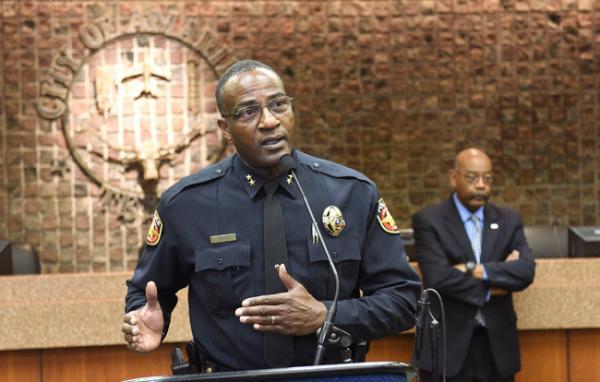
Drain, meanwhile, has distinguished himself in his few months on the job in Amarillo. Mayor Ginger Nelson brought out some key points regarding Drain’s tenure in her State of the City speech, noting some improvements that I want to look at briefly in this blog post.

One of them involves the return of community policing.

Former Police Chief Jerry Neal introduced to the city the notion of police officers making themselves more visible in the neighborhoods they patrol. He deployed bicycle patrols and instructed officers to engage in greater outreach to the communities they serve.

Then Neal retired. Taylor assumed command. Community policing disappeared. Then Taylor retired. In came Drain. Community policing has made a return.

As Nelson said Tuesday morning, the police department has instituted community policing programs in five neighborhoods. The program includes police substations where officers are able to do paperwork and perform other duties required of them.

The city has transformed the old North Heights YMCA into a community center now called the Charles Warford Center. It will include a police presence and will, according to Nelson, “provide a safe place for neighborhood children.”

It’s interesting to me that all this has occurred during Chief Drain’s time as head of the Amarillo Police Department.

I happen to be a big fan of community policing. It has worked in cities all across the nation. It puts police officers in more direct contact with the neighborhoods they serve. It helps remove the Us vs. The Man stigma that occasionally infects police relationships with the communities they serve.

Crime statistics suggest the city has work to do, according to Nelson, who said Tuesday that she intends to remove Amarillo from the list of “most dangerous cities in Texas.” She intends to make Amarillo known as one of the state’s “safest cities.”

I believe the mayor has a tremendous resource at her disposal in the form of Police Chief Ed Drain.

Tragedy brings out the best in humankind

Americans have been talking a lot in the past two days about the worst of humanity.

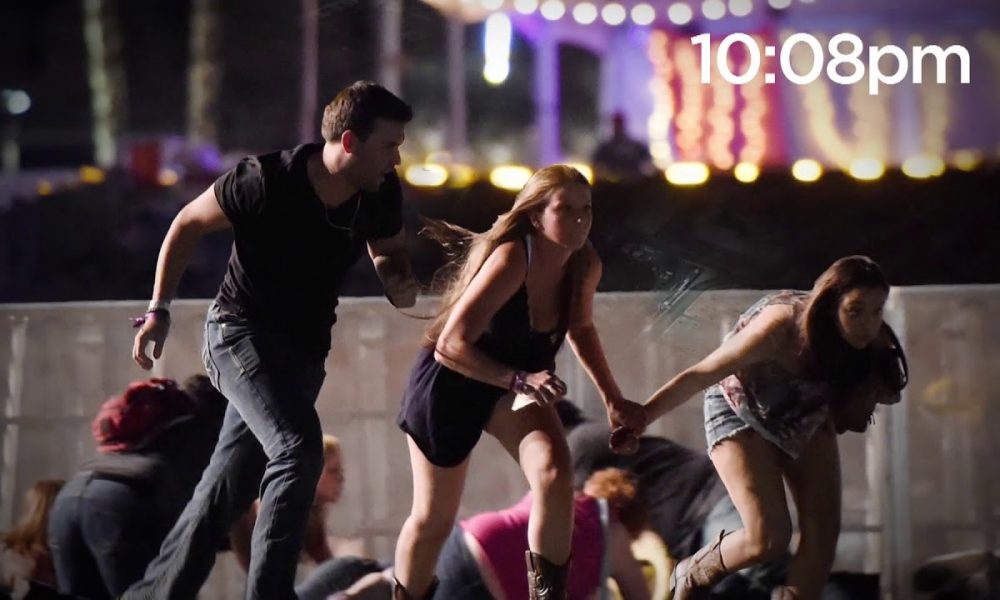
Las Vegas has now become identified with the worst mass murder in “modern U.S. history”; I’m not sure how the media are defining “modern,” but the city once known exclusively for its glitz and glamor is now known also for something quite different.

Let it also be known as a city full of heroes. It is full of residents who, when the shots rained down Sunday night on the crowd at the Mandalay Bay Hotel and Casino, responded with valor and heroism.

I posted an item on this blog that sought to pay tribute to the first responders who answered the call. They included scores of off-duty police officers and firefighters who reacted the way they were trained to do. I failed in that post to mention the heroism displayed by individuals who formerly were known as “just plain folks.” No longer.

https://highplainsblogger.com/2017/10/stories-of-heroism-emerging-from-las-vegas/

The stories keep coming out of Las Vegas about the acts of those who shielded strangers from automatic rifle fire. Some of those heroes paid with their own lives while protecting the lives of others, whether they were loved ones or those they knew only for a moment or two before all hell broke loose.

We tend to center on the worst of humankind when events like this explode onto our consciousness. The monstrous gunman is dead; he took his own life at the moment police were closing in on him in his hotel room.

His reign of terror, though, managed to produce hundreds of heroes at whom he aimed his weapon.

We should pray for them and thank them for exhibiting the best in humankind while they were responding to the worst.

It’s the ‘optics’ that keep bedeviling the president

Donald J. Trump had to know about the damage done by his long-distance feud with San Juan, P.R., Mayor Carmen Yulin Cruz.

The president surely knew it would be better for him to make nice with the mayor who he had criticized for her “poor leadership” after she criticized the federal response to Puerto Rico’s suffering in the wake of Hurricane Maria’s savage beating.

I fear he didn’t act on that when he went to Puerto Rico. He engaged in at least one peculiar public-relations stunt when he was video recorded tossing rolls of paper towels at a crowd of well-wishers. Someone will have to explain to me what that was supposed to tell us about the president’s concern for those U.S. citizens who are suffering from the hurricane’s devastation.

Then he sat in a meeting with local officials — which included Mayor Cruz — and said that Puerto Rico has cost the United States “billions of dollars, but that’s all right.” I heard that and thought, “Huh?”

The president keeps fluffing this part of his job description, the one that labels him “comforter in chief.”  He’s not making the grade.

President Reagan donned that mantle perfectly after the shuttle Challenger disaster in 1986; President Clinton did it as well in the wake of the Oklahoma City bombing in 1995; and of course, President Bush stood in the Twin Tower rubble, bullhorn in hand after 9/11, and said “the world will hear all of us soon.”

And can anyone forget the sight of President Obama leading a church congregation in a rendition of “Amazing Grace” at the memorial for the victims of the Charleston, S.C., massacre?

Trump hasn’t yet been able to demonstrate the capacity he needs to show in these times of intense national grief.

Puerto Ricans are suffering. Yet the president treats his visit there like some sort of performance on his part.

He’ll get another chance on Wednesday when he flies to Las Vegas. He’ll get an opportunity to show Americans he cares about that community’s suffering after the madman opened fire at the hotel and casino, killing 59 people and injuring 500-plus more in a hail of automatic weapon fire.

Do you have faith that the president will become comforter in chief?

Me, neither.

Parsing the founders’ language in the 2nd Amendment

Of all the amendments to the U.S. Constitution — all 27 of them — the one that gives me the most serious case of heartburn is the Second Amendment.

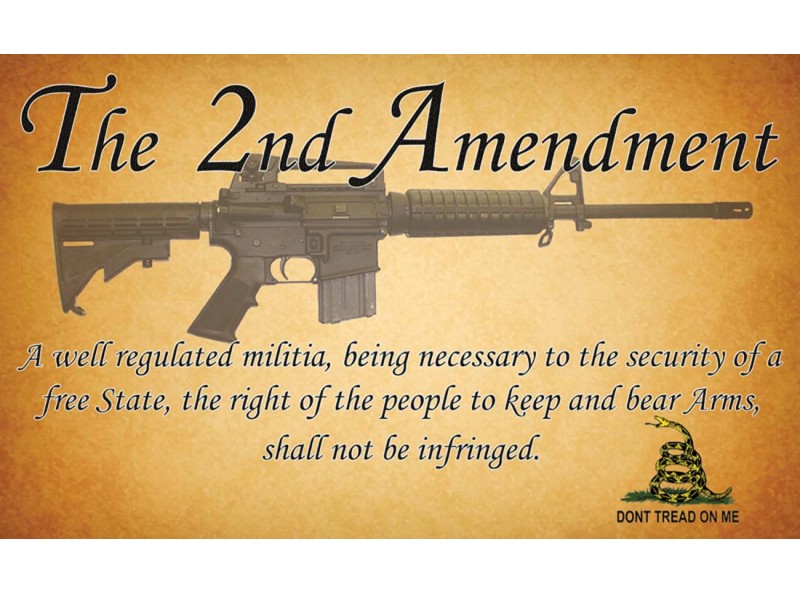
Here is what this amendment says. It’s brief, but it’s so damn confusing in my humble view: A well-regulated Militia, being necessary to the security of a free State, the right of the people to keep and bear Arms shall not be infringed.

Americans are talking yet again about this amendment. Events in Las Vegas over the weekend have thrust this issue to the top of our minds once more. We’re talking about gun violence, gun control. We’re even debating whether we should be debating this issue at this time. I believe we should.

But I want to look at the Second Amendment’s sentence construction. I’ve read it thousands of times over my many years on this good Earth. I don’t understand what it’s saying.

The founders were smart men. They did a good job of developing a fairly cogent and concise bill of rights that are contained in the first 10 amendments to the Constitution. The Second Amendment, though, seems to make two points that are not connected to each other.

Indeed, the first 12 words preceding the comma seem to be lacking an ending. It refers only to a “well-regulated” militia and the necessity to have one to maintain “the security of a free State.” That’s it!

The following clause could stand as a complete sentence in that it contains a subject, some verbs and a predicate.

Those who favor stricter controls on firearms point to the first clause as their rationale. Those who oppose such controls look to the clause after the comma as their rationale.

My sense is that here is where the debate over this amendment seems to break down. Those on opposing sides of this mammoth chasm place their emphases on separate clauses. One means something different from the other one.

I know that courts have ruled countless times that the amendment means that Americans can own firearms, that it’s protected in the Constitution.

The Bill of Rights was ratified Dec. 15, 1791 and thus, the Constitution was established to form a framework for our representative democracy.

The founders got it mostly right when they crafted that framework. They wrote the Bill of Rights almost without exception with sentences that make sense; nine of the 10 amendments comprising the Bill of Rights were constructed in ways that make sense to laypeople such as yours truly.

The Second Amendment, though, gives me heartburn.

By all means, let’s talk about guns

Part of the debate in the wake of the Las Vegas massacre has spun into a discussion about the timing of a debate over gun violence and whether we need more laws to control the ownership of firearms.

Donald Trump believes it’s premature to talk about such matters.

The White House echoes the president’s view on the timing of that discussion.

Others, meanwhile, have kicked that debate into first gear and are shifting into higher gears quickly.

To be honest, I am with those who want to start the discussion now.

I am not dishonoring the victims of the gunman’s horrific act. I pray daily for the 59 people killed and for the 500-plus victims who were injured. I pray for our country and hope we can return to some semblance of sanity.

Moreover, I do believe we can enact some additional controls on the flow of firearms without dismembering the Second Amendment guarantees of firearm ownership. I won’t engage in that debate here.

I do want to deal briefly with the notion that we can have that discussion while mourning the loss of life in Las Vegas. It’s not too early. I am mystified at the idea that it is inappropriate to seek measures to protect us against this kind of heinous act.

TV talking heads are grilling politicians about gun control. Some of them are hedging. Others are willing to engage — right now — in that discussion.

The carnage that spilled on the floor in Las Vegas has prompted yet another national debate over how — or if — we can ever protect humanity from gun madness.

Do I have confidence that this moment will produce any action? Consider this: If the deaths of those 20 innocent children and six of their teachers, who were slaughtered in Newtown, Conn., couldn’t get politicians to budge, does anyone believe they’ll move as a result of the Las Vegas massacre?

Their likely refusal does not make a national discussion any less important.

Mayor delivers on State of the City address

I had this gnawing feeling in my gut when I ventured this morning to the Amarillo Civic Center.

My gut was warning me of a possible happy-talk recitation from Amarillo Mayor Ginger Nelson who pledged to offer her view of the State of the City.

To her great credit, the mayor in effect told my gut to settle down. No need to worry about that. Instead, Nelson proceeded to tell a Grand Plaza Ballroom packed with attendees that the city has made great strides already, but has a good bit more distance to travel as it is “Getting it Done” for the city’s 200,000 residents.

Indeed, Nelson today put quite a Getting it Done-themed agenda looking forward on the record. She laid down a terrific benchmark to take forward next year — and for years after that.

This is the kind of speech that residents need to hear from the City Council’s presiding officer. Granted, under Amarillo’s voting plan, the mayor represents precisely the same citywide constituency as the other four council members; everyone on the council is elected at-large. The mayor is given what Theodore Roosevelt used to call the “bully pulpit” and this morning I heard Amarillo’s first-term mayor use that pulpit with effectiveness.

Much is going well in Amarillo, Nelson said. The city maintains a low municipal property tax rate; the city’s downtown district is moving forward and soon construction will begin on a $45.5 million downtown ballpark that will be home to a AA minor-league baseball franchise.

Amarillo’s police department is reinvigorating its community policing program under the guidance of Police Chief Ed Drain. The city is opening police substations in minority neighborhoods and putting officers in closer touch with the neighborhoods they are patrolling.

The city is working to improve North Heights living conditions and plans to focus soon on The Barrio and San Jacinto, Nelson said.

But we haven’t reached nirvana, the mayor cautioned.

Response times from police and firefighters need to improve, she said. The city needs to boost its educational level; only 22 percent of Amarillo residents have earned a bachelor’s degree or better, Nelson said. The city is ranked by the FBI as one of Texas’s “most dangerous cities,” according to Nelson.

“We have an epidemic of illegal dumping in our alleys,” Nelson said. There needs to be “better planning” between the city and the Texas Department of Transportation as it regards the enormous amount of road work that’s under way, the mayor said.

The city must do a better job of improving the physical appearance of Interstates 40 and 27 as they course through Amarillo, she said, although she noted that the city has instituted a new schedule for mowing the rights-of-way.

She urges residents to “buy local,” noting that business and sales tax revenue has slipped a bit in recent years. She laid the blame for the sale slippage on “online shopping.” Nelson said buying local ought to be an “easy” goal for residents to achieve if they intend to support their community.

It’s easy for elected municipal officials to tout the good news and give the challenges the short shrift when speaking to a public audience. Mayor Nelson did not do that this morning.

My major takeaway from her State of the City speech is that she set the table for more speeches that will communicate where the city continues to fall short … and where it is “Getting it Done.”

‘Even the loons’ deserve to have guns?

Bill O’Reilly isn’t on TV much these days but he still has quite a following around the nation.

I feel the need, therefore, to challenge an assertion that the former TV host made in a blog post he wrote about the Second Amendment, the U.S. Constitution’s guarantee of Americans to “keep and bear arms.” He said the Las Vegas massacre this weekend is the “price of freedom” and said the “Second Amendment is clear that Americans have a right to arm themselves for protection. Even the loons.”

Even the loons?

No, Bill. The loons might have that right currently, but they do not deserve the same rights to own firearms for protection.

This cuts pretty close to the heart of a debate that’s going to rage across the nation in the wake of the Las Vegas massacre that killed 59 people and injured more than 500 others. The gunman opened fire from the 32nd floor of a hotel onto a floor filled with concert goers who were listening to a concert performance by country music star Jason Aldean.

The debate over the Second Amendment has commenced, despite what White House press secretary Sarah Sanders said today about it being “too early” to have this national discussion.

Price of freedom?

I have no specific answers to the changing the status quo. I do believe in the Second Amendment. I believe Americans’ right to own firearms should remain. However, I continue to believe that there must be some additional controls placed on those who purchase firearms to do something to keep them out of the hands of people like the Las Vegas gunman.

There are limits on certain elements of the First Amendment; you can’t yell “fire!” in a crowded theater, nor can you slander or libel someone. Yet, there are those who contend that the Second Amendment must remain untouched from what the founders wrote in the 18th century. 

I won’t accept that notion. Surely there can be a way to craft reasonable restrictions on the purchase of firearms that seek to keep them from nut jobs like the guy who opened fire in Las Vegas.

And, no, I am acutely aware that no additional law is going to deter every single monster from obtaining a weapon, just as laws against murder haven’t eliminated that crime from occurring.

As we move forward with this discussion, my hope is that we can find a way to keep this debate as calm as possible and look as dispassionately as we can at alternatives to the status quo.

Now we have a design for The Ballpark

Yep. It looks like a ballpark.

Amarillo’s Local Government Corp. has approved a design concept for arguably the most significant downtown project of the past half-century.

It doesn’t have a name just yet. It’s going to be a multipurpose event venue, or MPEV. It’s also going to be a minor-league baseball venue, a ballpark. It’ll cost about $45.5 million to build.

It’s going to be home to a AA minor-league baseball franchise that is moving from San Antonio to Amarillo. Plans call for the ballpark to be finished by February 2019. They’ll toss the first pitch for the new baseball season in April 2019.

City Councilman Eddie Sauer — a member of the LGC — said he saw something “iconic” in the design that the LGC approved unanimously. “When I looked at it, I immediately saw something iconic,” Sauer told the Amarillo Globe-News. “I felt like I could see the Potter County Courthouse, the Santa Fe Building. It was special, I felt, with an eye for what we already had downtown.”

They’ve knocked down and scraped away the remnants of the old Coca-Cola distribution center that used to occupy the site along South Buchanan Street. I noticed some piles of dirt on the site the other day while driving downtown.

Plans call for work to begin shortly after the first of the year. Elmore hasn’t yet signed the lease agreement but that event reportedly is imminent.

I keep hearing the naysayers give raspberries to this project. They keep wondering aloud why the city is spending so much of its effort in reviving downtown.

I also keep wondering: How in the world is all this a negative development for Amarillo? Yes, there have been some hiccups and missteps along the way. The city got through them. The LGC negotiated a 30-year lease agreement with the owner of the baseball team that’s coming here. The team owner, Elmore Sports Group, is going to pay the city $400,000 annually to rent the ballpark. The city plans to pay for the ballpark with hotel occupancy tax revenue.

And in the bargain, the city’s downtown district will breathe deeply and is expected to throb with activity. We’re already seeing new urban residences being built; there will be new retail establishments; retail space along the ground floor of a shiny new parking garage is beginning to fill up; the just-opened Embassy Suites hotel figures to attract conventions to the Civic Center.

This is a bad thing for Amarillo? To my way of thinking, it’s pretty damn good.

Commentary on politics, current events and life experience