Tag Archives: Barack Obama

Listen to the VP, senators, about doing your job

biden

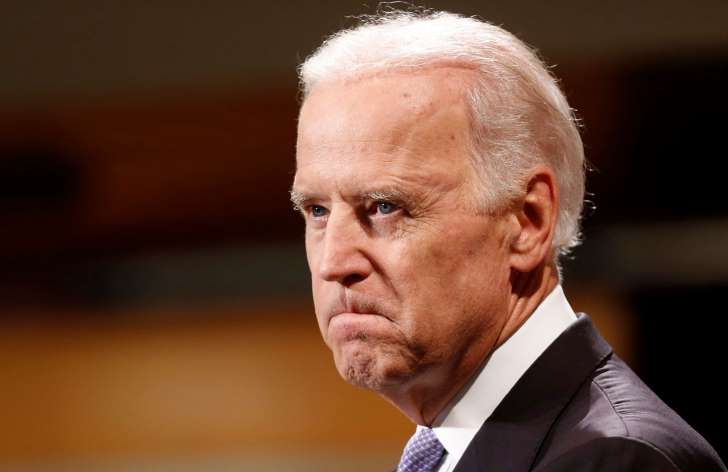
Vice President Joe Biden is going to lecture the U.S. Senate on something about which knows a thing or two.

He wants his former colleagues to do the job they took an oath to do, which is vote on whether to approve a nominee to the U.S. Supreme Court.

Biden will deliver his message in remarks at Georgetown University.

At issue is the nomination of Merrick Garland to fill the seat vacated by the death of Antonin Scalia. Senate Republicans — many of them, anyway — are digging in on the nomination. They don’t want to consider a Barack Obama appointment, contending that it’s too late in the president’s second term. He’s a “lame duck,” therefore, the task of appointing a justice should fall on the next president.

That, of course, is pure malarkey.

Barack Obama is president until Jan. 20, 2017. He wants to fulfill his constitutional duty and he’s urging the Senate to do so as well.

Oh sure. The balance of the court is hanging here. Scalia was a devout conservative ideologue — and a brilliant legal scholar. Garland is a judicial moderate; he’s also a scholar; a man viewed widely as supremely qualified.

How does Biden — who served in the Senate for 36 years before being elected vice president — figure in this?

As vice president, he’s the presiding officer of the Senate. Of course, he votes only to break ties. He doesn’t actually run the place. That task falls on the majority leader, who happens to be a Republican, Mitch McConnell of Kentucky.

It’s been McConnell’s call to obstruct this nomination.

Biden, though, does have a number of friends in both parties who serve in the Senate. Is there any hope that he can get through to them? Probably not, but when you’re vice president of the United States, you have the bully pulpit from which to preach an important message to those who need to hear it.


Meanwhile, Obama meets with dissidents

obama

In other news …

President Barack Obama took time during his visit to Havana, Cuba to meet with Cubans opposed to their government’s oppression of its citizenry.

How about that, folks?

Critics of the president’s visit to Cuba took him to task for failing to schedule a meeting with Cuban dissidents. Yes, I was one who said the president should do so as well.

What did the president do?

He met with several folks at the U.S. Embassy in Havana — how strange it is to make such a reference — and praised them for exhibiting “extraordinary courage” in the face of the communist government’s ham-handed approach to dealing with political dissent.

Can a U.S. president force the leaders of another sovereign nation to change its policies? Of course not. It’s not our call, or anyone else’s call, for that matter.

It’s still wholly appropriate for a visiting head of state — particularly if that head of state leads the world’s premier nation — to call attention to the courage of those who speak out against tyranny.

For doing so, Barack Obama should earn high praise from those who criticized his trip in the first place.

Will he get it? Something tells me the president isn’t exactly holding his breath.


Obama still went to a ballgame …

NC_obama_baseball_07_mm_160322_12x5_1600

President Barack Obama has been second-guessed — big surprise there, right? — about his decision to attend a baseball game in Havana in the aftermath of the terror attacks in Brussels.

Republican presidential candidate John Kasich said if he was president, he would have packed up his gear and returned to D.C. immediately to take charge of the U.S. response.

That’s fine, governor. Except that you aren’t the president. The man who’s in the hot seat now says quite clearly that the terrorists’ aim is to disrupt the lives of everyone in the world — and he would have none of it. As he told ESPN: “The whole premise of terrorism is to try to disrupt people’s ordinary lives … it’s always a challenge when you have a terrorist attack anywhere in the world.”

Indeed, let’s look back at what President Bush said in the wake of the 9/11 attacks. Didn’t he say quite the same thing, that we should go about our daily lives without fear? Didn’t say something like, “Go shopping”?

Barack Obama offered the nation’s support to the Belgians who are reeling in the wake of this horrific attack. He has dispatched military and intelligence officials to assist and help coordinate the pursuit of the monsters who did this deed.

As has been noted here and elsewhere, the president of the United States is never disconnected from the world.

So what if he went to a ballgame?

I’m pretty sure the state-of-the-art intelligence apparatus we all pay for is on the job.


Define whose ‘awful legacy,’ Mr. President

Bubba and The Worst President Evah

Former President Bill Clinton is paying the price for speaking without maximum precision.

So is the presidential campaign of his wife, Hillary Rodham Clinton.

The 42nd president, while speaking on his wife’s behalf, asserted it is imperative that voters erase what he called the “awful legacy” of the past eight years.

That’s it. Awful legacy. He didn’t identify whose legacy to which he was referring.

Pundits, politicians and just plain folks were left, therefore, to presume he meant the president’s “awful legacy.”

The borrow a term: Oops!

The Hillary Clinton campaign immediately sought to clarify what he meant, which was the legacy of the Republican-controlled Congress that, according to the campaign, has obstructed President Obama at every turn along the way.

OK, but he didn’t say it. He didn’t say “Congress’s awful legacy.” Then again, neither did he say “Barack Obama’s awful legacy.”

However, since the president is the Main Man in any political discussion, we are left to presume the former president was talking about his successor.

Right?

President Clinton, of course, has gotten into this kind of word-parsing mess before.

Recall his grand jury testimony during the Lewinsky Scandal when he sought to tell the panel, “It depends on what the meaning of the word ‘is’ is.” That verbal miscue has become embedded in U.S. political lexicon.

I doubt this one will endure quite as long.

Still, for a seasoned politician — which Bill Clinton certainly is — to speak so imprecisely in the heat of a critical campaign really does make some of us wonder: What in the world did he really say — or mean?

Perhaps he can blame it on jet lag.


About those human rights abuses …

BBqKETv

U.S. foreign policy abounds with hypocrisy.

We support some nations while opposing others, citing issues in those nations we oppose that are commonplace in the nations with which we are friendly.

I bring to you … Cuba.

President Barack Obama is visiting the island nation, becoming the first U.S. president to set foot in Cuba since Calvin Coolidge.

His foes back home keep yammering about the human rights abuses that the communists in Havana are guilty of committing. Why, we can’t allow Americans to travel freely there; we can’t commence trade with Cuba; we can’t let our guard down.

What’s the deal, then, with other nations with which we have reasonably healthy relationships?

The People’s Republic of China? Saudi Arabia? Egypt? Vietnam?

Sure, we have differences with many nations around he world, including those I’ve just mentioned.

But the communists who run governments in China and Vietnam treat their citizens badly whenever they speak out against their leaders. The Saudis refuse to grant full rights of citizenship to roughly half of their citizenry; I refer, of course, to women. What’s more, the Saudis are known to execute criminals in public.

My point is simply this: Let’s stop the griping about Cuba’s human rights record, suggesting that it’s a disqualifier for U.S.-Cuba relations. Yes, let’s keep the pressure on Cuba to do better.

We can bring the change we want there by engaging them fully.


Hey we may be friends, but we’re not that close

arm raising

Talk about an awkward moment.

It happened today at the end of a joint press conference with President Barack Obama and Cuban leader Raul Castro.

The picture attached here tells it all.

Castro sought to raise President Obama’s hand in some sort of show of bilateral solidarity.

Obama would have none of it. He managed to avoid grasping Castro’s hand and when the Cuban president raised the U.S. president’s hand, he ended up grabbing his wrist.

President Obama’s hand went limp.

It was really a strange sight. Don’t you think?

I suppose President Obama might have taken offense at the scolding Castro delivered to American reporters who had the temerity to ask him about human rights abuses in Cuba. Or maybe it was Castro’s insistence that the United States give back the land it owns at Guantanamo Bay.

Or … maybe it was that it’s just a bit too early in this rebuilt relationship to grasp hands and lift them jointly in a show of unity.

The nations have some distance yet to travel before they get to that point.

Thus, I believe President Obama — without saying a word — delivered a message of his own to his Cuban hosts.


Anti-Cuba lobby still flexes its muscle

26editorial-cuban-american-videoSixteenByNine1050

The anti-Castro/Cuba lobby in the United States has been outsized for as long as I can remember.

Perhaps we are witnessing this week the latest manifestation of that muscle-flexing as President Obama tours the tiny island nation and gets skewered by those on the right for doing what many others of us think is the right thing.

Which is to normalize relations  with the communist regime.

It’s a curious thing to watch the head of state of the world’s most powerful nation standing shoulder-to-shoulder with the leader of a dirt-poor Third World state. Then to have that tinhorn lecture the leader of the Free World about whether the United States should keep possession of its naval base at Guantanamo Bay gives the Cubans a dubious and overstated standing — and then to have critics pounce on Obama for taking it!

To what do we owe this strange juxtaposition?

I believe it’s the power of that Cuban-American community that resides mostly in Florida.

The community had its birth in the late 1950s when Cubans fled their nation that had been taken over by Fidel Castro and his gang of communists. They took up residence in Florida and began immediately pressuring the U.S. government to do more to destroy Castro.

President Eisenhower heard them. He formulated plans to invade Cuba and then handed the keys to the Oval Office over to President Kennedy in January 1961, who then launched the Bay of Pigs invasion.

It didn’t turn out well for our side. The Cubans squashed the small force, took prisoners and then crowed about how the big, bad U.S. government was intent on destroying them.

Then we had that missile crisis in 1962. JFK took care of it by blockading the island, forcing the Soviet Union to “blink” and remove the offensive missiles.

By 1991, the Evil Empire had vaporized. Cuba was left without its major benefactor.

Still, five decades after the revolution, Cuba has remained a communist dictatorship. Fidel Castro handed the power over to his brother, Raul, who welcomed President Barack Obama to his nation.

Is Cuba a nation to be feared? Do we tremble at the thought of normalizing relations with this tiny nation? No. Why should we? We’re the big kids on the block. Heck, we’re the biggest kids on the planet!

Our politicians, though, have been told to fear Cubans by that overblown Cuban-American community.

So here we are. The president of the United States is making history simply by visiting an island nation that sits within spittin’ distance of our southeastern-most state.

Sure, the Cubans must do more to improve human rights on their island. The president should tell them so.

I don’t know why we should sweat so much over whether Raul Castro listens to us. He and that backwater government he runs can’t do us any harm.

My own sense is that normalization of relations with Cuba by itself is going to do more to bring reform to a nation that needs it in the worst way. Soon enough, the Cubans will see what the rest of the world really looks like.

They also are likely to see how their giant neighbor just over the horizon relishes the fruits of liberty.

Then they might start demanding it from their leaders.


Well stated, Mr. Chief Justice

chief-justice-roberts

How about that John Roberts?

The chief justice of the U.S. Supreme Court has rebuked the U.S. Senate — here it comes — for playing politics with the appointment of the next justice on the nation’s highest court.

Chief Justice Roberts did not know he was doing so when he made the remarks, as they came just a few days before the shocking and tragic death of Justice Antonin Scalia.

He noted the partisan nature of the votes for recent appointees to the court. According to the New York Times: “Look at my more recent colleagues, all extremely well qualified for the court,” Chief Justice Roberts said, “and the votes were, I think, strictly on party lines for the last three of them, or close to it, and that doesn’t make any sense. That suggests to me that the process is being used for something other than ensuring the qualifications of the nominees.”

The court, of course, has a vacancy to fill. President Obama has selected D.C. Circuit Court Chief Judge Merrick Garland to fill the seat. Senate Republicans say they want the next president to make the call, denying the current president the opportunity to fulfill his constitutional responsibility.

Chief Justice Roberts, served with Garland, surely must believe his judicial colleague is as “extremely well qualified” as justices Alito, Kagan and Sotomayor — whose confirmations were approved on largely partisan votes.

Roberts is on point with his call to consider these nominations on the merits of the individual’s qualifications.

No one has heard hardly a whimper from anyone questioning whether Merrick Garland is qualified to determine the constitutionality of federal law.

The opposition is being mounted for purely political reasons.

John Roberts says such posturing should stop.

I happen to agree with him.

As the chief said in his remarks preceding Scalia’s death: “We don’t work as Democrats or Republicans and I think it’s a very unfortunate impression the public might get from the confirmation process.”


A new day begins in U.S.-Cuba relations

ct-obama-cuba-visit-20160217

Republicans are hyperventilating over President Obama’s visit to Cuba.

They need to chill out. They need to stop trying to put words in everyone’s mouth and stop trying to read others’ minds.

Barack Obama is paying a visit to the communist-run island nation because it’s the right thing to do, given that the two nations have restored diplomatic relations that had been severed for five decades.

A particular Republican who can’t seem to catch his breath is U.S. Sen. Ted Cruz of Texas, one of three men running for his party’s presidential nomination. He has written an essay that accuses the president of turning his back on the dissidents who’ve been holed up on prison cells throughout the nation.

Again, young man, don’t seek to know what’s going on behind closed doors when the president meets with Cuban leader Raul Castro.

Yes, I agree that Obama should have scheduled a visit with dissidents in Cuba. Those who disagree with the commies in charge are denied basic human rights that we all believe are inherent throughout the world.

Unless it can be proved beyond a doubt otherwise, I will continue to hold out hope that when the doors are closed and when no one else is listening that Barack Obama will tell Raul Castro something like this:

“Mr. President, the fate of political dissidents here is of grave concern to my country. As their president, I must insist that you give them the freedom to speak their minds, even if it brings criticism of your government.

“We’ve just established relations with you, but you and your government colleagues have known all along about the opposition American presidents and our Congress get every single day. It doesn’t weaken our government; it strengthens it!

“I believe it will have the same effect here.”

I get that communist regimes do not view political dissent the same way free governments do.

Still, I happen to be one American — among many others — who is happy to see this rapprochement occur. It’s been overdue for many years.

May it bring change to our former enemies.

POTUS should meet with dissidents

90

It’s probably way too late to change the itinerary now, but President Obama might want to give it a shot when he lands in Cuba this week.

He’ll be the first U.S. president since The Flood to visit the island nation.

I’ve been supportive for years of efforts to renew relations with the communist dictatorship. To that end, I have applauded Obama for finally taking the step to reopen embassies in our two countries.

I do wish, though, he would have insisted on meeting with Cuban dissidents while he’s on the island. It’s those dissidents who’ve been the subject of the opposition to U.S. efforts to do what should have happened at least two decades ago, when the Soviet Union disappeared from the planet.

None of us knows what the president will tell Cuban leader Raul Castro when the men meet in private. My hope is that he gives him a scolding as it relates to his government’s treatment of those who oppose it. If the Cuban commies are intent on restoring their nation’s status as a world player, they need to atone for their shameful treatment of political dissenters.

Still, the visit is a welcome turn in U.S.-Cuba relations.

If only the president could arrange to meet with those for whom he says he will fight.