Tag Archives: downtown Amarillo

Downtown revival journey takes unsettling turn

amarillo downtown

It appears the debate over how Amarillo’s downtown revival proceeds has been joined fully.

Three new members of the City Council have made their preferences fairly clear: They dislike the multipurpose event venue concept in its current form. They want to put the MPEV to an advisory vote of the residents, believing most voters will agree with them.

Now the council majority has managed to stack the Local Government Corporation board with new members who agree with them.

The LGC board majority now appears to mirror the majority of council members who endorsed their joining the volunteer citizens board that has been front and center in many of the key decisions made regarding downtown revitalization.

I know full well that the May elections have consequences and that the new council members made their intentions clear during the council election campaign.

But you may count me as one individual who believes the new majority appears headed toward making a big mistake if it torpedoes the MPEV and does anything else that forestalls the development of a planned downtown convention hotel.

Look, I’m a believer in the democratic process. However, I sense a fairly deep division in this city over the scope of the downtown plan. The differences seem to center on the ballpark element included in the MPEV.

For me, the ballpark is a plus. Others see it as a minus.

Financing will come from hotel/motel tax revenue provided by those who come to Amarillo and spend time in our many lodging establishments. That’s a bad thing? Supporters say property tax rates won’t be affected. That, too, is a bad thing?

But the LGC — with one of the three new council members among its ranks — appears to look differently on all this.

OK, change has come — as promised. I get it.

I just believe deep down — and on the surface for everyone to see — that the change we’re about to witness won’t do our city any good.

I want desperately to be wrong.
 

Get set for lots of split City Council votes

ama city council

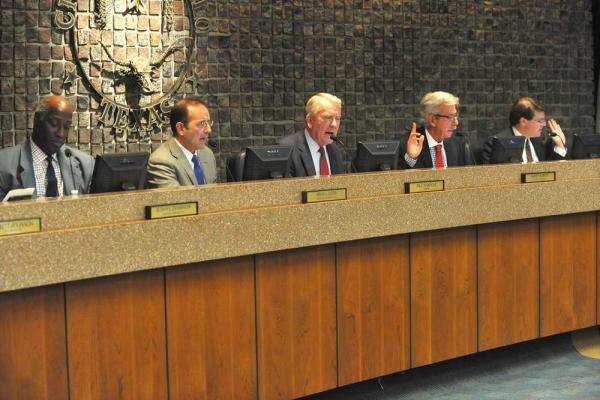
Three to two.

We’d all better get ready for a lot of those votes on critical issues that come before the Amarillo City Council.

Does a three-fifths vote in any governing body — no matter its size — constitute a consensus? Hardly. It says only that the body is divided. Does it represent the division that lies out here among us constituents? I’m not yet ready to concede that point.

Think of it in terms of the U.S. Supreme Court, which fairly routinely splits along ideological lines on key — sometimes landmark — decisions. The court likely will split 5 to 4, with the conservative majority winning the argument over the liberal minority.

Do all Americans see these 5-4 court decisions as a sign of consensus? Oh, no. Indeed, the court’s deeply split decisions are bound to trigger national debates over the rightness or the wrongness of whatever decision the court hands down.

I’m guessing a similar discussion might play out in Amarillo as the City Council takes up key issues. The city budget likely will be decided by a deeply split vote. You can rest assured that any issue relating to downtown Amarillo revival project will face a similarly split vote.

And just like the deep divisions that split the nation’s highest court, where dissenting opinions often produce as much as heat as the majority opinions, we here in Amarillo might have to expect fiery dissents from those in the minority on these key votes.

There used to be an unwritten rule at City Hall every one on the council — or commission, as it once was known — was expected to back whatever decision that came forth. Those who opposed a decision weren’t asked to support it publicly, but there was an accepted silence from those who voted on the short end of whatever decision came from City Hall.

I’m betting the mistrust that exists on both sides of this new 3 to 2 City Council divide won’t allow quiet acquiescence.

This, I submit, is part of the “change” that has arrived at City Hall.

Good luck with that, City Council.


City Council journey still a bit bumpy

ama city council

Looking at Amarillo City Hall from some distance — given that I’m no longer employed as a full-time print journalist — gives me some fresh perspective.

It also doesn’t diminish my own — or anyone else’s in a similar position — ability to discern dysfunction when I see it.

That’s what I’m seeing at City Hall these days. And, no, I don’t — as some have suggested on social media — have any skin in this game.

The City Council met this week to discuss the upcoming municipal budget and also to discuss how to fill three posts on the Local Government Corporation board.

The meeting got a bit heated, based on what I read about it.

Therein may lie the dysfunction that well could upend a lot of well-laid-out plans for the city’s future.

Ron Boyd, Richard Brown and Lilia Escajeda all cycled off the LGC board. I know two of them — Boyd and Escajeda — pretty well. Finding suitable successors apparently provided some significant friction among the newly constituted City Council.

Is this what we can expect on all matters that come before our city’s elected governing board?

It’s an interesting development that one of the three new members of the LGC is Councilman Randy Burkett, who took office in May and has suggested that he wants to derail the multipurpose event venue project planned for downtown. He voted to put the issue to an advisory vote in November and although I do not know Burkett I’d be willing to bet real American money that he’s going to vote “no” on whether to proceed with the MPEV as it’s been proposed for the city.

For the record — yet again! — I believe in the project that’s been presented.

Now he’s on the LGC board, which is up to its armpits in helping shape the course and the nature of downtown’s proposed redevelopment.

Two lawyers, Bryan Poff and Richard Biggs, have joined Burkett on the board. I’m only casually acquainted with those gentlemen. The council vote was 3-2, with Mayor Paul Harpole and Councilman Brian Eades voting “no” to change the LGC board.

And isn’t it interesting that Councilman Burkett was allowed to vote in favor of his own nomination to the board? Is that how it’s always been done?

I’m fearing more head-butting along the way as the City Council’s new majority tangles with the two veteran council members who managed to win re-election in May.

The council sits divided into two camps: those who liked the way things got done and those who vowed drastic “change” in the city’s modus operandi.

If the change is going to produce more bickering and back-biting just for its own sake, I’ll endorse the view expressed by Amarillo resident Cindi Bulla, who said: “Get over it. Work together and get the job done and get it done right.”


MPEV: more than a ballpark

activity for MPEV

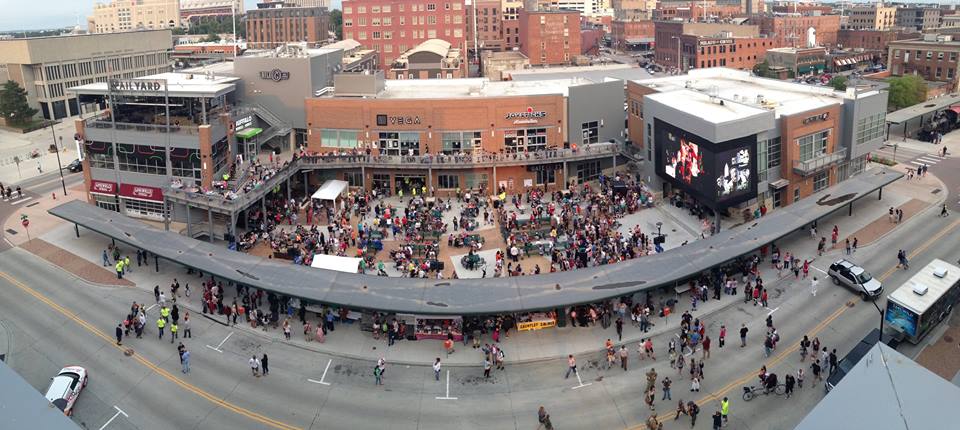
This picture showed up on my Facebook news feed and it intrigued me because of what it represents.

It was taken in Lincoln, Neb. It depicts the kind of rally that could occur in a venue being considered for downtown Amarillo.

Another picture showed up as well. It came with some text about the upcoming Amarillo Chamber of Commerce barbecue, set for Sept. 10. It’ll take place along Polk Street in front of the chamber office. It’ll be choked with thousand of people. Advance Amarillo thinks the chamber event could be relocated to the proposed event venue planned for downtown.

Hmm. Interesting, yes?

Here’s another thought. The city’s annual Block Party, which feature food and music along several downtown blocks? Perhaps organizers could change the name of that event and move it as well into the MPEV.

At issue is the multipurpose event venue that is up for an advisory vote on Nov. 3. Amarillo residents will be asked whether they support the MPEV as it’s been presented. Yes means yes; no means no.

But I’m beginning to see some creative thought by those who see uses for the MPEV that go far beyond it being a ballpark venue for whatever minor-league baseball team decides to play ball at the $32 million site.

I keep hoping we can get beyond the visceral negativity that seems to be driving much of the municipal debate concerning the MPEV. Critics don’t believe the city’s residents are able or willing to attend events at the MPEV.

I keep scratching my head and keep wondering: Why are some of us so wiling to dismiss the possibilities without first examining what they might include?

Build it and they will come … yes?

Amarillo MPEV

I keep hearing critics of Amarillo’s proposed multipurpose event venue — which includes a ballpark design — argue that the city isn’t a baseball town.

They point to the sparse “crowds” that often populate that certifiable trash heap called Potter County Memorial Stadium for the Amarillo Thunderheads games.

There’s your baseball interest, some of them have proclaimed.

I prefer to look at it differently.

The MPEV is up for a vote Nov. 3. City voters will get to decide whether they want to proceed with the MPEV as it’s currently designed. A “yes” vote means it moves forward; a “no” vote means the city should look for another design.

The dump where the Thunderheads play their home games isn’t a suitable venue for anyone.

The MPEV, estimated to cost around $32 million, will present a golden opportunity for the city to attract a major league franchise to hook up with a farm team based in Amarillo.

It’s always been my experience that sports fans prefer to sit in a modern venue with nice amenities to watch athletes perform on the field. The place formerly known as the Dilla Villa is not that place.

I continue to believe the downtown project as presented is worth supporting. The MPEV — whether it contains a ball field or becomes something else eventually — should be a part of the city’s effort to spruce up its downtown district.

They’ve started work on the new Xcel Energy office complex. They’ve cleared the old Coca-Cola distribution center site, relocating it at a new business park. The old jail site has been cleared.

A developer is set to begin work on a downtown convention hotel. And a parking garage is planned for the property next to it.

Will the MPEV be a part of this work? I happen to hope it is.

As for whether Panhandle residents — whether they live in Amarillo or in surrounding communities — will support minor-league baseball if it’s able to move into the new venue, well, time will tell.

It must depend on whether some marketing geniuses can develop a strategy to attract a major league franchise’s attention.

A gleaming new site — if it’s promoted properly — can be enough of a lure.


‘Bought and paid for’? Why … I never

Amarillo_Downtown_Development28July_36_copy

Social media can be a lot of fun to use. I’ll admit to getting somewhat hooked on a couple of those media outlets.

However, it can be a bit distressing when someone you don’t know, have never met, wouldn’t know if he sat in your lap, makes assumptions about total strangers.

It’s happened to me on the issue of downtown revival and the fate of the proposed multipurpose event venue.

Someone named Cory Traves wrote this on a Facebook post: “Obviously this blogger has been bought and paid for by Advance Amarillo.”

“This blogger” is me. The source of this guy’s angst is a series of blog essays I’ve posted that favors the MPEV as it’s currently configured, including the ballpark aspect of it. He posted that comment on a recent blog item I posted regarding the MPEV.

Amarillo voters are going to decide the fate of the MPEV’s current design on Nov. 3. I guess Cory Traves will vote “no” on the referendum, meaning he doesn’t like the ballpark element. I plan to vote “yes.” Our votes will cancel each other out.

Advance Amarillo is a political organization formed to support the downtown Amarillo revitalization plan as it’s been presented. I happen to agree with Advance Amarillo’s view of this downtown effort.

Have I been “bought and paid for” by this group? Umm. No. That’s all I’m going to say about that.

I haven’t a clue as to what drives those who oppose the MPEV, or the downtown effort in general. I will not pretend to assume anything about them.

My wish would be that those with whom I disagree on this issue would keep their assumptions about me — or anyone else on the “other side” — to themselves.

You’re entitled to think whatever you wish. You aren’t entitled to make assumptions — out loud and in public — about others.

Especially when you’re flat wrong.


New ballpark: not a new concept for city

ballpark

Amarillo is considering a downtown ballpark that could be home to a minor-league baseball team.

Some individuals — maybe many of them — think the city and Potter County have an adequate venue for baseball on the edge of the Tri-State Fairgrounds.

I believe they are mistaken.

City officials once considered a study on the feasibility of building a new ballpark to replace that trash heap once known as the Dilla Villa. Then-Mayor Debra McCartt wasn’t too keen on the idea of spending public money on such a study. The city manager at the time, Alan Taylor, had the idea that if you “build it they will come.”

That was a decade ago, in 2005.

The city’s governing board has changed from a commission to a council. Mayor McCartt is no longer in office, being succeeded by Paul Harpole, who happens to have bought into the idea of a public investment in a project that will do the public much good.

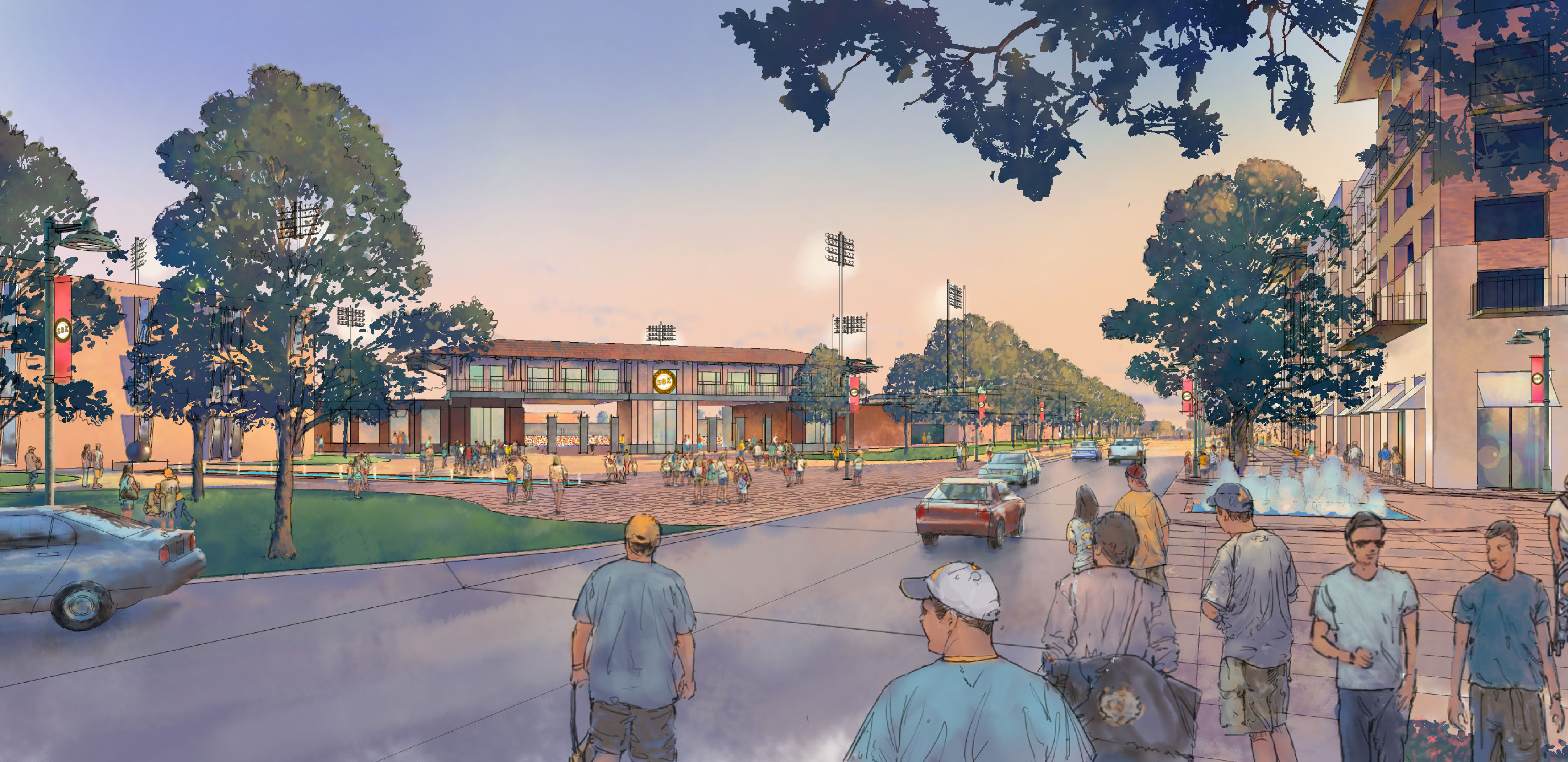
At issue now is whether voters will endorse a proposed multipurpose event venue. They’ll decide the matter in a citywide referendum on Nov. 3. The issue at hand is this: Do we develop an MPEV that includes a baseball park or not?

I say “yes!”

I offered an opinion on the concept of a downtown baseball park in a column published Aug. 14, 2005. I wrote that the nation is full of examples of how projects such as the MPEV — as it’s currently configured — have delivered “enormous payback” to cities that build them.

My favorite example is in Oklahoma City, where a downtown ballpark has helped revive Bricktown. Now, I understand fully that Amarillo is less than half the size of OKC. I keep returning to the notion of that “economies of scale” can work for Amarillo, just as it has done in Okie City.

Let’s not operate in a climate of fear over a concept that might be new to this city, but is far from new in other communities that had the will to march forward.

Let’s think big about the MPEV

Amarillo MPEV

Let us take a moment — or maybe two — to consider some possibilities for a venue that Amarillo officials want built in the city’s downtown district.

It’s called a multipurpose event venue, but “MPEV” has become its signature.

The MPEV is on the Nov. 3 ballot. The ballot language gives voters a narrow choice: whether to allow it to proceed with a “ballpark” included in it design. We will be asked to vote “yes” or “no.”

Critics of the MPEV, estimated to cost about $32 million, say the ballpark element restricts its use. I believe that’s nonsense.

So, we could move the baseball activity that’s been occurring at the Potter County Memorial rat hole, er. stadium for the past few years into a gleaming new downtown stadium.

That’s it? That’s all we can see for this venue? Hardly.

The weather, contrary to many other naysayers, shouldn’t detract from other activities. Why, for example, can’t we have outdoor concerts? Don’t other communities welcome acts to perform outdoors? Aren’t there sufficient numbers of entertainers who would like to play outdoors in downtown Amarillo on a cool autumn evening?

And let’s get real here. We all have appreciated the pleasant temperatures we see even during the summer when the sun goes down along the High Plains. Our altitude — nearly 3,700 feet above sea level — helps make those evenings a reality.

OK, so the winters get chilly around here. And yes, spring can be a bit unpredictable — weather-wise.

The planners who’ve proposed this project haven’t re-invented the wheel. Other communities have enjoyed success with downtown ballparks that have been used for various other activities when they aren’t hawking hot dogs, peanuts and cold beer at ballgames.

What they’re pitching, though, is a new concept for this city. The MPEV will work if it’s given the chance — and if we start thinking expansively about the many uses available to it.


Be sure to respond to council overture, public citizen

ama city council

There might be an interesting back story developing once the Amarillo City Council commences its new meeting time at City Hall.

The council says it will start meeting at 6 p.m. each Tuesday to give residents a better chance to attend the meetings. They do, after all, deal with the public’s business.

The back story deals with some of the yammering we’ve heard over a period of time about the so-called “secrecy” that shrouds City Council business. Some of the critics of the downtown revival project, for instance, contend — wrongly, in my view — that too much of it was pre-determined in secret.

Other gripes have concerned the work sessions that precede the official open City Council meetings, where council members actually vote on issues under consideration.

Well, with the new after-hours meeting time, there will be plenty of interest from residents who have been unable to attend the council meeting when they took place at 3 p.m. So, logic would seem to dictate that the City Council chamber spectator seats will have more people in them to listen to council members discuss and act on public matters … correct?

If the interest holds up, then perhaps there might be some credence given to the gripes about a lack of “public involvement.”

If it doesn’t sustain itself and the public doesn’t flock to the third floor Council Chambers meeting room each Tuesday evening, does that suggest that all the grumbling about secrecy was coming from a highly vocal minority of malcontents?

Let’s watch for how this plays out.


Why not play ball at MPEV?

Amarillo MPEV

Jon Mark Beilue might have laid out what could be a pivotal argument for approving construction of a multipurpose event venue — as it’s currently configured — in downtown Amarillo.

The stellar Amarillo Globe-News columnist — and a friend of yours truly — noted in an essay: “I would bet all the change in my pocket that no less than two years after construction, independent baseball would be replaced with AA Texas League affiliated baseball. From there, the MPEV could be designed in such a way as to draw other events that are the other half in making the venue succeed and attracting downtown crowds to added retail.”

The MPEV is coming up for a vote on Nov. 3. It headed to the ballot on a narrow 3-2 Amarillo City Council vote, with the three newest council members voting to place the issue on the ballot.

The crux of Beilue’s column was that the new guys “whiffed” on common sense, and that they had their mind made up long before taking the vote.

But I’m intrigued by the notion of what might happen if the MPEV design gets voter approval this fall.

As has been noted before — in this blog and in many other forum — Potter County Memorial Stadium, aka the Dilla Villa and now the Thunderhead Park, is a dump. It’s hardly more than a piece of fecal matter as far as athletic complexes go.

Is it unreasonable to believe that a brand new, shiny, state-of-the-art venue could become a magnet for the kind of minor-league baseball organization that Beilue and others visualize for the city?

My answer is “no,” not in the least.

Beilue writes: “Neither I nor most others are married to a baseball stadium as the signature piece of an MPEV, but it’s the most logical. The MPEV needs an anchor tenant, and baseball fits that.

“A Hollywood Bowl design has appeal, but its events would be in direct competition with the Globe-News Center for Performing Arts and Amarillo Civic Center Complex. Baseball is a unique alternative that would draw thousands.”

I refuse to heed the naysayers who insist that Amarillo “isn’t a baseball town.” It hasn’t been a baseball town for years largely, in my view, because that rat hole at the Tri-State Fairgrounds is a lousy place to play — or watch — a baseball game.

The ballot measure states: “Should the Multi-Purpose Event Venue (MPEV) to be constructed in downtown Amarillo include a Baseball Stadium at the approximate cost of $32 million?”

It works for me.