Tag Archives: Texas Legislature

Speaker-to-be Bonnen is OK with the far right

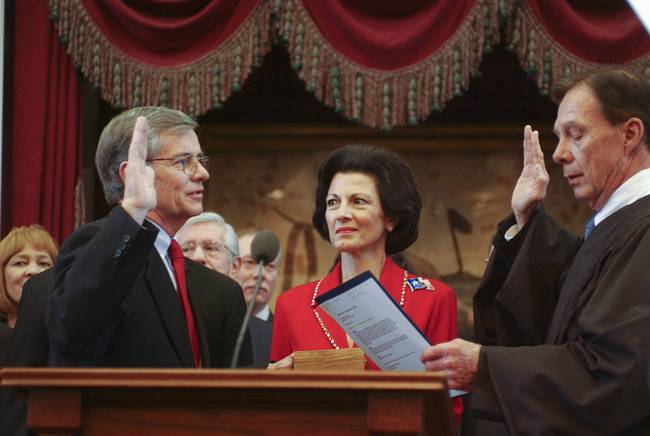
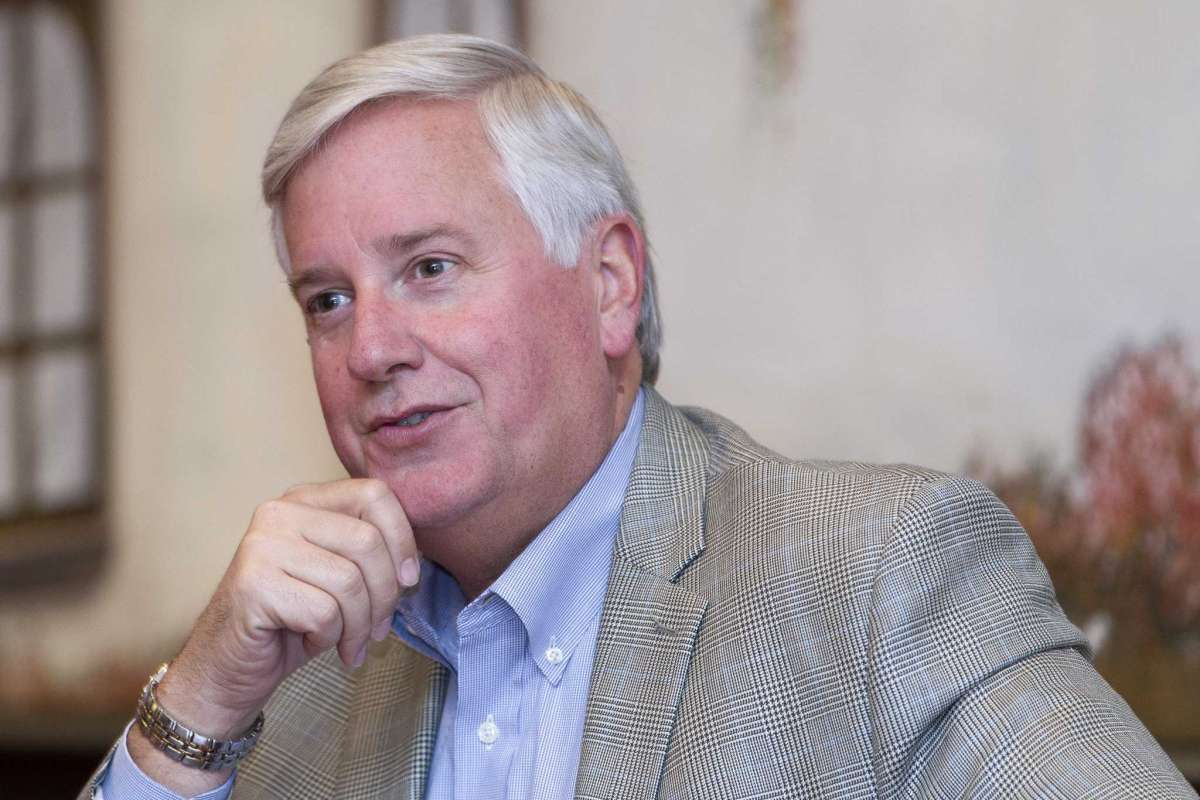
Dennis Bonnen, an Angleton Republican, is poised to become the next speaker of the Texas House of Representatives.

I wish him well. He succeeds Joe Straus of San Antonio, the GOP strongman who stood up to Lt. Gov. Dan Patrick and the Texas Senate when the need arose.

I hope Rep. Bonnen is made of the same stern stuff. He’s a moderate who likes to work across the aisle. He has had his differences with the Freedom Caucus wing of the legislative Republicans who serve with him. But the Texas Tribune reports that almost all the returning Freedom Caucus members are OK with the new speaker, assuming he gets the nod in January.

I get that the Freedom Caucus comprises only 11 members in a 150-member Texas House. History tells us that far right and sometimes far left fringe groups develop outsized influence that reaches far beyond their meager numbers.

Given the nature of Texas Republican politics, it’s likely too much to assume the Freedom Caucus will follow the speaker’s lead and become more of a moderate influence in the Legislature.

Whenever I think of these far-right groups, I think immediately of Empower Texans, the right-wing loons who sought to topple two of the Legislature’s shining stars — two fellows who happen to be friends of mine to boot!

They are state Rep. Four Price and state Sen. Kel Seliger, two Amarillo Republicans who fended off challenges in handsome fashion. The challenge was financed by Empower Texans, the far right group that seeks to influence local political races all across the state. Empower Texans got its mitts on a number of contests, but given that I was living in during the spring primary season, I got to witness Empower Texans’ dirty work up close.

So, it is my hope that the new speaker keeps his distance from the Freedom Caucus and certainly from Empower Texans.

Texas remains a red state, just not as red

I was hoping the 2018 midterm election would turn Texas from blood red to purple; turning the state blue was out of the question.

The results are in and from my perch it appears the state is still red, as in Republican-leaning. Texas, though, is not as red as it was prior to the balloting this past week.

Yes, “red” means Republican, “blue” means Democrat and “purple” is a combination of the two primary colors, meaning that “purple” states are those “swing” territories, battlegrounds if you will.

Texas’s roster of statewide offices remains occupied by an all-GOP lineup. The state’s featured race, between U.S. Sen. Ted Cruz and Beto O’Rourke, the Democratic challenger, finished with Cruz being re-elected by less than 3 percentage points. The closeness of that contest gives Texas Democrats some hope they might break the GOP’s death grip on statewide offices as soon as the 2020 election.

The Texas Legislature saw Democrats gain 12 seats in the 150-member House; Democrats gained two seats in the 31-member Senate. The House GOP majority remains substantial, but the Republican hold on the Senate is bordering on tenuous, although it’s not there yet.

Democrats did manage to flip some U.S. House seats. The one that interested me was the seat held by GOP Rep. Pete Sessions, who got beat by Democratic upstart Colin Allred in North Texas.

What does all this portend for the state as we head into the 2020 presidential election year? It might be that Texas becomes more of a battleground than it has been since, oh, 1980. In every election year since the Ronald Reagan landslide the state has been cast aside by both parties: Democrats have given up on the state; Republicans take us for granted.

That has-been role might change come 2020.

I am highly reluctant, though, to suggest that Texas is anything other than Republican red. It’s just that the state’s reddish hue isn’t nearly as vivid as it has been for so very long.

The next election cycle, therefore, might be a lot more interesting than anything we’ve seen here in some time.

Will the new speaker be a bulwark?

State Rep. Dennis Bonnen appears set to become the next speaker of the Texas House of Representatives.

The Angleton Republican says he has the votes to win the job when the Legislature convenes in January. I’m glad for him. I am not yet willing to say I’m glad for the state, given that I know nothing about him other than what I’ve read in recent days.

My favorite speaker candidate, Republican Four Price of Amarillo, bowed out of the race; three other GOP hopefuls did the same.

They left the field open to Bonnen.

Bonnen has the votes

I have a request of the presumptive speaker: Will you act as a bulwark against some of the Texas Senate’s more reckless impulses, the way the current speaker, Joe Straus, did in 2017?

I hope he does. Indeed, I understand that Bonnen has a bipartisan streak he might be willing to exhibit. One way is to select Democrats to chair House committees.

Bonnen is making some noise that he might stand tall against the likes of, say, Lt. Gov. Dan Patrick, the leader of the Senate. The men have had an occasionally testy relationship. That suits me fine, given my distaste for some of the stunts that Patrick has tried to pull on the Legislature and, therefore, on Texans.

The most notorious stunt, of course, was the 2017 Bathroom Bill that the Senate shoved through at Patrick’s insistence. It got to the House during a special session in the summer of 2017. Speaker Straus dug in. He ensured the death of the bill that would have required individuals to use public rest rooms in accordance with the gender assigned on their birth certificate.

The Bathroom Bill intended to discriminate against transgendered people. Straus was having none of it.

Bonnen says he is an ally of the lame-duck speaker. I hope he remains faithful to Straus’s policy in running the House of Representatives.

The early indications about a Dennis Bonnen speakership look promising.

Don’t let me down — please! — Rep. Bonnen.

There goes my favorite speaker candidate

Well, dadgummit anyway!

Four Price of Amarillo, as fine a legislator as I’ve ever had the pleasure of knowing, has decided he doesn’t want to be the next speaker of the Texas House of Representatives.

OK, in the interest of full disclosure, I’ll acknowledge that Price also is a friend of mine. I’ve known him almost from the day I arrived in the Texas Panhandle way back in January 1995.

He was elected to the Texas House in 2011, succeeding another Republican lawmaker, David Swinford.

I wanted Price to run for speaker after Joe Straus announced he wouldn’t seek re-election to his House seat from San Antonio. I said so a time or three. Then Price decided to go for it.

Now he’s out. He’s thrown his support to Rep. Dennis Bonnen, R-Angleton.

The Texas Tribune reports: On Sunday, … Price announced he was exiting the race, saying he and Bonnen had “had a number of candid and productive conversations about our vision for the future of Texas and how we can work together to make that future as bright as possible.”

If you know Four Price, you get the unmistakable sense that he means precisely what he told the Tribune.

That he is dedicated to the state’s future and wants the best for it.

It happens to be one of the reasons why I wanted him elected speaker of the House when the Legislature convenes in January.

If Four Price is up to remaining in the Legislature, I’m sure he’ll be in the hunt for the speakership at a later date. That, too, would be good for Texas.

Texas Democrats find the spring in their step

The just-concluded 2018 midterm election has produced a fascinating result in Texas.

The long-downtrodden Texas Democratic Party has rediscovered its mojo. Its members have a renewed spring in their step. They fell short in their goal of electing one of their own to a statewide office, but the fellow at the top of the ballot — Beto O’Rourke — came within 3 percentage points of defeating GOP Sen. Ted Cruz.

That’s not supposed to happen in blood-red Texas, which hasn’t elected a Democrat to a statewide office since 1994; the last Democrat elected to the U.S. Senate was Lloyd Bentsen, in 1988.

Now comes word out of Austin that the selection of the next Texas speaker of the House of Representatives will involve more Democratic votes among the 150 legislators.

Democrats carved into the GOP legislative majority. They’ll fill 67 seats in the 2019 Legislature; Republicans will occupy 83 of them.

That means Democrats will get to speak with a louder voice in determining who takes the gavel from Joe Straus, who didn’t seek re-election this year.

Democrats to join speaker fight

A Republican is a shoo-in to become the next speaker. That’s a given. My favorite for the speakership is my good friend Four Price, the Amarillo Republican who, in my view, would do a smashing job as the Man of the House. He is an ally of Speaker Straus, for whom I have high regard, given his torpedoing of the Bathroom Bill in 2017.

However, it’s good to see a semblance of two-party rule returning somewhat to the Texas House. The GOP remains the pre-eminent political party in a state that once was dominated by Democrats.

As for O’Rourke, I’m quite sure that Democratic Party loyalists and activists are getting way ahead of themselves by suggesting Beto should consider running for president in 2020. A better option might be to challenge John Cornyn for the U.S. Senate two years from now.

However, O’Rourke’s legacy for the state well might be that his presence on the ballot and his near-victory over the Cruz Missile has energized a political party that’s been in a hang-dog mood for as long as anyone can remember.

Speaker Straus to Lt. Gov. Patrick: Listen more, talk less

Joe Straus is now officially the lamest of ducks in Texas politics and government. The midterm election is over. The speaker of the Texas House didn’t run for re-election and voters in his San Antonio House district have selected a successor.

That doesn’t mean he is keeping quiet. He has offered Lt. Gov. Dan Patrick, the garrulous politician from Houston, some cogent advice: Patrick should “listen more and talk less” during next year’s Texas legislative session.

Patrick, not surprisingly, is having none of it. He responded in an interview with the Texas Tribune: “(Straus) decided he wanted to continue to poke a finger in the eye of Greg Abbott, the president, myself and conservatives as he goes out the door and I find that disappointing. I wish him the best and I thank him for his public service, but at the end of the day, it’s clear he’s not much of a conservative — and it’s beginning to look like he’s not much of a Republican.”

Read Texas Tribune story.

I suppose if Patrick’s view of a true Republican rests with some of the harsh, nutty notions that came out of the Texas Senate this past year, then perhaps he’s right about Straus. It sounds to me that Patrick is still miffed that Straus killed the Bathroom Bill that the Senate — over which Patrick presides — sent to the House. The Bathroom Bill required individuals to use public restrooms that comported with the gender assigned to them on their birth certificate. .

It clearly was a discriminatory measure aimed at transgender individuals. Straus called it a non-starter, along with police chiefs and other law enforcement officials across Texas.

Straus made sure the bill would die in a special legislative session during the summer of 2017. He said it was virtually unenforceable; he said it would harm businesses in Texas. He wanted no part of it.

The soon-to-be-former speaker is a reasonable man. He is as much of a Republican as Patrick, without the stridency that Patrick brings to his high-profile position.

To be candid, I’ll miss Straus’s leadership as the Man of the Texas House. As for Patrick, he ought to take Straus’s advice and listen more and talk less … a lot less.

Clean house at state AG’s office

Texas can do a lot better than it has done in selecting its top law enforcement officer.

State Attorney General Ken Paxton, a Republican (naturally!), is seeking re-election against Democratic challenger Justin Nelson. Paxton isn’t a normal incumbent. He happens to be an incumbent who’s been indicted for securities fraud.

But here’s the surreal part of it, the maddening element: Paxton is likely to win re-election when all the ballots are counted on Nov. 6.

I am going to cast my ballot for Nelson.

What’s fascinating to me is that Paxton — who used to represent Collin County, where I now reside — in the Texas Legislature. Yet a Collin County grand jury found enough credible evidence to indict him for securities fraud; Paxton allegedly didn’t register properly as an investment agent.

Here’s the fabulous part of it: While he was in the Legislature, Paxton voted against a bill that would have made it a felony to commit the very crime for which he has been accused.

The Dallas Morning News, which has endorsed Nelson, has taken note of Paxton’s penchant for partisanship while serving as AG. To be honest, I kind of expect such from most politicians in Texas. NOt that it’s acceptable, mind you. The partisanship doesn’t bother me nearly as much as having a state attorney general who is under criminal indictment.

Good grief, man! Can’t we do better than that? Of course we can! Will we do better when given a chance to select an attorney general on Election Day? Uhh, probably not, given the state’s hard-right lean.

Check out the Dallas Morning News editorial here.

The editorial board offers a solid reason to go with the challenger. Then again, I’ve been convinced for some time that Ken Paxton isn’t my guy.

Bathroom Bill looms over Patrick candidacy

I cannot forget or forgive the effort to legislate a patently discriminatory policy regarding the use of public restrooms.

And I put the responsibility for that effort right at the feet of Texas Lt. Gov. Dan Patrick, who is running for re-election against Mike Collier.

Spoiler alert: I plan to vote for Collier.

Patrick managed to engineer a Texas Senate approval of a bill that would have required people to use public restrooms in accordance with the gender assigned to them on their birth certificate. It’s known now as the Bathroom Bill.

The lieutenant governor presides over the Senate and is arguably the state’s most powerful elected official. The Senate approved the Bathroom Bill at Patrick’s insistence. Then it ran into House Speaker Joe Straus, another Republican, but one with common sense and the belief that Texas should not discriminate against transgender individuals, which is what the Bathroom Bill would have allowed.

Straus, who isn’t seeking re-election, blocked the Bathroom Bill, much to his credit. The House never approved it in its special session in the summer of 2017.

The Bathroom Bill remains an indelible scar on Lt. Gov. Patrick’s tenure as the Man of the Senate.

Collier is a former Republican who switched to the Democratic Party. The Houston Chronicle, which has endorsed Collier’s candidacy, likens him to another former lieutenant governor, Republican Bill Ratliff, one of the state’s great statesmen.

The Chronicle’s endorsement notes that Collier doesn’t look for simple solutions to complex problems.

Patrick, meanwhile, is quick with the quip — owing to his days as a radio broadcaster — and simplistic demagoguery.

The Bathroom Bill died the death it deserved in 2017. I don’t know what’ll happen when the 2019 Legislature convenes. My hope is that the next Texas Senate will be run by someone who won’t seek to demonize transgender individuals by resurrecting this patently hideous legislation.

Why write about red-light cameras? Here’s why

A social media acquaintance of mine — and I do not know this fellow personally — posed a question about why High Plains Blogger keeps writing about red-light cameras.

He implies that I am fixated on the issue, suggesting I reckon that I am devoting too much attention to it.

Hmm. Here’s my answer to my acquaintance — who’s a frequent critic of this blog.

I write frequently about the issue because I consider it a public safety matter. I also believe that cities that deploy these devices are correct to rely on a technological advance that assists police departments in their enforcement of traffic-safety laws and municipal ordinances.

It’s merely a matter of opinion and I am aware that others do not share it. I believe in the technology. I believe the Texas law that allows cities to use it is not being abused by local authorities.

The Texas Legislature stipulated some strict provisions on the law. It requires cities to use revenue generated by fines paid by motorists who run the red lights strictly for traffic improvements. I urged the Legislature to act while I was working for the Amarillo Globe-News; I wrote personal columns and editorials on behalf of the editorial board imploring the Legislature to act. I have continued beating that drum in my retirement years. I also have applauded Amarillo’s resistance to taking down the cameras despite the overheated protests from a vocal minority of residents.

The cameras take a picture of offending motor vehicles; cities then mail the citation to the registered owner of the vehicle, who then is required to pay the fine. He or she can appeal the fine to the municipal judge.

I answered the social media acquaintance with a semi-snarky response, telling him that I intend to keep writing about it. I’ll reiterate my answer here.

Public safety is important enough for this blog to keep raising the issue.

Gov. Greg Abbott vows to urge the next Legislature to rescind the enabling law, provided he’s re-elected on Nov. 6. If he does and the Legislature follows his lead, you can bet I’ll have a whole lot more to say on this issue.

That, dear reader, is my story and I’m sticking to it.

Once more about red-light cameras

I want to add this brief note to my previous blog post about red-light cameras.

They are not, as critics of the cameras contend, revenue raisers for cities looking to set up speed traps to catch unsuspecting motorists.

I want to cite an example of what I mean.

My wife and have been driving between Amarillo and the Dallas/Fort Worth region for more than two decades. Of all the communities through which we pass, I can think of precisely one — Denton — that uses the red-light cameras. The rest of them — Claude, Clarendon, Hedley, Memphis, Estelline, Childress, Quanah, Chillicothe, Vernon, Electra, Iowa Park, Wichita Falls, Bowie, Jolly … you name ’em — don’t use these devices.

Or if they do, say, in Vernon, Bowie, Jolly and Wichita Falls, U.S. Highway 287 does not have stop lights, meaning that motorists can breeze through these towns without having to stop.

Have some of these towns become “speed traps”? Yeah. Estelline comes immediately to mind. They do so without aid of these devices designed to deter motorists from breaking the law by running through stop lights.

There. That’s it. I’m out on this issue.

Until the next time.