Tag Archives: Texas Legislature

Enforcing state law: tough, practically impossible

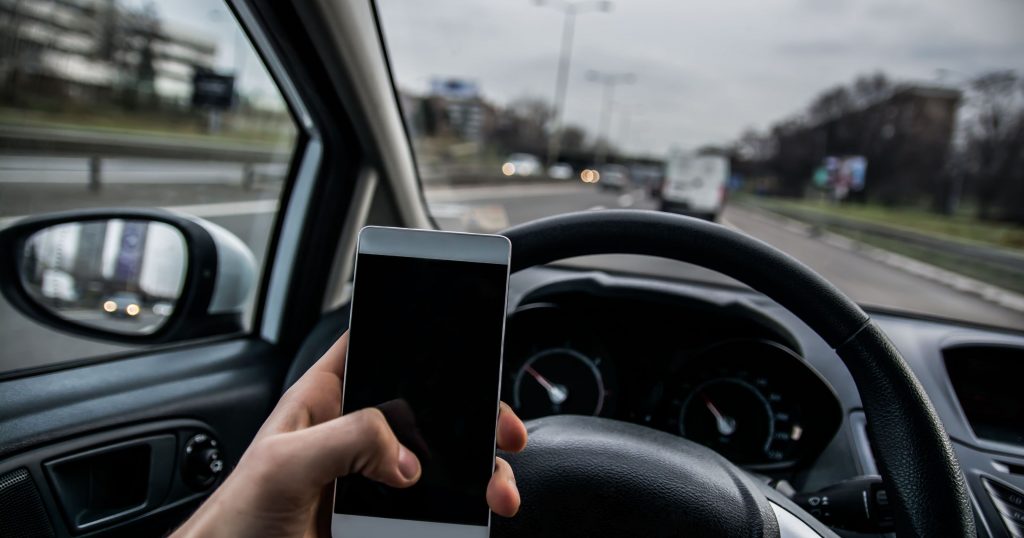
I have run out of ways to express my delight in the Texas Legislature’s decision in 2017 to outlaw the use of handheld devices while driving anywhere in this state.

Moreover, I also am glad that Gov. Greg Abbott signed the bill into law, rather than vetoing it, which his predecessor, Rick Perry, did foolishly, citing a ridiculous notion of “invasion of privacy.”

I also am delighted to see that Texas has posted signage on highways entering the state informing motorists that using a handheld device while driving is against the law. We spotted such a sign recently while returning to Texas along Interstate 20 after spending a night in Shreveport, La.

However, I am not totally happy about the outcome. The law is virtually unenforceable, whether the motorist is violating a municipal ordinance or a state law. You see, police cannot be everywhere at once!

My wife and I this every evening were walking along a street in Princeton, not far from our home. We noticed a driver speeding north along the street, exceeding the posted speed limit by a healthy margin. The driver was yapping on a cell phone; thus, she was breaking two laws simultaneously. For all I know she might have plastered to the gills or high as a kite to boot.

Whatever. My point is that these laws are intended to be enforced, but I don’t know how the cops can catch everyone doing it.

Then again, there’s another critical element. It well might be that the Legislature understood the difficulty in enforcing this law, but set up strict penalties for motorists who become distracted by these devices and, therefore, cause motor vehicle accidents.

That’s a reasonable alternative.

Daylight saving or standard time? Let’s decide

Texas lawmakers appear to be on the verge of giving Texans a fascinating election choice later this year.

It will be whether to scrap the twice-a-year switch between standard time and daylight saving time and keep our clocks fixed on the same time all year long.

I like the idea of giving us a chance to vote on this matter, even though I tend to think we vote on too many issues already in Texas.

For the record, I’ll state once again that switching back and forth is no big deal to me. I don’t mind the time change, even in the spring when we supposedly “lose” an hour of sleep because we push our clocks ahead an hour at the start of daylight saving time.

But since the Legislature is going to ask us to state a preference, I guess I should weigh in.

I would like to see us stay on daylight saving time. I prefer the extra hour at the end of the day, which is what a year-long daylight saving time setting would bring us.

But . . . that’s just me.

The Texas Tribune reports that the Legislature is preparing a two-part referendum. The first part asks whether a referendum on daylight saving time can occur; the Texas Constitution doesn’t allow for it now, so approving the first part of the ballot measure would legitimize the second part. That would be whether to follow a standard time or daylight saving time all year long.

I suppose you could presume that rejecting the first part of the ballot measure would be to reject the idea of tossing out the back/forth time change. State Rep. John Smithee, R-Amarillo, my former state legislator, sought to add a third element to the measure — keeping the time-change switch — but the amendment lost on a narrow 72-70 vote.

I do endorse the notion of putting this idea to a vote.

So, let’s settle it once and for all.

Then we cease the bitching about springing forward and falling back twice each year.

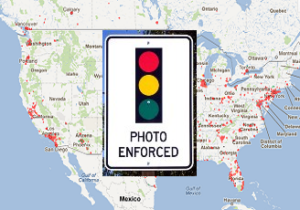
Red light cameras’ life is flickering away

Note: I submitted this brief essay for publication on KETR-FM’s website. I also want to share it here with readers of this blog. Be sure to check out https://www.ketr.org/ for more news and other good stuff from the public radio station affiliated with Texas A&M-Commerce.

***

The Texas Legislature is inching toward undoing what I consider to be one of the more worthwhile decisions it made in recent years.

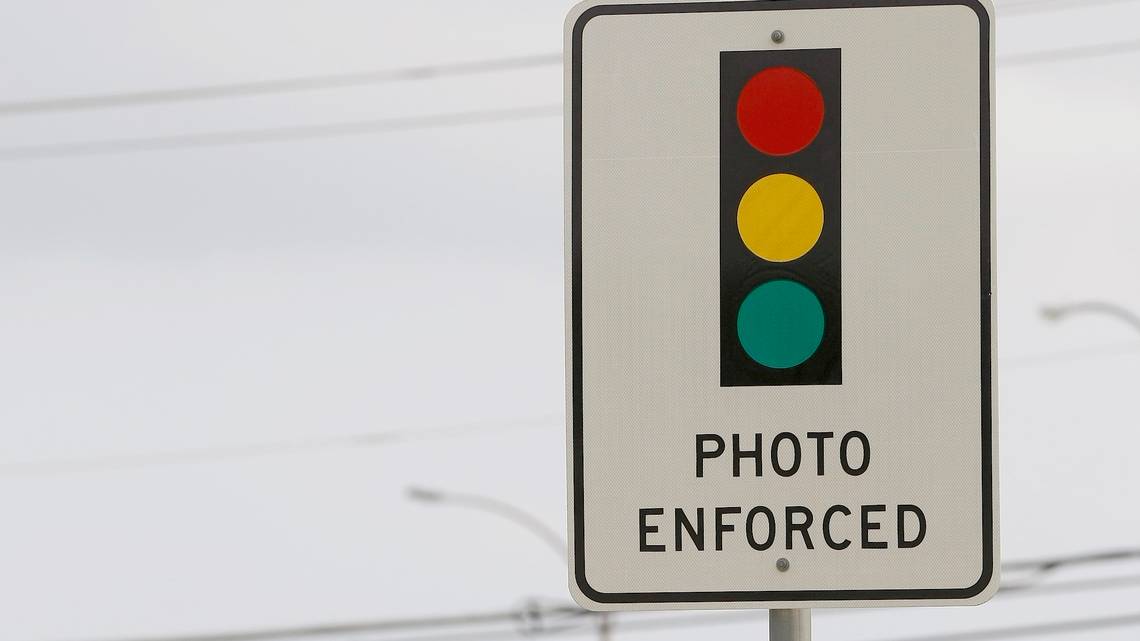
The House Transportation Committee has cleared House Bill 1631, which would ban cities from deploying electronic devices to catch lawbreakers who ignore traffic signals and run through red lights.

This is a big mistake, man!

I have been a big supporter of these devices since the Legislature empowered cities to use them to assist police officers in enforcing traffic laws. Yes, they have endured some controversy. Some cities – such as Lubbock – took the devices down when their governing councils faced criticism from constituents.

I’ll be candid: I consider such cowering an act of cowardice. Other cities, such as Amarillo, not only have stayed the course, but have increased the number of devices they deploy around their communities.

The Legislature appears headed toward the former course. Legislators are hearing too many gripes about the devices. To which I say . . . fiddlesticks!

Police cannot be everywhere at once. Cities that use these devices seek to curb instances of red-light running, a potentially hazardous act by those who defy a signal’s instruction to stop when the light turns red. Many of these lawbreakers too often just decide to peel out from a dead stop when the light is still red.

I was living in Amarillo when that city deployed the first set of red-light cameras. The traffic department identified about a half-dozen dangerous intersections. The result was that incidents of motorist misbehavior declined at those locations.

An earlier Legislature placed strict rules on how cities could spend the revenue they collect from violators. They had to use the money strictly for traffic improvements. Cities all across Texas have used those funds to upgrade signalization and shoring up lighting along dangerous streets and roads.

The gripes are worn out, tired and hackneyed. Motorists contend that the cameras deny them the right to “face their accuser.” Wrong! Cities allow motorists the opportunity to protest the fines levied when they break the law; if motorists can make the case that they were ticketed in error, the municipal judge can rescind the fine. What’s wrong with that process?

My all-time favorite complaint is that the devices are an “invasion of privacy.” Yes, some folks believe the cameras invade the “privacy” of individuals driving on public streets and putting others in potential danger when they ignore traffic signals’ order to stop – and to stay stopped until the lights turn green!

State Rep. Jonathan Strickland, a Bedford Republican, authored HB 1631, believing I guess that cities don’t deserve the right to take these specific measures designed to protect their residents. Of course, he would deny such a thing. That’s fine. It’s just that the Legislature is controlled by a Republican Party that used to believe in “local control” over issues affecting individual communities. I am left to wonder: What in the world happened to that worthwhile philosophy?

I wish there was a way to stop this effort. It appears lost to those of us who support this technology. Gov. Greg Abbott already is on board with HB 1631.

That is a damn shame . . . if you were to ask me.
Still wondering: Why not mandatory helmet law?

As my wife and I have motored across Texas and into Louisiana for the past few days we have witnessed a number of motorcyclists behaving (in my view) dangerously on our public highways.

They whip across lanes, weaving at high speeds through traffic.

What’s more, most of them are bare-headed. They aren’t wearing helmets.

And . . . it makes me lament that Texas decided back in 1995 to toss aside its mandatory helmet law in favor of allowing motorcyclists to blast their way along our highways with exposed noggins.

I know this is a hopeless notion as long as Republicans control the Texas Legislature, but I am going to express my wish that legislators one day might find it within them to reintroduce the helmet law.

At this moment, only 19 of our 50 states require motorcyclists to wear helmets; 28 states — including Texas — require some motorcycle riders to wear the protective gear. Those riders are children. Only three states — Iowa, Illinois and New Hampshire — have zero helmet requirements for motorcyclists and their passengers.

I might be overly pessimistic about the Texas Legislature’s potential for doing the right thing. The GOP-controlled Legislature did enact a law in 2017 that bans handheld cellphone use while driving motor vehicles. I still am amazed that the Legislature did pass such a law in 2011, only to have then-Gov. Rick Perry veto it, calling the law an infringement on personal liberty. It took a new Legislature and a new governor, Greg Abbott, to create that new law.

I wish the Legislature could find it within itself to do the same thing with motorcycle helmets. In 1995, when lawmakers dropped the law, they required licensed motorcyclists to be insured for at least $10,000. To which I said at the time “big . . . fu***** . . . deal.” Someone who suffers a traumatic head injury can burn through 10 grand before he or she even enters the ER.

I do know that helmets save lives. They also spare motorcyclists from debilitating head injuries that over time put a terrible strain on our state’s medical and social services.

While working as a journalist in the Golden Triangle in the early 1990s, an acquaintance from Orange County told me he hated the helmet law because he couldn’t “feel the wind” in his hair. I laughed in his face.

I know I’m spitting into the wind on this notion. That’s all right. I’ll keep spitting whenever the spirit moves me.

Not very ‘pro-life’ of this legislator

I am trouble grasping the logic of this proposal by a Texas legislator.

State Rep. Tony Tinderholt, a Republican, wants to criminalize abortion. He wants to charge every woman who terminates a pregnancy with homicide, or murder. He wants, therefore, to subject that woman to the death penalty, which Texas allows for those convicted of murder.

He is a “pro-life” legislator? I don’t get how that computes.

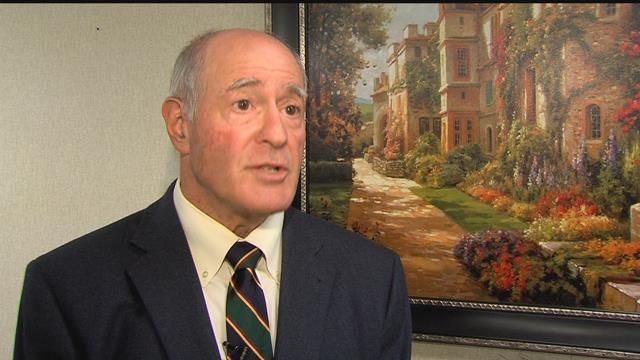
Enter a more reasonable GOP lawmaker, Rep. Jeff Leach of Plano (pictured), who says he won’t allow Tinderholt’s bill to the House of Representatives floor for a full vote among the state’s 150 state representatives.

Leach chairs the Texas House Committee on Judiciary and Civil Jurisprudence. Since announcing his plan to stop House Bill 896, Leach has received threats at his office. The Collin County Sheriff’s Department is investigating the source of those threats.

Yes, this issue is highly sensitive. It pushes hot buttons on folks they possibly didn’t know existed on their person.

As for Tinderholt’s idea of criminalizing a legal medical procedure — which the U.S. Supreme Court has ruled — it doesn’t sound very “pro-life” to kill someone who makes the most difficult decision she ever would make.

This debate over women’s right to choose whether to give birth needs to stay on a more sane track than the one proposed by Rep. Tinderholt.

Thank goodness there exist some sense of reason among Texas Republicans.

Just not caring about Daylight/Standard time

I guess I should care about this. Except that I don’t. Really, I don’t.

Some members of the Texas Legislature want the state to stop switching back and forth each year between Daylight Saving Time and Standard Time. They say the “spring forward” and “fall back” routine causes too much sleep deprivation at the front end, when we push our clocks forward an hour. We’re going to do it again Saturday night; we’ll awaken Sunday morning with one less hour of shut-eye to get our day started.

And, of course, many of us will bitch about it!

I just don’t see the significance of it all. I continue to recognize the motive behind enacting Daylight Saving Time in the first place. It was intended to help conserve energy by allowing us to not turn on our lights and, thus, burn electrical energy when we don’t need to do it.

As for the sleep deprivation, I learned long ago that however tired we might be on the first day of switching to Daylight time, we get over it quickly. We adjust. We human beings are adaptable creatures.

If we’re going to end the back-and-forth, though, I propose we stay on permanent Daylight Saving Time. I like having the sun in the sky a little longer at the end of the day.

Now . . . I am going to get back to the things that really matter, at least they do to me.

‘Right of privacy’ argument doesn’t work

I have made this point before, but it’s worth making again. A fellow who comments occasionally on this blog took note of how those who gripe about red-light cameras cite a phony infringement on their “right of privacy.”

He notes correctly that when motorists travel on public streets and are required to follow the law they surrender their “right of privacy.”

At issue is the future of red light cameras in cities across Texas. The Legislature is considering whether to pull back its authorization for cities to deploy the cameras to help deter motorists from running through red lights.

There is no such thing as a “right of privacy” when motorists put other motorists and pedestrians in peril when they break the law.

The cameras do have their critics. They say the timing of the light sequence from yellow to red can be unfair to motorists trying to sneak through under yellow.

Right of privacy, though, doesn’t cut it. I am reminded of the time then-Texas Gov. Rick Perry vetoed a bill that banned cell phone use while driving. He cited the legislation as an invasion of motorists’ right of privacy.

Gov. Perry’s thinking at the time was idiotic. The gripes now about red light cameras and the privacy issue are equally idiotic.

Red-light cameras about to go dark?

If the Texas Legislature forces cities to take down their red-light cameras — devices that aid local police departments in enforcing traffic laws — I fear we’re going to see an uptick in wrecks caused by reckless driving.

Sad times might lie ahead.

The Legislature is pondering whether to rescind the authority it granted cities a few years ago to deploy these devices at dangerous intersections. Local law enforcement and traffic officials were able to determine the most dangerous intersections in their cities; they deployed the cameras to take pictures of license plates on motor vehicles that ran through red lights. Cities then send citations to the registered owners of the vehicles, who then are told to pay fines.

I believe the cameras have deterred over time the rash of red-light violations in cities throughout the state.

Some folks keep bitching about them, though. I guess they’ve caught the attention of legislators and the governor, Greg Abbott, who’s now on board with the movement to take down the cameras.

That would be a shame.

Amarillo was one of the Texas cities to make use of the technology. Yes, it brought out the gripers. They complained to the city that they didn’t like being “busted” by machines; they considered the cameras to be unfair.

I laughed when I heard such nonsense. I also like harkening back to a retort offered a few years ago by a member of the City Council.

Then-Amarillo City Councilwoman Ellen Green said it succinctly and cogently. “If you don’t want to pay the fine,” she said during a council meeting, “then don’t run the red lights.”

Cities always can use the technological help the cameras provide. I hope the Legislature rethinks its move toward taking them down.

My hope doesn’t quite match my fear of what the Legislature is going to do.

Off to the races with public radio station KETR-FM

Well, we have a launch of a new project involving, um . . .  me.

KETR-FM has posted my first essay for its website. You can read it here.

I chose to comment on the Texas teacher pay increase that’s now under consideration in the Texas Legislature. The Senate is poised to approve a $5,000 annual raise for public school teachers; senators will send it to the House. If the House approves it, the issue goes to Gov. Greg Abbott’s desk for his expected signature.

I am thrilled to be part of this new endeavor. My association now is with Texas A&M University/Commerce and its radio station, which is affiliated with National Public Radio.

It’s a whole new gig for me. I want to give thanks to KETR news director Mark Haslett for giving me a chance to offer some perspective through the radio station.

I feel as though I’ve been given a fresh chance to pursue an aspect of a craft that gave me many years of enjoyment.

Reps. Price, Smithee turn their backs on ‘local control’

I know these two men well and have developed a lot of professional respect for them, but Texas state Reps. Four Price and John Smithee of Amarillo have disappointed me.

The two Republican lawmakers have put their names on a bill that would allow the Legislature to disallow the deployment of red-light cameras. Cities that deem there is a need to use the equipment to stop motorists from breaking the law no longer would be allowed to use the cameras.

Amarillo — which Price and Smithee represent — is one of those Texas cities that has used the cameras to assist in the enforcement of traffic laws.

Gov. Greg Abbott has gone on record saying he wants the cameras pulled down. His statement suggests he will sign legislation that forbids cities from using the cameras.

Why does this bother me? Well, I support the city’s effort to crack down on red-light violations at signaled intersections. I say that as someone who has been caught running through an intersection, seeking to sneak through when the light had turned yellow; I wasn’t quick enough to avoid getting caught.

Moreover, Republicans have traditionally been the political party that espouses local control. They have been champions of cities operating under their charter, rather than allowing “big brother” state government to impose policies that determine issues that are best left to the cities’ discretion.

I guess that’s no longer the case.

Indeed, the Legislature’s decision just a few years ago to allow cities to use the cameras came after extensive discussion and debate. I believe the cameras have helped deter motorists from acting in a manner that endangers other motorists and pedestrians.

I wish Reps. Price and Smithee had held true to their view that local control is the preferred method of delivering good government.