Tag Archives: AGN Media

AMA goes ‘flaps up’ to PHX

I have lived in Amarillo for more than 23 years and I do not remember the kind of hype that preceded a takeoff this morning from Rick Husband-Amarillo International Airport.

An American Airlines jet took off today for Phoenix Sky Harbor International Airport. It got lots of media coverage. It was the first non-stop flight between AMA and PHX.

I get that it’s a big deal. I also understand how Amarillo’s airport has become a vital economic development recruitment tool. It’s a small terminal compared to the other locations it serves with non-stop flights: Sky Harbor, Dallas Love Field, George Bush (Houston) Intercontinental and Dallas-Fort Worth and Denver International.

What’s important to understand, though, is that most of those terminals (Love Field being the exception) connect AMA with virtually any destination in the world.

The Amarillo-Phoenix connection aims to boost leisure as well as business travel to the desert Southwest. As the Amarillo Globe-News story noted, airport officials couldn’t state whether the maiden flight to Sky Harbor was full.

According to the Globe-News: Amarillo Mayor Ginger Nelson said, “I’m proud when people land here at our airport. It reflects us as a community; it reflects our creativity; it reflects our history and our culture. So I’m very, very proud of our airport.”

The city has invested a lot in its air terminal. I, too, happen to be proud of the air service we get in Amarillo. It has just improved a good bit with a heavily promoted service to a new community.

I am going to remain confident that this new air service will be worth the hype that preceded its first flight out west.

Downtown health: key to cities’ well-being

Gary Jennings returned to Amarillo years ago from the Texas Gulf Coast and then plunged into a project he knew would consume much of his time and energy.

It has been worth all of it. And then some.

He has turned a one-time dilapidated structure on the edges of downtown Amarillo into a showpiece. He owns the Firestone Building at the corner of 10th Avenue and Tyler Street. It used to be a tire shop. It has been turned into a “niche” complex of apartments, with retail space on the ground floor.

My point in bringing Jennings up with this blog post is to relay something he told the Rotary Club of Amarillo this past week. He said that a city’s health depends largely — if not exclusively — on the health of its downtown district. He ticked off a few successful American cities and asked, rhetorically, what they had in common. The common denominator was a vibrant downtown district.

To which I wanted to shout from my seat in the crowd, “Amen, brother!” I held my tongue. Of course.

I have enjoyed watching from the peanut gallery over the past five-plus years as Amarillo’s march toward the future has progressed nicely, despite a hiccup or two along the way. I had a more-or-less front-row seat at the Amarillo Globe-News until August 2012. Then I quit the newspaper and have been viewing this progress since then from the cheap seats.

The ballpark construction is under way; an Amarillo Economic Development Corporation official told the Rotary Club that it’s “a week ahead of schedule.” I won’t quibble over how he knows such a thing this early in the project that is supposed to conclude in time for baseball in April 2019.

So much has happened downtown. It gives me hope that Amarillo is moving forward at a steady — if not accelerating — pace toward a future few of us saw more than two decades ago. I arrived here in early 1995 and, so help me, I saw few tangible signs of forward movement in the city’s downtown district.

That has changed. The hustle, bustle and sizzle along Polk Street — the one-time “main drag” — provides plenty of evidence of forward movement.

Jennings’ list of forward-thinking American communities didn’t include one that I know quite well. It’s my hometown of Portland, Ore., where I believe a once-young and innovative mayor — the since-disgraced Neil Goldschmidt — set the gold standard for urban planning.

Goldschmidt disappeared after being caught up in a hideous sex scandal a few years back. In his day, however, when he was a 30-something Portland mayor, he set his sights on redeveloping a once-moribund downtown district.

Goldschmidt decided in the early 1970s to veto a freeway project through the southeast quadrant of Portland. He said the city would instead direct its resources — meaning public money — into developing a viable mass transit system. It would create a bus system that served the downtown district. His goal? To turn downtown Portland into a destination.

Goldschmidt’s strategy worked. My hometown’s central business district thrives in a way I couldn’t possibly imagine when I was growing up there.

I cite this example as proof of what Gary Jennings said this past week. He is correct in asserting that a city’s health depends heavily on the health of its downtown district.

We don’t yet know where Amarillo, Texas is heading after the last project is finished … whenever that occurs. I remain confident in the extreme that it will be in a different and far better place than when the work began.
What? Barfield is coming back to life? Maybe?

Well, shut my mouth and call me … whatever you want.

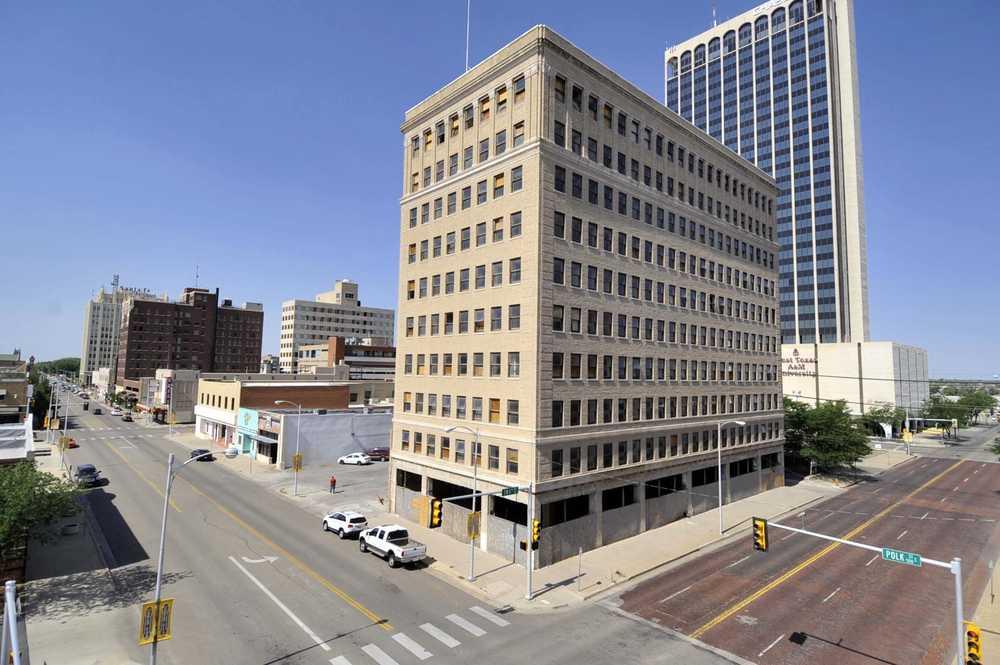
I had written not long ago about my doubts over the future of the long-abandoned Barfield Building in downtown Amarillo, Texas. It stands at the corner of Sixth Avenue and Polk Street. It’s a rotting hulk of its former glory.

https://highplainsblogger.com/?s=Barfield+Building

This morning I awoke to read a story in the Amarillo Globe-News that declares that the Barfield Building is en route to a revival. It will become a luxury hotel, developed by the Marriott Corporation.

Then came the qualifier. “Maybe,” according to the AGN. Maybe it will happen. Maybe … it won’t.

I’m going to pull for the “maybe it will.”

Plans call for the Barfield to morph into a Marriott Autograph Collection Hotel. It’s an upscale concept. As the Globe-News reports: “We want to bring the Barfield back to life and tell its story,” said Mark Brooks, of Brooks Hospitality Consulting. “We want to create something that speaks to Amarilloans. Hopefully, it’s pretty exciting.”

Brooks told the AGN’s Jeff Farris that the interior demolition at the Barfield is nearly done. Next up will be acquiring building permits from the city.

The Barfield has been down similar roads before. It’s been through several ownership changes. There have been reports of progress made to breathe new life into the building. They have been premature. Nothing has occurred there. As the AGN noted, the city came within a whisker of condemning the building.

This fellow Brooks, though, now is delivering some potentially good news about the Barfield. The category of hotel suggests it will be unique. Marriott says that none of its Autograph Collection structures are duplicates of others.

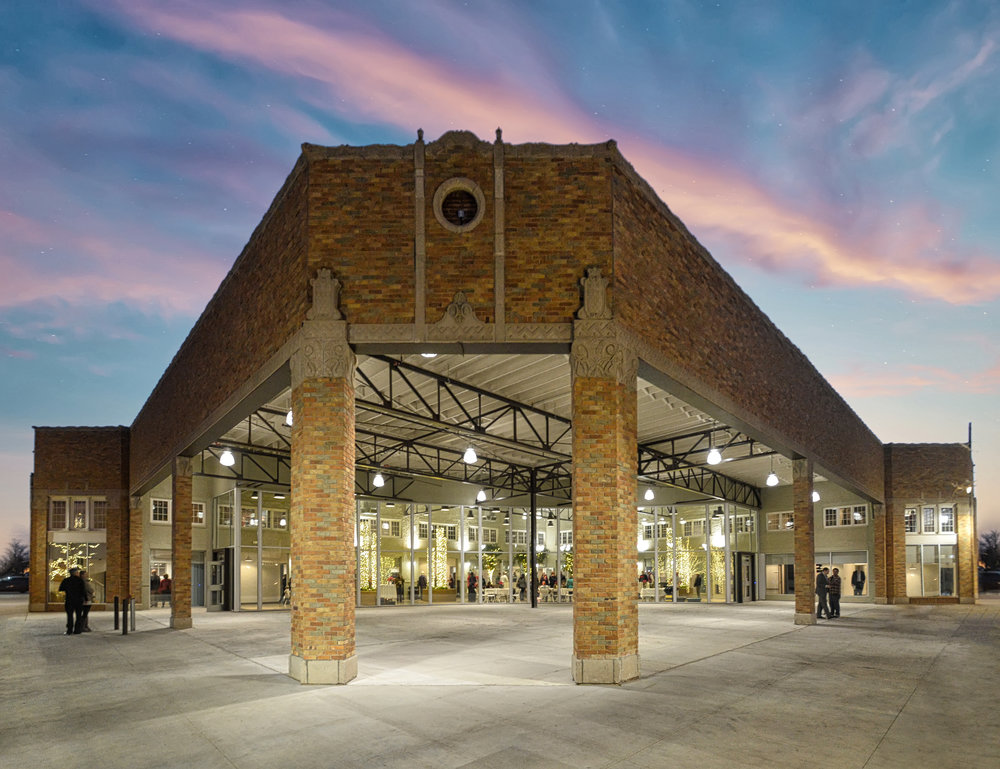
So, with this news, I am anxious to see if downtown Amarillo — which already has seen tremendous change in the past decade — is about to take another huge step forward. The multipurpose event venue is under construction. The Embassy Suites hotel has opened across the street from the Civic Center; Marriott opened another hotel prior to that at the historic Fisk Building. Construction crews are hard at work on new eateries and other business establishments along Polk Street. West Texas A&M University is set to open its downtown Amarillo campus.

And now? The Barfield Building? Is it possibly coming back to life? Might there be signs of activity in that dilapidated structure?

Maybe.

Unconstitutional? Umm. Nope!

An Amarillo resident has joined an amen chorus being sung by those who suggest that red-light cameras, which the city has deployed to deter those who run through stop lights, is “unconstitutional.”

Why is that? Because it violates the Sixth Amendment that guarantees that those who are accused of wrongdoing have the right to confront their accuser.

John Faulkner wrote this, in part, to the Amarillo Globe-News in a letter to the editor: A red-light camera photograph is hearsay, and is therefore inadmissible under the Sixth Amendment. It is hearsay because you cannot cross examine the photograph or the camera. The Sixth Amendment gives defendants the right to confront their accuser. 

Sigh. Actually, it is not “hearsay.” This equipment provides physical evidence that someone has run through a red light when he or she is supposed to obey its “instruction” to stop and not proceed until the light turns green.

Furthermore, the city grants accused red-light runners the opportunity to appeal the fine levied against the alleged lawbreaker. Thus, a defendant is granted the right to face his or her accuser.

The constitutionality argument is funny, except that I ain’t laughing.

The Texas Legislature granted cities the authority to install these cameras. It attached some provisions on it, such as requiring cities to devote revenue collected strictly to traffic improvements. The attorney general’s office is full of bright legal minds who can determine the constitutionality of laws the Legislature enacts. City Hall also employs a legal team that ensures its ordinances pass constitutional muster.

So, let’s toss aside this silly argument.

The red-light cameras are doing what they are intended to do. They are deterring some motorists from misbehaving while they travel along our busy streets. Not all of them, for sure.

I remain a strong supporter of this technology. It works.

No shortage of commentary grist

I can peg the day when it all began.

It was a Tuesday. Sept. 11, 2001. A colleague popped his head into my office that morning and asked, “Did you hear? Someone flew a plane into the World Trade Centers.” I asked, “Was the weather bad?” He said no; the weather was beautiful. “What kind of moron would do that?” I asked. I turned on the TV — and then watched the second jetliner crash into the other WTC tower.

The horror began.

It hasn’t let up. That was the day that as an opinion journalist — an editor and an editorial writer — that I’ve never had to struggle to find topics on which to comment.

More than one person has asked me about how I am able to write so frequently on varying subjects. I don’t really have a good answer. The only thing I can trace it to occurred on 9/11.

That singular event granted editorial writers such as yours truly with a sort of professional “dream scenario.”

It goes like this: My task for many years after that horrifying event was to decide which subjects I could set aside for another day. The opposite of that option is struggling to find subjects to write about to fill a gaping space on the editorial page.

Those opportunities seem — mysteriously, I should add — to have mushroomed into many other facets of commentary. In the weeks and immediately after 9/11, as the United States prepared to retaliate and as we searched our national soul for what happened on that terrible day, we were consumed by the act and our national response to it.

I stayed at my daily print journalism post for another 11 years after that day. Then my career at the Amarillo Globe-News ended. I have continued my passion for commentary damn near daily since I walked away from a rewarding and moderately successful career.

And in this strange and unexplainable way, I have maintained the pace that was set on 9/11. A day does not arrive that fails to produce something on which to comment. Yes, this blog has spent a lot of energy commenting on matters relating to the presidency of Donald Trump. I am able to look elsewhere, too.

Such as right now, commenting on the environment that produces such a rich harvest of topics on which to pontificate.

It’s great to be alive in this day and time! Yes?

Decision made on name of blog

I have made a command decision I want to share with you.

Some time back I mused out loud on this blog that I might change its name when we relocated to North Texas. The name “High Plains Blogger” has served two purposes. One was to salute our location on the High Plains of Texas; the other was to salute one of my favorite actors, Clint Eastwood, who starred in “High Plains Drifter” a few decades ago.

Well, our move is fast approaching and I’ve decided — drum roll! — to keep the name of this blog.

We intend to remain semi-mobile even after we relocate to North Texas. We have family matters to consider that will bring us back to Amarillo periodically. Thus, I won’t sever my ties to this city we’ve called “home” for 23 years.

I doubt I’ll be able to continue to comment with as much regularity on local matters as I’ve been able to do. My local-content musings have diminished considerably since I quit my daily print journalism job at the Amarillo Globe-News on Aug. 31, 2012.

I’ve remained somewhat connected through various media about goings-on in Amarillo and the Panhandle, enabling me to offer commentary on issues as they’ve presented themselves.

I won’t be disconnected completely even after we depart for points southeast of the Panhandle. The blog, though, is likely to concentrate more on state, national and international issues — along with the occasional stories about our beloved puppy, Toby, and musings about the retired life with which my wife and I have become quite comfortable.

Those retirement segments hopefully will include some travel tales as we embark on journeys across this continent of ours.

High Plains Blogger has developed an identity. I like being associated with it.

Now, I could change my mind and come up with a new name. If I do, you’ll be the first to know.

Meanwhile, thanks for reading and sharing. I am having the time of my life.

Happy Trails, Part 78

The word is getting out. My wife and I — along with Toby the Puppy — are leaving Amarillo, Texas.

I get asked all the time: When are you moving? My answer: I don’t know, but we’re a lot closer to a time line than we were a month ago.

I also get asked: What are you going to miss about Amarillo? Me: Many things.

I’ve told you already about my first impression of Amarillo, which was the bigness, the spaciousness, how one can see forever. The sky is as big as anywhere on Earth, of that I am certain. I will miss the big sky.

I also am going to miss — and this will seem strange — the political climate of this region.

We live in the heart of Republican Country. I lean strongly in the other direction. I mentioned once in an earlier blog post that I’ve never voted for a Republican for president, dating back to the 1972 election, when I cast my first vote.

When we moved to the Panhandle in early 1995, I knew about the politics of the region. I knew about how the John Birch Society was so prevalent in local politics and how Birchers helped inform many folks’ world view.

To be honest, that didn’t dissuade me from coming here. I was able to subvert my own more progressive leanings to write editorials for the newspaper, which had a long tradition of adhering to a conservative editorial policy.

As my wife and I settled in, our list of friends and acquaintances grew. Many of them voted in accordance with the community’s prevailing political leaning. I never let those leanings interfere with our personal relationships.

I understood from the get-go that I was swimming against the community “tide.” I managed to speak the company line when I wrote for the Amarillo Globe-News, which happened to comport with the community’s conservative tilt.

Over time, I developed a certain level of comfort with my surroundings. I knew what to expect of our many friends and acquaintances. I learned to give as much as I got. The needling was usually good-natured.

But … as they say, times and circumstances change. Our circumstance is about to change as we relocate to another community. I am absolutely certain we’ll find our comfort level there, just as we did on the High Plains of Texas.

Let ’em allow guns anywhere

This editorial cartoon appeared in the Minneapolis Star-Tribune and it speaks to an interesting irony about those who believe “more guns will keep us safe.”

The Conservative Political Action Conference, the Republican National Convention and the White House all prohibit guns. That’s fine with me.

The cartoon, though, does remind me of something a former boss of mine once asked a prominent Republican Texas senator before the Texas Legislature enacted a law allowing Texans to carry concealed handguns.

The 1995 Legislature approved a concealed-carry bill, which Gov. George W. Bush signed into law. The Amarillo Globe-News, where I worked, opposed the legislation and we editorialized against it. The publisher of the paper at the time was Garet von Netzer, as conservative a fellow as anyone I’ve ever known. He didn’t like the concealed-carry bill.

I’ll never forget the time von Netzer asked the late Sen. Teel Bivins, R-Amarillo, this question: “If you think it’s all right for people to carry guns under their jackets, why don’t you allow them to carry those guns onto the floor of the Legislature?” The Legislature chose then to ban guns inside the State Capitol Building.

I don’t recall Sen. Bivins’s answer.

Von Netzer’s question then seems totally appropriate today.

Candidates don’t deserve free ‘ad space’

I get that the Amarillo Globe-News has endorsed state Sen. Kel Seliger’s bid for re-election to the Texas Senate. That’s their call and, frankly, it was the wise decision.

Now, though, the newspaper has crossed a line it shouldn’t have crossed. One of Seliger’s Republican primary opponents, Amarillo businessman Victor Leal, has been allowed to write a letter to the editor excoriating Seliger’s voting record. The newspaper published it!

Leal’s letter makes no mention of the editorial. It doesn’t challenge the G-N editorial board rationale for its decision to back Seliger.

Read Leal’s letter here.

Instead, it challenges Seliger’s statements touting his voting record on a variety of issues.

Why does this set a slippery-slope precedent? Because political candidates should have to pay for their political advertisements. Newspapers and other media offer candidates space and air time to espouse their own real or perceived virtues, but they don’t usually give it to them for free.

I worked for a couple of newspapers that didn’t even allow people to speak on behalf of candidates during election season for that very reason. The idea was to reserve the free space for issues and discussions that steered away from political campaigns. As a former boss of mine used to say, “We aren’t going to give away political ad space with letters to the editor that endorse a candidate’s virtues.”

I moved away from that policy years later. The candidates themselves, though, did not get that space to speak for free to speak on behalf of themselves or against their foes. If they wanted the space, they had to pay for it.

We now can await Seliger’s response to Leal and quite possibly Mike Canon — the third GOP candidate in this contest — will get to boast about his own virtues.

Sheesh!

Happy Trails, Part 75

The time has arrived for me to start thinking about what I am going to miss about the Texas Panhandle.

Our retirement journey this week took a big step forward to the next place.

This place, though, has been good to my wife and me. We’ve called it home for 23 years … plus a couple of months. As we prepare to move on down the road, I am filled with many memories.

One of them slapped me in the face the first time I ever laid eyes on this region. It occurred in late 1994. I flew from Beaumont to Amarillo to interview for a job at the Amarillo Globe-News, which had a post to fill: editorial page editor of both papers, the Daily News and the Globe-Times.

I landed at Amarillo International Airport, walked into the terminal and met the man I hoped to succeed. Tom Thompson was about to become press secretary for the newly elected congressman from the Panhandle, Republican Mac Thornberry.

We walked out to the parking lot and I noticed right away: Man, this place looks so … big!

I could not get over how far one can see here. We walked to Thompson’s car and even riding from the airport toward downtown I couldn’t take my eyes off the panorama.

I don’t recall my precise words to Thompson as we drove into the city, but I think it was something like, “I cannot believe how big and spread out everything looks.”

If you’ve been the Golden Triangle, or seen the Piney Woods of Deep East Texas, you get what I meant. The pine trees and the dogwoods are lush. The highways that course through the woods, however, do tend leave one with a bit of claustrophobia.

Not here, man! You see the High Plains of Texas for the first time and you feel, well, sort of liberated.

Yes, I will miss that feeling here. I will miss the big, beautiful sky that I’ve said before is God’s payback to the region for neglecting to grant this part of the world with purple mountain majesty.

I’m like to have more to say in the days and weeks ahead about the many friends my wife and I have made here. I’ll offer a word or two about the professional fulfillment I received while working for nearly 18 years at the local newspaper. I might even say something about how I managed to navigate my way through a community with a significantly different world view than the one I carry with me.

Today, my mind takes me back to that first glimpse of the wide open spaces this region provides. One’s first impression of a place often is the most compelling. So it was when I first cast my gaze on the place we would call “home.”