Tag Archives: Texas Legislature

Good riddance to this legislative … blowhard

I want to be among those who say so long, farewell and good riddance to a Texas legislative blowhard.

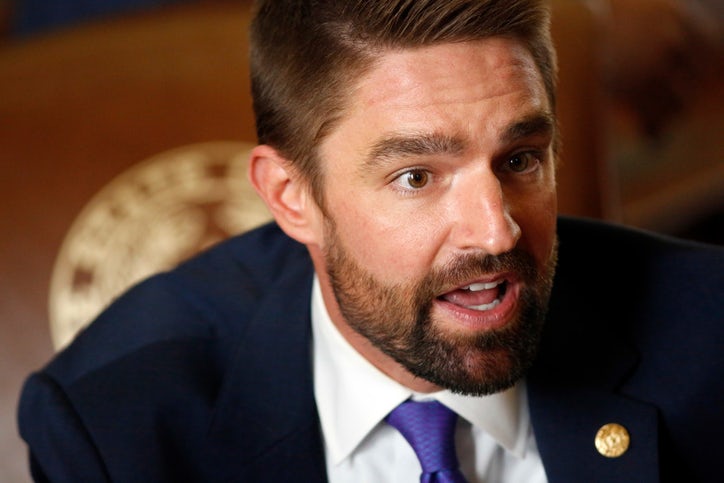
State Rep. Jonathan Stickland, a onetime member of the Texas Freedom Caucus, has announced he won’t seek re-election in 2020.

The Republican from Bedford distinguished himself mainly through his fervent debates on the floor of the Texas House of Representatives. He got little legislation enacted into law.

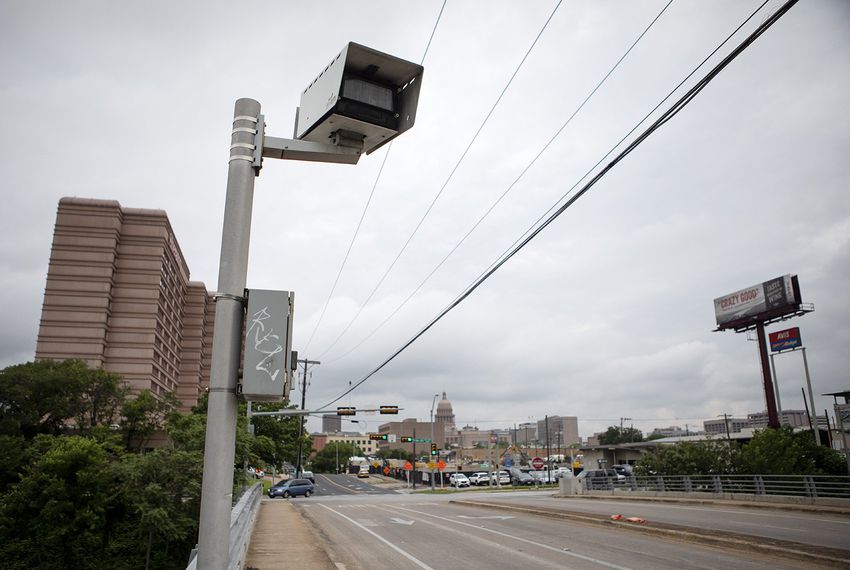
Although he did finally score something of a win when the Legislature approved — and Gov. Greg Abbott signed into law — a measure that bans cities from using red-light cameras to help fight lawbreakers who run through street signals that order them to come to a complete and full stop.

Nice going, pal.

He quit the Freedom Caucus — a group aligned with the TEA party faction of the GOP — to concentrate on “grassroots issues.”

Well, now he is soon to be gone from the Legislature. He represents a district on the other end of the Metroplex. Still, his votes matter to all of us, given that state laws cover everyone who lives in Texas.

I will not miss this man’s fiery objection to normal rules of order in the Texas House. Indeed, he managed to anger many within his party — and damn near lost to a Democratic challenger in 2018.

So, maybe he read something into those election results and decided to pack it in.

See ya, dude.

Texas AG waits and waits and waits … to stand trial

This just isn’t normal.

The state’s top law enforcement official continues to function with a dark cloud hanging directly over him, but there’s no apparent resolution in sight on how that cloud will disappear.

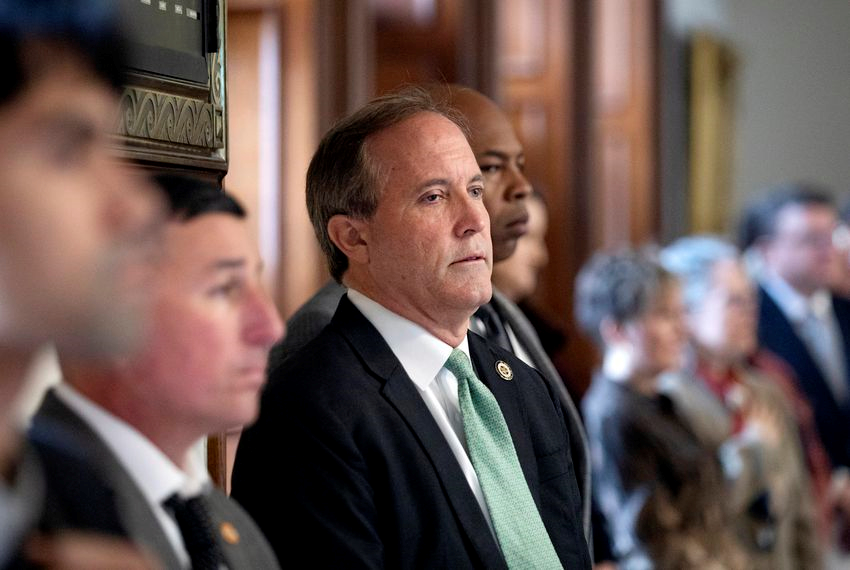
Texas Attorney General Ken Paxton has been indicted for securities fraud. He was elected in 2014 with that indictment hanging over him. Then he won re-election — albeit narrowly — in 2018 with the same cloud.

There have been venue change rulings and then delay upon delay.

Paxton got indicted by a grand jury in Collin County — which Paxton used to represent in the Texas Legislature — on felony counts of security fraud. Grand jurors accused him of failing to register with the state while receiving payments in return for soliciting clients for a North Texas investment firm.

Paxton also has received complaints from the Texas Securities Board, which reprimanded him for soliciting clients without being properly registered.

This is ridiculous.

The Texas Tribune has published a fascinating timeline of Paxton’s legal difficulties. Read it here.

I am left to doubt damn near everything that this guy says in his capacity as Texas AG. Sure, he’s entitled to an innocence presumption. However, a grand jury indictment doesn’t just happen because grand jurors are intent, to borrow a phrase, on “indicting a ham sandwich.”

Now the principals are caught up in a side issue involving prosecutors’ pay. More delays, foot-dragging and whatever.

Justice isn’t being delivered on this matter. The state’s attorney general needs to stand trial and there needs to be a resolution of the serious charges that have been brought against him.

Panhandle no longer is a Texas ‘step-child’

There once was a Texas Panhandle state representative who semi-seriously thought the Panhandle should separate itself from the rest of the state because, he groused, state government ignores the region.

That state rep was David Swinford, a Dumas Republican first elected to office in 1990. I asked him about that notion when I first met him in 1995 and he didn’t exactly deny it.

Well, Swinford has retired from the Legislature. And to its credit, the legislative body has restored faith in many in the Panhandle. How? By appropriating enough money — $17 million — to build a school of veterinary medicine in Amarillo.

This is great news for the region. A lot of folks are taking credit for ensuring the Legislature made this event a reality.

The Texas Tech University System is going to build the vet school, the second one in Texas. The first vet school is run by the Texas A&M University System. Aggieland opposed Tech’s initiative. Tech wasn’t going to be denied. It lined up plenty of political backing in the Panhandle and the South Plains.

Amarillo Matters, a political action committee formed a couple of years ago, is one organization that is taking credit for pushing the Legislature to act. Amarillo Matters said this on its website:

“Not only does the budget include startup funding for the vet school, but it also includes a directive for Texas Tech to move forward developing the school,” Amarillo Matters President Jason Herrick said. “This is great news for Amarillo, the Texas Panhandle and South Plains, and our state as a whole.” The school will help meet the growing need for large animal and rural veterinarians across the state. It will also increase the opportunities for Texas students to further their education without leaving the state.

“Legislative approval of the Texas Tech veterinary school is a watershed event for West Texas, the Texas Panhandle, and all of Texas,” former Texas Tech University System Chancellor Bob Duncan said. “This culminates years of hard work by literally hundreds of individuals who recognized the unmet demand for rural and large animal veterinarians throughout our state,” Duncan added.

Read the rest of Amarillo Matters’ post here.

Here’s my essential point: State government has not ignored the Panhandle. Yet one hears the occasional gripe from those who think it still does. Let’s lose the attitude, my former Panhandle neighbors. The Panhandle has plenty of legislative clout and it used it effectively for the benefit of the delegation’s constituents.

I also doubt that my friend David Swinford is among the soreheads.

Vet school set to become a reality for the Panhandle

I want to offer some hand claps to Amarillo and the Texas Panhandle for a signature they have obtained from Gov. Greg Abbott.

The governor has signed legislation that grants state money to build a school of veterinary medicine in Amarillo. It will be the second such institution in Texas. It will be operated by Texas Tech University and it will be located wholly in Amarillo, which lobbied furiously for the funds to build this much-needed project.

I had the pleasure of visiting with former Texas Tech Chancellor Bob Duncan not long before he got the bum’s rush by the Tech board of regents. Duncan came to Amarillo to make the case for the vet school and to tell the community that the state needed the second such program. Texas A&M University operates the long-standing school of veterinary medicine and had resisted Tech’s efforts to gain legislative approval for the new school.

This is a big deal, man! I am delighted that the region’s legislative delegation — state Sen. Kel Seliger and state Reps. John Smithee and Four Price, all Amarillo Republicans — flexed its collective muscle to ensure this legislative victory.

It also is heartening that Texas Tech, despite Duncan’s ouster as chancellor, managed to maintain its own momentum with a new chancellor, Tedd Mitchell, at the helm.

The Amarillo campus will enable Panhandle veterinary students to stay closer to home to get their education. One can hope, too, that they will remain at home to pursue their careers as doctors of veterinary medicine.

I had my share of anxious moments while living in the Panhandle and even after moving away. But then Amarillo’s economic development gurus lined up behind the project; so did the City Council; civic and business leaders ponied up serious money to help lighten the public burden.

I understand the vet school will open for class in a couple of years. Students will receive a first-class education that will pave the way for first-class careers.

It is nice to see the Texas Panhandle, which occasionally gets the short shrift from those in power way down yonder in Austin, score a major victory.

Red-lights cameras can stay … at least for a while

Texas Gov. Greg Abbott signed a bill into law that I wish he hadn’t signed. It was a bill that disallows cities from deploying red-light cameras to aid in enforcing traffic safety laws.

Ah, but here’s an interesting catch: An amendment to the bill approved by the Legislature allows cities to keep the cameras operating until their current vendor contracts expire. That means that while cities can terminate contracts for cause, they also can keep them operating for the length of the contract.

One city that has the cameras in place is Amarillo. I strongly supported Amarillo’s decision to use the devices to deter motorists from running red lights. I also strongly support the city’s apparent decision to stay the course until its contract with the vendor runs out.

Amarillo’s contract with American Traffic Solutions expires in September 2022. So, for more than three more years the city will be able to rely on the cameras to be on guard against lawbreakers when the police are looking the other way.

Unlike some cities knuckled under to some critics of the devices, Amarillo recently expanded the deployment locations, believing it had identified troublesome intersections; it did remove the cameras at some other intersections as well.

So, it’s a good-news, bad-news sort of thing. Some cities will get to keep the devices on duty for the length of their contracts; that’s the good news.

The bad news is that the contracts will expire eventually.

Then what? Will these Texas communities’ motorists and pedestrians be exposed to those who just don’t bother to follow the instructions to stop when the street signals turn red?

Let the kids’ lemonade flow!

Texas Gov. Greg Abbott has taken up the cudgel for the state’s budding entrepreneurs.

Abbott signed a bill that makes it illegal for cities and homeowners associations to force children to shut down their lemonade stands.

Yes, I know I have been tough on the governor and the Legislature for snatching local-control issues out of locals’ hands. This one, though, makes me smile.

State Rep. Matt Krause, R-Fort Worth, authored the bill that prohibits the closure from cities and local neighborhood groups. Kids like to sell non-alcoholic drinks to raise money for all manner of causes: field trips, gifts for Mom and Dad, or just plain vacation money.

As the Texas Tribune reports, support for the legislation grew after two East Texas siblings were forced in 2015 to shut down a lemonade stand they had set up to raise money for a Father’s Day gift.

The injustice of it all! I’m tellin’ ya, those youngsters needed the strong arm of the state. Well, those who will come along to raise money for their own parents will have the protection of state law.

The warning now has been sent to city halls and neighborhood association busy-bodies: Leave the kids alone! In fact, you need to buy a glass of the cool drink yourselves to help the up-and-coming business tycoons meet their financial goals.

It’s now law: Cities cannot use technology to deter lawbreakers

Texas has taken a step back to where it was until the Legislature decided to allow cities to use technology to assist police in deterring those who break the law.

Count me as one Texan who’s disappointed in this decision.

Gov. Greg Abbott has signed legislation that now prohibits cities from deploying red-light cameras to catch those who disobey signals’ directions to stop. Abbott listened to the complainers who said the cameras are — and this just kills me — unconstitutional, that they disallow motorists busted by the devices to “confront their accuser.”

The owners of the vehicles that are busted can appeal the fines levied by municipal courts, which gives them the chance to confront the government.

Princeton, where I live, does not use the devices. Neither do neighboring cities Allen and McKinney. Denton, which is about 30 miles west on U.S. 380, uses the devices.

The Legislature did allow for cities to keep the cameras operating for the length of their existing contract with the vendors that supply them. After that, they come down!

Cities and towns long have been thought to be the best judge of their own needs. Many cities in Texas have deemed that they need help from these devices to help police in enforcing traffic laws. Why not let the cities make that call? Why not cede “local control” to the cities?

The Legislature doesn’t see it that way. Neither does Gov. Abbott.

I believe they have made a mistake.

This conservative stands on principle … how about that?

Jeff Leach calls himself a true-blue political conservative, an avid pro-life politician who opposes abortion fervently.

The Plano, Texas, state representative, though, does see the wall that separates conviction from political fanaticism.

Such is the case when he withdrew his support for a piece of legislation that was considered in the 2017 Texas Legislature. Leach co-authored a bill two years ago that would have made abortion a crime, it would have made women who obtained them criminals and would have subjected them potentially to the death penalty for terminating a pregnancy.

He pulled his support for the bill in the just-concluded 2019 Legislature. As he told the Dallas Morning News:

“Very candidly, when I signed onto that bill … I did not understand the criminal implications on the woman and the possibility of that woman being convicted of homicide and subjecting her to the death penalty … I think it’s the wrong direction for the pro-life movement in Texas to be criminalizing women and I decided very strongly not to support it this session. And I’m pro-life through and through and will not apologize for that, but this is the wrong direction for the pro-life movement.”

Well. How about that?

The Morning News asked Leach this question: What would you say to purists or idealists who might call that kind of flexibility cowardice instead of compromise?

“It’s not cowardice or compromise, it’s conviction. I am a conservative through and through … My values are deeply rooted. It’s who I am and political strategy and legislation changes, but my core convictions, my core values do not.”

Read the DMN interview here.

I believe Rep. Leach represents one of the struggles occurring within the Republican Party and the conservative movement over this abortion matter.

Several states have enacted strict laws banning abortion. Some of them have criminalized the act, subjecting women who have to make the most difficult decision imaginable to prosecution. And, yes, the death penalty is in play in some of those instances.

Does a politician who proclaims himself to be fervently pro-life then stand by while a woman who — for whatever reason — cannot carry a pregnancy to full term? Does that politician then want to punish that woman by killing her in the name of the state where she ended the pregnancy?

This kind of legislation has drawn considerable reluctance among some GOP politicians who, like Leach, say they are reaching too far.

State Rep. Leach tilts too far to the right to suit my political tastes. On this matter, though, he is demonstrating a commitment to reason and to a higher principle than legislating punishment for women who face decisions that not a single male human being can ever imagine having to face.

Lobby reform: a tough hurdle to clear

Having already lauded Sen. Ted Cruz and Rep. Alexandrea Ocasio-Cortez for reaching across the partisan chasm to take up the issue of lobby reform, I want to extol the virtues of what the lawmakers hope to accomplish.

The Republican Cruz and the Democrat Ocasio-Cortez say they want to prohibit members of the House and Senate from moving directly from public service into lobbying on behalf of well-heeled, deep-pocketed corporate sponsors.

Yes, the Cruz Missile and AOC have teamed up.

Why is their goal so important? Because it would deprive recently former lawmakers from parlaying their influence and friendships with their former colleagues into legislation that favors their new employers. It’s not a fair fight when lobbyists who do not have those connections have to compete with those who do have them.

I understand fully the role that lobbyists play. I do not oppose lobbying per se within the halls of power, as long as it’s done ethically and above board.

I do oppose the notion that legislators can walk directly from their public service jobs into their for-profit jobs, while gaining an unfair advantage as they campaign on behalf their sponsors.

We’ve seen this kind of thing happen all too often in Texas. Other states no doubt have the same issue that nags them, too.

Former Republican state Rep. David Swinford went to work for wind energy interests immediately after leaving his Texas House District 87 seat. Former Democratic Texas House Speaker Pete Laney left the House some years earlier and registered immediately as a lobbyist for agriculture interests.

That’s for the state to rectify. Perhaps it will eventually.

As for the federal lobbying reform, let’s hope Sen. Cruz and Rep. Ocasio-Cortez can use their newfound alliance to hammer out an overhaul that makes sense.

Whether a lobby reform bill ever gets a vote in both congressional chambers likely will serve as a test to determine whether Cruz and AOC are serious about the effort or whether they’re just pretending to be allies for the sake of positive news coverage.

AEDC scores big with Bell Helicopter project

The Texas Legislature took a moment before adjourning this week to offer a well-deserved salute to a company that took a gamble that has paid off in a major way.

The company was Bell/Textron, which once used to assemble aircraft in the Fort Worth area. Then in the late 1990s, the Amarillo Economic Development Corporation dangled a significant financial incentive package to lure Bell/Textron away from the Metroplex to the Texas Panhandle.

That was 20 years ago. The Legislature approved a resolution saluting AEDC and Bell/Textron for the decision to relocate to Amarillo. Man, this investment has paid off handsomely.

AEDC lured Bell/Textron to Amarillo with an incentive totaling around $45 million. It included tax abatements and free land next to Rick Husband Amarillo International Airport. Bell/Textron took the bait and built a plant where it assembles V-22 Osprey tiltrotor aircraft, which at the time — and it still is! — was considered a state-of-the-art airplane that can take off like a helicopter and fly like a fixed-wing airplane.

The V-22 has endured some controversy and some tragedy. Planes have crashed, killing service personnel who were aboard. Bell grounded the aircraft while it worked on the issues that caused a particular crash that killed 19 Marines. It fixed the issue.

The plane has been deployed to battlefields in Afghanistan and Iraq, where it ferries troops and supplies to and away from the field of combat. It has worked well.

The AEDC incentive that lured Bell to Amarillo drew plenty of criticism, particularly from the Fort Worth area that lost the corporate neighbor. Metroplex media bitched about how Amarillo was essentially bribing companies to relocate to the region.

Well, I believe they were suffering from sour-grape indigestion.

AEDC collects a half-cent on every dollar in sales tax revenue in Amarillo. It banks that money and then uses it for purposes such as the one that brought Bell/Textron to the Panhandle. AEDC sees the money as an investment on job creation. So it has worked. Some projects have paid off better than others. AEDC has had some misfires along the way, to be sure.

However, the Bell/Textron investment has paid off well for the company, as well as for Amarillo and the rest of the Texas Panhandle.

The Marines are still flying the V-22; the Air Force and Army have signed on as well.

There are time when you need to take a gamble in search of a big return. Amarillo’s economic development planners saw the potential of such a gamble . . . and have reaped the reward.