Tag Archives: MPEV

MPEV as parade staging area?

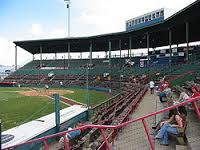
ballpark

I used to say to my mother, “Mom, I was thinking …”

To which Mom would quip, “Oh, beginners luck?” Mom had a million of ’em.

Well, I was thinking the other day as Amarillo’s Electric Light Parade was tooling down some downtown streets: Wouldn’t the multipurpose event venue be a suitable location for the parade either to begin to end?

The MPEV development is moving forward. Critics of the venue keep insisting that there’s insufficient uses for the proposed building, that it wouldn’t be kept busy enough.

Well, the Electric Light Parade is just one event in which the MPEV could play a part. Yes, it’s just one night a year. But it symbolizes a number of one-nighters that could occur at the venue, given the right amount of creative marketing.

Back in the old days, when I was growing up in Portland, Ore., my parents would take my sisters and me to the Rose Festival Grand Floral Parade. It’s a big event that clogs downtown Portland every June when the roses are in full bloom and the City of Roses celebrates the flowers for which Portland is famous.

We usually would find a spot to sit along the parade route.

But one year I remember Mom and Dad taking us to Memorial Coliseum, which once was a state-of-the-art athletic arena. It was built in 1960; its cost then was $8 million. It became home eventually to the Portland Trail Blazers professional basketball team.

It also used to be the starting point for the Grand Floral Parade.

Mom and Dad took us there one year to watch the parade take off. The marchers and the floats would exit the building, move across the Burnside Bridge that spanned the Willamette River and through downtown.

It served a marvelous purpose back then.

Why not use our very own venue for such a thing here?



Hey, maybe Amarillo really is a baseball town

maxresdefault

Paul Matney seems to be a serious expert on baseball and its potential interest in his hometown.

The retired Amarillo College president hit the stump this fall to campaign for approval of a multipurpose event venue in downtown Amarillo. Part of Matney’s pitch was that Amarillo “is a baseball town.”

The MPEV received voters’ endorsement on Nov. 3 in a non-binding municipal referendum. The Amarillo City Council then ratified the results and voted unanimously to proceed with development of the MPEV.

Then, what do you think was revealed just this week?

Melissa Dailey, head of Downtown Amarillo Inc., told the Local Government Corporation that, by golly, she’s had some informal contact with a Class AA minor-league baseball franchise that might be interested in setting up an operation in Amarillo.

Dailey said she is not at liberty — yet! — to disclose the name of the franchise. She said the city is on a “short list” of communities being considered.

Hey, didn’t Paul Matney predict this might happen if voters approved the MPEV?

Yes, I believe he did.

The LGC is moving forward, per the City Council’s advice. It will report to the council regularly as it continues its work toward developing the $32 million MPEV.

And now the conversation might include a minor-league baseball outfit, with major-league connections, that could move into the MPEV once it’s built.

Who knew?

Oh yeah. Paul Matney seemed to be ahead of the curve.


Is the MPEV actually picking up some steam?

MPEV

If you had asked me, oh, a month ago whether I thought the multipurpose event venue would begin gathering forward momentum so soon after a citywide vote, I’d have said, “not a chance.”

My concern was that foot-dragging would impede the MPEV’s progress, that the Local Government Corporation might begin looking for reasons to delay it.

Well, things might be working out all right after all.

Timeline set for MPEV

The LGC is beginning now to assign duties to city staffers charged with carrying the MPEV forward. Downtown Amarillo Inc. executive director Melissa Dailey has informed the LGC that her office has had informal contact with an organized minor-league baseball franchise that might be interested in moving to Amarillo and playing some old-fashioned hardball in the MPEV. Nothing is set. No deal is done. It’s just conversation, she said.

Then came an LGC decision, which was that it should pursue an affiliated team first rather than an independent team, such as the Amarillo Thunderheads, which has entered into a goofy decision next season to split its home schedule between Amarillo and Grand Prairie.

By all mean, LGC, pursue the affiliated team!

The LGC has been advised that time is not on its side. It has deadlines to meet, work to get done, firms to hire and construction to begin.

The LGC now aims to have the MPEV open for business by the start of the 2018 baseball season, perhaps March or April of that year.

Were some of us wrong about the LGC’s commitment to following through on the voters’ expressed desire to build the MPEV and the ballpark associated with it.

Man, I sure hope so.

Construction crane: sign of downtown progress

amarillo downtown

There used to be a time when I ventured into downtown Amarillo daily.

I worked there full time. I would see the same sights as I drove toward my place of employment. When you see the same things each day you don’t always notice changes while they’re occurring.

These days I get downtown far less frequently. It’s usually once per week to attend a Rotary Club meeting at the Chase Tower.

Those downtown sojourns, though, are producing a visual treat for me. I’m noticing the changes more readily. I cannot say I notice them week over week, but I do sense some serious changes — for the better — in our downtown district.

The most obvious change has been the sight of that construction crane over a major project going up on Buchanan Street. It’s the new Xcel Energy office complex. They’ve laid the foundation and have begun framing the multi-story structure. Xcel will move into the building in 2017.

OK, there’s more.

As I drive down Polk Street, I get the sense of more activity on what used to be the city’s “main drag.” It’s nothing I can define point by point. It’s just a feeling in my gut.

The last time I saw Potter County Judge Nancy Tanner, I told her how proud I am of the courthouse complex renovation. She’s clearly proud of it, too. And she should be.

The Commerce Building at Eighth and Tyler is going to be transformed into an urban branch campus for West Texas A&M University.

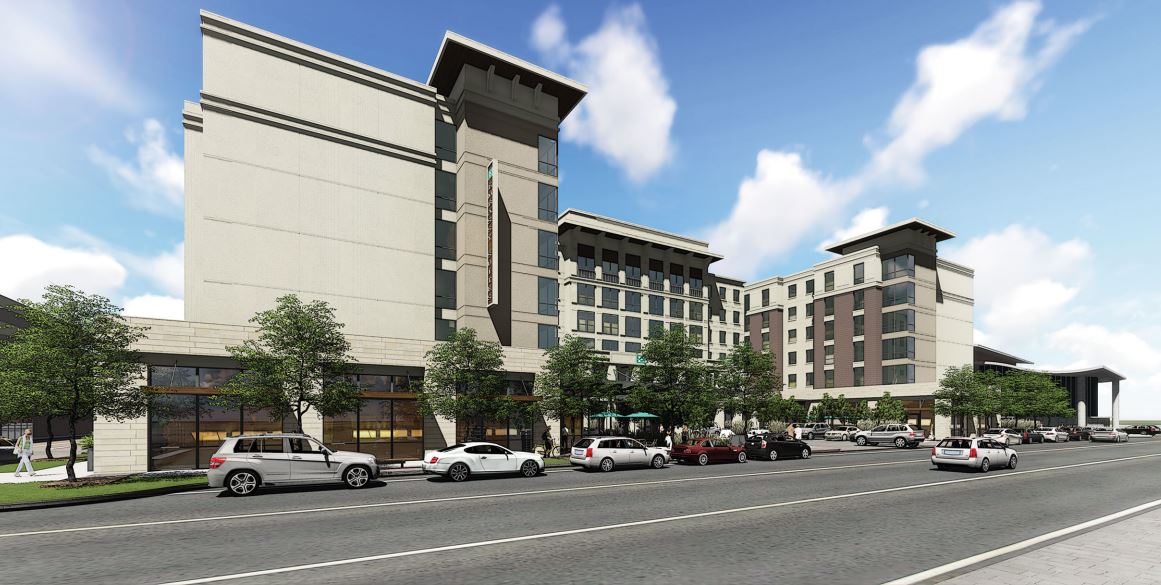
My anticipation is growing as well as I await the start of actual construction of the Embassy Suites hotel, where they’ve “broken ground.”

And, of course, we have this multipurpose event venue that’s now planned for construction at the site of the vacated Coca-Cola distribution complex across the street from City Hall.

I’ve long believed that any city’s future depends on the health of its downtown district. Show me a city with a dilapidated downtown and I’ll show you a city in serious decline. Believe me, I’ve seen my share as I’ve traveled through Texas over the past 31 years.

I’ve also seen cities with vibrant downtown districts that also reflect the health of their communities.

My hope for Amarillo is that the momentum I sense is increasing in its downtown district will continue and pick up speed.

That Xcel Energy construction crane is a huge start. I’m ready to see more of them.


Potter County ballpark: not worth any more effort

baseball

So … I’m visiting with a health care professional and the discussion about the topic at hand comes to an end.

The conversation then turns to the city’s effort to build a multipurpose event venue downtown — which includes the ballpark that would be the home field for a minor-league baseball team.

My acquaintance — who favors the downtown MPEV — then mentions the Potter County Memorial Stadium next to the Tri-State Fairgrounds. “I’ve heard the argument that we should pump more money into that ballpark,” he says. I shake my head and tell him, “But it’s a dump!”

He agrees, adding that the Potter County already has pumped too much money into the ballpark as it is and then he broaches a subject that few individuals seem willing to address: It’s in a depressed neighborhood that is unlikely to see any kind of revival any time soon.

What’s the point, he asks, of putting more money into that ballpark when the city hopes to build a new venue downtown?

Bingo! Presto! Enough said! Those are the thoughts that banged around my noggin at that very moment.

The Potter County-owned ballpark, in the words of retired Amarillo College President Paul Matney, “at the end of its life.” The clock should be ticking on that venue. Its best days are long gone. It is held together with the proverbial equivalent of rubber bands, wire, duct tape and perhaps a staple or two.

Matney made the case all over Amarillo as he campaigned successfully on behalf of the non-binding citywide referendum that voters approved on Nov. 3. The MPEV, with its current price tag of around $32 million, will be built eventually — at least that’s my hope.

Let’s no longer discuss the Potter County Memorial Stadium as having any kind of meaningful future for the county, or the city, or any other entity.

The county has put enough money into it already.

It’s time to look to the future.


Start thinking creatively about MPEV uses

MPEV

The cockamamie decision to merge the Amarillo minor league baseball team with the team in Grand Prairie seems to have gummed up the works in Amarillo’s planning to develop its downtown event venue.

It shouldn’t.

By definition, the place would be home to multiple uses. Hence, the name “multipurpose event venue.”

The City Council has ratified the voters’ decision to proceed with the MPEV. The ball — so to speak — is now in the hands of the Local Government Corporation, which the council created to carry out council policy.

The baseball franchise merger was announced as being for the 2016 season. The Thunderheads and the AirHogs will play 50 “home” games, with 25 of them in Amarillo and 25 in Grand Prairie. The league where the teams play said in a statement that it expects the teams to return to their home fields perhaps by 2017. We’ll see about that.

Does this mean the MPEV is a non-starter, that the ballpark element no longer will be applicable? Not in the least.

Multipurpose, remember?

The $32 million venue will have 4,500 or so permanent seats. That’s enough to accommodate a well-run Class AA baseball team. Once they break ground on the venue, my hope would be that the Chamber of Commerce, the Convention and Visitors Council, Center City, Downtown Amarillo Inc., City Hall’s senior administrative staff and anyone else with a bright idea or two start a coordinated marketing effort to bring that franchise to Amarillo.

Meanwhile, there are plenty of other opportunities to use that complex. There has been talk of “family nights,” of church-related events, downtown-related parties and perhaps even outdoor concerts occurring at the MPEV.

Are any of these out of the question? Not by a long shot.

Like a lot of other Amarillo resident, I also am scratching my head over this franchise-combo idea. On the surface it looks for all the world like a loser for both cities. To be candid, I don’t know how this is going to work well.

The goofiness of this decision, though, need not preclude the attractiveness of a new sports/entertainment venue in downtown Amarillo. If it means doing business with another league and another baseball franchise, then that’s fine.

The task, though, rests with the marketing experts who can make it work.


MPEV argument making more sense

matney

Paul Matney did not say this directly as he was touring Amarillo on behalf of a proposed multipurpose event venue, but I think I have gleaned a message from his pro-MPEV pitch.

It is that if we build a shiny new baseball park in downtown Amarillo we’re going to attract the attention of a serious, well-funded minor-league baseball franchise that can come here to run a team the right way — and not the way it’s being run these days.

I refer to the decision to combine the Amarillo Thunderheads with the Grand Prairie AirHogs and to split the 2016 baseball season between two locations, nearly 400 mile apart.

I believe I now get what the retired Amarillo College president was getting at.

Amarillo’s baseball fan base deserve better than to be treated to this clown show.

They haven’t broken any ground yet on the MPEV. The $32 million venue has been (more or less) endorsed by the Amarillo City Council, which has handed off implementing the development of the project to the Local Government Corporation.

I’m not certain how this combined franchise location thing is going to work for the owner of the Thunderheads/AirHogs. My gut tells me it’s a loser.

It well might give MPEV supporters additional grist to expedite the development of the new ballpark, to get it built, to market the city to the owner of a legitimate Class AA franchise and return serious minor-league baseball to Amarillo.

Hey, maybe this franchise combo deal can be a blessing after all.


Play ball … in two cities next year

ama thunderheads

Amarillo’s minor-league baseball fortunes have taken a bizarre turn.

I cannot yet tell if it’s for the better or the worse. Let’s just call it bizarre. Weird too. Strange? You bet.

The Amarillo Thunderheads have merged with the Grand Prairie AirHogs, according to the American Association of Independent Baseball, the league to which both teams belong.

What does it mean? Well, the team will play 25 of its “home” games in Amarillo and 25 in Grand Prairie (a Dallas-Fort Worth suburb) for the 2016 season.

There’s more strangeness. According to a league statement: “We appreciate that Southern Independent Baseball, owner of the Amarillo and Grand Prairie clubs, agreed to the league’s request to operate its two teams as one in 2016. We fully expect that both teams will return in 2017 as individual entities with a full schedule in their respective markets.”

The league had 13 teams. It wanted to pare it to 12 to provide a more even schedule for everyone concerned. So, the league decided to combine the Amarillo and Grand Prairie franchises for the upcoming season. Is this a one-season gig? Time will tell.

OK. I know what you’re thinking. What does this mean for the future of the multipurpose event venue that many of us — yours truly included — hope will be built in downtown Amarillo?

To be honest, at this very moment I have no earthly idea what this means. Here, though, is my hope.

It is that the $32 million MPEV construction will proceed and that marketing gurus here will be able to locate a first-cabin minor-league franchise — say a AA outfit affiliated with a major-league team — to bring their organization to Amarillo. Here, the theory goes, the baseball team will play ball in a gleaming new sports venue, fill the 4,500 or so seats on most days or nights with fans — and the enterprise will be deemed a success.

I have to say, though, that this merging of two teams into one for the 2016 season seems a bit fraught with peril for those who’ve been hoping that the Thunderheads could make a go of it in Amarillo.

The Dillas became the Sox and then the Thunderheads, all in the span of just a few years.

What now? The Thunder Hogs? The Air Heads?

How about we just get this new baseball venue built and then bring in an outfit that can lend some stability for those who want to cheer for their very own minor-league baseball team?


MPEV might need a new name

amarillo hotel

Dan Quandt isn’t fond of the acronym “MPEV.”

He runs the Amarillo Convention and Visitors Council and, quite naturally, is glad the proposed $32 million multipurpose event venue received the voters’ endorsement earlier this month.

But as he told the Rotary Club of Amarillo this afternoon, he wishes city planners could have come up with a different name for the facility to be built across Seventh Avenue from City Hall.

But, hey, as long as we’re stuck with the acronym, Quandt suggested it stand for “multiple people entering our vicinity.”

Therein lies his belief in the MPEV. It’s going to bring people here. They’re going to spend money, generating sales tax revenue and additional revenue from the city’s hotel occupancy tax — aka the HOT.

He noted that 60 percent of the city’s revenue comes from sales tax collections — and a good portion of that revenue comes from those who don’t live here. They are traveling through the city or are spending a night or perhaps longer here.

Quandt also noted something most Amarillo residents likely don’t know. It is that Amarillo has as many hotel rooms as Arlington, a city of nearly 400,000 residents sitting, as Quandt said, “in the heart of the Metroplex.” He also pointed out that Arlington is home to the Texas Rangers and a “professional football team that plays there”; he must not be a Dallas Cowboys fan. Whatever …

Amarillo’s fortunes are bound to improve with construction of the MPEV and the completion of the new Embassy Suites hotel across the street from the Civic Center, which he said is in line eventually for some “long-awaited” improvements and expansion.

One would expect Quandt to speak well of the MPEV and the city’s downtown future. He’s in the business of promoting the city.

However, from where I stand, Quandt and other city boosters are going to have quite a bit more material with which to lure visitors to our city.


Time for LGC, council to move forward

MPEV

An interesting tidbit has come from Tolk Persons, a supporter of Amarillo’s proposed multipurpose venue/ballpark.

He writes in response to another social media post: “The LGC shall provide project status reports to the City Council monthly or as requested by the Council,” citing Section 2 (D) of the resolution that the council endorsed at its regular meeting.

The Amarillo City Council voted unanimously Tuesday to proceed with development of the MPEV as dictated by the results of the Nov. 3 municipal referendum. It handed off the implementing of city downtown redevelopment policy to its appointed Local Government Corporation.

It did not abandon its oversight of the effort to revive downtown. It has made sure that the LGC keeps the city — meaning the public informed along the way as it proceeds with the $32 million (give or take) MPEV.

There will be public accountability built into this process. The LGC, which comprise some new members — some of whom had opposed the MPEV as it was designed — is now on the hook to do the City Council’s bidding.

Of course, the council — which also comprises a majority that opposed the MPEV — should be held accountable for its own actions.

If the council is going to keep faith with what the majority of voters said they want — which is to build the MPEV and keep the momentum going for downtown’s redevelopment — then it must ensure that the project keeps moving forward.

If the LGC drags its feet, the council must insist that it stop doing so.