Tag Archives: MPEV

AMM: Flash in the pan? Yeah, probably

amm

Two groups have taken the lead on opposing sides of Amarillo’s next big municipal election challenge.

Unite For Amarillo is favoring the seven propositions on the ballot that would pay for some extensive infrastructure improvements.

SaveAmarillo.org has formed to oppose the measures.

I am on the sidelines, offering commentary from the peanut gallery. I plan to support the propositions.

I also am wondering: What has become of the Amarillo Millennial Movement?

You remember AMM, yes? A young Amarillo woman, Meghan Riddlesburger, became the face and voice of this “movement,” which arose from nowhere to support the ballot measure that sought voter approval of the multipurpose event/ballpark venue the city plans to build in downtown Amarillo.

The measure passed. The Amarillo Globe-News honored Riddlesburger as a Headliner of the Year for 2015. She took a lot of flak from those who opposed the MPEV measure. The criticism was unduly harsh, unfair and it was hurtful … bordering on hateful.

Then she left the city for new opportunities in Fort Worth.

AMM’s status? As near as I can tell, it evaporated the moment the young woman departed Amarillo.

This is a disappointment for me. I actually bought into the notion that AMM represented a legitimate “movement” of young people dedicated to improving their city’s quality of life; that they were motivated to get behind the MPEV as a lure for other young people to stay here after getting their education.

Some of us — I include myself in that group — saw AMM as a potential deterrent to the “brain drain” that has been depleting the city’s intellectual wattage.

Here we are, a year after the MPEV vote. The city is asking residents for permission to improve its quality of life on a whole array of fronts: street repair, Civic Center expansion, park improvements, police and fire protection enhancements; athletic fields; municipal office improvements. The City Council broke the $340 million package into seven components and has asked its constituents to vote on them separately.

Where in the world has become of AMM, if it ever actually existed in the first place?
Downtown changing its nature, one resident at a time

14291879_1270291946323983_5049468187849995869_n

I’ve been enjoying the changes I see occurring in downtown Amarillo.

We all know about the construction underway: the Xcel office building, the Embassy Suites Hotel, the parking garage.

Another element is taking shape. It’s potentially the deal-maker for downtown’s revival.

It involves the continued development of urban residences.

The recently Lofts on 10th have received some recognition for their creativity. Other residences have been completed in an old warehouse not far from City Hall. The Eagle Center at the corner of Seventh and Tyler has housed downtown residents for years.

Where does this end? Does all this portend a growing new demographic among Amarillo’s population, which now sits at 200,000 … and growing?

My wife and I recently returned from Germany and The Netherlands, where one at times is hard-pressed to find single-family dwellings in the middle of great cities. There, urban life is a long-standing reality.

It has led to the “gentrification” of many neighborhoods, according to our German friends, who note that formerly run-down neighborhoods have become places that ooze with charm.

Sure, gentrification comes at a price. In many American cities, it drives up the cost of real estate and makes such property less affordable to those who cannot pay the cost of living in high-dollar downtown lofts or condos.

Amarillo’s transition — as I see it — appears to be well under way.

The ballpark construction will begin soon. Xcel Energy’s new office complex is entering its final stage of construction. The convention hotel will open soon, as will the parking garage.

Amarillo voters will get a chance to vote on seven propositions aimed at financing several key construction projects; one of them involves the Civic Center, which many foes of the ballpark said needs dramatic improvement.

It’s invigorating to see the changes that are afoot in a city that at times has resisted it.

No motor vehicles allowed?

nuremberg street

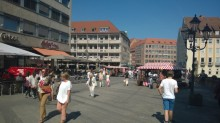
NUREMBERG, Germany — Let’s think way, way, way outside the box for a moment … or maybe two.

Amarillo is trying to redesign, reconfigure and reinvent its downtown business district. City political and civic leaders have this idea of turning it into something of an entertainment district keyed in part to a couple of venues: the Globe-News Center for the Performing Arts and the to-be-built multipurpose event venue.

The thought occurred to me today while strolling through a much older city than Amarillo: Why not try something really radical, something that has met with some success in a place such as, oh, Nuremberg?

This city known as much for a series of trials that occurred here after World War II as it is for its astounding beauty and ambience has developed a pedestrian area that is full of people on foot.

No cars allowed along many city blocks within this area. It’s, um, pretty damn quiet during the peak business hours. The serenity is almost palpable.

I haven’t even begun to think how Amarillo might pull this off. How does the city cordon off, say, Polk Street from 11th Avenue to 5th Avenue, turning it into essentially a pedestrian mall? What kind of storefronts would be developed there? Eateries, craft shops, after-hours watering holes? Where would we allow people to park their vehicles?

Ideas pop into my noggin constantly. They have done so here as my wife and I are enjoying time with friends.

I know what many of you are thinking. How does Amarillo pull something like that off? How do we ask Texans who love their pickups, SUVs and assorted gas-guzzlers to park their vehicles outside this zone?

I must assure you that Germans love heir motor vehicles, too. Trust me when I tell you that traveling along the no-speed-limit autobahn is a unique kind of “thrill.” Yes, it’s an acquired taste to be zipping along at roughly 80 mph only to passed as though we’re standing still by motorcyclists and automobiles going — oh, I don’t know — 110 or 120 mph!

“You get used to it,” my friend Martin told us. I asked about the speed of motor traffic and he thought I was unnerved to the point f wanting off the autobahn. “Do you want me to get off?” he asked. “No, it’s OK,” I said.

Still, the Germans here manage to park their cars and ride the train into this shopping and eating district. They manage to enjoy themselves just fine.

Do we impose a never-drive zone that it’s in effect 24/7?

Do we make it an after-hours zone, say, from 5 p.m. until 2 a.m. daily?

I don’t know. I’m just tossing this one out there for you to consider.

If I’m all wet, full of buffalo bagels, living in a pipe-dream world, well, you are welcome to tell me so.

However, I am not yet willing to toss aside any ideas for what I believe can lead to an even better downtown district for Amarillo, a city I’ve grown to love.

Expand and improve Civic Center? Absolutely!

ama civic center

“SHALL the City Council of the City of Amarillo, Texas, be authorized to issue general obligation bonds of the City in the principal amount of $83,430,000 for permanent public improvements and public purposes, to wit:  constructing, improving, expanding, renovating and equipping civic center facilities and the acquisition of land therefor; such bonds to mature serially or otherwise over a period not to exceed twenty-five (25) years from their date, to be issued and sold in one or more series at any price or prices and to bear interest at any rate or rates (fixed, floating, variable or otherwise) as shall be determined within the discretion of the City Council at the time of issuance or sale of the bonds; and whether ad valorem taxes shall be levied upon all taxable property in the City sufficient to pay the annual interest and provide a sinking fund to pay the bonds at maturity?”

* Proposition 5 on the Nov. 8 Amarillo municipal ballot

That might be the longest sentence ever written in English. Ever!

But it speaks directly to an issue that has been on the top of Amarillo residents’ minds ever since, oh, we began talking about building the multipurpose event venue across the street from City Hall.

Amarillo City Council has put forward seven ballot propositions. This one, No. 5, deals directly with the Civic Center.

This is the first in a series of blog posts — as I promised earlier — commenting on the propositions coming to us this November.

The city asks residents to spend $83 million and change to improve, rehabilitate and “expand” the Civic Center.

Those who objected to the MPEV said the Civic Center ought to be a higher priority for the city than building a new ballpark. They cited the city’s lack of convention meeting space. Meanwhile, pro-MPEV forces argued that the new venue would be a great attraction for people to venture downtown for an evening of entertainment — which doesn’t argue directly against Civic Center improvements.

The Civic Center is a decent venue for conventions. Sure, it could stand some improvements. The Cal Farley Coliseum isn’t exactly a first-rate sports venue. It’s cramped, with limited seating for hockey and indoor football, although fairness requires me to say that neither the hockey team or the football team play to many sellout crowds during their respective seasons.

Still, an $83 million price tag would seem to do quite a bit for the Civic Center, which has been standing along Buchanan Street since the late 1960s.

Here’s our chance, then, to improve this venue to make it an even better draw for convention business.

Hey, we’ve got that five-star Embassy Suites hotel going up across the street. The folks staying there ought to be able to do their business in a first-cabin convention center as well.

Minds can change in heated political climate

I’m hearing a lot of pundits saying things about how locked in Americans are on the presidential election.

Voters’ minds are made up.

They’re going to vote for Democrat Hillary Rodham Clinton or Republican Donald J. Trump. Perhaps they’ll vote for a minor-party candidate; we’ve got a few of them on the ballot this year.

Nothing either of the major-party nominees can say is going to sway voters on the other side.

I’m not so sure.

I witnessed the changing of a mind nearly a year ago. It involved an Amarillo municipal referendum. I wrote about it. Take a look.

https://highplainsblogger.com/2015/10/a-mind-has-changed-on-the-mpev/

The above blog post, published in October 2015, also notes how one former Texas legislator, the late Teel Bivins, told me how another legislator, Carl Parker, could change minds during Texas Senate floor debate.

Are our minds locked in on this election?

Maybe. Maybe not.

Here’s why minor-league baseball is good for Amarillo

baseball

I’ve spoken already about my hope that Amarillo can reel in a baseball franchise that would play ball in a new downtown ballpark.

What I want to explore briefly here today is why the potential new franchise is so much more desirable than what the city has at this moment, which is a “franchise” in name only.

The current baseball team calls itself the Texas AirHogs. It is an “independent” team that splits its home schedule between Amarillo and Grand Prairie.

When these guys play their Amarillo half of their “home” schedule, they suit up and perform at the Potter County Memorial Stadium, which in reality is a dump.

I’m not sure what next season will bring us. The AirHogs might go somewhere else next year. They might devote their full home schedule to Amarillo. Or, they might decide to stay full-time in Grand Prairie.

The push now is on to lure a Double A franchise from San Antonio. The Missions are affiliated with the San Diego Padres of the National League. The Padres appear to be a well-run major-league franchise. They produced a Hall of Fame outfielder, the late Tony Gwynn. Indeed, Gwynn finished the 1981 season in Amarillo, hitting .462, which was a precursor to the brilliant career he forged with the Padres.

Amarillo is no longer a one-horse burg known only for Cadillac Ranch and the gigantic steak. We’re on the cusp of passing the 200,000-population barrier; we might already have passed it, for all I know. We are blessed with a healthy local economy and an increasingly diversified work force.

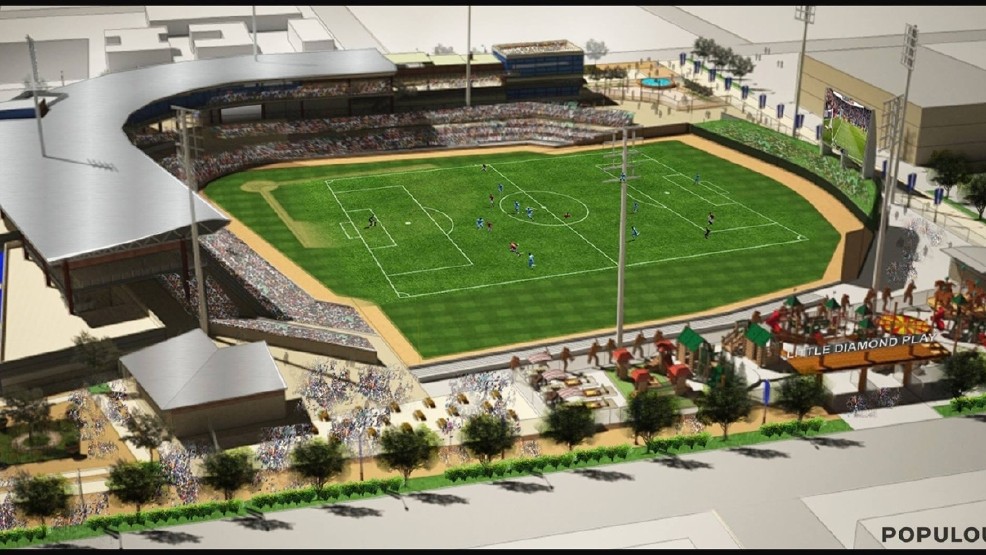
The city has committed to building a downtown ballpark. It cost is about $50 million. Demolition and construction will begin perhaps later this year. The city is now negotiating with the sports group that owns the Missions to bring that franchise to the Top of Texas.

My hope is that the city can sell itself to the Missions, persuade them to come here, rather than go somewhere else. My expectation doesn’t yet match my hope, but the gap between them is narrowing.

The Amarillo City Council has done a good job of jerking my emotions around. The council occasionally says the right things to assuage my concerns about the direction the city might be going. Then some council members blurt out intemperate remarks that get people’s attention — for the wrong reasons.

An affiliated minor-league baseball franchise would be wonderful for Amarillo. That it would play baseball in a new venue downtown would produce a fine return on the investment being made in that venue.

Again, this only is a hope, but I think it’s a reasonable one: The crowds attending baseball games downtown could bring plenty of what we could call “recreational revenue” to many of the businesses that would be clustered in the downtown district.

I will presume the city is negotiating with the group that owns the Missions is bargaining in good faith. If it comes to pass, as one council member has suggested will happen soon, then the city will reap the benefit.

How do I know that? It’s happened thousands of times already in many American cities. It surely can happen here.

I believe it will.

Is an Amarillo baseball deal at hand?

ballpark

“Amarillo Councilman Randy Burkett said he expects his city’s leaders will sign an agreement with Elmore Sports Group in late September or early October.”

— From an Amarillo Globe-News Facebook post

What prompts Councilman Burkett to make such a bold prediction? Lubbock missed a deadline to put a proposed tax increase on the November ballot that would pay for construction of a new baseball stadium.

Lubbock’s late entry into the baseball franchise hunt appeared for a moment to hinder Amarillo’s own quest.

Thus, the deck now appears cleared for Amarillo to negotiate aggressively to bring the Double A minor-league baseball franchise to the High Plains. The franchise currently does business as the San Antonio Missions.

The Missions are planning to vacate the Alamo City, which is angling to bring in a Triple A franchise.

I am not privy to the goings-on at City Hall. I just sit out here in the peanut gallery hoping for the best.

And “the best” appears, if Burkett is correct, to be taking shape.

Amarillo is set to begin making room for its downtown ballpark. Crews will begin demolition of the old Coca-Cola distribution building across the street from City Hall. Once the lot is swept clean, then the plan is to build the multipurpose event venue that voters endorsed with their November 2015 referendum vote.

So, if an agreement is about a month away, then the franchise that now plays hard ball in San Antonio will bring its act to Amarillo — hopefully soon.

Then the city can have a legitimate minor-league baseball franchise to root for in a shiny new ballpark. It would be a significant improvement over the half-in, half-out bunch that splits “home” games between Amarillo and Grand Prairie and plays half of its “home” schedule at a rat hole ball park at the Tri-State Fairgrounds.

Amarillo can do better than that.

City takes an astonishing turn

downtown

Maybe I’m easily amazed.

Whatever.

My amazement is focused on what I have perceived to be a remarkable about-face at Amarillo City Hall. It involves the city’s focus on its downtown business and entertainment district. It has gone from a hands-off public policy to a definite hands-on approach.

I am utterly convinced the entire city will reap the benefit.

My wife and I arrived in Amarillo in early 1995 to start a new life — and to continue a life we started when we arrived in Texas 11 years earlier.

We saw a downtown district that was, to put it charitably, in a state of suspended animation. Downtown was in shabby condition. In addition to the Barfield Building and Herring Hotel — two significant structures that have been rotting ever since — the city had the vacant Santa Fe Building with which to contend.

Then the light bulb flickered on at the Potter County Courthouse. County Judge Arthur Ware finagled a deal to purchase the Santa Fe Building for $400,000. He then secured a state historic preservation grant to pay for a renovation of the magnificent 12-story structure. The project was completed — and the county moved some of its offices into the Santa Fe Building.

That might be considered the start of downtown Amarillo’s revival.

City Hall’s outlook, though, remained standoffish. Mayors Kel Seliger and Trent Sisemore seemed uninterested in getting involved directly with downtown revival. They preferred to let private business take the lead. The city might lend support — if it felt a project merited it.

Little happened over nearly a decade.

The pace has accelerated tremendously in the past decade. How did it come about? I believe it has been the result of a more activist City Hall approach.

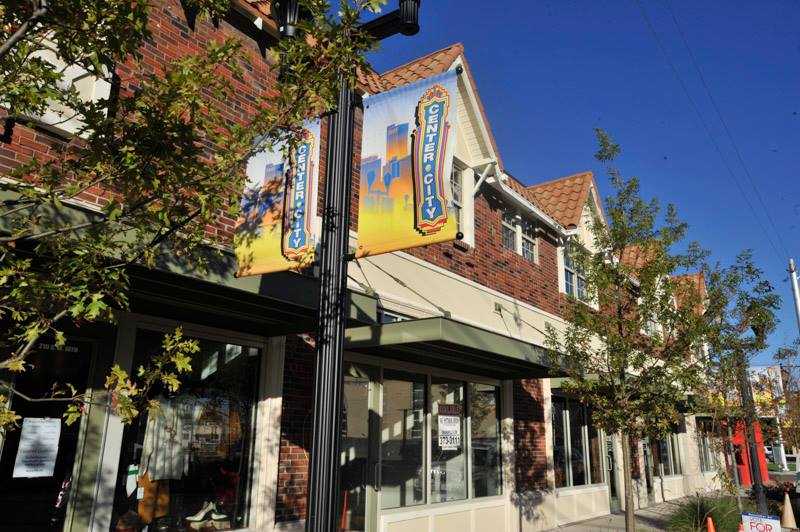
The city launched a Strategic Action Plan, which produced a vision for the downtown district. It created Downtown Amarillo Inc. Center City became even more of a player. The city created the Tax Increment Reinvestment Zone. The Amarillo Economic Development Corp. invested sale tax funds to help some of these projects along.

Meanwhile, private businesses — apparently sensing the energy coming from City Hall — began a series of tangible improvement projects. New bank branches went up. A convenience store was built. The old Fisk Building was turned into a business hotel.

The momentum was building.

Then came the Embassy Suites hotel project. Plans took root to build a parking garage. And, oh yes, we have that multipurpose event venue/ballpark.

Along the way, some folks started expressing anger. They didn’t like the way the city was proceeding with some of these projects. They alleged “secrecy,” which I believe was a dubious accusation.

Sure, we had some serious misfires. Wallace Bajjali — the master development firm hired to oversee downtown’s resurrection — went kaput overnight. That, too, fueled the anger. Well, WB is long gone.

But the movement is continuing.

The City Council has gone through a serious makeover. There have been some more hiccups, mostly created by tensions among some of the council members.

Is all this amazing? Yes it is.

I do not want the city to turn away from its new course.

The city is going to ask voters to approve more than $300 million in infrastructure improvements, just as it asked voters to approve a referendum to build that MPEV downtown.

There are times when local government can step in — and step up — when it perceives a need.

Amarillo saw the need to boost its downtown district. Believe this: When this project is done — as every U.S. community that has taken this kind of proactive approach has learned — the entire city will reap the reward.

Let’s get busy, Amarillo City Council

MPEV

The author of a letter to the Amarillo Globe-News has sounded an alarm for Amarillo.

He suggests that Lubbock is up to no good in its effort to lure a Double A baseball franchise that is planning to vacate San Antonio. He likens the move to someone who is stealing a kiss.

You see, Amarillo is also trying to bring that same franchise, which is currently called the San Antonio Missions, to the Panhandle. Lubbock has just now joined in the hunt for the same prize.

The headline on the letter to the editor calls Lubbock a “wicked stepsister.”

Interesting description, although it does seem a bit harsh.

But make no mistake, there exists a civic rivalry between the communities.

Lubbock is home to more residents; it has Texas Tech University; it has a first-cabin sports and entertainment venue at the Tech campus. There is this perception that Lubbock is able to land the first-line entertainment acts while Amarillo — as often as not — gets stuck with knock-off “tribute” bands and truck pulls.

Lubbock now it seeks to land a baseball franchise that first came into Amarillo’s sights several months ago.

Amarillo wants the Missions to move here and to take up residence in that downtown ballpark that is set to be built — eventually! — on property across the street from City Hall. The multipurpose event venue is part of the city’s downtown revival effort. The key to the MPEV’s success, though, seems to lie in whether the city can persuade the Missions to come here.

Will the Lubbock initiative get in the way?

I do believe that the time has officially arrived for Amarillo’s City Council to pull together, in unison, for the same goal.

There’s been some signs of fracture among council members since the latest municipal election, which occurred in May 2015. It’s more imperative than before, though, for the governing board to set aside personal differences.

A new MPEV tenant does not want to wade into an environment that — in the words of interim City Manager Terry Childers — has produced a “caustic political environment.”

I don’t yet know what Lubbock has up its municipal sleeve.

However, I do believe it is time for Amarillo to show its chops and ensure this potential suitor that it intends to do all it can to make the MPEV/ballpark a success and that whoever takes up residence in the new venue will enjoy the fruits that success will bring.

Some unity of purpose is in order.

Amarillo’s baseball quest has gotten complicated

baseball

I thought for an instant — that’s all it was — that I was hallucinating.

The headline on the front page of the Amarillo Globe-News said something about Lubbock making a bid to land a Double A baseball team: the San Antonio Missions.

They did pull plans to build a stadium, but then they might dangle some other incentives and seek to lure the team from the Alamo City to the Hub City.

Hold it!

Isn’t that the goal of the Amarillo City Council, too? Are we now competing head to head with our major municipal rival for the same prize?

I don’t know the particulars of the Lubbock initiative and I know only some of what Amarillo has up its governmental sleeve as it seeks to land the baseball franchise.

Here’s what I do fear, though. I fear that Amarillo’s recent spate of in-fighting, back-biting, name-calling and otherwise  uncivil behavior among members of its City Council might not play well in the Missions’ board room as it ponders where to relocate its baseball franchise.

It’s not as though San Antonio — the second-largest city in Texas — is going to lose anything. The plan there is to bring in a Triple A franchise to replace the Double A team that’s departing.

I’m not going to get into which city is the West Texas top dog. Lubbock has more residents than we do. It does have a Division I public university. Amarillo has its charms, too. We’ve got more scenic splendor nearby with Caprock Canyons and Palo Duro Canyon state parks. And, hey, we’ve got Cadillac Ranch, too!

We also have had our share of recent tumult at the center of our municipal government.

We’re going to start clearing the land to make room for that multipurpose event venue. The MPEV is slated to be home for a lot of activities, anchored — it is hoped — by a baseball franchise.

I won’t predict how this will turn out. The Lubbock entry into the baseball sweepstakes, though, does complicate matters.

Do you think it’s time Amarillo starts pulling together?

As a friend of mine noted in a message to me this morning, “Amarillo’s council members should now be incentivized to forget pettiness and unite to get the Missions to Amarillo, because the longer it drags out, the greater the chances other suitors will emerge.”