Who are we to believe: Trump or Comey?

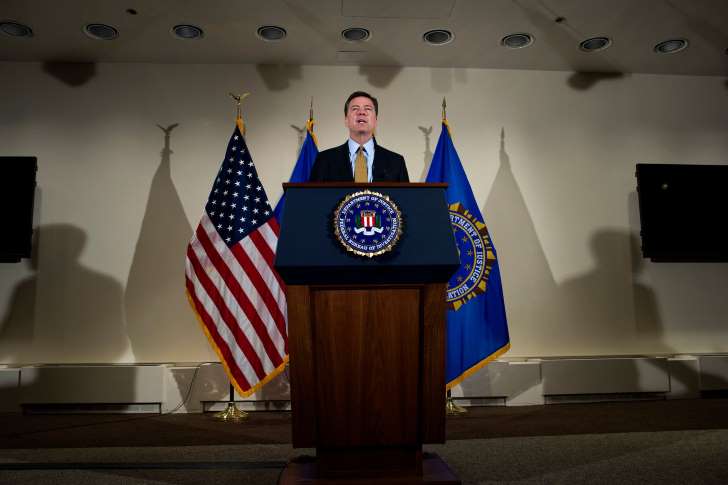
I am unable to watch in real time the interview that former FBI Director James Comey gave to ABC News; we have spotty TV reception in our RV park at the moment, so I’ll have to catch up with it in the next day or two.

However, I am able to read much of the interview on the link attached here.. 

I am struck by something about the interview that Comey gave to ABC’s George Stephanopoulos. It is that he is recounting one-on-one encounters with Donald John Trump, the president of the United States.

I also am left to wonder: Whose recollections of those meetings should I believe? The former FBI director known to be a meticulous note-taker of such meetings, or the president who has demonstrated time and again to be a serial liar?

Let me think. I believe I’ll go with Comey’s assertion of what transpired in those meetings.

It’s impossible to prove much of Comey has alleged occurred during those meetings, whether the president intended to torpedo Comey’s work as FBI director.

I’m just struck by how Trump responded in advance of the televised interview, the name-calling and petulant tone of his tweets.

Comey said he believes Trump is “morally unfit” for the office of president. He doesn’t believe the president is suffering from dementia or is otherwise mentally unfit. It’s the man’s moral compass that gives Comey such cause. He mentions how Trump treats women like “meat.”

That is the kind of assessment that Comey has concluded after meeting privately with Trump.

It also is going to make the nation ask itself: Who is the more trustworthy man in this exchange?

I’ve made my call.
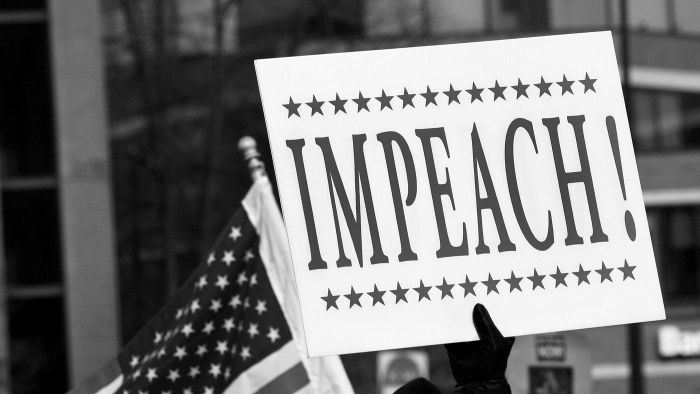
Impeachment remains huge obstacle

I am believing now that Donald J. Trump isn’t likely to be kicked out of office before his term expires.

The nation’s founders set a high bar for removal of a president.

The U.S. House of Representatives can bring articles of impeachment. It can essentially indict a president on a complaint that he has committed “high crimes and misdemeanors.” It takes a simple majority of House members to impeach a president.

It’s happened twice. President Andrew Johnson got impeached in 1868. Then in 1998, the House impeached President Bill Clinton. The House impeached Johnson on 11 counts, the principal count being a violation of the Tenure of Office Act after he had fired Secretary of War Edwin Stanton. The House impeached Clinton on a charge that he perjured himself in testimony before a federal grand jury.

Both men were spared being kicked out. Johnson made it by a single vote in the U.S. Senate. Clinton survived much more easily in his Senate trial.

The Constitution lays out a two-thirds rule for conviction and removal from office of the president.

What makes a Trump removal so difficult lies in the numbers. Republicans control the Senate by a single seat. If they lose the Senate majority after the midterm election, it is projected that several GOP senators would need to join Democrats who likely would vote to convict the president on whatever charge is brought before the body.

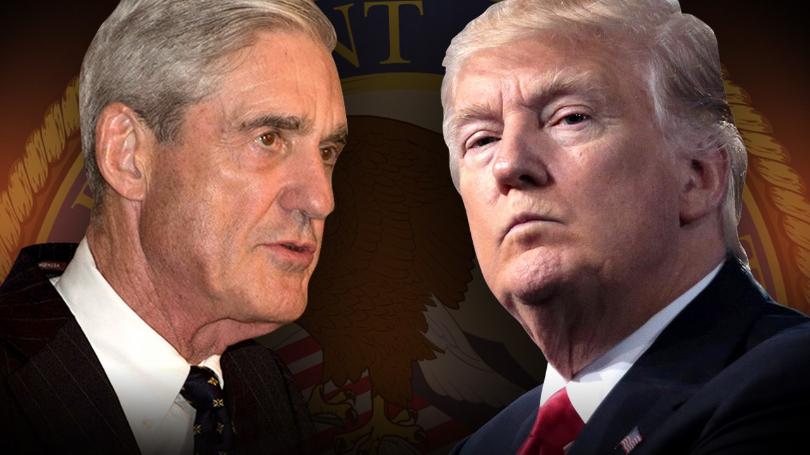
I’m not certain that an impeachable offense will emerge from the investigation being conducted by special counsel Robert Mueller. If one does emerge, though, it remains a tremendously tenuous view that there would be enough political support in the Senate to actually convict the president — no matter how egregious the charge that might come forth.

Impeachment is a political process, even though members of the House and Senate state piously that they are conducting a quasi-judicial process. It really relies on the partisan leaning of both legislative bodies.

I want to offer this look at what might lie ahead for the president and for Congress.

First things first. We have an election to complete that will determine the partisan makeup of the legislative chambers that will decide what to do about this president.

Hey, you know he could just quit once he realizes his agenda — whatever it is — is going nowhere.

Being ‘not aware of plan’ is no reason for comfort

White House press secretary Sarah Huckabee Sanders says she is “not aware” of any plans for Donald Trump to fire special counsel Robert Mueller and/or Deputy Attorney General Rod Rosenstein.

I have to ask: Are we supposed to take that to the bank?

The president operates on a sort of chaotic system of strategy and tactics. He doesn’t tell those ostensibly closest to him anything in advance, or so it appears.

For Sanders to say she is “not aware” of the president’s plans gives me zero assurance that the man for whom she works is going to avoid doing something profoundly stupid.

Firing the special counsel would send Congress into pure apoplexy. Republicans and Democrats alike are urging Trump to let Mueller do his job, which is to get to the bottom of the Russia collusion issue that has dogged Trump since Day One of his presidency.

Trump reportedly has let it be known that he believes he has the authority to fire Mueller, even though he was appointed by Rosenstein.

Which brings me to the other point, which is that firing Rosenstein would be equally apoplectic for members of Congress.

I guess it’s good to remind y’all that Mueller is a Republican; Rosenstein is, too. And, oh yes, Donald Trump was elected as a Republican.

Yet the president keeps yapping “all those Democrats” who insist on the Mueller investigation continuing.

So, will the president let the special counsel and the deputy AG do their jobs? Will wisdom overcome this impetuous individual who seems incapable of listening to wise men and women who know more about government than he ever thought of knowing?

As for the press secretary telling the nation that she is “not aware” of any foolish actions coming up … well, stay tuned, Sarah. You’ll likely find out right along with the rest of us.

‘Separation of church, state’ need not be written

I cannot let this one pass without offering a brief rejoinder.

Dave Henry, the director of commentary for the Amarillo Globe-News, offered this tidbit in a column Sunday about what is written in the U.S. Constitution.

His column dealt with myths and other untruths that show up on social media. He writes: The fake “City of Amarillo” Facebook page reminded AGN that, “The free press is a cornerstone of democracy.”

Is the free press a “cornerstone” of a republic? I hope so, because the word “democracy” is nowhere to be found in the U.S. Constitution or the Declaration of Independence. Unfortunately, what is actually written in the U.S. Constitution – and what is not – does not matter anymore. For example, “separation of church and state.”

He quibbles correctly about whether the founders created a “democracy” or a “republic.” It was the latter, for certain.

But then …

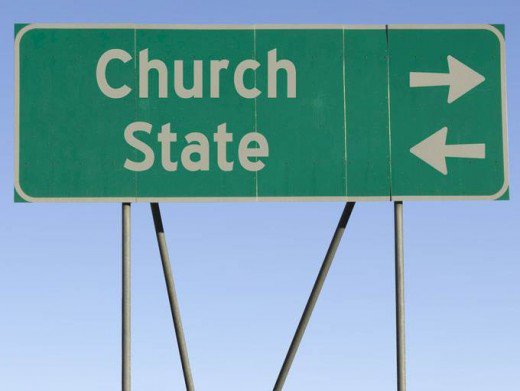
Henry repeats a canard that needs some further explanation. He says the Constitution does not contain the words “separation of church and state.” True. But only as far as it goes.

What that remark — cited often by conservatives who keep arguing that it’s OK to teach religion in public schools — ignores is that the Constitution implies such a separation in its First Amendment. The founders didn’t need to write “separation of church and state” when they declared that Congress shall make no law that establishes a state religion. The prohibition against writing such a law translates quite nicely, in my humble view, to a church-and-state separation.

What’s more, the federal courts have upheld that standard repeatedly through countless court challenges over the course of, oh, 200 years.

I just have grown weary of the tired refrain that the Constitution needs to say something specifically in order to make an issue relevant. Church/state separation is covered by the nation’s governing document — even if it doesn’t say it in so many words.

Insult machines kick into high gear

I have been watching U.S. politics for a long time.

At no time have I heard the disgusting and disgraceful level of insults being hurled between two individuals and their allies at the highest levels of our federal government.

One of them is the former director of the FBI, James Comey. The other is the president of the United States, Donald J. Trump.

Holy cow, dudes! What has happened to civil discourse?

Comey has written a book in which he declares that the president — who fired him a year ago — is “untethered from the truth” and who runs the executive branch of government like a “mob boss.”

Then comes the response from Trump, who calls Comey an “untruthful slime ball.” The president’s allies refer to Comey as a “disgruntled former employee” and a “partisan hack.”

Are you proud of our government at this moment? Me, neither.

To be truthful, I expected a lot more from Comey than from Trump. I had hoped that the former FBI director could have refrained from some of the gratuitous personal criticism of Trump he has written in his book. He is a former federal prosecutor, a top-flight lawyer who then led the FBI — a once-universally highly regarded law enforcement agency.

I didn’t expect Comey to sink to Trump’s level of juvenile petulance.

But he did.

He has opened the door for Trump and his allies to respond as they have done. Slime ball? Partisan hack? Disgruntled employee? And who knows what the president and his pals are saying to each other in private, out of public earshot?

This is not a good era in the annals of American political history.

Where is outrage over conventional weapons?

Chris Wallace has posed an perfectly legitimate question to United States ambassador to the United Nations Nikki Haley.

The “Fox News Sunday” host asked Haley this morning why the Trump administration is so willing to use military action against Syria when it uses chemical weapons on its citizens but doesn’t deliver such punishment when the Syrian government kills them with “conventional weapons.”

“That’s an unfair question,” Haley said in her initial response.

Actually, Mme. Ambassador, it’s a perfectly fair question and Wallace was correct to ask it.

For the record, Haley said the United States doesn’t tolerate the use of any weapons, but didn’t respond directly to Wallace’s query about whether the president views chemical weapon use differently than conventional weapon use.

I happen to support the decision to strike at Syria. I believe we responded correctly by aligning ourselves with France and Great Britain and hitting the Syrians in concert with our allies.

My belief now is that we need to reignite some intense diplomatic power to persuade the Syrians it clearly is in their best interests to call a halt to the slaughter in their country.

Oh, and while we’re at it, we also need to ratchet up the pressure on Russia and Iran to cease lending aid to a war criminal — Bashar al Assad — who happens to be the dictator who runs a ham-fisted government in Damascus.

So, here we are. We have pounded the Syrian chemical weapons infrastructure. Our forces reportedly delivered crippling damage to it. Ambassador Haley said the strikes have set back Syria’s chemical weapons program by many years.

What about those conventional weapons? When do we draw the “red line” when it involves the hideous use of those weapons on innocent victims?

Quite sure ‘Dust Bowl’ won’t return

One of the things I learned about the Dust Bowl was it was manly caused by human fallibility and ignorance.

I also learned that the Dust Bowl was centered right here on the High Plains of Texas and Oklahoma.

As dry as it has been in the Texas and Oklahoma panhandles since this past autumn, I will rely on the knowledge that we have learned how to prevent a recurrence of the hideous tragedy that befell the region in the 1930s.

Ken Burns’ fabulous documentary film, “The Dust Bowl,” which aired on PBS in 2015, reminded us that the event was the worst “manmade ecological disaster” in U.S. history. How did it occur?

Human beings settled on the High Plains and began plowing up natural grassland, turning it into cultivated farm land. Many farmers relied on rainfall to irrigate their crops; they were “dry land farmers.”

They plowed up hundreds of thousands of acres of grassland, which Mother Nature put there to act as protection against wind erosion. The grass held the soil together, preventing it from blowing away in the stiff wind that howls frequently across the High Plains.

Well, then something drastic happened. It stopped raining. The region became gripped by a killer drought. Then the wind blew as it always does. What happened next has become the stuff of legend throughout the High Plains.

The dirt blew in sinister, black clouds across the vast landscape. People breathed in the dirt. They contracted “dust pneumonia.” Many of them died; the most vulnerable were the very old and the very young; obviously, the very sickly also fell victim. Many others who didn’t die vacated their farms and ranches.

Other survivors, though, stayed and powered through the misery.

The nation learned a lot from that terrible time. One of the lessons dealt with tilling the land. Farmers started by letting the grass grow back where Mother Nature intended for it to grow. They improved their tilling techniques to minimize wind erosion.

The rain would return eventually. The High Plains would rebuild. The dust settled.

We’re now gripped by another drought. The U.S. and Texas departments of agriculture consider the region to be in “severe drought” mode.

Here’s a glimmer of hope: No one really believes we are going to experience a chapter-and-verse repeat of what occurred on the High Plains more than eight decades ago. The region’s ignorance about Mother Nature’s way has long gone.

However, we’ve got those damn fires with which we must contend.

https://highplainsblogger.com/2014/04/looking-more-like-dust-bowl/

Happy Trails, Part 93

MELISSA, Texas — This likely won’t come as a huge flash to most of you, but I’ll offer it anyway.

My wife and I are spending a couple of nights at an RV park just down the highway from our granddaughter and her parents. We’ve been on the road for a couple of weeks.

I am torn by the notion that I cannot take my mind off of what is happening in Amarillo, where we are current headquartered.

The wind has kicked up on the High Plains yet again. It has ignited fires all across that sprawling landscape. I heard on the news this morning that Fritch, Texas, about 50 miles north of Amarillo, was evacuated because of the deadly threat posed by wildfire.

It occurs to me that it is going to take a great deal of time for me to put Amarillo in the distant past. We intend to move soon to North Texas. We have inched a bit closer to making a decision where we might move and on what terms we will relocate.

However, my mind is occupied as well by what is happening in the community we called home for 23 years.

It’s not a surprise.

Our life together took a dramatic turn in the spring of 1984 when we relocated from Portland, Ore., my hometown, to the Texas Gulf Coast. We picked up, packed up and moved our young sons to another culture. We didn’t leave Portland behind, either. Then we departed Beaumont for the Texas Panhandle in January 1995. Beaumont has stayed in our hearts and minds ever since … along with Portland.

Now we’re set to move on from Amarillo. We’ll settle in another community. Yet the misery that frightens our neighbors in Amarillo gnaws at us from afar.

We’ll be returning to Amarillo in the next couple of days. We’ll hang loose there for a time before shoving off yet again. I cannot project precisely where we’ll end up. I can, though, predict that Amarillo be on my mind — more than likely for as long as I draw breath.

A lot of good things are happening there these days. Downtown revival is under way. The state is rebuilding huge chunks of Interstates 40 and 27 in Amarillo as well as the southern loop. The city is repairing and renovating streets.

And, oh yes, those damn fires keep threatening people and property. These are our friends and neighbors.

I cannot possibly forget about the danger they face.

‘Mission accomplished’? Not just yet, Mr. President

Donald Trump did what he needed to do when he ordered “precision strikes” against Syrian chemical weapons facilities.

The White House has declared “mission accomplished” with regard to the strikes launched by U.S., French and British air power. It was an impressive allied effort to retaliate against Syrian dictator Bashar al Assad’s use of chemical weapons against civilians, including children.

The sight of those victims convulsing and heaving in the wake of the gas attack sickens the heart. It also points out that we are dealing in Syria with an animal disguised as a strongman.

To hear the Russians, Syrians and the Iranians deny that Assad gassed civilians is to defy credulity. Of course he did it. Assad has shown such propensity in the past.

The air strikes, though, have accomplished their mission, which was to destroy Syria’s ability to deliver chemical attacks. Reports from the field indicate that the air strikes — as deadly as they were — did not prevent a future gas attack.

Which brings me to a critical point. To claim “mission accomplished” requires proof that Assad has been rendered impotent militarily. That hasn’t happened.

We once heard a president of the United States, George W. Bush, issue a similar “mission accomplished” statement after our forces invaded Iraq in 2003. We captured the late Saddam Hussein, resulting in President Bush making that landing aboard a U.S. aircraft carrier, where he stood under the banner proclaiming that we had accomplished our mission. The war dragged on for years after Saddam’s capture and execution.

Trump cannot make such a declaration yet. The Joint Chiefs of Staff — at the president’s direction — have executed, in conjunction with our French and British allies, a strong response to Syria’s dictator.

Let us hope it doesn’t lead to a broader conflict or — and this is the worst case — open conflict with Russia and Iran.

A mission that is accomplished fully will render Bashar al Assad incapable of inflicting such misery ever again on helpless victims.

Comey takes Trump feud to new level

James Comey should be better than this.

The former FBI director, whom Donald J. Trump fired this past year  because of “the Russia thing,” has fired a heavy salvo at the president that includes some strangely personal observations about the man who canned him.

For instance, he has written in his book that the white bags  under Trump’s eyes are the result of goggles he allegedly wears while lying on a tanning bed.

Did he really have to go there? Did the former FBI boss really have to offer that observation about Trump? I, um, don’t believe so.

As such, Comey seems to have climbed aboard the Trump clown wagon, providing the kind of critique of the president that we usually hear from Trump himself.

This disappoints me greatly.

There is so much to criticize about the president. His policy-making process; his tempestuousness; his lack of judgment; his caprice; his inability to acknowledge mistakes. I could go on forever. I won’t.

Comey has now opened the door for Trump to drag the men’s apparently intense mutual loathing even farther into the rhetorical gutter.

Of the two men, I consider Comey to be much more credible than the president, who continues to demonstrate his inability to tell the complete, unvarnished truth about anything. He has lied continually all during his 16 months as president, not to mention the two years that preceded his election.

I am left to wonder: Why did James Comey choose to saunter down that path of gratuitous innuendo?