Category Archives: environmental news

Not all Category 1 storms are alike

I have learned something while watching the non-stop media coverage of Hurricane Florence as it pounds the coasts of North and South Carolina.

It is this: Not all hurricane categories can be judged by the same parameters.

Florence blasted ashore overnight as a Category 1 hurricane. Category 1 supposedly is the least damaging, least threatening of these storms, which can be labeled as high as Category 5.

Here’s the deal: Florence brought a lot of water with it. Weather forecasters are saying it could dump as much as 3 feet of rainfall on the Carolina coast.

This is a bit of a surprise to me. My family and I once endured a Category 1 hurricane when we lived in Beaumont, Texas. Hurricane Bonnie made landfall while blasting ashore from the Gulf of Mexico in 1986. Bonnie was considered — even in the moment — to be a somewhat tepid event. Yes, it brought some heavy wind — about 85 mph sustained winds and occasional gusts of around 100 mph. However, the rainfall wasn’t nearly as heavy as what we’re seeing right now along the Carolina coastline.

Thousands of residents throughout the Golden Triangle lost power. Ours was out for just a few hours. Others endured days without any electricity.

Rainfall? Flooding? I don’t recall anywhere near the deluge that’s been brought by Hurricane Florence.

So, when they say a hurricane is a “mere” Category 1 event, that all depends on so many other factors that accompany such a storm as it blasts the coastline.

I’ll take Hurricane Bonnie over Hurricane Florence any day of the week.

Storm response might reveal truth about Maria

Donald J. Trump, as is his habit, told a serious lie when looking back on the administration’s response to Hurricane Maria’s devastating attack on Puerto Rico.

He called it an “unsung success,” which it wasn’t. It was a disastrous display of incompetence.

So … now the administration is preparing for another monstrous storm. Hurricane Florence is bearing down on the Carolina coast. Federal emergency management officials have ordered evacuations along Atlantic coasts of North and South Carolina.

The president said this week that “we’re ready” for the storm to make landfall. It will land likely as a Category 4 monster, packing winds of 150 mph, producing storm surges exceeding a dozen feet and bringing as much as 2 feet of rainfall.

We’re about to see just how well the government can respond to Mother Nature’s wrath. In a curious sense, we’ll also get to compare this response to what the president described as a glowing success a year ago when Hurricane Maria killed nearly 3,000 Americans in Puerto Rico.

I damn sure want the government to deliver on its promise of being “ready” for this storm, even if its response to Hurricane Florence reveals where the feds fell short in the Caribbean.

The nation is hoping for the best.

Worrying about New Orleans all over again

I know I’m not the only American who is worried a little more than normal tonight about what might occur in the next couple of days in New Orleans, La.

Tropical Storm Gordon is pounding South Florida. The storm is heading into the Gulf of Mexico and is drawing a bead on the Big Easy.

Why the worry? You know what I mean.

Thirteen years ago, New Orleans fell victim to the deluge brought ashore by Hurricane Katrina. The levees that were supposed to protect the city’s residents failed. Water poured in over the city. The tragedy became a worldwide story as residents fled their homes for places far inland, away from the danger.

They eventually drained the water out of New Orleans. They buttressed the levees. They say the city is protected better than it was in the summer of 2005.

But … is it?

TS Gordon might grow into another hurricane. Or it could make landfall as a tropical storm as it churns across the Gulf of Mexico.

And, yes, I’m going to worry about New Orleans residents who no doubt get the heebie-jeebies whenever the summer season produces these storms every single year.

I’m sending them all good thoughts and positive karma as they await this latest unwelcome visitor coming in from offshore.

Be strong.

Maria: a ‘real tragedy’ after all?

Well now, it turns out that the hurricane named Maria that devastated Puerto Rico and the Virgin Islands was more than a footnote in the history of natural disasters.

You might recall how Donald Trump thought to compare the then-measly death toll of 16 to a “real tragedy” that struck New Orleans in 2005 when Hurricane Katrina stormed ashore.

The territorial government today has declared that 2,975 Puerto Ricans — all American citizens — died when Hurricane Maria all but destroyed the island territory.

Reasonable folks know that it was a tragedy anyway, even when the official death toll stood at 64.

Do you think the president might offer a mea culpa now that we know the real number of fatalities? Um. I don’t think so.

Wondering about the ‘Big Sky’ label

INTERSTATE 90, Mont. — I couldn’t stop thinking about the “Big Sky Country” label that someone long ago hung on Montana.

The sky is ample, I suppose. But as we drove from Missoula through Coeur d’Alene, Idaho and Spokane, Wash., I was struck by the sight of all those tall mountains throughout out trek — especially those that towered next to the highway in Montana.

The mountains soared seemingly forever into the sky, rising maybe 9,000 or 10,000 feet above sea level.

The thought occurred to me: Those magnificent mountains impede the volume of sky one would see if we were traveling along more, um, flat terrain.

Thus, the “big sky” isn’t quite so, um, big … you know?

I’ve long noted that the Texas Panhandle, where my wife and I lived for 23 years before our move this spring to the Dallas/Fort Worth Metroplex, is the real big sky country. The sun is in the sky forever. It sets well past 9 p.m. during the peak of the summer.

It’s huge, man!

The Montana sky — when it isn’t covered in smoke, as it as today — is pretty enough. It just isn’t nearly as big as the High Plains sky I grew accustomed to seeing daily for more than two decades.

OK, maybe the Montana sky finds its bigness farther east, where it lacks mountains to jut skyward into the big sky.

But I find it hard to imagine how its size could compare with the sky with that envelops the vast landscape I used to call “home.”

Beautiful view … if only we could see it

MISSOULA, Mont. — Our drive today from West Yellowstone to Missoula was spectacular — or at least that’s what I’ll presume.

We couldn’t see much of what we understand is breathtaking mountain splendor.

Our 260-mile trek north and west was uneventful in important ways. We had no delays. Our truck performed perfectly. Our fifth wheel recreational vehicle followed along just as it is designed to do.

The obstruction to our sight-seeing while driving comes from smoke. Those wildfires that keep breaking out throughout the western United States are causing considerable havoc to those of us who want to enjoy the splendor the Almighty provides.

Do not misunderstand me. I am not going to bitch and moan about it Why? My inconvenience pales in comparison to the struggle being fought in those mountains, valleys and meadows by the firefighters who are thrusting themselves into harm’s way.

Our latest retirement trek will continue west before we head back home in a few days. I keep hearing about the smoke all along the way. I want it to clear out for totally selfish reasons, but also because — like all Americans — I want the firefighters to return home safely. Their children and spouses need them.

I won’t go too deeply into the climate change debate with this blog post. I’ll only re-state what I’ve believed for a good while: The weather is changing and we can expect more of these fires and more than likely they’ll arrive with increasing ferocity.

Millions more tourists just like my wife and me will be denied the chance to take in the view we know is out there … somewhere.

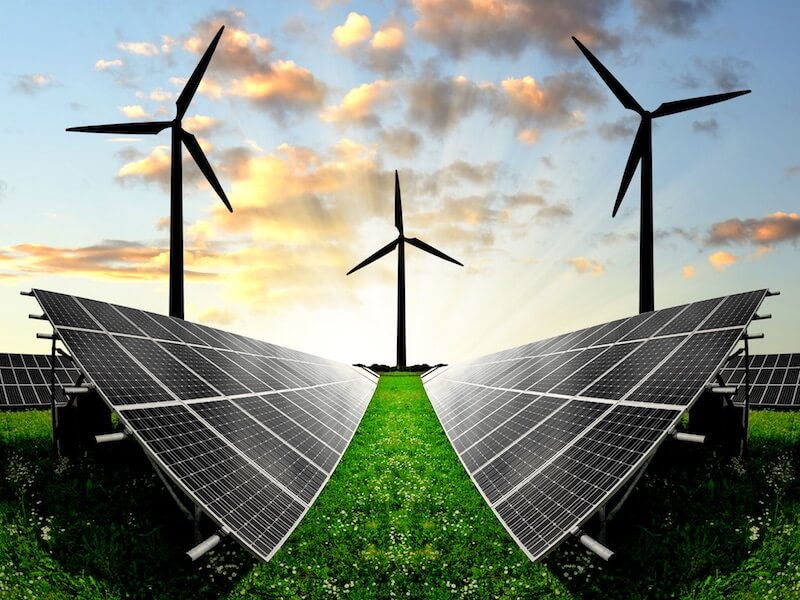
Where are the wind turbines?

CASPER, Wyo. — We drove 275 or so miles today from suburban Denver to this central Wyoming community and didn’t see something I thought I’d see during our entire journey here.

Wind turbines. They were, um, nowhere man!

The terrain was perfect for them. Rolling hills. The atmosphere was, too. We ran into occasionally stiff wind almost throughout our drive.

But … we saw not a single turbine spinning in the wind during our lengthy drive, producing electricity to be shipped elsewhere or to be consumed by the locals.

I want to offer this only for observational purposes. I have no particular answer as to why much of northern Colorado or western or central Wyoming haven’t seemed to have invested in this form of alternative energy.

Now, you may spare me the notion that Wyoming digs a lot of coal out of the ground or pumps oil and natural gas. Texas also has a lot of fossil fuel, albeit no coal. Still, Texas extracts plenty of petroleum and natural gas out of the ground. It also has invested heavily in wind energy, dating back to the George W. Bush and Rick Perry governorships.

I don’t know whether local politics keeps the wind farms from springing up along this vast landscape. I will concede as well that the Colorado-Wyoming countryside is quite gorgeous.

Still, Wyoming is as politically conservative as the Texas Panhandle and the South Plains of Texas. Maybe more so.

Texas is full of these clean-energy devices. Why not Wyoming? Or Colorado?

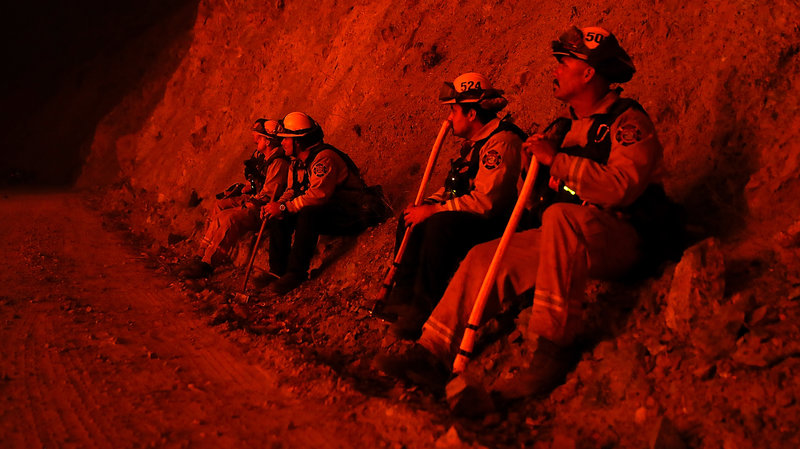
They come from all over to fight the fire

I never tire of saying good things about first responders.

The firefighters who at this moment are risking their lives — and in some instances losing their lives — deserve a good word today.

They are battling fire that is ravaging much of northern California. At last count (that I have heard) eight people have died from the fire. One of the blazes, the Carr fire, is believed to be the largest wildfire in California history.

What really doesn’t get nearly the attention it deserves, though, when these tragedies occur is the inter-state cooperation that occurs among firefighting organizations. Sure, the media report on it; they mention on TV news broadcasts that fire crews have rushed to the aid of the local firefighters.

My wife and I got a  taste of just how extensive these inter-state efforts can get. We visited Grass Valley, Calif., a year ago on our way north to Portland. We parked our fifth wheel at the Nevada County Fairgrounds and became acquainted with firefighters who had encamped at the fairgrounds, which they used as a base camp from which they would confront the fires.

One of the senior firefighters told us fire crews had come from 12 states to assist the locals in battling the blazes that were terrorizing communities all over California.

Indeed, the Texas Panhandle — which also is susceptible to wildfire — earlier this summer welcomed fire crews from as far away as Oregon to assist crews battling the range fires that have blackened many thousands of acres.

These men and women are heroes in every sense of the word. They surrender their lives in the comfort of their own communities to assist their colleagues. They thrust themselves into harm’s way to protect human beings, livestock and pets from the merciless blaze.

Such heroism is presenting itself yet again out west.

All of these individuals deserve a nation’s prayers as they keep up the good fight against Mother Nature’s fury.

What do I miss? The weather!

AMARILLO, Texas — Yep. we’re back where we lived for about a third of our lives on Earth.

Tonight I think I have discovered what I miss the most (sort of) about the Texas Panhandle.

I’ll stipulate up front that we made many friends here before departing for the Dallas/Fort Worth Metroplex earlier this year. I miss them terribly already.

The next thing? Man, it’s gotta be the weather.

We’ve been getting re-accustomed to downstate humidity while we have settled into our new digs in Fairview. It hasn’t been narly the struggle it was when we first moved to Texas in the spring of 1984; we left Oregon for — gulp! — Beaumont, in the Golden Triangle, or, as I like to call it, The Swamp.

Then we moved to Amarillo in 1995. It was in January. My blood had thinned out (if that’s possible) during our years way down yonder, so getting used to the Panhandle winter was a project. But we did.

We have returned for a few days while we prepare to depart for Yellowstone National Park and Grand Coulee, Wash.

We’ve had a hot, humid, sticky summer in Fairview. We parked our fifth wheel tonight at an RV park and have enjoyed the cool breeze wafting through our vehicle.

Ahh, yes! The weather. We likely are going to miss the Texas Panhandle’s version of the four seasons.

Yes, the government works for us

My wife and I — along with Toby the Puppy — are preparing for a two-week-plus journey out west where we’re going to enjoy the sights associated with two massive federal government projects.

Yes, the federal government has lured us to take in these projects’ splendor and to marvel at the genius that created them.

Our first stop will be the nation’s first national park: Yellowstone. We’ll be parked outside the west gate of Yellowstone in an RV camp in Montana.

The federal government established Yellowstone National Park in 1872. It would the first in a long line of gorgeous exhibits of natural splendor.

And yet we get rumblings from Washington that the government wants to scale back its national park land, specifically its national monuments, which also are run by the National Park Service, an arm of the Department of Interior.

I am of the view that we need to set aside more land for Americans to enjoy, not less of it.

We intend to see Yellowstone again and thank those far-sighted individuals who saw fit to create a national park system that would stand the test of time … and I hope it’s forever!

From there we’ll venture to the Columbia River in eastern Washington, where we’ll take a gander at a project that came into being during the Great Depression.

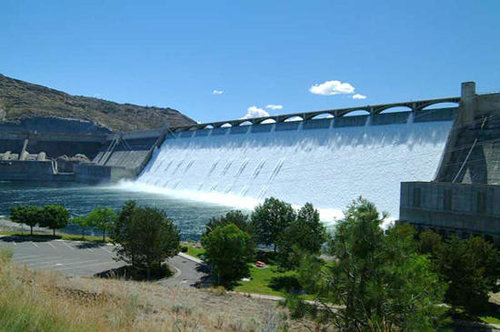
President Franklin Roosevelt inherited an economy in free fall in 1933. He then set about creating the mother of government economic stimulus packages. It included the Bureau of Reclamation, which began construction on Grand Coulee Dam in July 1933.

This is a product of what I would call “good government.” It’s a quaint saying these days. We don’t hear much about the good that government does on behalf of Americans. Grand Coulee produces electricity and also irrigates some fertile farm land where growers produce food to feed millions of Americans.

How can that ever be a bad thing?

So we’ll cast our gaze on these two governmental masterpieces. They’ll make me even prouder of the things my government has done for all of us.