Category Archives: business news

Tax returns? Remember them?

Forgive me, please, for being repetitive.

I believe it’s time, though, to bring up an old issue: tax returns. Specifically, the tax returns of the president of the United States of America. Yes, I know: I’ve traveled down this road already.

Donald J. Trump’s astonishing performance Monday alongside Vladimir Putin in Helsinki has prompted questions about whether Putin has “something” on Trump, as in some sort of business matter that might embarrass the president.

How might we know for certain? Oh, I’ve got it! Tax returns!

Trump refused to release his tax returns when he declared his presidential candidacy in 2015, flouting a tradition followed by candidates of both major parties dating back to 1976. They all did it voluntarily.

Not so with Trump. Why? His returns were “under and IRS audit,” he said. It’s crap. The Internal Revenue Service said an audit didn’t prevent release of those returns for public review.

But now there are questions arising anew about whether the president’s substantial business empire has been caught up in the “Russia thing” that special counsel Robert Mueller is examining as part of his probe into Russian meddling in our 2016 election.

I’ll ask one more, and it likely won’t be the final time: Why not release the returns and shine the light of accountability on your dealings, Mr. President?

Growth vs. no-growth in new city of residence

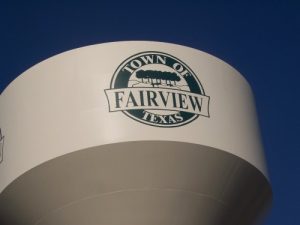
I have learned something about the town my wife and I now call “home.”

There appears to be a struggle within the town of Fairview among residents, some of whom want to see the community grow, while others of them don’t want any more growth. They like the town just the way it is.

Hmm. I haven’t seen this kind of intra-city tension in a good while.

I have made a fascinating acquaintance in Fairview. He is a member of the Town Council. I hesitate to give you his name because he doesn’t know I’m writing this blog post; I’ll respect his privacy.

He tells me about the strife that’s occurring in this Collin County community. Fairview’s population in 2010 was about 7,200; its estimated population in 2014 had grown to more than 8,400 residents.

It is tucked between McKinney to the north (population of just less than 200,000) and Allen to the south (population of about 100,000). Collin County’s population likely has surpassed 1 million residents.

This is a high-growth, high-demand region of Texas (just north of Dallas), which is a state that is growing rapidly as well.

We lived 23 years in Amarillo before relocating to Fairview. I don’t recall ever hearing much public squawking in Amarillo about the city’s aggressive growth strategies: its use of the economic development corporation to lure jobs; its courting of manufacturing and medical center jobs. All of that meant growth was certain. Indeed, Amarillo’s population will exceed 200,000 by the time they take the census in 2020.

We lived in Beaumont for nearly 11 years before migrating to the Caprock. The Golden Triangle, too, demonstrated an eagerness to grow and to seek diversity in its economic base, which for generations relied heavily on the petrochemical industry.

My own sense is that the pro-growth faction — whoever comprises it — ultimately will win the argument. I have found little appetite in Texas during my 34 years living in this state for wholesale resistance to growth opportunities when they present themselves.

Growth means more revenue, which produces greater means to pay for services. My new friend in Fairview seems to believe the no-growth faction remains a vocal minority.

I trust he is correct, as he knows the town far better than I do.

That also is my hope.

Trump’s trade war inflicts casualties on friendly forces

Donald J. Trump keeps insisting that the United States hasn’t declared a trade war against China.

Except that we have.

Here’s the bad news for those who supported Trump’s “America First” political mantra in 2016. The trade war is going to hurt them. It will hurt them bigly.

The Texas Tribune reports that Texas agriculture is being cost in the trade war crossfire between Washington and Beijing.

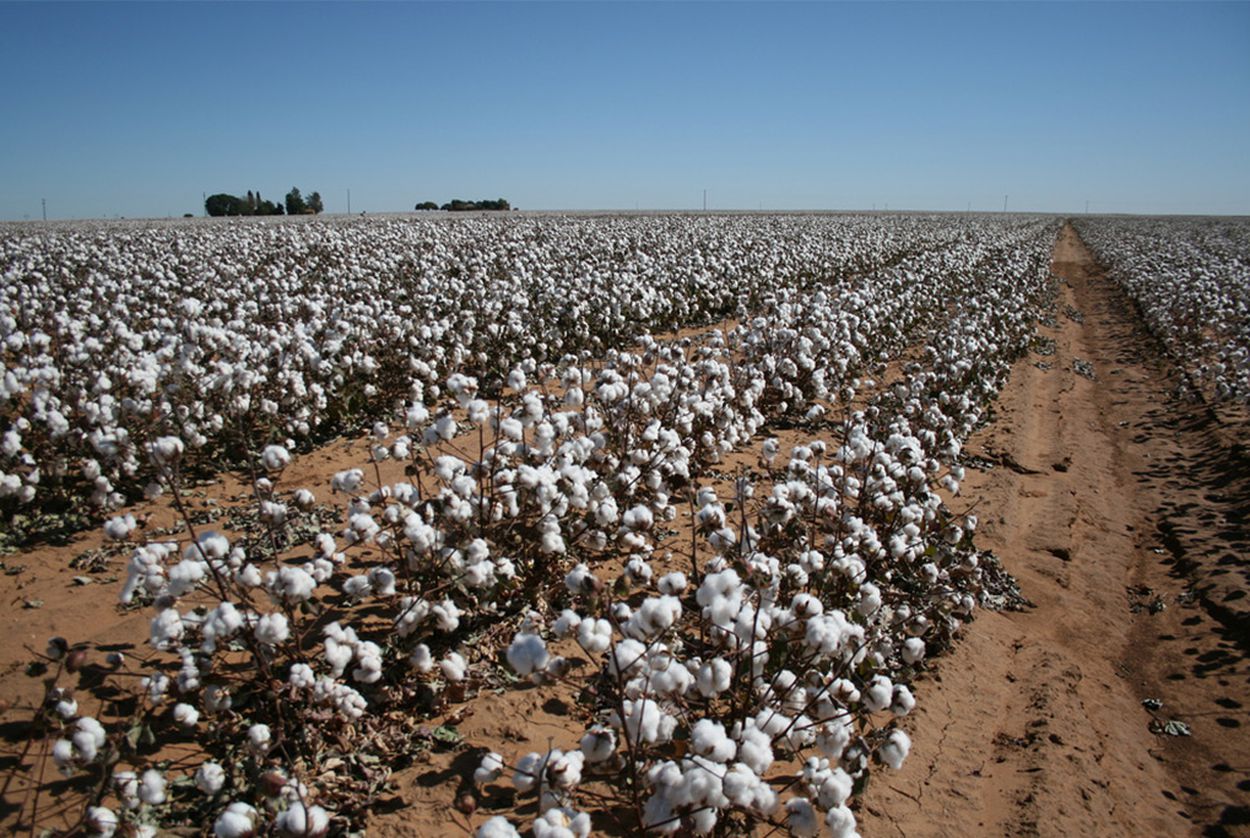
I lived in the heart of Texas Cotton Country until just a few weeks ago. I am saddened to read what might happen to cotton growers in the Panhandle.

As the Tribune reports: President Donald Trump — and by extension many of the nation’s farmers — is seeing that lesson in action after he launched a bevy of tariffs against China on Friday, prompting the People’s Republic to retaliate with its own tariffs on imports from the United States. Among those American goods are some key Texas exports, including cotton, corn and sorghum. Some of the Chinese goods targeted in Trump’s tariffs are vital parts for Texas’ agriculture industry, such as livestock equipment.

“No question, it’s going to hurt,” said Gene Hall, a spokesperson for the Texas Farm Bureau.

They harvest a lot of cotton and corn in the Panhandle, much of which goes to China. More from the Texas Tribune: Cotton is the state’s 10th largest export. Nearly half of the U.S. cotton exported to China comes from Texas. Soy is a smaller market for Texas, but China is the state’s largest international soy customer. Texas exports about $157 million worth of corn a year, making it the 13th largest exporter of the crop in the country, though U.S. corn exports to China have dropped precipitously over the past few years due to increased regulations on the Chinese side.

Read the entire Texas Tribune story here.

And, yes, I hasten to add that many of the farmers who now are going to suffer from the trade war collateral damage supported Trump’s election in 2016. They rallied to his “America first” rhetoric, apparently not anticipating that a trade war would ensue that would have a direct impact on their ability to make a living.

The 26 counties that comprise the Texas Panhandle voted roughly 80 percent for Trump in 2016. I am wondering at this moment how many of those who live off the land are going to regret their vote for the guy who vowed to “make America great again.”

Trade wars aren’t ‘good,’ really, they aren’t

I believe it was the character Gordon Gekko, portrayed by Michael Douglas, who said in the film “Wall Street” that “Greed … is good.”

That was about three decades ago. These days, we have another character, who happens to be the president of the United States, who is saying that “trade wars are good.”

Well, greed isn’t necessarily good. Trade wars aren’t good, either.

Yet the president of the United States, Donald J. Trump, has now officially gone to “war” with China, the world’s second-leading economic powerhouse.

Ladies and gents, we’re all going to pay for this.

Trump has imposed tariffs on Chinese imports. As the New York Times has reported: On Thursday, President Trump showed no signs of backing down from his fight, saying aboard Air Force One that the first wave of tariffs on $34 billion in goods would quickly be followed by levies on another $16 billion of Chinese products. And Mr. Trump continued to threaten Beijing with escalating tariffs on as much as $450 billion worth of Chinese goods.

How are the Chinese going to respond? That remains the open question. According to the Times: “At the moment, I don’t see how this ends,” said Edward Alden, a senior fellow at the Council on Foreign Relations. “This is very much in the president’s hands because he’s got advisers that seem divided, some substantively, some tactically. I just don’t think we’ve had any clear signs of the resolution he wants.”

Trump’s war against our traditional allies and trading partners has reached around the world. He’s imposed tariffs on Canada and Mexico, on the European Union and on Great Britain.

Tariff is another word for “tax,” meaning that the tax will add to the cost of producing the goods being shipped. If we’re going to impose these taxes on imported products, then the nation from which they come will respond with tariffs/taxes of their own on the goods that come from the United States.

Think, too, for a moment about the U.S. Labor Department’s report today that non-farm payrolls grew by 213,000 jobs in June. Good news, yes? Of course it is!

Will we continue to experience this continuing job growth if manufacturers no longer can afford to do business in this world of growing tariffs and taxes?

That’s my fear.

Trade wars aren’t good.

Landmark birthday venue still going strong

I was visiting with my son today and I blurted out that I spent my 21st birthday playing pool and drinking beer with my father and grandfather at a popular watering hole in downtown Portland, Ore., my hometown.

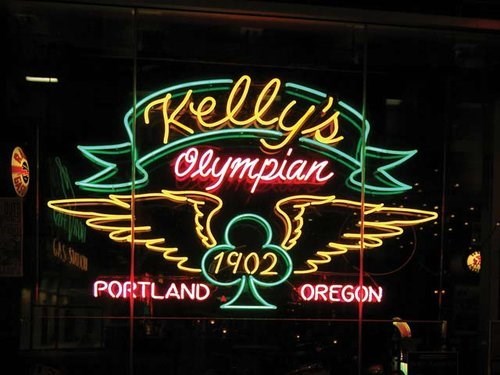
That was in December 1970. Then my son made a discovery. He wondered if it had survived all those years. He Googled “Kelly’s Olympian” on his phone and discovered that it’s still in business.

Not only that, it appears to be thriving. It’s lively. It’s trendy. It apparently serves good food and a wide assortment of adult beverages. It doesn’t look much as it did back when Dad and I were playing pool and swilling cold ones; my grandfather walked in later and joined us.

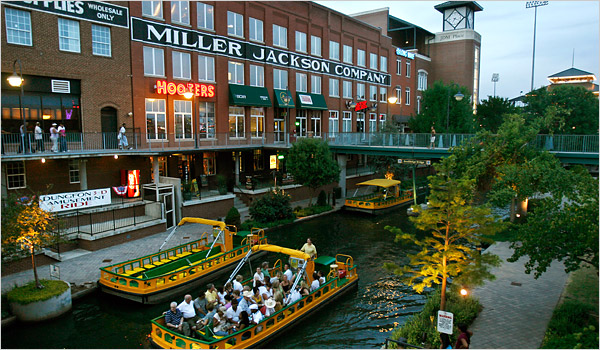
Kelly’s Olympian isn’t the only longtime business that has survived the ups and downs of any city’s economic cycle. Portland, though, has turned its once moribund downtown district into the gold standard for how to make the central district a destination for those who live within that city or those who are just visiting.

*****

This thought occurs to me.

Amarillo,Texas, where my wife and I lived until just about six weeks ago, is undergoing quite an urban makeover in its own downtown district. Polk Street is rumbling back to life. Work is proceeding briskly on that ballpark on Buchanan Street. Longstanding iconic structures have been repurposed into downtown lofts.

When I take the long view and think of what future generations might recall about Amarillo’s downtown district, I wonder — and certainly hope — that they can recall a place that flourishes today. If we flash forward another 47 years, to 2165, my expectation would be that Amarillo’s downtown will continue to evolve into something brighter and more vibrant than anyone ever imagined.

Those Amarillo residents who today are enjoying the fruits of their downtown’s rebirth will look back and be as astonished as I was today to learn that Kelly’s Olympian is still packing ’em in.

Motorcycle maker caught in crossfire

Hey, what’s going on here?

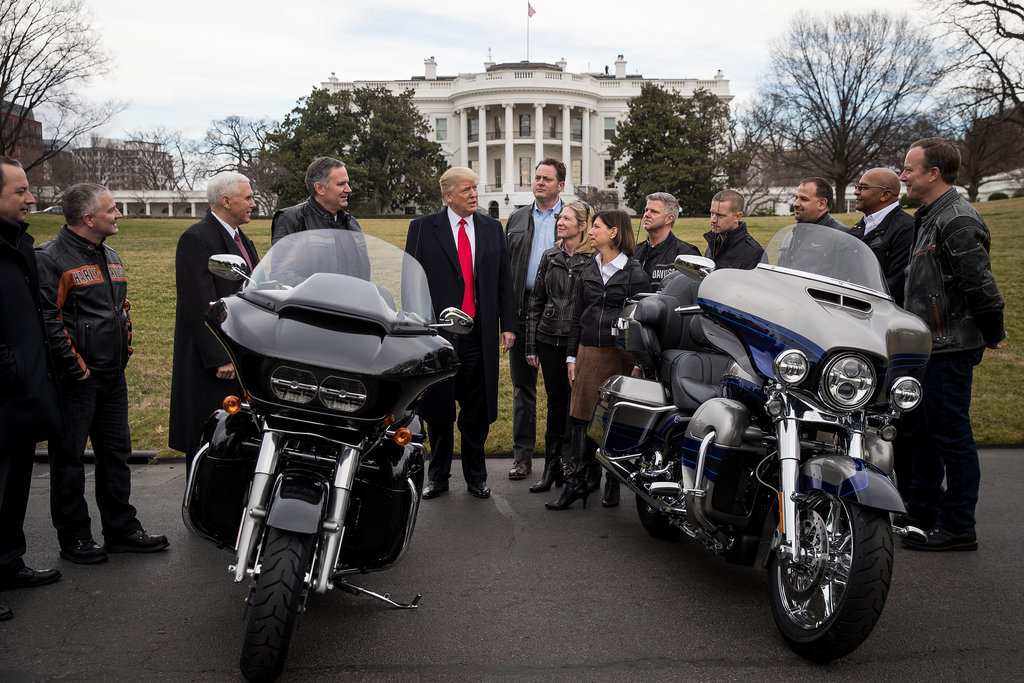
Donald J. Trump said that Harley-Davidson, the iconic motorcycle manufacturer, was going to benefit from his economic policies. The company would flourish from his protectionist measures. The tariffs and all that.

That’s not how it’s playing out.

Harley-Davidson has announced it is moving some of its operations offshore because it doesn’t want to get caught in the crossfire leveled by the European Union, which is retaliating against the president’s tariffs against EU nations.

As the New York Times has reported: Mr. Trump’s trade war is beginning to ripple through the United States economy as companies struggle with a cascade of tariffs here and abroad. While Mr. Trump says his trade policy is aimed at reviving domestic manufacturing, Harley-Davidson’s move shows how the White House approach could backfire as American companies increasingly rely on overseas markets for materials, production and sales.

Harley-Davidson is one of the few American companies that had resisted — until now — the temptation to relocate to sites overseas. They make Harleys in Wisconsin and the president was proud to hail the U.S.-made manufacturer as a beneficiary of the policies he is pursuing.

Of course, the president is distressed that Harley-Davidson would bail as a result of the tariffs and the trade war that has commenced between the United States and the EU. He said Harley-Davidson is using the tariffs as an “excuse.” He wrote in a tweet, according to the NY Times: “Surprised that Harley-Davidson, of all companies, would be the first to wave the White Flag,” he said. “I fought hard for them and ultimately they will not pay tariffs selling into the E.U., which has hurt us badly on trade.”

Well, Mr. President, you didn’t fight hard enough, apparently. The trade war has just produced some early casualties.

Nice going. Who’s next?

Amarillo to get new link to Austin

Amarillo is being hooked up more tightly to Austin, via a new air carrier that will provide direct non-stop daily service between the cities in September.

Fascinating, yes? I couldn’t help but think of a former state legislator who once half-joked about splitting the Texas Panhandle from the rest of the state when he first took office in 1991.

State Rep. David Swinford once pitched a notion out loud that the Panhandle was so far removed from the state capital that it should become a separate state. I asked the Dumas Republican lawmaker about that idea when I first arrived in Amarillo in 1995 and he acknowledged that he was semi-serious about it.

The idea never got sufficient traction.

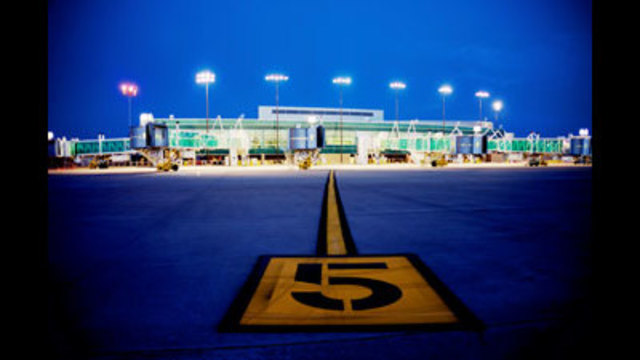
So, here we are, more than two decades later and we get news that Via Airlines is going to begin direct air service between Amarillo and Austin this fall. The in-state air carrier plans one flight out of AMA and one flight back each day, with the hope of expanding service if traffic merits it. Via currently operates a fleet of 50-passenger regional jets.

Via officials along with Rick Husband Amarillo International Airport officials say there’s sufficient interest in getting from the Panhandle to Austin to merit this new service. I guess travelers don’t like flying first to Dallas Love Field via Southwest Airlines, or to Dallas-Fort Worth International Airport via American Airlines before connecting to Austin-Bergstrom International Airport.

We’ll see how this goes. It does bode well for the future of the Panhandle and the growing reliance the region has on its air service, which happens to be quite good. AMA already provides direct service to Las Vegas, Phoenix, Denver, Dallas-Fort Worth and Houston. Now we can add Austin to the list of business and leisure travel destinations.

I also am quite sure that former Rep. Swinford no longer wants to split the Panhandle from the rest of the state.

The message? We don’t need your money!

I’m trying to put myself inside the skull of my friends at the Amarillo Chamber of Commerce or the Amarillo Convention and Visitors Council.

They no doubt know about that moronic sign west of Amarillo, the one that tells liberals to keep on going.

Don’t bother stopping in Amarillo, or in Vega (where the sign is planted) or in Wildorado, Adrian or in any of the cities and towns along the length of Interstate 40 that crosses the Texas Panhandle.

While you’re at it, the sign implies, don’t bother spending any of your money here if you’re one of them damn liberal thinkers. Don’t even think about eating here. Or booking a night or two of lodging here. Or buying groceries.

Just keep on going.

That’s what the sign suggests y’all just do. Pronto, man!

The sign is the product, apparently, of a former Amarillo City Council member who by all rights should know better than to dissuade people from spending their money in the Panhandle.

But … Randy Burkett is so damn ideologically rigid — or so it appears — that he he has tossed the needs of the greater community into the crapper just so he can demonstrate a silly penchant for political grandstanding.

Nice going, Mr. Burkett. This is how you show your “love” for the Texas Panhandle and the “great state of Texas”?

Two years later, Trump still making no sense on trade

I posted a blog item nearly two years ago wondering if Donald Trump knew a damn thing about trade policy.

My conclusion, based on what I understood from a speech he gave in Bangor, Maine, was that he was clueless.

I must maintain that conclusion today.

https://highplainsblogger.com/2016/06/incoherence-on-trade-policy/

Now that he is president of the United States, Trump has decided to impose steep and punishing tariffs on imported goods from two of our nation’s most vital trading partners: Canada and Mexico.

The Republican president has trashed the North American Free Trade Agreement, which includes the United States and, yes, Canada and Mexico. NAFTA was intended to forgo the kind of protectionist tariffs that governments impose on other nations.

The concept of “free trade” is to allow goods and commodities to flow among participating countries. To that end, I long have believed NAFTA was doing as it was intended.

Yet the president took office after promising to re-do NAFTA. I don’t know the basis of his disagreement with the agreement, except that he says the United States is wallowing in some sort of deepening “trade deficit” with our primary trading partners.

Now he’s calling Canada — Canada, I tell ya! — a threat to our “national security.” Does this guy, the president, know anything — about anything?

Two years ago, in Maine, Trump told us he favored free trade; then in the same speech, he said he opposed it.

His nonsensical approach to trade has not abated one bit now that he has taken an oath to serve as the head of state of our great nation.

This is what we acquired when Donald Trump got elected?

Holy cow, man!

Let’s try ‘Sod Poodles Tower’

AMARILLO, Texas — OK, I’m just kidding about that suggestion to name the tower after Sod Poodles.

I mention it because of an announcement today that Amarillo’s tallest structure is slated to carry the name of another bank.

Chase left the ground floor of the 31-story tower and today it was announced that FirstBank Southwest is moving into Chase Bank’s first-floor office space.

FirstBank Southwest, pending federal approval, will be able to put its name on the top of the “tallest building between Fort Worth and Denver.”

The building known formerly as the Chase Tower will become the FirstBank Southwest Tower.

My question: For how long?

I’m not real crazy about corporations purchasing building-naming rights. What occasionally happens is what occurred when Chase left the tower. The building name came off the top of the skyscraper. Yet we still refer to the structure informally as the “Chase Tower.” Just mention the name and everyone in Amarillo knows what you’re talking about.

At least, though, the new bank is a locally owned outfit. I suppose that makes it more tolerable than some big corporate name being plastered on the side of what is among the city’s most recognizable downtown structures.

They’re going to name the city’s new minor-league baseball team later this year. I’ve already stated my case for Sod Poodles, which is among the five finalist names under consideration by the team owners.

My own preference for what it’s worth — and it’s not much these days, given that my wife and I now live elsewhere — would be to put a name more linked to the region than to some corporate entity.

Palo Duro Tower. Llano Estacado Tower. High Plains Tower. Canadian River Tower. Caprock Tower.

Just thinking out loud …