Category Archives: State news

Census Bureau throws in a trick question

Counting more than 300 million U.S. residents is difficult enough.

Now comes word that the Census Bureau is going to toss in a ringer of a question. It’s going to ask residents if they are American citizens.

The outcry from so-called “blue states” — those states that tend to vote Democratic — has been loud and expected. But then there’s this from the Texas Tribune: Texas could suffer, too, even though Texas remains a solid “red state” that favors Republicans.

The Census Bureau appears to be on the hunt for illegal immigrants. Asking the citizenship question is likely to dissuade residents from filling out the Census questionnaire, thus depriving states with large numbers of undocumented residents of the representation they have in Congress.

The House of Representatives is apportioned every decade based on states’ population. Texas has been one of the country’s fastest-growing states. Thus, its House representation has exploded along with its population.

As the Texas Tribune reports: Hispanics and poor people are already harder to count — whether there’s a citizenship question in place or not. Census tracts with lower-than-average response rates tend to have higher Hispanic and/or poor populations. Opponents to including a question on citizenship contend it will further increase chances of an undercount — particularly in areas with higher numbers of poor and Hispanic Texas residents.

I guess I should note as well that the citizenship question isn’t required by the U.S. Constitution, which does spell out the need to count U.S. residents every decade to determine each state’s congressional representation. This added question is an add-on that is going to diminish many states’ representation in the halls of power.

That many of them happen to vote Democratic suggests that the GOP-run executive branch of the government is putting the screws to “blue” states. This punishment is likely to make officials see “red.”

Planning for an education on Texas history

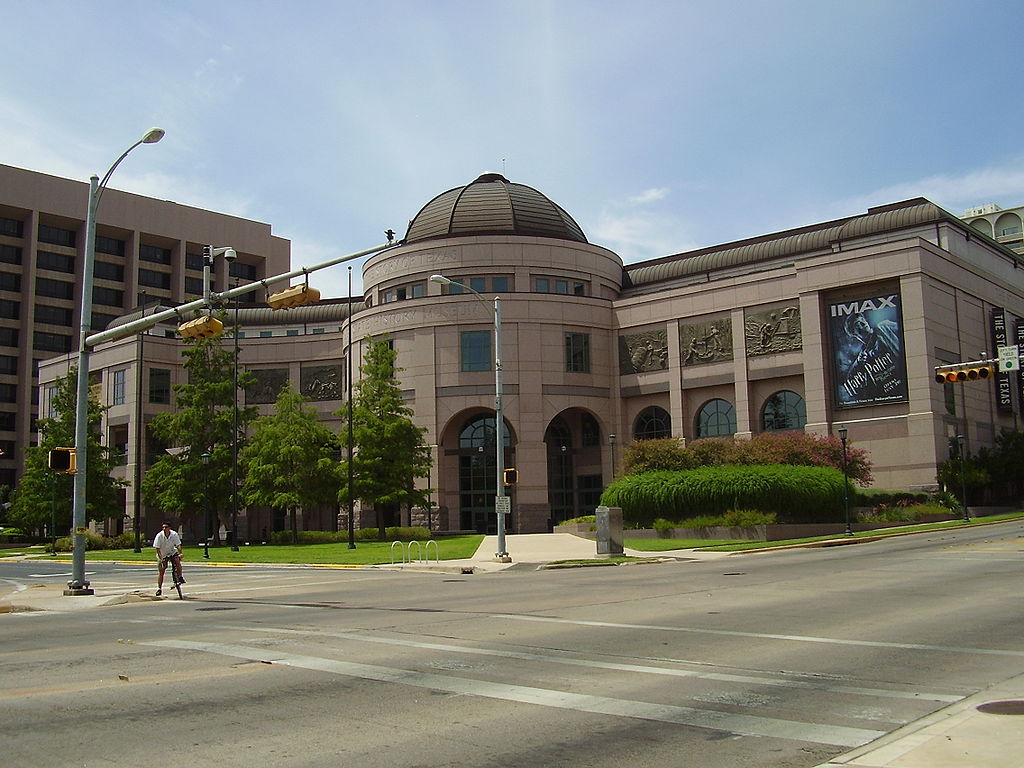
We’re heading downstate soon for a two-week tour and we’ve made a tentative decision on one of the sights we intend to take in: the Bullock Texas State History Museum in Austin.

I regret I have not yet toured this place.

It’s not far from the State Capitol and it carries the name of one of the state’s more legendary political figures: former lieutenant governor and Texas comptroller Bob Bullock.

Bullock died some years ago of cancer. He was an irascible, often grouchy politician. He was a crusty, traditional Texas Democrat; by that I mean he wasn’t what you’d call a squishy liberal. I met him once while I was working in print journalism; it was near the end of his life and, to be candid, he looked like death warmed over. Lt. Gov. Bullock did not take good care of himself.

But, oh man, this man — who died in June 1999 — loved Texas. He was fond of finishing his public speeches with that gravely “God bless Texas” salutation. His political descendants from both parties have adopted that blessing as their own.

The museum in his memory opened in 2001 and it tells the story of Texas history like no other such display.

Now, I offer that view with no disrespect at all to the Panhandle-Plains Historical Museum on the campus at West Texas A&M University in Canyon, just down the highway a bit from Amarillo. I’ve been to the PPHM many times and have seen the flyers proclaiming it to be the “finest historical museum” in Texas. It’s a wonderful exhibit and I see something new every time I visit it.

Our RV travels are going to take us downstate for a tour of the Hill Country and later to the Golden Triangle, where we lived for nearly 11 years before moving in early 1995 to the Texas Panhandle. We’ll finish our jaunt in the Metroplex before heading back to Amarillo.

I am so looking forward to touring what I have heard for many years is a beautiful exhibit in Texas’s capital city.

Technology serves Austin PD — and the public — quite well

Technology sometimes gets a bum rap. Such as in Amarillo, where city officials are employing cameras to help officials deter motorists who believe stop lights are merely a suggestion and not an order.

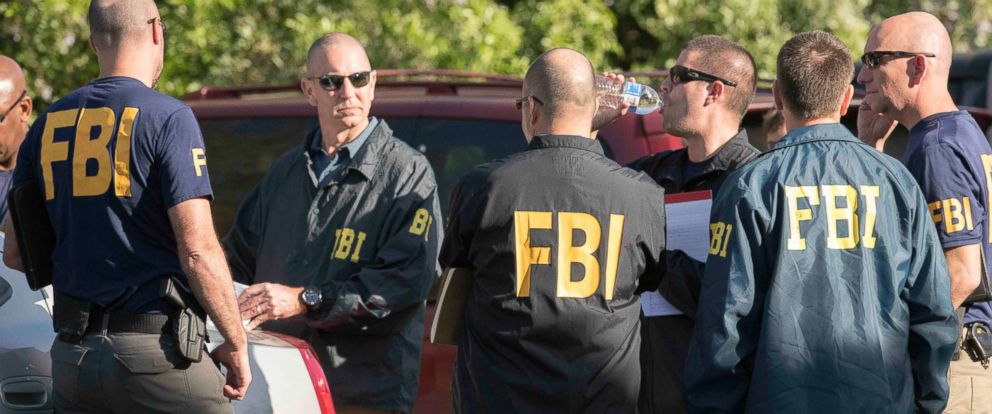
I want to applaud the Austin Police Department, the FBI and the Bureau of Alcohol, Tobacco and Firearms for using high-technology measures in helping the cops track down a serial bomber who had terrorized the city for nearly three weeks. He detonated five explosive devices, killing two victims and injuring many more.

A young man was photographed at a FedEx center dropping off a package. The police got a good look at the image, then tracked him to a hotel in Round Rock. Austin PD deployed a SWAT unit to arrest the man, who took off in his car.

Police gave chase, and then the man blew himself to bits by setting off a bomb he was carrying in his own vehicle!

This is what I would call some first-rate police work.

Technology came into play. Austin PD used it to its fullest advantage. Granted, the man alleged to have set off the bombs seems to have made a fatal mistake by showing up — in all places — at a FedEx station where it could be assumed that officials are watching everyone’s every move every minute of every day. Right?

Austin’s terror appears to be over, provided the bomber didn’t plant other devices that have yet to be detonated. The individual who terrorized a major American city appeared to have sophisticated knowledge of how to assemble and plant these devices.

I’ll continue to hold my breath and hope that Austin has gotten past this terrible, frightening episode.

I also want to applaud Austin police and federal agency officials for their diligence and their thorough investigative techniques in bringing their hunt to a conclusion.

As they say: When it works, technology can be a wonderful thing.

Will this young man enter the speaker’s race?

The Texas Tribune has listed five state legislators who either have announced plans to run for Texas House speaker or are interested in joining the fray.

I looked the list over and was expecting to see a name from Amarillo. He wasn’t among the five of them.

So, with that I’ll offer this on-the-record request for state Rep. Four Price, the Republican representative from House District 87: Go for it, young man! Join the field of legislators who want to be the next Man of the House!

Price will see this blog post. He already knows that I have great personal regard for him. I am acknowledging my bias, OK?

Rep. Price brings some political muscle to this contest, were he to run for speaker.

First of all, Texas Monthly rated him among the state’s “Ten Best Legislators” in 2017. TM’s editors like his commitment to mental health issues.

Second of all, Price beat back a challenge from a guy who had some serious financial backing from Empower Texans, the far-right-wing political action group that had targeted a number of incumbent legislators. Price rolled up 79 percent of the vote in the March 6 Republican Party primary race. The way I see it, a victory margin of that size has purchased Price a good bit of political capital that he can spend while campaigning for speaker.

Third of all, Price would give the Texas Panhandle an important — and loud — voice in the Legislature at a time when it is experiencing a diminishing level of clout in Austin. It’s part of the state’s shifting population trend, with Central and North Texas growing at a much more rapid rate than the vast reaches of West Texas.

Price told me some months ago that he was part of current Speaker Joe Straus’s legislative team in the House. He endorsed the leadership that Speaker Straus brought to the lower legislative chamber. It follows, then, that a Speaker Price would follow the lead established by Straus, who’s not running for re-election.

I say all this knowing that this decision rests exclusively with Four Price and his family. Were he to run for speaker and then be selected by his House colleagues, he would be elevated immediately from a part-time citizen-legislator to a full-time political leader — even though the job won’t pay him accordingly.

It’s a sacrifice to run for speaker and to subject oneself to the abuse that goes with the territory.

Still, I hope Four Price goes for it.

New state anti-texting law: no apparent deterrent

A friend posed a question on social media that needs an answer and a brief rant from yours truly. She asked whether anyone else “looks in their rear view mirror” when they are stopped to see if the person behind them is texting while driving a motor vehicle.

I answered “yes,” although I should have been a good bit more emphatic about it.

Texas legislators in 2017 finally approved a statewide ban on the use of hand held communications devices while driving motor vehicles. Amarillo already had an ordinance on the books, along with several other cities throughout the state.

To their credit, our local lawmakers backed the ban. It went to Gov. Greg Abbott’s desk and he signed it, reversing the position taken by his immediate predecessor, Rick Perry, who vetoed a nearly identical bill in 2011; Gov. Perry offered one of the most idiotic reasons ever recorded for his veto, calling it a form of “government intrusion.”

So, then, are laws against speeding and drunk driving … if you follow Perry’s nonsensical “rationale.” Texting while driving is every bit as dangerous as swilling alcohol or speeding.

My rant follows this track. Since the enactment of the law, I do not sense a serious decline in the incidents of texting while driving. I see motorists constantly doing that very form of dual-tasking.

I curse them, often out loud and in a bellicose voice.

I haven’t traveled out of state in a while, so I cannot confirm this, but the last time my wife and I went beyond the state line I didn’t see any signage on the return trip advising motorists that texting while driving — or using hand held cell phones while driving — was against state law.

Not that such a warning necessarily will deter motorists from breaking the law, but … you get my drift.

There. Rant over.

I’ll now refer to a bumper sticker that once adorned a car we used to own — but which was destroyed in 2012 by a driver who rear-ended my wife while she well might have been texting while driving. The cops never revealed it to us.

Get off the phone and drive!

No-brainer: Don’t vote on husband’s salary

Angela Paxton is a solid favorite to be elected to the Texas Senate this fall, representing the suburban region north of Dallas.

She won the Republican Party primary earlier this month. Given the state’s heavy GOP leanings, that puts her on the inside lane en route to the Senate.

Her husband happens to be Texas Attorney General Ken Paxton, who’s likely to be re-elected in the fall general election.

Ahh, but here’s a potential quandary facing a Sen. Paxton: Does she vote on budget matters that set her husband’s salary as the state’s top legal official? There appears to be some gray area here, with ethics experts debating it.

To me it’s a no-brainer. No matter what the Texas Constitution allows, Paxton shouldn’t vote on her husband’s salary. Let her 30 Senate colleagues determine how much the attorney general should earn.

For the life of me I don’t understand why this is even under discussion. According to the Texas Tribune: “She’s going to have to think about what she does before she does it. If they’re doing [increases] for everyone, I don’t think that’s a conflict because everybody’s getting the same raise,” Hugh Brady, a law professor at the University of Texas at Austin, said. “If it’s something special for the attorney general, I think she should step back and pause.”

I disagree with the professor. I don’t think a lawmaker casting a vote that materially affects his or her income passes the smell test, no matter if it’s a vote for all officials or if the vote affects an individual.

Paxton wouldn’t be the first lawmaker to face this issue. GOP State Rep. Tom Craddick’s daughter, Christi, serves on the three-member Texas Railroad Commission. Rep. Craddick has voted through three legislative sessions in favor of state budgets that include salaries for the RRC. I believe that, too, constitutes a conflict of interest, although it would not be as blatant if Angela Paxton were to vote to approve her husband’s salary, given that she and the AG share the same home.

I’ll fall back on a truism that should govern elected officials’ conduct: Just because it’s legal doesn’t always make it right.

Did you oppose it, governor?

How about this? A Texas legislator says Gov. Greg Abbott opposed that idiotic Bathroom Bill and didn’t want it to show up on his desk.

So says the chairman of the House State Affairs Committee, Byron Cook, a Corsicana Republican. Cook’s panel managed to block the Bathroom Bill from clearing the House of Representatives during this past summer’s special legislative session.

You will recall that the Bathroom Bill would have restricted the use of public restrooms by transgender individuals; it would have required them to use restrooms in accordance to the gender assigned to them on their birth certificate. So, if you’re a man who was born a woman you would have had to use the women’s restroom … and vice versa.

Republican legislators determined the Bathroom Bill was “bad for business,” according to the Texas Tribune. That’s only part of the problem with this hideous piece of legislation. It was discriminatory on its face.

Yet the Texas Senate insisted that the state should enforce a public restroom use provision. Sheesh!

Most of me is glad the Legislature threw this bill — and please pardon the intended pun — into the proverbial crapper. A smaller part of me, though, wishes it had gotten to Abbott’s desk if only just to see if the governor opposed the bill enough to veto it.

I want to believe Chairman Cook is right, that Gov. Abbott disliked the Bathroom Bill. However, I still wonder …

Here’s an idea. Maybe the governor could set the record straight and tell us himself whether he would have signed it or canned.

State prison unit to get A/C … more to come?

Texas’s massive prison system is no stranger to lawsuits.

An inmate, David Ruiz, once sued the Texas Department of Criminal Justice on grounds that the crowded prison conditions violated the constitutional ban on cruel and unusual punishment.

The federal courts took over the prison system and a massive prison unit construction boom ensued to relieve crowding.

Now it appears that another lawsuit has forced the TDCJ to install air conditioning units at its Pack Unit southeast of College Station. It’s too damn hot there and inmates deserve air conditioning in their living quarters. I support the state’s decision to cool off this unit.

As the Texas Tribune reports: “It’s a big day for the inmates who suffered through those summers at the Pack Unit,” said Jeff Edwards, attorney for the prisoners. “They’re not going to be in fear of dying from heat stroke anymore.”

Edwards said the agreement details that the department will install temporary air conditioning for the coming summer, with permanent units in place by May 2020. A spokesman for the Texas Department of Criminal Justice confirmed an agreement, adding that the department and plaintiffs would be working to finalize details in the coming weeks.

The agreement is awaiting federal court approval.

This brings to mind something I learned not long after I arrived in Amarillo in 1995. I received a tour of the William P. Clements Unit northeast of the city. The assistant warden at the time walked me through the unit and made quite a point of telling me that Clements did not have air conditioning. To cool the place off during the summer, it had large fans to blow the air around and provide some semblance of relief from the heat.

Amarillo, though, is a different kind of place from the region near College Station. It not only gets damn hot in Aggieland, but the humidity can stifle even the stoutest of individuals.

I moved to the Panhandle from the Golden Triangle, where the humidity is overpowering. I don’t know if the Mark Stiles Unit in Jefferson County has air conditioning; if it doesn’t, I believe it should.

I do not buy the notion that our prison units are “country clubs,” which some critics have contended for too many years. They’re tough places to exist.

Air conditioned prison units do not turn them into posh resorts. They merely create a semblance of livable conditions for individuals who would rather not be there in the first place.

Disappointed in GOP primary for land commissioner

I’ve already told you about my satisfaction in the Republican Party primary election finish for two key races for the Texas Legislature: State Sen. Kel Seliger and state Rep. Four Price, both of Amarillo, beat back challenges to win their party’s nomination.

In Seliger’s case, he has a token foe this fall, so he’s virtually assured of his re-election.

I suffered through my share of GOP disappointments, to be sure.

One of them involved the race for Texas land commissioner. I cast my ballot for former Land Commissioner Jerry “The Gun Guy” Patterson, who sought to win his old job back from the incumbent, George P. Bush.

Patterson had grown weary of Bush’s scaling back of General Land Office functions, notably its administering of The Alamo in San Antonio. Bush keeps harping on how “conservative” he has been in running the GLO.

I’ve long appreciated Patterson on a couple of levels.

He had a demonstrated commitment to veterans issues. The GLO administers the state’s veterans home loan program and Patterson — a former Marine Corps pilot — made the issue his own as land commissioner.

I also appreciated his self-deprecating humor, how he doesn’t take himself too seriously. Patterson once joked about how he finished “in the top 75 percent of my class at Texas A&M,” and how he managed to earn is “four-year degree in six years.”

I get that these personal traits don’t necessarily translate to public policy, but I do find them endearing.

Patterson ran for land commissioner after a Texas Senate career distinguished by his authoring the state’s concealed handgun carry bill. I opposed that legislation when he introduced in the mid-1990s; although I don’t endorse it now, I have come to accept it as the law of the state.

Bush is likely to be re-elected this fall. He’ll continue to scale back the GLO’s functions, declaring his actions to be those of a dedicated conservative. Patterson sought to make the case that the Land Office needs to step up to take care of state treasures, such as The Alamo.

He didn’t make the case to enough Republican Party primary voters.

That’s too bad.

Now the governor calls for GOP ‘unity’

Texas Gov. Greg Abbott is trying to recover from some of the political wounds he suffered this week in the state’s Republican Party primary.

You see, the governor took a most unusual step in endorsing three challengers to Republican legislative incumbents. It’s highly strange for politicians to take sides within their own party. Abbott sought to get rid of three legislators who oppose many of his policies.

Oops! It didn’t work … mostly. State Reps. Sarah Davis and Lyle Larson won their primary races. Rep. Wayne Faircloth lost his primary contest.

So now the governor wants the party to “unify” behind its slate of candidates running against Democrats this fall.

As the Texas Tribune reports: “Now that the primary’s over, I think it’s very important that the Republican Party come together as one and work together all the way through the November to make sure that we win the elections in November,” Abbott said.

We live in politically contentious times. The Republican Party is being redefined at the very top of the food chain, by the president of the United States. Donald Trump has imposed protectionist trade tariffs that run totally counter to traditional GOP orthodoxy.

That tumult has splashed over state politics as well. Consider the intraparty battles that occurred throughout Texas during this primary season. Popular incumbents received GOP primary challenges in all corners of the state, including in rock-solid Republican Texas Panhandle legislative districts.

This tells me that the “unity” that Gov. Abbott seeks might be a bit more difficult to obtain that it might be in a “normal political climate.”

Ain’t nothing “normal” about what we’re watching transpire within this once-great political party.