Category Archives: military news

Why the fixation over labels?

Conservative media continue to be fixated over the White House’s refusal to refer to the terrorists with whom we are at war as “Islamic terrorists.”

Homeland Security Secretary Jeh Johnson got the third degree on Fox News Sunday over that question.

His answer: Islamic State terrorists don’t deserve to be dignified by any reference to Islam.

http://www.realclearpolitics.com/video/2015/02/22/fox_news_sunday_host_vs_jeh_johnson_islamic_state_doesnt_deserve_the_dignity_of_being_called_islamic.html

I’ve long wondered when this silly argument is going to cease. I’m believing now that it will never end.

From my standpoint, it makes no difference if we call these monsters “Islamic terrorists,” or “violent terrorists,” or “garden-variety terrorists.” What matters — or what should matter — is what we’re doing in the field to fight these groups.

We’re stalking them. We’re killing them. We’re taking some of them prisoner. We’re subjecting them to serious interrogation.

Isn’t that enough?

However, it doesn’t seem to be among those on the right who keep insisting that the refusal to label the bad guys as “Islamic terrorists” somehow makes the fight less, well, heartfelt or sincere on our part.

I continue to believe our deep-cover agents, special operations personnel, Homeland Security and CIA analysts are doing all they can do to ensure that we avoid a repeat of the 9/11 attacks. No one anywhere can predict the level of success in avoiding another dastardly attack.

If we get hit once again, it won’t be because the White House doesn’t hang the correct label on the forces of evil with whom we are fighting a war.


Some expressions become meaningless

People extend greetings or offer certain expressions that at times — all too frequently, actually — seem like clichĂ©.

“Have a nice/blessed/wonderful day.” “How ya doin’?” “I’m sorry for your loss.”

Those three have become trite and, frankly, hackneyed.

A New York Times essay tells of veterans who don’t like people saying, “Thank you for your service.”

http://www.msn.com/en-us/news/us/please-don%e2%80%99t-thank-me-for-my-service/ar-BBhPFEn

Why is that? According to the Times, vets feel that the expression of thanks from non-veterans rings shallow, tinny, insincere. As one vet told the Times, those offer such expressions “don’t have skin in the game,” meaning they haven’t seen war in Afghanistan or Iraq.

I kind of understand the feeling here. Thanking someone for their service does sound like something one is supposed to say — even when the expression of thanks comes from the heart of the person offering it.

Matt Richtel’s article states: “To these vets, thanking soldiers for their service symbolizes the ease of sending a volunteer army to wage war at great distance — physically, spiritually, economically. It raises questions of the meaning of patriotism, shared purpose and, pointedly, what you’re supposed to say to those who put their lives on the line and are uncomfortable about being thanked for it.”

One of the vets Richtel interviewed had an interesting take on these expressions: The idea of giving thanks while not participating themselves is one of the core vet quibbles, said (Michael) Freedman, the Green Beret. The joke has become so prevalent, he said, that servicemen and women sometimes walk up to one another pretending to be ‘misty-eyed’ and mockingly say ‘Thanks for your service.’

“Mr. Freedman, 33, feels like the thanks ‘alleviates some of the civilian guilt,’ adding: ‘They have no skin in the game with these wars. There’s no draft.’

“No real opinions either, he said. ‘At least with Vietnam, people spit on you and you knew they had an opinion.’”

I never got spit on when I came home from Vietnam. But I’ve discovered that a particular expression does resonate with Vietnam veterans. It’s a pretty simple statement that we didn’t hear much back then: Welcome home.

As the vets interviewed by the Times said, they appreciate hearing from those who’ve been there. Those who haven’t, well, those expressions of thanks at times make today’s vets bristle.

As Richtel writes: “(Hunter) Garth appreciates thanks from someone who makes an effort to invest in the relationship and experience. Or a fellow vet who gets it. Several weeks ago, he visited one of his soul mates from the mud hut firefight, which they refer to as the Battle of the Unmarked Compound. They drank Jameson whiskey in gulps.

“’We cried in each other’s arms until we both could tell each other we loved each other,’ Mr. Garth said. ‘We each said, thank you for what you’ve done for me.’”


Hey, how does 'conflict' sound?

A good friend of mine has an idea about how to deal with the word games being played over what we call the current war we’re waging with international terrorists.

My pal Jim, who lives in Arizona, writes: “Let‘s call it a conflict. Didn’t we use that term before to soften the impact?”

Boy, howdy! We sure did.

Remember the Korean conflict? Or the Vietnam conflict? The “conflicts” in Korea and Vietnam turned into  “wars” eventually, but many headline writers and journalists writing about Vietnam often didn’t capitalize the “w” in “war,” as if to suggest that it wasn’t really a war.

Perhaps this sidesteps the issue. My earlier blog post noted the discussion about whether the Obama administration is right to avoid using the term “Islamic terrorists” to describe the enemy with whom we are at, um, war. My point is that we need not quibble over what to call the enemy, but we should instead concentrate our efforts solely on actually fighting these monsters.

Whatever we call the enemy, or the fight in which we are engaged, it’s a war by any known definition of the word.

I’ve noted before that we’re in a form of a world war, although it doesn’t resemble the two previous world wars in which we fought — Nos. I and II. Those wars involved nations declaring war on other nations. It involved mass mobilizations of men, who then were sent to battlefields to fight men from other nations that had done the very same thing.

Our wars since WWII, though, have materialized differently. We’ve had no formal declaration since President Roosevelt asked Congress on Dec. 8, 1941 to declare that “a state of war has existed” between the United States and Japan.

But we’ve fought actual wars. The men and women who’ve died in battle have been killed just as dead as they were in World Wars I and II.

I told my friend Jim that I’ve always hated the term “conflict” to describe war.

Instead, I prefer to call these fights what they are. And what we’re fighting today is no less gruesome and deadly than any war we’ve ever fought.


Let's stick to the singular 'war'

A Huffington Post headline contains a word that requires a correction.

It says, “Jeb Bush won’t talk about wars his brother started.”

The operative word here is “wars.”

http://www.huffingtonpost.com/2015/02/14/jeb-bush-iraq-afghanistan_n_6683970.html?ncid=fcbklnkushpmg00000013

The Huffington Post is no friend of Jeb Bush or of his brother, former President George W. Bush. Having stipulated the obvious, I now shall make a crucial point.

The “wars” referenced in the article are the conflicts in Afghanistan and Iraq. I hereby submit that George W. Bush didn’t start the Afghan War. The first shot — if you want to call it that — was fired on 9/11 when two jetliners crashed into the World Trade Center, another one plowed into the Pentagon and a fourth plane crashed into a Pennsylvania field as passengers fought to retake the aircraft that had been hijacked by al-Qaeda terrorists.

Nearly 3,000 innocent victims died on that terrible day.

President Bush responded to an act of war against the United States. The war began because terrorists headquartered in the Afghan wilderness plotted the dastardly deed and were plotting to do even more damage to this country and to others around the world.

Our military response was in retaliation for what the monstrous murderers did on 9/11.

As for the Iraq War, yes, Bush started that war. The Bush administration relied on bad intelligence — or perhaps fabricated a weapons of mass destruction scenario to justify a military invasion of a sovereign country. Whatever the cause, the Iraq War was ill-conceived and then sold to the public dishonestly as a relatively simple mission.

The world would then learn that Iraq didn’t possess WMD, which only worsened the public perception that President Bush was out to settle a score with the late Iraqi dictator Saddam Hussein.

That is the war the former president’s brother, Jeb — who’s considering a presidential campaign in 2016 — should keep hidden in the closet for as long as he can.

The Afghan War? That one was justified.

It’s an open question about whether the effort in Afghanistan was worth it. The U.S. combat mission there is over and the Afghans will be left to defend their country against the Taliban and al-Qaeda terrorists who are seeking to retake the country.

Jeb Bush, though, will have his hands full trying to justify the Iraq War and whether the cost of that bloody conflict — more than 4,400 American lives — was worth the fight.

Take care in defining 'combat veteran'

It didn’t take Joni Ernst long to make a name for herself in the U.S. Senate.

The Iowa Republican is now defending her military record in which she defines herself as a “combat veteran.”

I would caution her to speak very carefully when using such terminology.

At issue is her service in an Iowa National Guard transportation company in Iraq and Kuwait in 2003 and 2004. She calls herself a “combat veteran” even though she didn’t face enemy fire during her deployment in the Middle East.

http://www.rawstory.com/rs/2015/02/joni-ernst-says-she-earned-the-right-to-call-herself-a-combat-veteran-despite-never-seeing-combat/

Sen. Ernst defends her record, saying that because she drew hazardous duty pay while deployed, she has earned the right to call herself a combat vet.

“I am very proud of my service and by law I am defined as a combat veteran,” Ernst said. “I have never once claimed that I have a Combat Action Badge. I have never claimed that I have a Purple Heart. What I have claimed is that I have served in a combat zone.”

Technically, she is correct. But it is a technicality that can be misconstrued. She needs to be careful how she uses such language in the future.

I understand where she’s coming from. I, too, served in a war zone for a time. The Vietnam War was raging when I arrived in-country in the spring of 1969. I received hazardous duty pay while serving as a U.S. Army aircraft mechanic and later as a flight operations specialist at the I Corps Tactical Operations Center in Da Nang.

Do I refer to myself as a “combat veteran”? No. I didn’t see direct combat — except for having to run for cover while the Viet Cong lobbed mortars into our position on occasion.

Sen. Ernst is rightfully proud of her service in Iraq and Kuwait, as I am of my service many years ago during another armed conflict.

But be careful, senator, when using terms such as “combat vet,” especially around those who’ve actually seen the real thing.


Vets get long-needed help from government

It can be stated clearly: Tom Coburn’s greatest public service accomplishment occurred the day he retired from the U.S. Senate.

The Oklahoma Republican — for reasons that remain a mystery to many observers — continually blocked legislation aimed at helping returning veterans cope with post-traumatic stress disorder that tragically led to suicide.

Coburn is gone from the Senate. So, what did his former colleagues do? They approved a bill — in a 99-0 vote! — that seeks to improve suicide prevention efforts at the Department of Veterans Affairs. It was a stunning display of bipartisan cooperation on an issue that clearly should transcend partisan differences.

As the New York Times noted in an editorial: “The bill calls for regular independent evaluations of the V.A.’s suicide prevention and mental health programs to ensure the most effective approaches are used in its hospitals and clinics. Other provisions include a pilot program to match returning veterans with colleagues whom they can confide in about mental health concerns, and a website to make it easier for veterans and their families to find help. Another provision would help psychiatrists who work for the V.A. repay medical school debt, which could ease the chronic shortage of mental health professionals.”

And yet … Sen. Coburn — using the Senate’s procedural trickery that allows a single senator to block legislation at will — kept this legislation from getting a vote on the floor of the upper congressional chamber.

What’s more, Tom Coburn’s other profession — besides blocking legislation in the Senate — is as a physician. It’s astonishing, therefore, that he would take such an obstructionist view on this issue.

The Senate has turned an important corner and America’s veterans are better served as a result.


So much for 'trust'

My trick knee is throbbing once again.

This time it’s telling me NBC News anchor Brian Williams has some more explaining to do about a made-up story that got him some seriously happy — and falsely premised — publicity over the weekend.

You see, it turns that Williams erred in recounting a story that he had been aboard a Chinook helicopter that had been hit by enemy rocket fire in Iraq in 2003. He had befriended an Army command sergeant major, Tim Terpak, who — according to Williams — had provided cover for the anchorman and other passengers aboard the downed helicopter.

http://www.stripes.com/news/us/nbc-s-brian-williams-recants-iraq-story-after-soldiers-protest-1.327792

Williams and Terpak went to a New York Rangers hockey game the other evening and both of them stood and accepted the crowd’s applause as the public address announcer revealed the story about Terpak’s heroism in protecting the passengers and crew, which allegedly included Williams.

It now turns out Williams wasn’t there.

This is a serious smirch on Williams’s reputation as a veteran TV journalist who trades on the “trust” he has built with the viewers of his nightly newscast.

Williams has recanted the story, apologized and said he “misremembered” the events of that day. He actually had arrived about 60 minutes after the chopper was shot down.

Misremembered? For a dozen years?

The anchorman came clean only after other soldiers who were there protested, telling others they had no memory of Williams being present when Terpak — who’s since retired from the Army — engineered the getaway of those aboard the Chinook.

“I would not have chosen to make this mistake,” Williams said. “I don’t know what screwed up in my mind that caused me to conflate one aircraft with another.”

Neither does anyone else.


Condemnations pouring out over latest ISIL atrocity

President Obama called it “heinous.” Secretary of State John Kerry called it “barbaric.” Japanese Prime Minister Shinzo Abe called it a “cruel and despicable act of terrorism.”

The object of this worldwide scorn once again is the Islamic State, which reportedly beheaded a captured Japanese journalist supposedly in “retaliation” for Japan’s assistance in the international fight against these terrorist monsters.

http://thehill.com/policy/international/231381-kerry-isis-killing-of-journalist-barbaric

Kenji Goto was murdered because Japan has been sending food and medical supplies to assist the international coalition and to lend aid to those who are suffering from the violence in Iraq and Syria, where ISIL is conducting its reign of terror and destruction.

Japan’s hands are tied in this fight, given that its government is sworn by the treaty it signed at the end of World War II that prohibits it from deploying armed forces overseas. Japan maintains a stout military for national defense purposes only. And that’s an understandable caveat that the Allies placed on Japan, given its own history of ruthlessness and, um, barbarism during WWII.

However, none of that excuses for an instant the fate that apparently befell Kenji Goto and Huruna Yakawa — who was beheaded earlier.

All of this insane ghoulishness only requires that we maintain the fight against these monstrous agents of evil.

ISIL’s appetite for barbarism stretches one’s ability to describe it in strong enough language. Heinous, despicable, barbaric, cruel? Yes, all of those are true, but they don’t go far enough. I’m at a loss to find the appropriate description to hang on these monsters.

They need to die. A painful and excruciating death would suit many of us just fine.


Mrs. Obama defends 'Sniper'

Michelle Obama has taken a stand in support of a controversial film about a heart-wrenching subject.

Good for her.

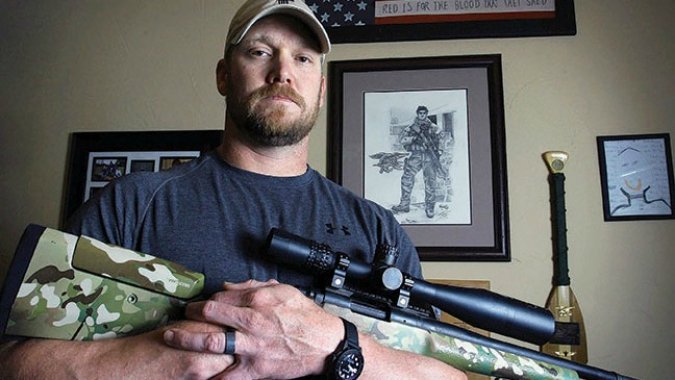
She came to the defense this week of “American Sniper,” the film about the late Navy SEAL sharpshooter Chris Kyle, saying the film deals squarely with the emotional heartache felt by combat veterans and their families.

First lady defends ‘American Sniper’

Mrs. Obama didn’t go after some of the critics of the film directly, although she well could have done so; perhaps she should have done so. But whatever her intention, she made a salient point about the film’s theme and the emotions it has brought to those who have seen it.

She said: “I felt that, more often than not, this film touches on many of the emotions and experiences that I’ve heard firsthand from military families over these past few years.”

Indeed, she and Jill Biden, the vice president’s wife, have made the care of veterans and their families a hallmark of their tenure during the Obama administration and both of these women deserve to be applauded for the attention they have given to this important matter.

As for the criticism of the film — notably by filmmaker Michael Moore — much of it has bordered on the ridiculous. Moore, of course, referred to snipers as “cowards.” He knows nothing of which he spoke on this matter, but his comments got considerable play anyway — I suppose because of his celebrity status and his previous tangles with political conservatives over an array of other issues.

I believe the first lady has put the film in its proper perspective and that should stand as a more credible assessment of a gripping story of triumph, struggle and immense emotional heartache.


Another hero leaves this world

Edward Saylor was a hero. The real thing.

He was one of just four survivors of one of the most daring military acts of all time. He took part in the famous Doolittle Raid on Tokyo in April, 1942.

Lt. Col. Saylor was 94 when he died this week at his home in Sumner, Wash.

http://www.msn.com/en-us/news/us/1-of-4-remaining-world-war-ii-doolittle-raiders-dies-at-94/ar-AA8KsWN

There just are three men left who served on that mission. It was bold, brash and fraught with peril.

The Japanese had attacked U.S. forces at Pearl Harbor just four months earlier. President Roosevelt and the Pentagon brass were reeling as the Japanese were marching through Asia and the Pacific. They needed to do something — anything — to rattle the enemy. So they came up with a plan.

Why not load some U.S. Army Air Corps B-25 bombers aboard an aircraft carrier — the USS Hornet — strip them down to just the fuel and the bombs they need, teach the pilots how to launch a land-based bomber off a floating carrier deck and then have that squadron of planes drop its ordnance on targets in Japan? Lt. Col. James Doolittle would command the raid.

Edward Saylor served as a flight engineer-gunner aboard one of those planes.

He completed the mission at great risk, completed 28 more years in the Air Force before retiring and lived a long and happy life.

He received the Medal of Honor for his supreme bravery.

Sadly, he is just one more of a diminishing number of The Greatest Generation who went off to war to defeat tyranny. Of the 16 million or so men and women who served in World War II, fewer than 2 million are left. They are dying at a rapid rate daily.

Those of us who came up after them owe these men and women everything.

Rest in peace, Lt. Col. Saylor.

Thank you.