Category Archives: media news

Newspaper endorsements: do they matter?

newspapers

Near the end of my career in daily print journalism, I began to question the value of newspaper “endorsements.”

We didn’t really even like to refer to them out loud as endorsements. We preferred the term “recommendations.” We’d recommend a candidate of our choice while understanding that voters are independent thinkers — or so they say — and wouldn’t take whatever the newspaper said as gospel.

These days I’m beginning to wonder about voters’ independence. The plethora of social media and big-money advertising are having the kind of influence on voters’ thought process that, well, newspaper endorsements might have had a half-century or longer ago.

Former Texas Gov. Rick Perry perhaps demonstrated better than anyone in recent times how newspaper editorial endorsements’ value has diminished.

When he ran for re-election in 2010, Perry announced he wouldn’t even talk to newspaper editorial boards. He’d go straight to the voters. He didn’t need no stinkin’ newspaper editors’ approval.

How did Gov. Perry do at the ballot box that year? He thumped Republican primary opponent Kay Bailey Hutchison — no slouch as a Texas politician herself — and then clobbered Democratic nominee Bill White that fall. White, by the way, garnered virtually every newspaper endorsement there was to get in Texas — including from the Amarillo Globe-News, where I worked as editorial page editor; it did him virtually no good at all.

So now, in this presidential election cycle, newspapers are weighing in. The “influential” Des Moines Register endorsed Republican Marco Rubio and Democrat Hillary Clinton in advance of the Iowa caucuses. Over the weekend, the Boston Globe endorsed Clinton as the neighboring New Hampshire primary approaches.

There will be others coming along as the campaigns proceed along the long and winding road toward the parties’ conventions. Newspaper editors and publishers will extend the invitation for the candidates to make their cases. Some of them will accept; others will follow the Perry model.

In the end, however, none of these endorsements — or recommendations — likely will be decisive.

Voters are getting their heads filled by ideologues on both sides of the divide. Their minds are made up.

What’s more, during the more than three decades I practiced my craft in daily journalism, I never heard first-hand any voter say they changed their mind on an election based on a newspaper endorsement.

Maybe they’re out there.

Back to my initial question: Do these endorsements really matter?


When did National Review become a GOP pariah?

27buckley4-600

I’m puzzled.

I’ve always thought that the National Review was seen as the “bible” of conservative thought. The magazine founded by the late, great William F. Buckley was the go-to publication for conservatives to get their view distributed among the masses.

The National Review was the magazine to read.

What in the name of all that is holy is happening?

The Republican National Committee has cut the National Review out of its debate participation. GOP presidential frontrunner calls the magazine a “failing” publication.

Times are changing, yes?

William Buckley might not recognize what’s happening these days to the conservative movement.

Or that his once-revered publication has been shoved aside. There once was a time when thoughtful conservative leaders would occupy the platform that the National Review provided. They would offer their policy views on this or that issue.

Conservatives would embrace them; liberals might not join in the group hug, but they would at least consider the argument made, if only to shore up their own bias.

We have not entered a new age of wisdom when we toss aside thoughtfulness in favor of anger and shoot-from-the-hip talk-show rhetoric.

Mr. Buckley, wherever you are, I wish you were around to talk some sense into these guys who have redefined the conservative movement you once led.


Internet proves, um, wrong!

48405289

Back in the day — when I toiled at a daily newspaper — I actually had the following exchange with a reader of the paper who had submitted a letter to the editor and asked me to publish it.

Me: Are you sure about your facts here? This stuff looks kind of fishy to me.

Reader: Of course I’m sure. It’s the truth. I got it on the Internet.

Suffice to say we didn’t publish the individual’s letter.

The Internet is a lot of things. The purveyor of the whole truth all the time, though, is not one of them.

Breitbart.com posted a story that has Amarillo abuzz with concern. It describes the city as a haven for Middle East refugees and that the city is being “overrun” by them.

Not so, says Mayor Paul Harpole.

I’ve got to give Amarillo Globe-News reporter Kevin Welch huge props for exposing this nonsense.

Harpole said the city is working to control all immigrants, which include refugees. The issue isn’t limited to just those fleeing bloodshed and misery in the Middle East.

But according to the Welch’s story, Brietbart.com and some other conservative websites are disseminating bogus “information” about the state of affairs in little ol’ Amarillo, Texas.

It’s been a given for years that Amarillo has been a magnet of sorts for immigrants. Community faith-based and secular organizations have done a lot over the years to welcome immigrants, as Welch reported.

The city, though, isn’t being swarmed, swamped and swallowed up by hordes of refugees, as some Internet sites have said.

The fallacy of this kind of alleged “reporting” contains several lessons.

One of them ought to become required of all who consume news and commentary. It is that the Internet is a source for fiction far more frequently than it is a source for fact.


Penn fails to make the case

Bloomberg's Best Photos 2014: Drug trafficker Joaquin "El Chapo" Guzman is escorted to a helicopter by Mexican security forces at Mexico's International Airport in Mexico city, Mexico, on Saturday, Feb. 22, 2014. Mexico's apprehension of the world's most-wanted drug boss struck a blow to a cartel that local and U.S. authorities say swelled into a multinational empire, fueling killings around the world. Photographer: Susana Gonzalez/Bloomberg via Getty Images

Sean Penn invented a word last night on “60 Minutes.”

He called himself an “experiental” journalist.

I’ve been working with words for, oh, damn near 40 years. I consider myself a journalist. I worked at four newspapers in two states. I enjoyed some modest success during my career.

“Experiental”? What the . . . ?

Penn is a movie actor of some renown. He recently ventured to Mexico, where he shook hands with Joaquin Guzman, aka El Chapo, the then-fugitive drug lord; he had escaped in early 2015 from a maximum security prison in Mexico. Penn interviewed this supremely evil individual for a 10,000-word article he wrote for Rolling Stone.

I watched with considerable pain in my gut as Penn sought to explain to CBS News correspondent Charlie Rose what he hoped to accomplish by writing a story about El Chapo, who was recaptured by Mexican authorities the day after the magazine article hit the streets.

I think I heard a tinge of sympathy in this guy’s voice as he tried to relay Guzman’s reasons for peddling drugs, for delivering so much misery to so many millions of people, for being responsible for the deaths of thousands of individuals with whom he has come in contact.

I also believe I detected a look of incredulity in Rose’s face as Penn offered his explanations.

And then Penn would drop that hideous, made-up adjective that he put in front of the word “journalist.”

This thought doesn’t come from me, but I’ll pass on what a friend of mine said this morning on social media.

My friend, too, is a trained journalist. He wants to know if he can now seek to become an “experiental movie actor.”

***

This just in: I’m advised that “experiental” is a real word. I stand corrected on that particular point.


What’s with this ‘national poll’?

polls

More often than not I’m going to look carefully at public opinion poll results.

In this election season, we’re being inundated with them. Republican-leaning polls say one thing; Democratic-leaning polls say another. I prefer to look most closely at polls unaffiliated with either party, or certain ideological think tanks, or media outlets I know to have bias in either direction.

But one recent poll has me wondering: Is this one even relevant to anything?

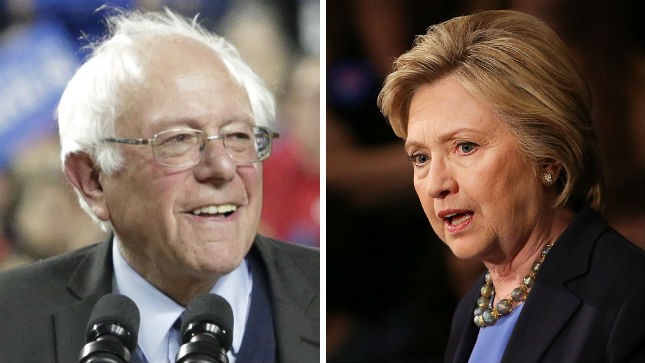
Hillary Clinton leads Bernie Sanders by 25 percentage points nationally, according to a poll released by NBC News and the Wall Street Journal.

The relevancy issue?

Well, consider a couple of things.

They’re both running for the Democratic Party presidential nomination, which means that they’re not going to face each other in a national election. Therefore, they are battling state by state: Iowa, then New Hampshire, then South Carolina . . . and on it goes.

They’ll get to Texas in early March.

Therefore, whether Clinton beats Sanders by a single percent or a million percent in a national poll doesn’t matter one bit.

How are they faring in each state?

The poll does compare the candidates’ chances against a potential Republican nominee and it shows Clinton faring better against the GOP foe than Sanders.

That’s relevant, I guess.

However, these polls pitting one candidate against the other running in the same party primary simply doesn’t register with me.


El Chapo interview continues to provoke debate

photo

I heard a media analyst make an astonishing comparison this afternoon on National Public Radio.

The discussion on NPR was about actor Sean Penn’s interview — published in Rolling Stone — with Joaquin “El Chapo” Guzman, the despicable drug lord who was on the lam from his escape from a Mexican prison.

This analyst seemed to make a direct comparison between El Chapo and Saddam Hussein, Osama bin Laden and Moammar Gadhafi, all of whom were interviewed by the media before they met their deaths.

Hmmm. There’s something of a difference here.

Hussein and Gadhafi were heads of state; bin Laden hadn’t been convicted of anything, even though the entire world knew of his involvement in the 9/11 terrorist attacks.

Guzman was an escapee from a maximum-security prison. Mexican authorities had been scouring the country looking for him since his escape six months ago.

Penn’s access to this individual — whose drug activities have produced so much death and misery — was a function of his own celebrity status as an Oscar-winning film actor.

I keep coming back to what I believe is a central question: Doesn’t an American citizen such as Penn have an obligation to assist authorities in their search for a notorious drug dealer?

Sen. Marco Rubio was asked over the weekend to comment on the interview. The Republican presidential candidate said Penn is entitled to his First Amendment rights, but then he used a term with which I agree.

He called the interview “grotesque.”


How would this guy do in the Internet Age?

Internet

My mind wanders occasionally into strange places.

I think of people I used to know and wonder things like, oh, how would they fare in today’s world?

The name of a one-time Amarillo gadfly came to mind today. His name was Michael Wyatt. He’s deceased now; he died in an automobile accident in the late 1990s at a fairly young age.

I came to Amarillo in early 1995 to become editorial page editor of the two papers published by the same owner: the Amarillo Daily News and the Amarillo Globe-Times.

One of the things I learned upon arrival was that the opinion section operated under a policy that I felt compelled to change immediately. It did not place any time restriction on the frequency of people submitting letters to the editor. Put another way: One could get letters published every day of the week if he or she were so inclined.

Michael Wyatt was a prolific letter writer. He had opinions on just about anything — and anyone — in public life. He was unafraid. He took on City Hall, the school districts, county governments, the chamber of commerce. You name it, he had something to say about it.

The frequency of Wyatt’s submissions, I would learn, had a chilling effect on others who had something to say about a public issue. Wyatt scared people off, kept them from expressing their views. “Why get into a public p*****g match with this loony bird?” they would ask themselves.

Well, we changed the policy right away, settling finally on a once-per-calendar-month rule.

He also would come engage us face to face, talk our ears off about this and/or that. He wanted to know what we thought about something and, of course, he would share his own view.

I’m wondering now how Wyatt would fare in this Internet Age.

I have to believe he’d be in hog heaven with the availability of venues, forums, platforms, websites — whatever — to express himself.

I wrote a column for the newspaper upon hearing of Wyatt’s death. I saluted him as someone who felt the calling to contribute to the public dialogue. He did so with gusto and demonstrated great courage in speaking his mind. A member of the Amarillo City Commission at the time called me to complain about the column paying tribute to Wyatt; he told me he “couldn’t stand him.” Why? “Well he was just so damn critical all the time.”

My reaction at the time, as best as I can remember, was “umm, too bad.” He sought to keep our elected officials on their toes.

To be blunt, Wyatt likely would put many of the individuals who respond to this blog to shame. I’ve got my share of “regulars” who like to comment on this or that; many of them get into arguments with each other on the social media outlets through which I channel these blog posts (and which will receive this one once I’m finished with it).

I find myself chuckling at the notion of Michael engaging in these seemingly endless exchanges. He was quite capable of devouring anyone rhetorically.

It’s too bad he didn’t live long enough to witness the dawn of this new “information/disinformation age.”

Michael Wyatt — wherever he is now — no doubt is wishing he could come back to take part. He would be right at home.


El Chapo saga takes strange turn

CCkRgg

I’m trying to figure this one out and, so help me, this item has me puzzled to the max.

Joaquin “El Chapo” Guzman escaped six months ago from a maximum-security prison in Mexico. He is one of the world’s most notorious drug lords, responsible for dealing in death while peddling meth, heroin and assorted other killer drugs.

So, as one who practiced journalism for more than 36 years, I find myself asking tonight: If given a chance to interview this notorious criminal, would I accept the chance to do so or would I blow the whistle on his whereabouts to the authorities who are looking for him?

The actor Sean Penn took the former course. He interviewed El Chapo for a Rolling Stone interview several months ago.

I don’t think I would have done that.

Then again, Penn is an actor.

I’m also wondering tonight whether Penn has the same sense of outrage that El Chapo was on the lam that many others — such as yours truly — have had as he avoided capture by the authorities.

The Mexican police caught up with him and Guzman is now facing extradition to the United States.

I believe it’s fair to ask: What was Sean Penn thinking?

According to the New York Times: “Mr. Penn and Mr. Guzmán spoke for seven hours, the story reports, at a compound amid dense jungle. The topics of conversation turned in unexpected directions. At one stage, Mr. Penn brought up Donald J. Trump, the Republican presidential candidate; there were some reports that Mr. Guzmán had put a $100 million bounty on Mr. Trump after he made comments offensive to Mexicans. ‘Ah! Mi amigo!’ Mr. Guzmán responded.”

Perhaps there’s something about this story that goes over my head. I’ll admit that I’ve never been given a chance to interview one of the world’s most wanted fugitives . . . so I have no direct knowledge of how I’d respond to such an opportunity.

Still, I find it strange in the extreme that a celebrity of Penn’s stature — someone with no apparent experience as a journalist — would seemingly turn a blind eye toward the circumstances that led to an interview subject’s arrest and conviction while he is seeking to avoid being thrown back into the slammer.

Is it fair to question Penn’s loyalty?

Hmmm. I think I just did.


Recognition for ‘Headliner’ well-earned

millennials

People say it all the time.

They don’t do things for the recognition. They have higher, loftier goals than that. It’s all fine to be honored for your work, but that’s not what it’s all about, they say.

Sure thing. Truth be told, though, we all like to be patted on the back for a job well done.

To that end, a young Amarillo woman has received a well-placed honor by the Amarillo Globe-News. Meghan Riddlespurger is a Globe-News Headliner of the Year.

She made headlines by helping spearhead a movement of fellow young Amarillo residents to get involved in a municipal election. The Amarillo Millennial Movement — named to honor those from the so-called “millennial generation” — was created to campaign in favor of a multipurpose event venue that was decided in a citywide election this past November.

Riddlespurger stepped up. It wasn’t always an easy path to notoriety. She became the target of some criticism from those who opposed the MPEV. Some of the criticism was angry to the point of being mean and cruel.

But the young woman stayed the course.

It’s not yet known whether the AMM will have staying power. Nor is it known whether the effort to energize young voters will gather even more steam. Such endeavors often need a specific goal to craft strategies and tactics to meet that goal.

It’s my hope, though, that AMM’s efforts will continue.

Many of us have long lamented a couple of sad realities about municipal elections in this city.

One is that the overall turnouts for these elections are pitiful in the extreme. The MPEV referendum produced a greater than normal turnout, but let’s face it: 20-plus percent voter participation still isn’t great.

The other is that Amarillo has suffered a “brain drain” among young residents, who graduate from high school, then head off to college somewhere far away, get their degree and then come home back only to see Mom, Dad, their siblings and a few of their best friends. They leave the city behind while they pursue their dreams elsewhere.

Riddlespurger’s effort seeks to reverse that trend. It seeks to keep young people at home to raise their own families and to build a better community.

It’s a noble effort.

I’m glad to see the recognition come her way.

Well done — and well-earned — Meghan.

Keep the faith.


Thank you, readers, for joining this adventure

Blog concept in word tag cloud

I entered the blogosphere on Feb. 13, 2009, with this post:

“My name is John Kanelis and I am joining the world of bloggers.

 “What will this blog feature? That will depend on my mood and what I see as I go through my day, and travel through Amarillo and the Panhandle.
 
“My discussion topics will be mostly local, I predict, but not exclusively so. They’ll focus mostly on politics and policy. They’ll have an edge. They will invite comment and community discussion.
 
“I’ve been in daily journalism for 32 years. I’ve watched the media change during that entire time, but never at the pace it is changing now. Thus, this entry into the Age of Blogging is an exciting venture for me.
 
“With that, well, let’s talk.”
I was working full time as a print journalist for the Amarillo Globe-News, and the blog was written exclusively for that publication. My association with the newspaper ended abruptly in August 2012, but the blog has continued.
I want to thank those of you who’ve stuck with me over the years and hope you’ll stick around for as long as I continue to vent, rant, cajole, coax, praise, pound and offer a word or two of my brand of wisdom on this and/or that subject.
We’re heading toward the end of an eventual year and the next one is shaping up to make this one look like a walk in the park.
I intend to be there to watch it unfold.
As always, I hope you’ll feel free to share these musings with your own social media friends, acquaintances and assorted contacts as you see fit.
Thanks so much.
Stay tuned. There’s much more to come.