Born in the U.S.A.

I have gotten mail during the past year that questions whether President Obama is a native-born American.

It has come from those who doubt the president is qualified legally to serve in office.

Goodness. I have a two-word answer: Secret Service.

The issue has boiled up in Congress with legislation that requires future presidential candidates to provide a birth certificate to prove they were born in the United States, which is required by the Constitution.

The Secret Service is charged with protecting the president. It’s also charged with all manner of national security issues. Does anyone really believe that the crack security arm of the Treasury Department would allow someone to run for president if it felt there was some doubt that he or she was qualified under the Constitution? I think not.

Baby Barack Hussein Obama was born in Hawaii in 1961, two years after the island state joined the Union. The state has a birth certificate. There is no doubt — none, zero, zilch — that he is a citizen of the United States.

Will the crazies among us please stop this nonsense?

Back to the moon, and beyond

I shook Amarillo native Rick Husband’s hand exactly twice, both times in church.

The first time was in a receiving line after he had spoken to our First Presbyterian Church congregation about how he fulfilled his dream of becoming an astronaut. His message that day? Never give up on your dreams. I told Rick then how riveted I had been as a child to the space program. He smiled knowingly. My mom and I spent many hours waiting and waiting and waiting for the Mercury and Gemini missions to launch. I didn’t have time to tell him all of that, although my mother-in-law said something quite similar that day as we greeted Husband after his message from the pulpit.

The second time was some months later when his mother-in-law, the late Jean Neely, introduced me to him during some fellowship time in our church’s Great Hall. I told him how I would give anything for a ride on the space shuttle Columbia flight he was commanding. He kind of chuckled and apologized that there was no vacancy aboard the ship. We chatted for a moment or two longer. I wished him good luck on his upcoming mission. Columbia launched in January 2003 and, of course, came to a tragic end.

I thought of Husband today as the nation celebrated the 40th anniversary of the Apollo 11 mission to the moon. I thought also of Rick’s admonition to our church congregation that we shouldn’t give up on our dream.

Have we given up on the dream of deep-space exploration? It seems that we have.

President Bush said we would go back to the moon. President Obama has made similar commitments. But neither of these men have come close to capturing the imagination of the nation the way President Kennedy did when he declared the national mission would be to put a man on the moon “and return safely to the Earth” by the end of the 1960s.

Mission accomplished, right?

We need to return. It’s part of our humanity.

We dreamt it once, but we’ve given up. Rick Husband would be an unhappy Texan.

Presidential prerogative

Elections have consequences. That’s a given.
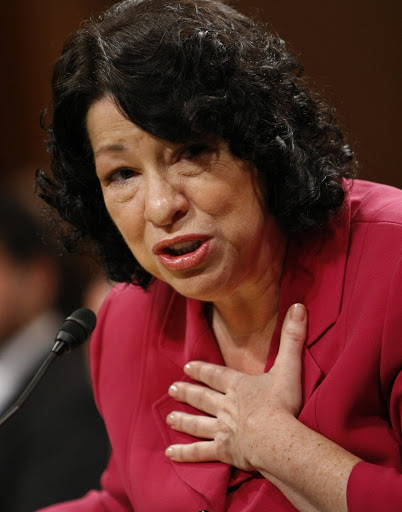
What isn’t always understood, though, is that elections enable the winners to make key appointments. President Obama has chosen a federal judge, Sonia Sotomayor, who — by any objective standard — is an outstanding candidate for the U.S. Supreme Court. She will be confirmed soon by the Senate.
Sotomayor will succeed David Souter, who has retired after serving 18 years on the high court. Souter was chosen by President Bush the Elder in 1991 and, as happens on occasion, turned out to be more liberal than the president would have liked.
But all presidents have the right to make these choices. And I’ve always believed that if the judges are qualified, that if they understand the law and make sound judgments without trying to rewrite existing law, then they ought to be seated. If some folks are upset with a president’s pick, that’s just too bad.
I understand that the Constitution gives the Senate the right to confirm or reject appointments. But a rejection ought to be based on more than just personal pique at statements made in an academic setting, such as the time Sotomayor said something about trusting a judicial ruling handed down by a “wise Latina” more than a white guy.

Sotomayor is as qualified on paper as any candidate I’ve seen in the past three decades.

Does she tilt to the left? Well, yes. What does one expect from the current president? President Bush the Younger appointed conservatives John Roberts and Samuel Alito to the bench, just as he pledged he would. He, too, deserved the right to select judges with whom he felt comfortable.

President Obama has that right, as well.
Elections do, after all, have consequences.

Water, water … not everywhere

No one is talking out loud about it.

There might need to be some difficult choices made when it comes to wasting of water.

Are we running out? No. The city of Amarillo is drilling wells. It’s tapping into groundwater supplies that will take pressure off the use of surface water coming from Lake Meredith, which also quenches the thirst of Lubbock, which has even more residents than Amarillo.

But when I drive around the city, particularly in the pre-dawn period on most workdays, I am stunned at the amount of water I see being wasted by commercial watering operations. Broken sprinkler heads dump water into the streets. Businesses — and, yes, even a few private residences — feature irrigation systems that aren’t working properly.

Is anyone paying attention? Many of the business owners and homeowners aren’t. City public utility enforcers need to get with the program more than they are at the moment.

With some motorists reeling over the city’s get-tough policy on red-light runners, it is getting to be time to create some heartburn among business owners who don’t fix their sprinkler systems.

This water supply of ours isn’t infinite.

Lame answer to lame duck matter

Alaska Gov. Sarah Palin has been taking some well-earned broadsides over her idiotic decision to quit her office.

She said she didn’t want to become a “lame duck.”

OK. The 22nd Amendment to the U.S. Constitution confers lame-duck status on presidents the moment they’re re-elected to a second term. Did she consider President Bush a mere “lame duck” when voters re-elected him in 2004? I think not.

Palin’s excuse was that she didn’t want to fall into the trap that grabs lame ducks. She could have said she’d just stay on do her job. But no-o-o-o. She branded herself a quitter.

Many of us in the Lower 48 are still trying to figure out what went through her mind when she decided to give up on this office, causing all the chatter among political junkies. She might not yet know herself. Perhaps she’ll make it up as she goes along.

I am reminded, however, of another approach to this lame duck matter. A one-time lawman back in Oregon was appointed in 1982 to a sheriff’s position after the incumbent got himself into an ethical bind. The sheriff quit, forcing the county commissioners to appoint the new top man to serve out the remainder of the former sheriff’s term. The new guy, Bill Brooks, then announced immediately he would run for election in Clackamas County, Ore. His reason? “If I don’t, then I become a lame duck and people will try to bulldoze things past me,” he told me, “and I don’t bulldoze worth a (bleep).”

Signs, signs everywhere

One of my favorite driving spots in Amarillo is eastbound on I-40, just as you come over the rise and head toward the Western Street exit.

You’re greeted by a swarm of signs. They’re free-standing signs. Billboards. Banners. Even a few blinkers.

The city has placed a 90-day moratorium on new signs until it figures out whether to impose a new sign ordinance on businesses. A sign panel has been appointed to study the issue. It’s makeup is an interesting one. It includes a lawyer, Roger Cox, who has railed publicly against visual blight; Dusty McGuire, founder of Keep Amarillo Beautiful; local clothier George Raffkind; CPA Don Marsh; and Gary Cox, owner of a sign company. I don’t know Gary Cox and Marsh, but I do know the other three.

It’s a varied panel, with wide-ranging interests and, perhaps, biases.

They should ask themselves at least this key question: Would allowing more signs along major thoroughfares, such as the aforementioned I-40 corridor, help or hinder businesses that already have signs up, not to mention business owners who want to clutter up our line of sight even more?

I keep wondering every time I make that drive: Who’s able to read even a fraction of these messages when you’re blazing by at 60 mph?

Don’t forget the Panhandle

Tom Schieffer came by this past week to carry his own torch for the Democratic nomination for Texas governor.

He’s an earnest enough fellow. I’d never met him. Schieffer served in the Legislature in the 1970s, before my arrival in Texas a quarter century ago. He also served as U.S. ambassador to two key allies — Australia and Japan.

But he made a pledge I’ve heard countless times during my 14-plus years in the Panhandle: I won’t forget about you if I get my party’s nomination.

OK, whatever.

Let’s be honest here. Candidates for these big-ticket offices go to where their time will be worth the investment. That would be the Metroplex, Houston, Austin and San Antonio. Everyone in the burgs knows it, too. What’s more, because this region votes so heavily Republican, the Democratic candidates as a rule don’t care about us, and the Republicans simply take us for granted. Our fellow Texans in the Valley, which votes as heavily Democratic as this area votes Republican, face a similar sense of abandonment.

Schieffer said he’d be different. “The Panhandle is a vital part of the state, with its agriculture and natural resources,” he said.

I mean no disrespect to Tom Schieffer, but if I had a nickel for every candidate’s declaration that he or she will return to the Panhandle …

Palin earns new title: quitter

“I love my job and I love Alaska,” Sarah Palin said.

And then the rookie governor quit.

The chatterers are wondering whether Palin’s sudden walk-away from her job portends a run for higher office in 2012.

Her previous incoherence has been eclipsed by what she said this past week. She didn’t want to become a “lame duck governor” and fall into the trap that ensnares lame ducks: you know, junkets and stuff. Well, who said she had to fall into that routine? She could have, well, just stayed on the job and governed.

None of this makes any sense.

Palin talked a bit the other day about the intense criticism she received since joining John McCain on the Republican presidential ticket in 2008. I’ll concede some of it has been unfair. But the governor epitomizes delusional qualities if she believes it would get easier for her if she is considering a run for the presidency.

She ought to pick up the phone and ask the secretary of state, Hillary Clinton: Madame Secretary, tell me about your eight years as first lady and your eight years as a senator from New York. Did your critics ever go soft on you — at any point? Do you think it was unfair? How did your daughter, Chelsea, like being pilloried when she was a good bit younger than my own teenager daughter?

I hope she makes that call — and I hope Secretary Clinton answers it.

It’s not just the sex, governor

South Carolina Gov. Mark Sanford’s affair with an Argentine woman continues to make waves in U.S. political circles.

But it’s not the sex that matters.

Sanford’s major mistake was to abandon his post as governor. He vaporized, lied to his staff, which then misled the public unintentionally as to his whereabouts, only to be revealed as being in Argentina.

The Republican governor’s sexual misdeed is bad enough. He has proclaimed himself to be a born-again Christian. He excoriated a one-time president, Bill Clinton, for his own transgressions and then lying about it. Sanford has held himself up as a paragon of virtue; he now stands before us as a major-league hypocrite.

But the real problem with Sanford now is that he has to explain how he can continue to govern when he has demonstrated an ability to walk away from his job — and then reportedly spend public money to help pay for his romantic misadventure.

If it were me, I couldn’t look at myself in the mirror, let alone ask my constituents to keep paying my salary.

Al Sharpton, frontrunner

I’m scratching my head.

Watching this incessant, non-stop coverage of the death of Michael Jackson, I’m trying to remember when I’ve ever seen Al Sharpton associated with Michael Jackson in any way when the King of Pop was alive. For the life of me, I cannot recall a single time when Sharpton and Jackson were photographed together, or even mentioned in the same sentence.

Yet there he is on TV screens all over the world: Sharpton speaking to the crowd at the Apollo Theater, Sharpton extolling the contributions Jackson made to American pop culture, Sharpton expressing his deep sympathy to the Jackson family over their loss.

I have asked some folks if I’ve missed something, that Jackson and Sharpton were somehow best friends, but no one knew about it. They cannot remember it, either. Before he became known as a “civil rights activist,” Sharpton’s main claim to notoriety was his role in the trumped-up brutality charges brought by a young black woman against some white police officers, who eventually sued Sharpton and others for slander — and won.

It’s been said of many politicians that the most dangerous place in the world is any space between them and a television camera.

Al Sharpton wins that honor — hands down!

Commentary on politics, current events and life experience