Tag Archives: Panhandle

Not used to humidity … just expecting it

My introduction to Texas’s fascinating climate came in the spring of 1984, when I moved to Beaumont to take a job at the Beaumont Enterprise newspaper.

It took no time at all for the seasonal humidity to settle in. I informed my wife of that in a phone call to her in Oregon, where she stayed behind for a time to sell our house. To be candid, once we went through a summer or two of Gulf Coast heat/humidity, we all — our sons included — learned to expect the stifling temperature and the energy-sapping humidity. None of us ever got used to it.

Then we moved to Amarillo in 1995. The weather in the Panhandle was as unpredicatable in the spring as the Gulf Coast. It also was more temperate. Cooler in the morning and evening. The elevation of Amarillo, at 3,676 feet above sea level, had something to do with it. Much more pleasant. During the summer days? Still damn hot! But, hey … it was a dry heat, y’know?

Then we moved to Princeton in 2019. More humid again. Not like the coast, but stickier than the Panhandle.

My mantra now is as it was when I first got here 41 years ago. I have learned only to expect the humidity. I don’t like it, but as my dear old Dad would tell me when I bitched as a boy about the rain in Portland: Go talk to God!

Growth explosion: brand new to me

I have lived a long life and I intend to keep living it, but I want to take a walk back briefly through the communities I once called home and explain why my current hometown is so different.

I was born in Portland, Ore., a city that seemed stuck on a certain population of about 375,000 people through the 1950s and 1960s. The Army called me into active duty in 1968 and I returned to Portland, where the population stayed more or less the same through the 1970s and much of the 1980s. My career then summoned my family and me to Beaumont, Texas, a nice city to be sure, but one trapped in the era of “white flight” of residents to the suburbs. The population of Beaumont declined during our nearly 11 years on the Gulf Coast, falling from about 120,000 residents to around 115,000. Opportunity knocked again in 1995 and my wife and I moved to Amarillo, way up yonder in the Panhandle. The city enjoyed slow, but steady growth during our 23 years there. The city grew from about 180,000 residents to just less than 200,000. In 2019, I was retired from daily journalism and Kathy Anne and I moved to Princeton, Texas, a Dallas suburb about 25 miles northeast of Dallas. Then it came, a population explosion the likes of which I never had experienced. We bought our home at the right time, securing a loan for a ridiculously low interest rate. New residents came pouring into our city. The population exploded from 6,800 residents in 2010 to 17,027 in 2020. Today the city estimates the city is home to 40,000 residents. Forty thousand people now call Princeton home! That number is continuing to explode. The city council has invoked a ban on residential construction permits, but it must honor the permits already granted and the housing construction already underway. I am filled with anxious anticipation as Princeton grapples with this growth. Texas highway planners have big projects set for U.S. 380. City public works crews have to install new water and sewer lines. Police and fire departments need to hire more personnel. The school system is building campuses as quickly as it can but they are being overwhelmed by new students pouring into the district. The city desperately needs more commercial development to serve the thousands of new residents who are moving here. Those of us who already are here must watch as the city grapples with solutions to the “problem” officials face. How to cope with the tide of people who realize what many of us knew all along, that Princeton is a nice place to call home. City Hall’s challenge is to maintain Princeton’s desirability.

Returning … only to say good bye

AMARILLO — I think it was Boone Pickens — the late, legendary oil tycoon — who once told me he didn’t return often to Amarillo “except to attend funerals.

It’s weird saying so, but I am finding myself in the same boat as the former Amarillo resident. My wife and I lived here for 23 years. She’s gone now and I don’t come back much these days. I have returned to attend a memorial service for a friend we both new. Kathy Anne is here in spirit, while I am here in the flesh.

And the sad truth is that my life has relocated from the Panhandle to the Metroplex. Which means that I don’t return often to the community where my wife and I forged a wonderful life.

We made a lot of friends during our time here. I reckon I’ll see many of them as we all bid farewell to a woman who also cultivated many friendships during her 70-something years on the good Earth. I don’t want my return here to revolve only around funeral services. It seems that is the inveviable trend my life will follow.

Whatever. I have returned this weekend. Hope to hug a lot of folks before I head back home.

I am ‘home’ for keeps

A friend asked me a question I have been asked many times since moving to Texas in the spring of 1984.

“Do you plan to move back to Oregon at any time?” the question came. I answered my pal the same way I have answered it many times before.

“My short answer is no,” I said. He wanted to know why.

“It’s too expensive there,” I said. I have watched real estate prices climb into the heavens in the state of my birth and I have determined I cannot afford to live there.

Plus, I told my friend, my wife Kathy Anne and I moved to Texas to advance my journalism career. We were successful in (a) allowing my career to proceed and provide me with some modest success along the way and (b) carving out a great life in three vastly different regions of this massive state.

We moved to the Golden Triangle, then to the Panhandle, and then to the Dallas-Fort Worth Metroplex. Each region provided us with great joy, a bit of culture shock and the move to the D/FW area put us close to our granddaughter, who tomorrow celebrates her 12th birthday.

All of this is my way of saying out loud that although I have proven to be an adaptable fellow, I still am able to sink my roots deeply into whatever terrain where I am living. I have done so in the Lone Star State.

I am here likely for the duration.

It’s still ‘home’

AMARILLO, Texas — I returned to what once was the church home for my wife and me. She’s gone now, but my own return came with plenty of love from those we knew back when we attended worship services there regularly.

I don’t get back to First Presbyterian Church much these days. I am busy with life in Princeton.

It’s as if I never left. So help me, that’s the overwhelming feeling I got when I walked in. I greeted some gentlemen seated at their regular table in the fellowship hall. Slowly, other friends wandered in en route to the sanctuary for Easter services. The greetings came with hugs, expressions of “glad you’re back,” questions about whether I was back for keeps.

The answer to the question is obvious. My life is re-igniting in the Metroplex. For that renewal, I am eternally grateful.

I also will be eternally grateful for the bonds of friendship I formed among those with whom I celebrated this most holy holiday.

Those bonds remain tight and strong. I was good to come home. Now, the rest of my life beckons.

Another leg completed

SANTA FE, N.M. — The longest leg of this extraordinary journey is complete. I am pooped. So is Toby the Puppy.

The next two legs will be pieces of cake compared to what we just endured. What was that?

We left this morning at 5. Our trip from Richfield, Utah to a campsite just north of Santa Fe was all of 570 miles. My Ford Ranger guidance system said it would take about eight hours of drive time. It took us 11 hours.

We had to get some shut-eye along the way, Toby the Puppy and I had to relieve ourselves, we needed gas and I stopped for lunch in Cortez, Colo.

My bride, Kathy Anne, and I lived in West Texas for 23 years before moving to Princeton in 2019. During our time out yonder, we learned one irrefutable truth about that part of the world: In order to get anywhere, you have to drive some distance. Amarillo is a long way from most destinations, so we accustomed ourselves to driving a while to get to where we needed to go.

Those trips, though, rarely required us to drive 570 miles.

I’m going to see friends near Lubbock and then family in greater Austin before I point my buggy toward the house.

This journey has been worth the effort. I’ll have more to say about it later. Just know that I believe it was the correct course of action to take.

johnkanelis_92@hotmail.com

Ready for the best season of the year

(Photo by David McNew/Getty Images)

You hear it on occasion: This is my favorite time of the year. My favorite season of the year. Most folks I know keep saying it’s the autumn.

Why? They’ve been through a grueling, boiling-hot summer. The cooler temperatures are a welcome respite from the heat.

That’s not for me. My favorite time of the year is about to arrive. I love the spring. In Texas, spring produces an unusual and often unpredictable series of events.

We have spent 36 winters in Texas. We came initially to the Golden Triangle on the Gulf Coast. Winter in Southeast Texas occasionally was, well, rather un-winterlike. We spent our first Christmas in Beaumont — in 1984 — lounging around in shorts and t-shirts.

Nearly 11 years later we gravitated to the opposite end of the state, settling for 23 years in the Panhandle. The winter there was, shall I say, more like winter in most regions of the world. It got cold … damn cold at times! We had winters with heavy blankets of snow. We also had one hideously dry winter that didn’t produce a single drop of precipitation.

We have moved to the Metroplex. This is our second winter here. It’s been a bit chilly, although not as cold as it often gets up yonder on the Caprock.

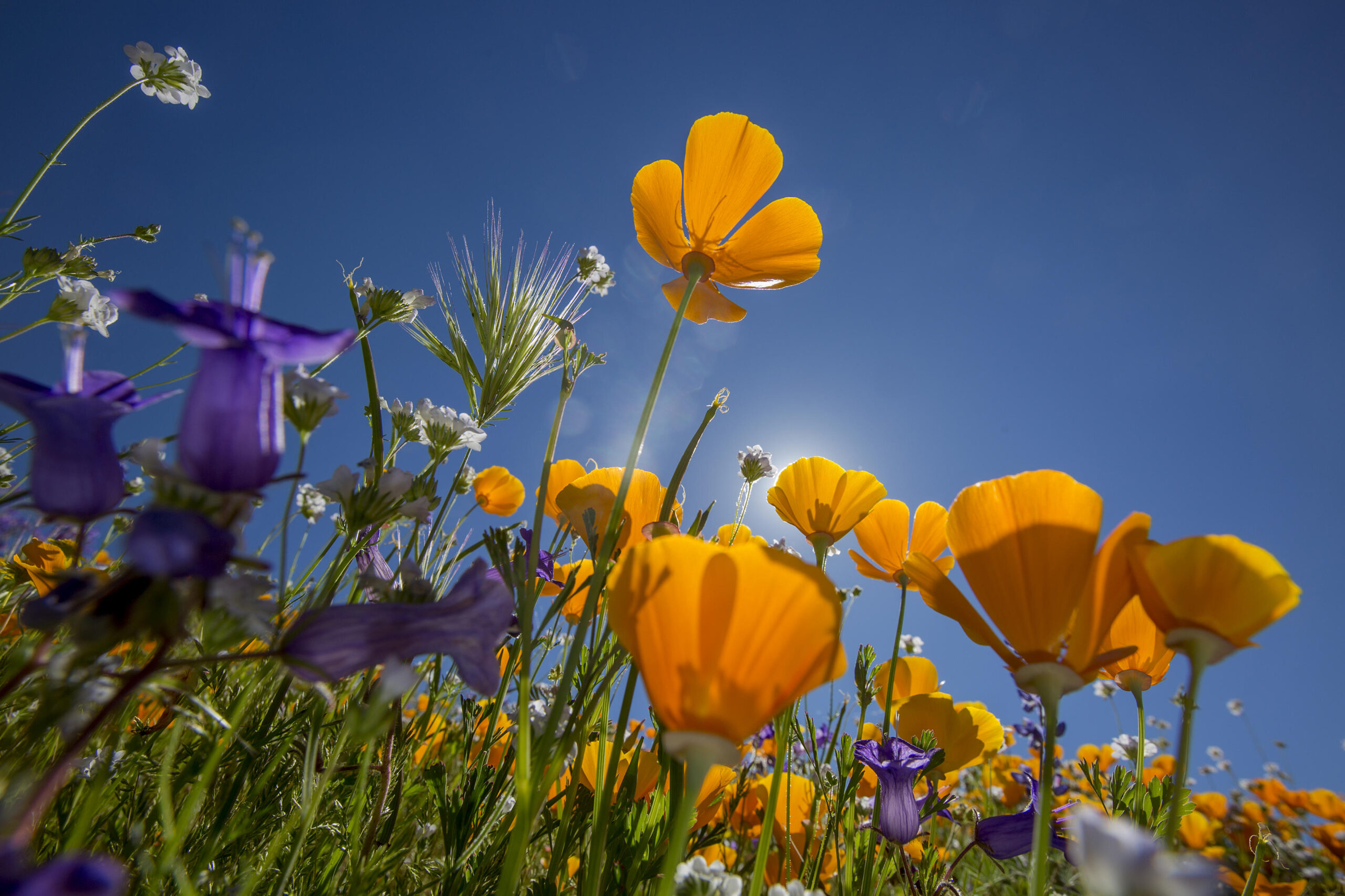
Spring is about to arrive. The grass will snap out of its dormancy. The leaves will produce buds. It’s a time of renewal. A time of rebirth. A time that will give way to the fruits and flowers of the season.

Spring in the Panhandle occasionally produces some explosive weather. The wind howls. The storm clouds swirl. It rains hard, man. It would hail on us.

The Metroplex occasionally produces that kind of frightening weather. However, I look forward yet again to the time of year when we spring forward and emerge from our winter doldrum.

It’s my favorite time.

Trying to shake the blues

I must admit to feeling a bit melancholy these past few days.

Perhaps you know why. My mother-in-law passed away nearly a week ago. I wrote about her just the other day. We laid her to rest Friday in a cemetery near us in Collin County, just a few minutes north of us.

This kind of emotional response is to be expected. It’s happened to be many times before at the loss of loved ones: my parents, my grandmothers and one of my grandfathers (the fourth grandparent died when I was an infant), several of my beloved aunts and uncles.

As we have done in the past, we likely are going to seek to cure this feeling of loss by sharing memories of my mother-in-law.

She lived for 93 years. She was a big part of our life for more than 20 years, notably with her retirement in 1997 at the age of 72. We moved her from Oregon to Amarillo, Texas in May 1997; she lived with my wife and me in our newly built house for about 11 years. It was the right decision for us and for her at the time.

Time, though, took its toll on her. We eventually moved her into a residence set aside for the elderly. Then she needed assisted living. Finally, she moved to a nursing home, which is where she died.

I am feeling a bit blue at this moment. Yes, I’ll get over it. So will my wife and my sons, both of whom have many grand memories of Grandma upon which they will be able to draw.

I have them, too. So does my wife.

I am left merely to acknowledge what we all know to be the obvious, which is that death is part of life.

Texas city becomes environmental pioneer

Who would have thought that a Texas city would blaze an impressive environmental trail?

Georgetown has announced plans to become the first city in Texas to use renewable energy sources for all its power needs.

Is this the start of something environmentally revolutionary?

http://www.texastribune.org/2015/03/18/georgetown-goes-all-renewable-energy/

Georgetown is in Central Texas. It owns the utility company. Thus, it is able to convert to wind and solar energy exclusively, no longer over time relying on fossil fuels.

Are you paying attention to this, Amarillo, which has abundant sun and even more abundant wind.

OK, the cities are different. Amarillo does not own the utility company that provides electricity to the city’s 200,000 residents. Xcel Energy controls the source of fuel it receives to power its energy plants.

It’s a hopeful sign nevertheless to see a Texas city — which happens to be near the capital city, Austin — engaging in this kind of ecological pioneering.

According to the Texas Tribune: “Because of its size and intense radiation, Texas leads the nation in solar energy potential, but the solar industry has long struggled to get a foothold in the state, as policymakers have provided fewer incentives than other states, and solar energy currently makes up a tiny percentage of the state’s energy portfolio.

“That’s beginning to change.

“Improving technology has driven down the price of solar power, making it more competitive with other resources­ — even without extra incentives, developers say. That trend has sparked what some industry experts describe as a small “land rush” in West Texas, and it’s increasingly convincing utilities that solar power is workable.”

Texas already has joined California among the nation’s leading producers of wind energy. That’s a hopeful sign as well of a commitment to renewables in a state that has relied for more than a century on fossil fuel — oil and natural gas — to fill its energy needs.

Here’s hoping this decision by a single Texas city is a harbinger of a cleaner energy future.