Tag Archives: MPEV

Polk Street being ‘born again’?

I don’t want to attach some overblown significance to this, but a TV news report I watched last night suggests that downtown Amarillo’s former “main drag” is being reborn into something quite different, and equally cool.

We returned this week to Amarillo for a brief visit before returning to our new home in the Dallas area. I learned about the opening of some new business establishments along Polk Street.

Back in The Day, Polk Street served dual functions for the city’s residents, or so I learned. One was that it was a retail center: lots of shopping galore. Two was that it served as a place for kids to “cruise” at night. You know what I’m talking about: Guys with cool cars would take them along the street and show them off to girls.  Yes? Yes!

The retail went away. The cruising activity has moved to other locations.

What’s happening along Polk these days, though, is a rebirth of places for folks to enjoy a meal, a beverage or two. Restaurants are opening up in new locations. One of them, Crush, is relocating across the street.

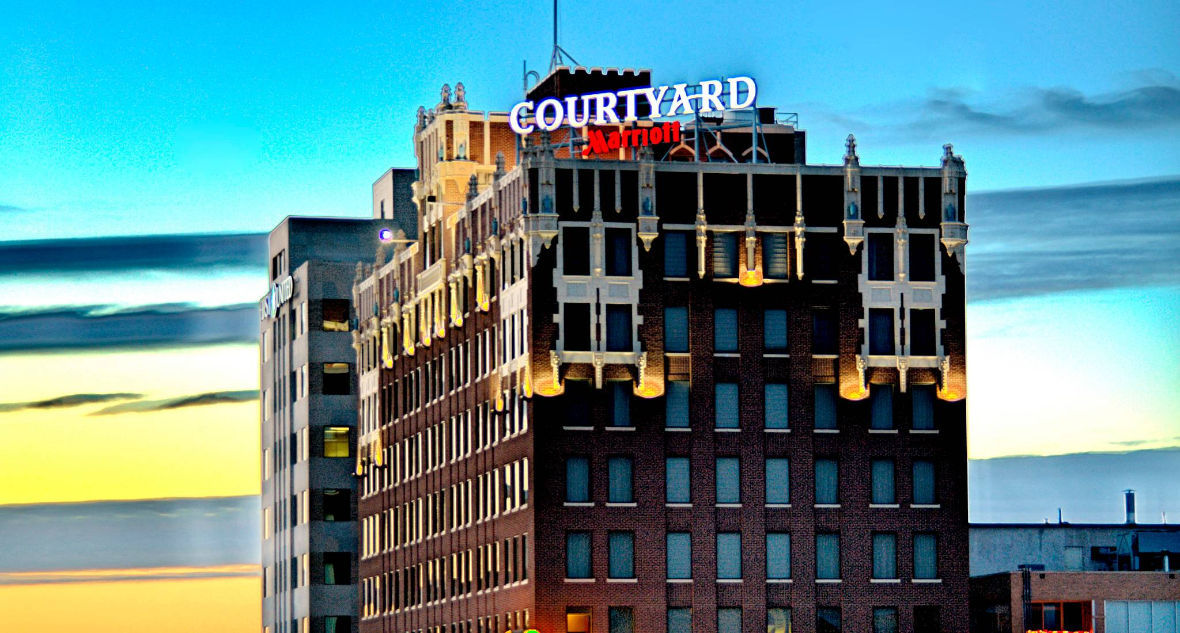
Buchanan Street has that fancy hotel across the street from the Civic Center. And, oh yes, the ballpark is under construction across from City Hall.

I won’t equate this rebirth to any sort of religious event, as in being “born again” to the Christian faith. However, I am struck by the astonishing acceleration of progress toward that new life downtown after so many years of stagnation. There were lots of discussion about moving forward. But … nothing happened.

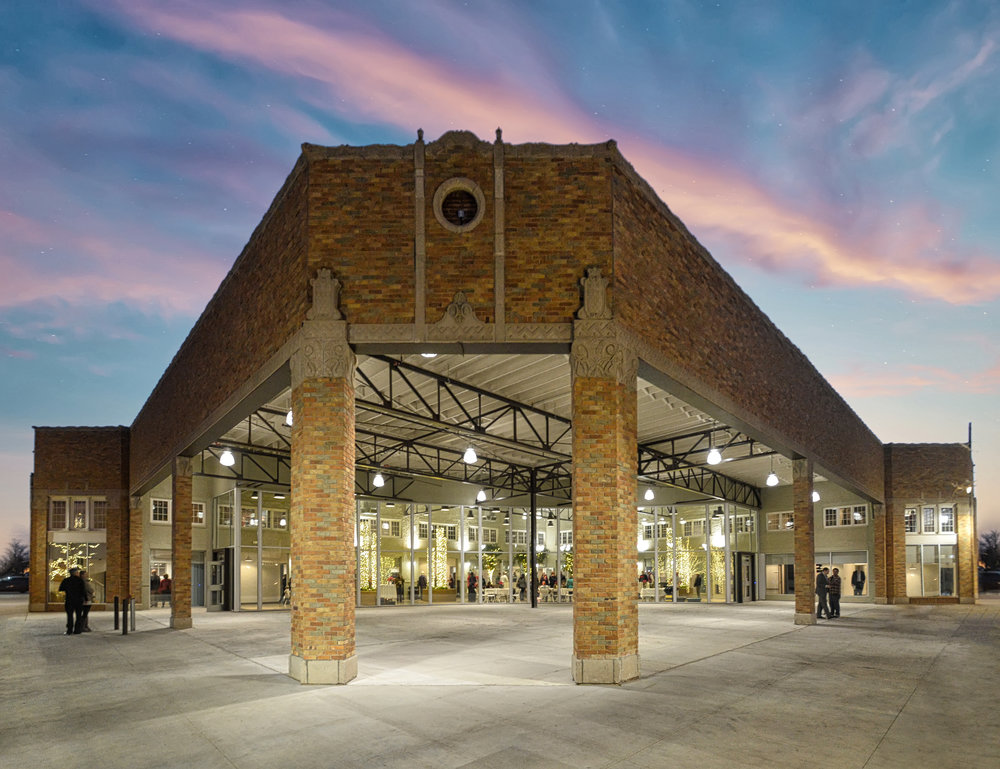
Now, with relative suddenness, that discussion has turned into action. They’re tearing up old storefronts, refitting them into something new. They’re turning historic buildings (such as the Firestone, the Fisk, Levine’s and Woolworth) into venues that bear little resemblance to their original uses.

My head is spinning.

I need to get away — and then return — more frequently to see this progress continue to take shape.

I like what I am seeing.
Downtown’s future looking brighter

Beth Duke is on a singular mission, which is to improve the economic condition of Amarillo’s downtown district. It makes sense, given her day job as executive director of Amarillo Center City.

This past weekend, Center City conducted a tour of historic structures scattered through the downtown region. The aim of the tour is to give prospective business owners an opportunity to see what the future might hold for the city — and for them.

I happen to support Center City’s mission and I have noted before that the organization has deployed the perfect person — that would be Beth Duke — to carry the mission forward. Duke was born and reared in Amarillo and spent a lengthy career covering the city while working as a reporter and editor at the Amarillo Globe-News.

Another reason for supporting Center City and its effort to juice up downtown lies in the ripple benefit that is sure to accrue across the city over time.

Study after municipal study reveals a common denominator among cities: All of the communities that enjoy economic and cultural vitality also are home to vibrant downtown districts.

Amarillo is on that path. You see it constantly evolving into something few of us can foresee at this moment. The downtown ballpark is under construction; downtown has welcomed two new first-class hotels; new retail businesses are springing up along Polk Street — and existing businesses are moving into shiny new digs.

There’s some positive rumbling about prospects for some rotting structures, namely the Barfield Building and the Ruhl Building.

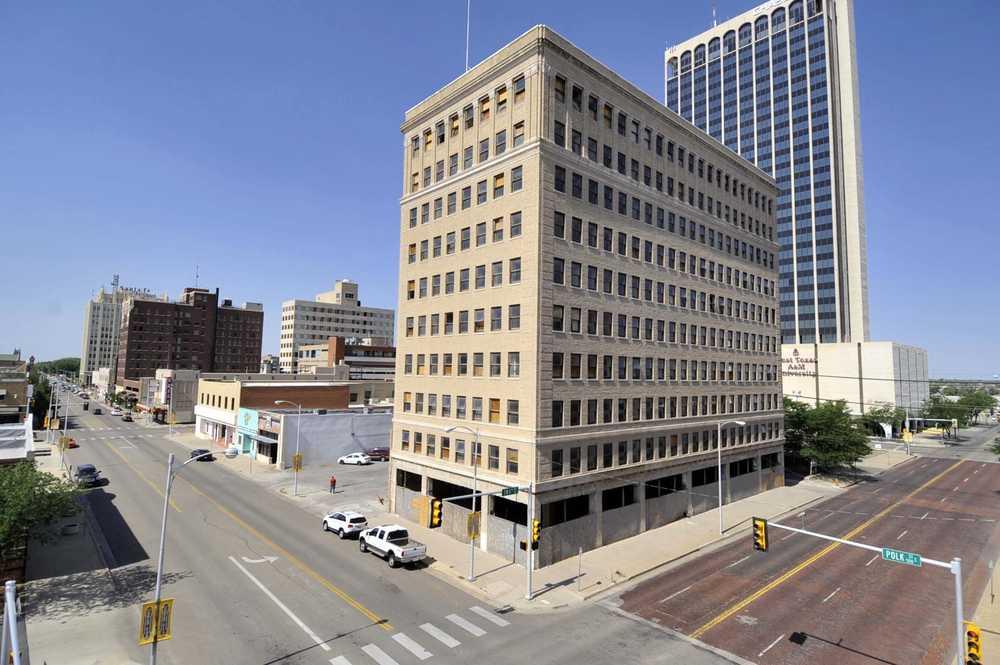
It’s not all goodness and light. That 31-story skyscraper once known as the Chase Tower is undergoing change, although commercial real estate brokers report a jacked-up interest among folks who want to relocate to it. But then we hear that the Amarillo Club — which occupies the top two floors of the tower — is closing.

Will the historic building tour accelerate downtown’s rebirth? That remains to be seen, although the Globe-News reports some highly positive impact: “Tours like this are great, otherwise I don’t think people would realize what has been done to these old buildings,” said Laura Lane, who took part in the tour. “I am so glad to see historical buildings in downtown Amarillo get refurbished and reused and reinvented. To be able to walk to work, with restaurants everywhere now, this just enlivens the downtown area.”

As the city’s downtown evolution progresses, I feel confident enough to declare that once Amarillo’s work is done — whenever that occurs — the entire city is going to reap the reward.

HOT to pick up MPEV tab

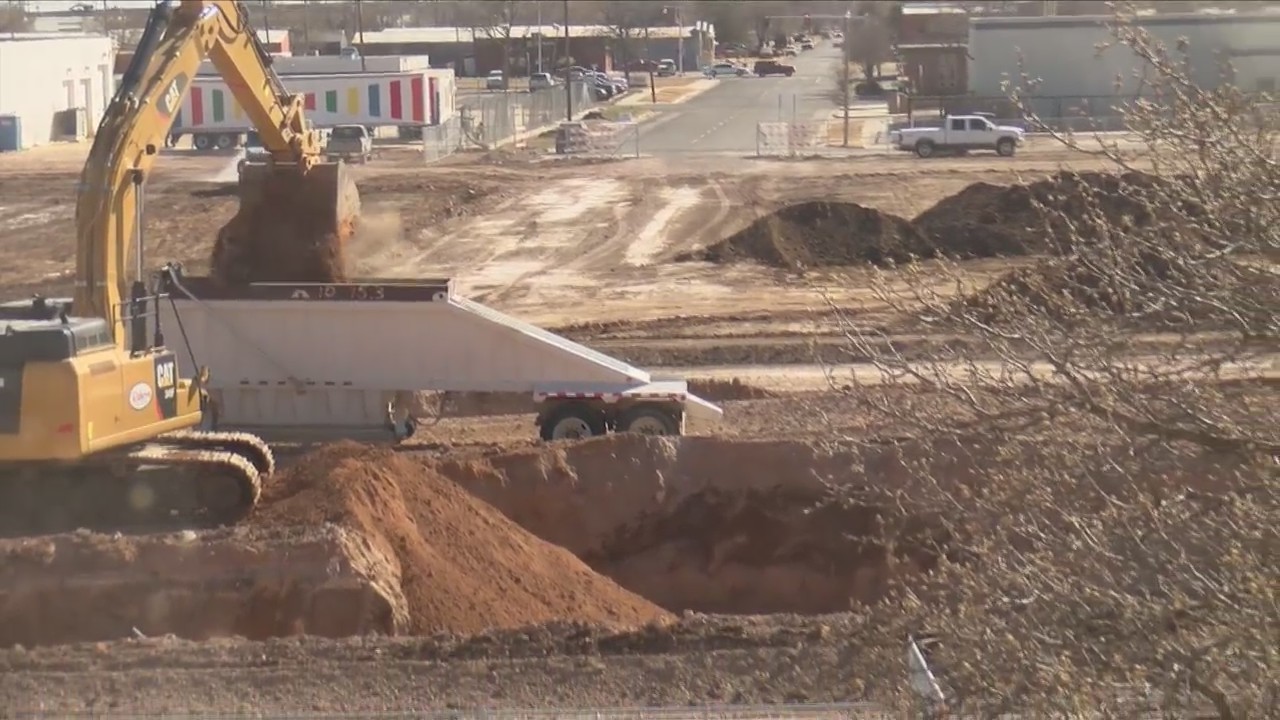
I got my first good look today at the big hole they’ve dug out in front of Amarillo City Hall.

It is, as they say, what it is: a big hole full of heavy equipment moving lots of dirt around. I noticed some wood scaffolding on the north side of the hole.

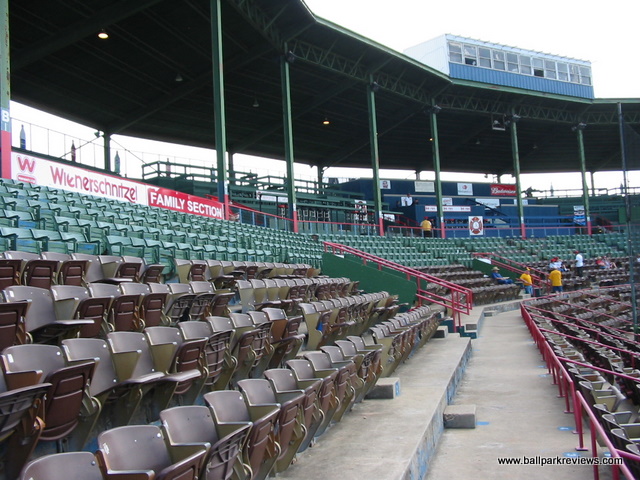
It’s going to take shape, probably quite soon, as the new multipurpose event venue, which in April 2019 will become the home field for the AA minor league baseball team that will relocate to Amarillo from San Antonio.

Yes, there’s still some grumbling — although it’s quite muted these days — about the MPEV. I’m OK with the muted aspect. The soreheads seem to want to believe erroneously that the MPEV is going to cost them a lot of property tax money.

It won’t..

The money is coming from visitors to the city as well as from lease fees the ballclub owners — the Elmore Group — are going to pay the city to use the MPEV.

My wife and I went out this evening to watch “Sister Act” at Amarillo Little Theater. On our way home, we scooted along Interstate 40 where I couldn’t help but notice the hotels along the route. What did they have in common? All their parking lots were full of motor vehicles.

What does that mean to me? It means the vehicles carried people to those hotels, where those people paid to spend the night. Part of that lodging cost gets siphoned off for the Hotel Occupancy Tax the city collects.

And, yes, a portion of that HOT goes to paying for the MPEV.

It makes me wonder about the timing of the initiative to build the MPEV and the hotel construction boom that erupted along I-40. I’m quite sure it’s more than mere coincidence, which makes me figure that someone — or several folks and interests — knew what they were doing all along.

Let the MPEV proceed … and let the visitors to our city pay for it.

Downtown Amarillo’s progress marches on

There was some discussion this week at Amarillo City Council’s regular meeting about the city’s downtown march.

A woman asked the city to suspend work on the multipurpose event venue until residents could vote on whether it should continue.

I have no idea whether she represents a larger bloc of residents, but I was impressed to hear City Manager Jared Miller’s response. It was that the city did put the issue to a non-binding referendum in November 2015. Voters were asked whether they endorsed the MPEV’s construction. A majority of them answered in the affirmative. Miller also noted that the city was not obligated to put the issue to a vote, but it did as a show of good faith.

Work then began this past year. It will be done by February 2019. By April of that year, a AA baseball team will start playing hardball in the MPEV.

I would like to offer this nugget of, well, opinion about the MPEV.

It’s a vital component of the city’s stated desire to improve its downtown district. I get that the November 2015 referendum called for construction of a $32 million ballpark, but that the cost has escalated some to $45.5 million. There well might be some latent resentment among residents — many of them soreheads — who dislike that its cost has escalated.

The city doesn’t need to put the brakes on a project that’s already been discussed, debated, dissected and, finally, determined to be part of the city’s dynamic future.

The public has had plenty of opportunities to comment on it. Whether the public has responded to those opportunities sufficiently is a matter of ongoing discussion.

I remain steadfast in my belief that the MPEV is going to trigger a tremendous revival of interest in our downtown district. When that occurs, I also remain dedicated to the notion that all of Amarillo will flourish perhaps in a manner that we cannot yet foresee.

I want to join my good friend David Horsley, a former Center City board member, who told the council: “We had great goals and thought we were pushing the ball down the field a little bit … But after I rotated off after about six years, we didn’t have much to show for our work. And it was kind of depressing. Downtown is the heart of the city and the heart was barely beating. Skip forward 28 years and now look at what’s happening downtown. I know you all can’t take credit for what’s happening, but I think there is a lot of wonderful stuff happening downtown and maybe you do get a tiny bit of credit for it. And I thank you for being leaders and helping good stuff happen downtown that people are going to want to be involved in.”

Amen, pal.

Tear it down! Tear it down!

I feel like revisiting an issue that has been discussed before on this blog. It’s the fate of Potter County Memorial Stadium.

The Amarillo Globe-News has put forward a notion that the stadium’s demolition ought to be an option. I’ll take it a step beyond.

Take the damn thing down!

Let me count the reasons for the venue known formerly as the Dilla Villa to be reduced to rubble.

  • It is in terrible physical condition. Drive by the dump/rathole and you see what I mean. The exterior grounds outside the fence look hideous. Potter County, which owns the place, is doing next to nothing to fix it up.
  • There is no practical use for it beyond it being the home field for San Jacinto Christian Academy’s baseball team. SJCA has a deal to use the ballpark for its home games.
  • Amarillo is going to welcome a shiny new sports and entertainment venue downtown in April 2019, thus removing Potter County’s ballpark from any consideration for future use. The MPEV will be home to a AA minor-league baseball franchise. They’ll play hardball next to City Hall, signaling the continued revival of the downtown district.
  • Potter County Memorial Stadium is the property of Potter County. As the AGN noted in its editorial, the county doesn’t have the money to fix it up. But even if it did, what would be the reason to throw money for a useless cause?

I usually get in trouble with some readers of this blog with these comments. They tell me about the “history” and the “tradition” associated with Potter County Memorial Stadium.

But … as the Globe-News noted in its editorial, they tore Yankee Stadium down to build a new ballpark with the same name. I’m quite sure that The Babe, The Iron Horse, Joltin’ Joe and The Mick all would have objected greatly. But the New York Yankees are still playing ball — and the city got over the demolition of The House That Ruth Built.

Potter County’s ballpark has outlived its usefulness. It’s time for it to go. Sooner, rather than later.

Cultural District: ready for some tangible results

Amarillo wants to become a destination for those who seek a cultural awakening.

Given that I’m out of the loop these days as a former print journalist, I am not entirely privy to the nuts and bolts of what is going on in every corner of the city.

I once wrote a blog for Panhandle PBS. The final installment in my series of blogs dealt with the then-pending designation of an Arts and Cultural District for Amarillo.

Here is what I wrote for the final time for Panhandle PBS.

The Texas Arts Commission eventually approved Amarillo’s request for an Arts and Cultural District designation. As I wrote in April 2016, I consider this to be a huge step forward in the city’s evolution.

I wrote then about the impact that the arts have on the Texas economy: The districts apply for grants through the Texas Commission for the Arts, which estimates that the arts generate approximately $5.1 billion annually to the Texas economy; of that total, about $320 million comes from sales tax revenue.

The city has many ways to measure the impact of the cultural district. Suffice to say, though, that the city is making some mighty large strides toward reaping the rewards of a beefed-up arts and entertainment community.

Allow  me to turn briefly to the construction of that downtown ballpark/multipurpose event venue that is well under way. The soreheads around the city keep yapping about the ballpark being a single-purpose venue: It will be the home field beginning in April 2019 to a AA minor-league baseball team that will move here from San Antonio.

But as the saying might go, “There’s more ‘there’ there.” Or at least that is the hope of those who want to see the MPEV take root and grow. There well could be plans to stage community events in the shiny new venue: concerts, for example; or perhaps some communitywide gatherings featuring food and music.

The cultural district does have plenty with which to work. I think of the musical “Texas” performed during the summer in Palo Duro Canyon, the Broadway series of musicals at the Civic Center and the Amarillo Little Theater.

There’s plenty of ground to plow here. Plenty of ways to market the city’s art and its myriad entertainment offerings.

I will join the rest of the community and await the big payoff. I don’t know when it will arrive, but I’m sure I’ll recognize it when it does.

It’s time to name that baseball team

Amarillo’s upcoming minor-league baseball season, which commences in April 2019, will welcome a new team nickname to the region.

The Elmore Group, owners of the team that will play hardball at the multipurpose event venue under construction in downtown Amarillo, has opened up the team-naming process to the fans.

I welcome this challenge. I likely won’t submit a suggested name, but I’ll watch from the peanut gallery as the team ownership ponders what to call this new team that will move to Amarillo from San Antonio.

The team now plays under the name of “Missions.” It’s a AA ballclub affiliated with the National League San Diego Padres. San Antonio will get a AAA franchise that will relocate there from Colorado Springs.

Hmm. Think of that for a moment. Maybe the new Amarillo team will have a sort of religious name, given that “Padres” can be construed as having a religious meaning, just as “Missions” is so interpreted.

Well, whatever. The last time I lived in a community that went through a pro franchise team-naming exercise, the name that came forward was initially greeted with derision. That was in 1970. The NBA awarded my hometown of Portland a pro basketball franchise. They had to name the new team. I preferred “Lumberjacks,” given the huge impact the timber industry has on the Pacific Northwest.

Instead, they came up with “Trail Blazers,” which as I remember it was meant to honor Meriwether Lewis and William Clark, who led that “trail blazing” expedition from the Midwest to the Pacific Ocean in the early 19th century.

Still, I didn’t like the name initially — but it grew on me and the rest of the community.

Thus, I caution baseball fans in Amarillo to be patient with whatever name comes forward for the new team that will play ball at the MPEV. The name might grow on you, even if you don’t like it at first.

And, come to think of it … the ballpark needs a name, too.

MPEV gets a break from Mother Nature

Amarillo’s newest sports and entertainment venue is getting a big break from a most unpredictable source.

That would be Mother Nature.

Yes, the elements that can — and have — bedevil major construction projects are working to assist the contractor working to build Amarillo’s downtown multipurpose event venue, aka “The Ballpark.”

I heard a couple of weeks ago from an Amarillo Economic Development Corporation official that the MPEV already is a “week ahead of schedule,” which made me wonder at the time, “How is he able to measure such a thing so early in a project of this size and magnitude?”

Whatever. The crews have dug out a huge hole in the ground across the street from City Hall. Site preparation is proceeding rapidly. I suspect that quite soon we’re going to start seeing crews laying down the components that will go into the MPEV’s foundation. After that, the framing will commence.

And on and on it will go.

The MPEV is projected to cost around $45 million. It will seat roughly 4,500 seats for baseball, which will begin there in April 2019 when the AA minor-league baseball team moves from San Antonio to Amarillo.

I don’t want to spook the project, given the good meteorological fortune that has foreshadowed it to date, but we do have the rest of the spring and summer coming up and then the winter of 2018-19. As dry and relatively calm as the winter of 2017-18 turned out to be, there can be no way to predict this far out what the next winter will bring. We all know the quips and jokes about the fickle Amarillo and Texas Panhandle weather, yes?

My faith in what the MPEV will bring to downtown Amarillo remains strong. It will play a huge role — perhaps the major role — in reshaping the city’s central business and entertainment district.

To date, I am gratified and hopeful that the construction crews will be able to proceed quickly and, of course, efficiently as it moved toward completion of this important project.

Gratitude and hope, though, cannot predict what Mother Nature has in store. As inclined as I am to pray for rain to help our beleaguered farmers and ranchers, I am torn because I don’t want the MPEV stalled because of torrents.

Downtown health: key to cities’ well-being

Gary Jennings returned to Amarillo years ago from the Texas Gulf Coast and then plunged into a project he knew would consume much of his time and energy.

It has been worth all of it. And then some.

He has turned a one-time dilapidated structure on the edges of downtown Amarillo into a showpiece. He owns the Firestone Building at the corner of 10th Avenue and Tyler Street. It used to be a tire shop. It has been turned into a “niche” complex of apartments, with retail space on the ground floor.

My point in bringing Jennings up with this blog post is to relay something he told the Rotary Club of Amarillo this past week. He said that a city’s health depends largely — if not exclusively — on the health of its downtown district. He ticked off a few successful American cities and asked, rhetorically, what they had in common. The common denominator was a vibrant downtown district.

To which I wanted to shout from my seat in the crowd, “Amen, brother!” I held my tongue. Of course.

I have enjoyed watching from the peanut gallery over the past five-plus years as Amarillo’s march toward the future has progressed nicely, despite a hiccup or two along the way. I had a more-or-less front-row seat at the Amarillo Globe-News until August 2012. Then I quit the newspaper and have been viewing this progress since then from the cheap seats.

The ballpark construction is under way; an Amarillo Economic Development Corporation official told the Rotary Club that it’s “a week ahead of schedule.” I won’t quibble over how he knows such a thing this early in the project that is supposed to conclude in time for baseball in April 2019.

So much has happened downtown. It gives me hope that Amarillo is moving forward at a steady — if not accelerating — pace toward a future few of us saw more than two decades ago. I arrived here in early 1995 and, so help me, I saw few tangible signs of forward movement in the city’s downtown district.

That has changed. The hustle, bustle and sizzle along Polk Street — the one-time “main drag” — provides plenty of evidence of forward movement.

Jennings’ list of forward-thinking American communities didn’t include one that I know quite well. It’s my hometown of Portland, Ore., where I believe a once-young and innovative mayor — the since-disgraced Neil Goldschmidt — set the gold standard for urban planning.

Goldschmidt disappeared after being caught up in a hideous sex scandal a few years back. In his day, however, when he was a 30-something Portland mayor, he set his sights on redeveloping a once-moribund downtown district.

Goldschmidt decided in the early 1970s to veto a freeway project through the southeast quadrant of Portland. He said the city would instead direct its resources — meaning public money — into developing a viable mass transit system. It would create a bus system that served the downtown district. His goal? To turn downtown Portland into a destination.

Goldschmidt’s strategy worked. My hometown’s central business district thrives in a way I couldn’t possibly imagine when I was growing up there.

I cite this example as proof of what Gary Jennings said this past week. He is correct in asserting that a city’s health depends heavily on the health of its downtown district.

We don’t yet know where Amarillo, Texas is heading after the last project is finished … whenever that occurs. I remain confident in the extreme that it will be in a different and far better place than when the work began.

What? Barfield is coming back to life? Maybe?

Well, shut my mouth and call me … whatever you want.

I had written not long ago about my doubts over the future of the long-abandoned Barfield Building in downtown Amarillo, Texas. It stands at the corner of Sixth Avenue and Polk Street. It’s a rotting hulk of its former glory.

https://highplainsblogger.com/?s=Barfield+Building

This morning I awoke to read a story in the Amarillo Globe-News that declares that the Barfield Building is en route to a revival. It will become a luxury hotel, developed by the Marriott Corporation.

Then came the qualifier. “Maybe,” according to the AGN. Maybe it will happen. Maybe … it won’t.

I’m going to pull for the “maybe it will.”

Plans call for the Barfield to morph into a Marriott Autograph Collection Hotel. It’s an upscale concept. As the Globe-News reports: “We want to bring the Barfield back to life and tell its story,” said Mark Brooks, of Brooks Hospitality Consulting. “We want to create something that speaks to Amarilloans. Hopefully, it’s pretty exciting.”

Brooks told the AGN’s Jeff Farris that the interior demolition at the Barfield is nearly done. Next up will be acquiring building permits from the city.

The Barfield has been down similar roads before. It’s been through several ownership changes. There have been reports of progress made to breathe new life into the building. They have been premature. Nothing has occurred there. As the AGN noted, the city came within a whisker of condemning the building.

This fellow Brooks, though, now is delivering some potentially good news about the Barfield. The category of hotel suggests it will be unique. Marriott says that none of its Autograph Collection structures are duplicates of others.

So, with this news, I am anxious to see if downtown Amarillo — which already has seen tremendous change in the past decade — is about to take another huge step forward. The multipurpose event venue is under construction. The Embassy Suites hotel has opened across the street from the Civic Center; Marriott opened another hotel prior to that at the historic Fisk Building. Construction crews are hard at work on new eateries and other business establishments along Polk Street. West Texas A&M University is set to open its downtown Amarillo campus.

And now? The Barfield Building? Is it possibly coming back to life? Might there be signs of activity in that dilapidated structure?

Maybe.