Tag Archives: Texas Legislature

Starr speaks sanely about campus-carry law

campus carry

There once was a time when I wasn’t much of a fan of Kenneth Starr.

That was when he served as a special counsel who was given the task of investigating a real estate matter involving Bill and Hillary Clinton. Then he came upon another matter, the relationship that President Clinton had with a young White House intern.

He’s gone on, though, to become president and chancellor of Baylor University. And this week he told the Texas Tribune that there’s almost no chance that Baylor is going to allow licensed gun owners to pack heat on the Waco campus. What’s more, Starr also opposes the campus carry law.

Who knew that Kenneth Starr had such a reasonable streak?

Baylor joins other private universities in Texas that likely will opt out of the concealed carry law. Starr’s take? He told the Tribune: “My own view is that it is a very unwise public policy, with all due respect to those who feel strongly (and) very, very rooted in constitutional values as they see them. We’re here as seats of learning, and I do not think this is helpful.”

The bill, enacted by the 2015 Legislature, seeks to bring more guns into places where they previously had been banned. I saw nothing wrong with banning firearms on college and university campuses.

I’m glad to be on the same page as Kenneth Starr. For the life of me I never thought I’d see it happen.


Hideous coincidence follows campus-carry law

UT-Tower3

On Aug. 1, 2016, Texas is going to mark two important events.

One of them will be when the state law allowing anyone to carry a weapon onto college and university campuses takes effect.

I dislike the new law, although I am not vehemently opposed to it. The campus carry law gives me the heebie-jeebies, given the outbreak of violence that occurs on campuses throughout the country.

Now, for the next event.

Next Aug. 1 marks the 50th year since Charles Whitman climbed to the top of the Texas Tower on the University of Texas-Austin campus and opened fire with his high-powered rifle, killing 16 people before being gunned down by police.

The campus-carry law takes effect on the very same day that Texas will mark what’s been called commonly as the first such tragic incident of its kind in the nation.

Tower shooting

Erica Greider, writing a blog for Texas Monthly, poses this thought: “This is just a comically lurid coincidence that led me to ask myself whether the Lege should lose its lawmaking privileges, and probably raises more substantive questions for many of you.”

Could the Texas Legislature have picked a more ghastly date for this law to take effect? I think not.

***

On a side note, one of my sisters recently expressed her dismay over the use of the term “anniversary” to remember events such as these. The term, she said, ought to be reserved for occasions that recall joy and happiness.

This date ain’t an “anniversary.”

Lower gas prices: more positive than negative

gascosts

Did you see what I saw this morning while driving to one of my four part-time jobs?

The price of regular unleaded gasoline has dipped to less than $2 per gallon in Amarillo.

Good news, yes? Well, I think so.

Motorists such as my wife and me do not enjoying shelling out big bucks for gasoline. Our Prius hybrid has more than paid for itself in fuel efficiency. We’ll keep for as long as we possibly can. Heck, it might live me.

But I get the downside of the lower prices, particularly in states — such as Texas — that rely on oil revenues to fund things such as, oh, state government.

State Rep. Four Price, an Amarillo Republican, told the Rotary Club of Amarillo the other day that the next Texas Legislature is likely to receive some not-so-cheery news from the comptroller’s office when it convenes in January 2017. It will be that oil revenue will be down sharply from the current budget cycle and that the state likely will not have the projected revenue surplus it got when the 2015 Legislature convened.

Gas prices plummet

I get that. I also understand that $100-per-barrel oil is more profitable to pump than, say, $42-per-barrel crude — which is about what it’s drawing these days.

But you know what? I am not going to waste too much emotional energy worrying about those ancillary effects when my household is getting a significant break in its weekly expense obligation.


We should expect more from our attorney general

Texas Attorney General Ken Paxton is going to have a big start to his work week.

A grand jury in McKinney, about noon Monday, is reportedly going to indict him on at least two felony counts of securities fraud. One of the counts is a first-degree felony, the other is a third-degree felony.

Paxton has essentially admitted to committing the lesser offense. He did so while campaigning for the office to which voters elected him in 2014.

This all brings to mind an essential question about the wisdom of Texas voters: Shouldn’t we demand the very best from our elected officials?

Paxton was elected in a breeze this past November. That, by itself, really isn’t surprising, as Paxton is a Republican running in a heavily Republican state.

However, the guy took office in January as the state’s top legal eagle. Some AGs have cast themselves as major crime fighters; I keep thinking of the late Democrat Jim Mattox, who used to imply wrongly that he’d bring bad guys to justice, even though the office basically deals with civil matters.

Paxton’s indictments don’t suggest the man is morally unfit to hold the office he occupies. However, it galls me greatly that he could get elected for no other reason than he happened to be a member of the political party that calls all — and I mean all — the shots in Texas.

I don’t think Paxton needs to step down while he defends himself against the criminal complaints brought against him. I believe in the presumption of innocence. Thus, there’s no legal obligation for Paxton to recuse himself from his duties.

Yet it becomes difficult for the attorney general — and the office this one leads — to proceed with any matter relating to the very type of infractions that have produced these indictments.

Some of Paxton’s critics have noted that his record in the Legislature wasn’t all that stellar. He was under-qualified politically to ascend to an important statewide office, they said. I didn’t follow his legislative career all that closely, but this upcoming indictment involving securities fraud is a serious matter that needs to be resolved as quickly as possible.

The attorney general of Texas needs — and deserves — to have this matter adjudicated in short order.

For that matter, rank-and-file Texans need this case settled soon as well. Our state’s attorney general must not operate under this cloud. After all, this man works for us.

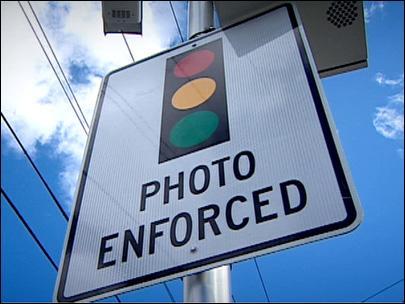
Red-light cameras don’t blink

red light cams

A legal challenge to Texas cities’ deployment of cameras to stop red-light runners has come to an end.

It was tossed out. The case had been filed out of Fort Worth, but it affected all the cities that are using the cameras.

That includes Amarillo.

Now, can we just stop yapping and yammering about these devices?

I continue to support the use of the cameras. It’s not that I cherish the thought of people getting pinched. It’s that I hope knowledge of the cameras at specific intersections eventually will deter motorists from running through the red lights and putting other motorists and pedestrians at risk of getting injured … or killed!

I keep falling back on the comments delivered by my one-time favorite Amarillo City Council member, Ellen Robertson Green. She scolded protesters who were griping about the red-light cameras, telling them flat out that all they to do to avoid getting caught was not obey the law and not run the red lights.

State law is clear: Money raised by the devices must be dedicated to improving traffic in the city. The Legislature tinkered and toyed with the idea of revoking cities’ ability to deploy the cameras. Then it backed off for lack of support. That was a good deal.

Cities should be allowed to determine whether to use the cameras if they perceive a red-light running problem. Amarillo identified such a problem and took steps to deter it.

Let’s allow the system to keep working.

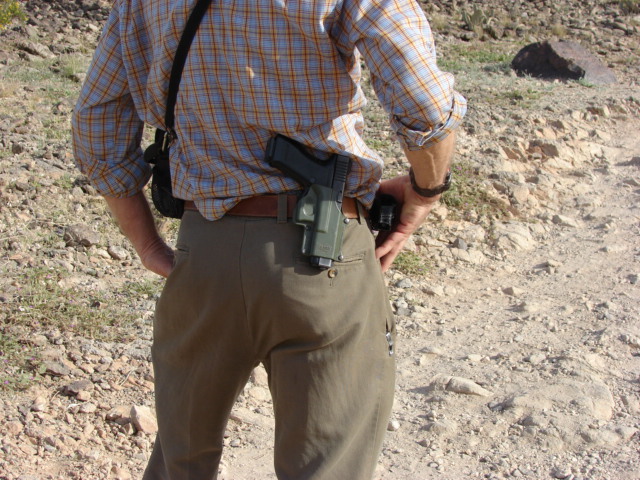
Burger chain: You can pack, just not in the open

Now that Whataburger has declared that people carrying guns in the open won’t be served in its Texas restaurants, let’s be sure we understand something else.

Texas also has a concealed carry permit provision, meaning that Texans can carry a handgun hidden under their clothing. The only people who’ll be allowed to carry openly are those with concealed permits.

So …

If you have a concealed carry permit and you want to go to Whataburger for a big ol’ burger, you’re entitled to do so.

That’s my understanding.

Whataburger staffers aren’t going to frisk customers walking into their establishments to ensure they aren’t carrying weapons. The company, based in Texas, is merely banning those who have a gun strapped to their hips — in plain sight. The open-carry law takes effect in January.

After all, the concealed carry law that the Texas Legislature enacted in 1995 was meant to keep these firearms hidden from view and deterring bad guys from doing something they shouldn’t be doing for fear that the person next to them is packing a pistol.

Bon appetit, y’all.

Burger chain takes a stand against open carry

open carry

You’re hungry. You decide you want a burger smothered in some sort of gooey sauce.

Then you decide you want to go to Whataburger, a well-known Texas-based chain of burger joints. We’ve got ’em here in Amarillo.

But you’re carrying a pistol on your hip. Then you know that Whataburger has decided it won’t serve customers carrying their weapons openly. What do you do? You love those burgers. Hey, it’s simple. You take your gun out of your holster, store it in your car, go in and get your goopy burger.

Will that be the end of it? Hardly.

Any discussion at all involving guns is bound to get goofy.

Frankly, I’m all in favor of what Whataburger has decided to do.

No shirt? No shoes? Packing heat in the open? No service, man.

It’s a fascinating development in the open-carry era in Texas, which begins in January when the law takes effect.

The Texas Legislature approved the bill; Gov. Greg Abbott signed it immediately into law. The National Rifle Association and other gun-owner rights groups applauded lawmakers and the governor.

Open Carry Texas founder C.J. Grisham called Whataburger’s decision “premature and irresponsible.” He said the restaurant chain is pandering to fear.

Give me a break. This shouldn’t be a problem at all for those who are licensed to carry their guns in the open. If they want to do business with someone that doesn’t allow guns in their establishment, don’t carry the gun into the place.

While the nation has been arguing about the merits of flying the rebel flag, we need to understand that privately owned businesses are able to set certain rules for those seeking to enter their establishment. They must not refuse service to people because of their skin color or their religion.

Prohibiting the open carry of loaded weapons onto their property? That’s a reasonable restriction.

Kids who skip school aren’t criminals

Texas Gov. Greg Abbott did right by Texas children and their parents when he signed a bill that decriminalizes truancy.

House Bill 2398 means that kids caught skipping school won’t be tossed into jail. And, as Abbott said when he signed the bill into law, “Criminalizing unauthorized absences at school unnecessarily jeopardizes the futures of our students.”

http://www.texastribune.org/2015/06/19/texas-decriminalize-truancy-after-abbott-signs-bil/

Critics of the previous practice had said it punishes poor and minority children unfairly. Too many of them come from home backgrounds where education simply doesn’t take the priority that it should. So, the kids skip school to hang out with friends or, sadly, do things they shouldn’t be doing. If they commit a crime while they’re out cavorting when they should be in school, then by all means, arrest them and treat them accordingly. Skipping school by itself shouldn’t be a reason to put a kid into juvenile detention.

The emphasis now falls on school districts to take measures designed to keep kids in school. Since truancy now will be handled as a civil matter, it becomes critical for districts to work with the Texas Education Agency to deal with habitual truants and seek ways to eliminate their impulse to skip school.

As the Texas Tribune reports: “HB 2398 offers preventative measures districts can take to curb unexcused absences and suggests rehabilitative programs for habitual offenders.”

This is a good — and in my view a surprising — move that the governor has taken. He developed a reputation as a “tough on crime” state attorney general. His statement relating to his bill signing suggests he understands that the state can lean too heavily on children who, after all, are just children.

They don’t need to tossed into the slammer because of unexcused absences from school.

Ethics reform gets a little kick from Abbott

Texas Gov. Greg Abbott vowed that the 2015 Legislature would reform the state’s ethics policy.

Lawmakers tried to torpedo Abbott’s call. But the governor struck back with his veto pen on one element that he didn’t like coming out of the Legislature.

http://www.texastribune.org/2015/06/20/abbott-vetoes-spousal-loophole-davis-says/

Abbott vetoed a bill that would have allowed married elected officials to hide their spouses’ financial holdings. The governor said the bill did the opposite of what he wanted and he vowed to take up the matter of ethics reform when the 2017 Legislature convenes.

He said, according to the Texas Tribune: “At the beginning of this legislative session, I called for meaningful ethics reform. This legislation does not accomplish that goal. Provisions in this bill would reduce Texans’ trust in their elected officials, and I will not be a part of weakening our ethics laws,” he wrote. “Serious ethics reform must be addressed next session — the right way. Texans deserve better.”

Good for you, Gov. Abbott.

For as long as I can remember — and I’ve lived in Texas for 31 years, nearly half my life — “ethics” and “government” been mutually exclusive terms.

Abbott didn’t whiff completely on his effort to get some ethics reform enacted. One victory came as a result of a Democratic lawmaker’s effort to end the pension double-dipping that existed in Texas. As the Tribune reported: “State Rep. Chris Turner, D-Grand Prairie, won passage of a bill that will close a loophole that allowed longtime elected officials to double-dip their salary and pension. Former Gov. Rick Perry had famously taken advantage of the provision toward the end of his 14-year reign.”

The state has much more ground to cover if it is going to restore a belief among many Texans that their elected officials’ behavior shouldn’t be questioned with such regularity.

But as Gov. Abbott has displayed, he retains veto power. In this instance, he used it wisely.


Is Austin a ‘thorn’ in the Republicans’ side?

An interesting back story is profiled by an Associated Press story about how Texas Republicans are trying — finally — to remove what some have called a “thorn” in the GOP side.

The city of Austin is just a pain in the Republicans’ rear end.

This liberal bastion — nicknamed by some as The People’s Republic of Austin — keeps electing progressive politicians, which of course is the city’s prerogative. Why not? The Texas capital city is thriving. Its population is booming with high-tech employees, educators and learned professionals moving there.

Someone is doing something right there. About the most serious gripe one hears about Austin is the traffic, worsened by the fact that it’s the largest city in the country with just a single interstate highway coursing through it.

Texas Republicans, though — who control every statewide office in Texas and comprise a super-majority in the Legislature — have had enough of those liberals who populate public offices in Austin and Travis County.

http://news.yahoo.com/texas-gop-tries-pluck-liberal-thorn-side-182836892.html

As the story notes, the “last straw” was the Travis County grand jury’s indictment of then-Gov. Rick Perry on two felony counts: abuse of power and coercion of a public official.

Travis County District Attorney Rosemary Lehmberg’s office runs the Public Integrity Unit, which investigates allegations of wrong doing by state officials. Lehmberg, though, got herself into a jam in 2013 when she pleaded guilty to drunken driving. She should have quit, but didn’t. Perry then insisted that she quit. Still, she didn’t. Then he threatened to withhold money appropriated by the Legislature for the Public Integrity Unit if she didn’t step down. She stayed. Then he vetoed the money.

The grand jury said he shouldn’t have done it that way. Thus, the indictment.

The 2015 Legislature has taken action against Austin. The Public Integrity Unit has been moved out of the DA’s office and put under the authority of the Texas Rangers, an arm of the Department of Public Safety, whose head is appointed by, um, the governor, who now happens to be Republican Greg Abbott.

Oh, but hey. They’re going to take politics out of it, isn’t that right?

Sure thing.

Meanwhile, Austin and Travis County voters will get to continue electing politicians more to their liking.

Keep it up, folks.