Tag Archives: Texas Panhandle

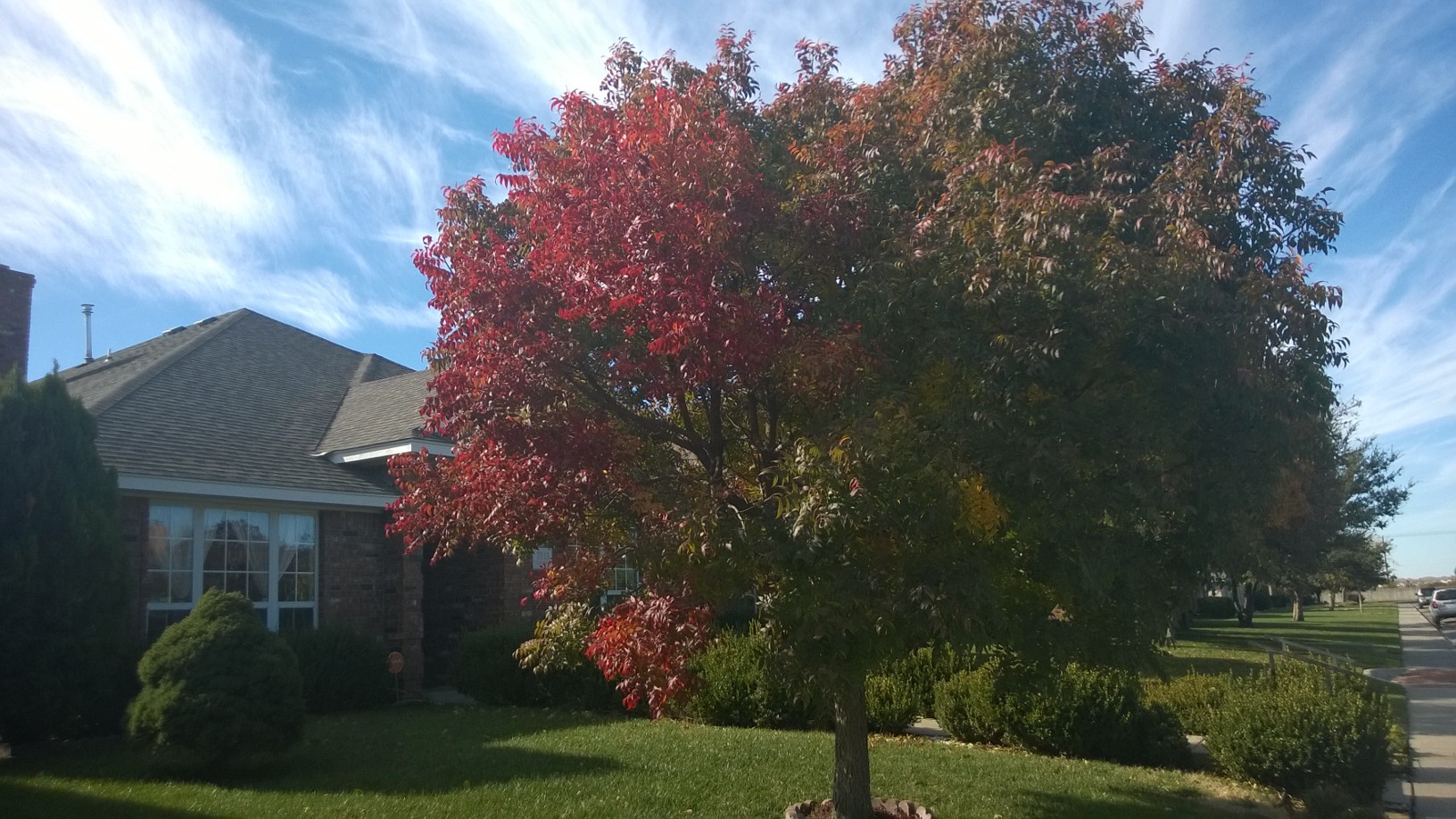
Fall colors? All we saw was green

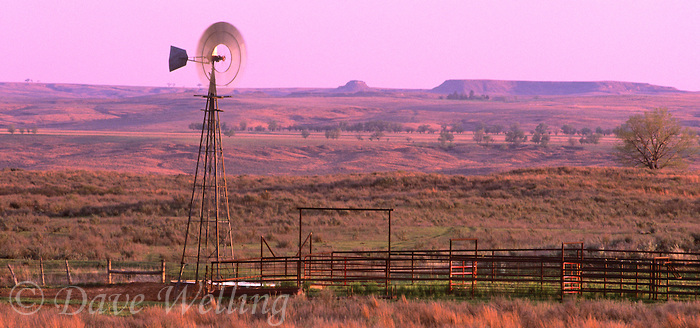
980000010 a panoramic view of an active windmill and cattle fencing and water tank on the open grasslands of the panhandle near canadian texas

CANADIAN, Texas — We ventured — my sister, brother-in-law and I — northeast on Saturday to this lovely town in the far corner of the Texas Panhandle.

Our mission? To look at the “fall foliage” honored at Canadian’s annual “Fall Foliage Festival.”

Our findings? There isn’t any fall foliage to be seen. At least not yet.

The darn warmth that keeps lingering in this part of the world is the culprit.

Now, was the trip a total loser? Of course not.

Sis and her husband hadn’t been to this part of the Panhandle — the “pretty part,” as many of us like to call it. Our two-hour drive along U.S. 60 became quite scenic as we approached Miami and then motored into the Hemphill County seat.

I told my sis the story of the cockamamie idea that Texas highway planners had in culling many of the trees along the highway, citing some notion that the trees posed the a hazard to motorists.

I mentioned the reaction of residents of Hemphill and Roberts counties, which in effect was: You’ll cut these trees over our cold, dead bodies!

The highway department backed off and ended up, if memory serves, cutting down a lot fewer trees than it planned initially.

The fall foliage? Well, it’ll arrive eventually. The temperature will drop, as it does every year at this time.

I wonder if there’s any way to make the Fall Foliage Festival a movable event.


El Nino gets a new name

Some weather experts are calling the current version of El Nino “Godzilla.”

It’s meant to suggest that the severity of the weather that could be coming to the Pacific Coast is monumental, historic, unprecedented. El Nino is the name the National Weather Service gives to the ocean currents that deliver stormier-than-normal weather patterns. The opposite of El Nino is La Nina, which has been blamed in large part for the drought that has ravaged the West Coast.

http://sfist.com/2015/07/23/godzilla_el_nino_now_being_called_s.php

Many millions of Californians are hoping El Nino takes on Godzilla-like traits, if they don’t live on or within spitting distance of the beach. They need the moisture out there.

I won’t get into the climate change debate with this post, but there does seem to be some significant change in the weather occurring in the Pacific Ocean. And, oh by the way, it’s having an impact on us way inland, many miles away.

We’ve had a very wet spring and first half of the summer on the Texas Tundra. But those of you who live there know that already.

If we’re going to have a Godzilla-like El Nino current for the rest of this year and perhaps well into the next one, then we’re going to see some tremendous benefit from this change in our climate.

The weather that moves in off the mountains to our west has been bringing a lot of rain over the course of the past few months.

We’ll take it. Anytime.

Welcome to the High Plains, Godzilla.

Texas drought is over? Really?

drought

Usually, I am likely to accept the word of experts when they proclaim something about which they’ve acquired lots of knowledge.

My instinct is being tested, though, just a tad by a report from the U.S. Drought Monitor’s office.

It says Texas’s drought is over. Finished. Kaput. Drowned out.

http://www.texastribune.org/2015/07/20/texas-drought-done/

Hey, I know we’ve had a lot of rain. The Texas Tundra — aka the Panhandle — has been blessed beyond measure by abundant rain this spring and well into the summer.

We’re barely halfway through the year and we’ve already surpassed by a significant margin the region’s annual average precipitation amount. More rain is sure to come. Late in the year, we can expect snow.

But the Drought Monitor says the drought is over.

Our playas are full. Our reservoirs are filling up. Lake Meredith, the region’s primary surface water source, now is well more than 50 feet deep, about double its depth from the worst of the drought in 2013. Water authorities are pumping water out of the lake and supplying it to cities, such as Amarillo.

My wife and I drove to Allen — just north of Dallas — this past weekend and were blown away by the vast expanse of green we saw every mile of the way. We had to remind ourselves that this is the middle of July, in Texas, for crying out loud!

Is the drought over? Well, the experts say it is.

I think we’re going to keep acting, though, as if it’s still got its grip on us.

Rain, rain, rain … keep thinking ‘drought’

Even as I write this brief post, let us ponder something that seems nonsensical.

The Texas Panhandle has been drenched — and that’s a relative term — for the year to date. We’ve exceeded our annual precipitation average, and it’s only the eighth day of July. It’s raining again tonight. Hard.

Should we consider the drought to be over? You’re welcome to do so, if you wish. We intend at our house to continue operating as if we’re in a drought.

We won’t water the lawn, which of course is quite obvious, given that we’ve had plenty of moisture already. We intend to watch our indoor water consumption. When it dries out, we’ll keep our lawn-watering to a minimum.

We only average about 20 inches of rain per year on what I call the Texas Tundra. We’ve reached that total already in 2015.

Our playas are full. Lake Meredith’s levels keep rising. Who knows? Perhaps they might even release some water upriver at Ute Lake, allowing it to flow down the Canadian River into Lake Meredith.

Water planners said this all could happen if we kept the faith and were careful with our water resources.

Our water condition is much better than it was just two years ago.

Remember, though: The drought took years to develop and it’ll take years to be abated fully.

Not complaining about the rain

As a boy, the rain drove me batty.

I grew up in the dank, damp and sometimes dreary Pacific Northwest, where it rains three or four days before you ever notice it.

Now that I’m older and now that my wife, one of our sons and I live in this so-called semi-arid region I refer to as the Texas Tundra, you won’t hear me complain about the rain we’ve been getting of late.

More of it is falling tonight. Even more of it is expected through Friday and perhaps over the weekend.

You won’t hear me gripe. Nope. Not me.

I know the sun will return in due course, just as I (more or less) knew we’d get the rain we’ve all sought through prayer.

These things run in cycles.

Our playas are full. McDonald Lake — which is just about a mile north of us on Coulter, is practically overflowing. I saw some video of fish that had ended up on the street next to the lake. Now that’s weird.

The closest thing to a gripe I’ve heard has come from cotton farmers who need to start planting their crops, but cannot do it because the ground is too wet.

Be patient, folks. The sun will return.

Oh, and the drought? It’s still with us.

I’ll guess that Amarillo’s daily water use gauge is down … considerably. That, too, is a good thing.

Let's guard against drought smugness

The latest downpour that drenched the Texas Panhandle this morning likely means a couple of things.

One: Our year-to-date precipitation total is more than double the normal amount at this time of the year. Normal is around 5 inches; I’m betting our total now exceeds 10 inches of precipitation for the year.

Two: Our total precipitation for this year is now about 10 times the amount of moisture that fell a year ago to date.

OK, here’s a third thing this abundant rain means: Our drought is far from being over.

I trust you understand that.

The drought we’ve endured on the Texas Tundra has been years in the making. It’s going to take years — and I mean several years — of abundant rain and snowfall to abate this drought.

What does it mean? It means we ought to still take care when watering our lawns and washing our vehicles.

I know we city folks cannot control how farmers irrigate their crops. Then again, they know better than we do about the value of the water that runs underground and are likely to ensure they have enough of it to keep irrigating their crops.

The rain is welcome. As always.

Let’s not get too smug, though, about the drought. It’s still with us.

Rain, rain, rain … and there's still a drought

Those of us who live on the Texas Tundra are enjoying the rain that’s pelting these parts.

We had more than an inch of it today, according to the National Weather Service office at Rick Husband Amarillo International Airport.

This means we’re more than 2 inches over normal precipitation for the year to date.

Great news? Absolutely!

Is it a drought-buster? Hardly.

Can we predict what the weather will do for the rest of the year? We cannot predict for the rest of the week.

I stopped by Amarillo City Hall about a week ago and noticed the city’s “Every Drop Counts” water-use monitor over the first-floor elevator. The water use goal for that day was 48 million gallons; the actual use that day was 19 million gallons. Folks who normally water their lawns time of year didn’t turn the sprinklers on to irrigate their grass.

I reckon tomorrow’s water-use meter will register similar figures.

That, too, is great news.

I prefer to stay in water-conservation mode, no matter how much rain we get.

You see, it’s going to take a literal deluge to eradicate the drought threat that continues to draw down the water flowing through the Ogallala Aquifer, which gives our region its life.

The recent rainfall — and the prospect of more of it in the days and weeks ahead — gives City Hall, the water conservation districts, the counties and even the state a chance to remind us of what some of us sometimes forget when we get any significant moisture.

It’s that the drought hasn’t let up. The Texas drought remains a serious threat to our way of life — and even our lives.


Rain offers new appreciation

I awoke this morning to the sound of rain beating on the front of my house.

It was music to my ears.

The sound used to be like fingernails on the chalkboard. It annoyed me. I was a lot younger then, growing up in a community known for its incessant rain.

Portland, Ore., is a lovely city. It’s full of tall timber and lots of flowers. It’s called the City of Roses and every June, it stages a festival honoring the roses that are in full bloom. The highlight of the festival, for me, was the Grand Floral Parade through downtown Portland. Mom and Dad would take us every year. We’d get there early, find a nice spot on the parade route and wait for the sounds of the drums.

It seemed to rain every year on our parade, though.

Which brings me to my point.

I hated the rain as a kid. I griped about it constantly. My parents tired of me always complaining.

Then I grew up, went away for a couple of years to serve in the Army, came home, got married and eventually my bride and I moved to Texas.

We gravitated to Amarillo more than 20 years ago.

It doesn’t rain nearly as much here as it does in Portland, or in Beaumont, where my family and I lived for the first 11 years of our Texas residency. It’s not that Portland gets a lot of rain each year, it’s that it seems to drizzle constantly. We could more rain in Beaumont in an hour than would fall in Portland in a month.

I’ve come to appreciate the rain much more now. The Panhandle drought has awakened me to the value that rainwater brings to everything. To the economy, to our ability to function as a society, to the fulfillment of our basic needs — such as quenching our thirst and, you know, bathing.

I won’t complain ever again about too much rain.

Growing up teaches us the value of things that used to annoy us.

Today, I intend to enjoy the sight and smell of the rain.

Ode to spring: I'm glad it's arrived … finally

People I meet as I go through life occasionally comment on their favorite season of the year on the Texas Tundra.

Surprisingly — to me, at least — most of them seem to prefer the fall. Leaves changing colors. Our landscape brightens just a bit. The cooler days. All that stuff seems to appeal to many people.

Me, too.

But this is my favorite season of the year. Bring on the spring, man.

The terrain out there can get pretty bleak in the winter. We’ve had a good bit of snow in these parts during the winter of 2014-15. For all I know, more might be on the way. Hey, it’s only early April.

It’s the renewal aspect of the season that I find so joyous.

Those bare trees are beginning to blossom. Some of them go from naked to “fully clothed” in green seemingly overnight. That’s all right. The greenery is a sign of that spring has sprung.

It also has a good bit to do with my faith. We’re going to celebrate Easter tomorrow along with billions of other Christians around the world. We’ll go to church, listen to the pastor praise the new life that Jesus promises us. We’ll sing joyful hymns celebrating The Resurrection. We’ll have a nice dinner later in the day with family and friends.

Indeed, Easter is all about renewal and rebirth.

It’s all around us.

The signs of spring are unmistakable. They’re quite welcome in our home. Very soon, summer will arrive. Temperatures will rise and, oh yes, we’ll commence the gripes about the triple-digit heat and wish dearly for the return of autumn.

My friends and acquaintances will cherish autumn’s arrival and say, once again, how it’s their favorite season of the year.

Me? I’ll just wait for next spring.

First things first. I plan to enjoy the current spring to the max.


Drug-bust stories becoming … um, boring

“Police grab drugs in ‘traffic stop.'”

You hear and read these headlines all the time. I almost always chuckle when I see these stories. Why? Because the traffic stop, such as it is, usually is something of a ruse. The police pull motorists over expecting to find contraband hidden away.

http://www.newschannel10.com/story/28575346/dps-finds-15-pounds-of-marijuana-on-i-40

Texas Department of Public Safety troopers have gotten really good at this.

The Interstate 40 corridor across the Texas Panhandle usually is among the most lucrative for DPS traffic troopers of any district within the state police network.

How do these troopers do it? As I understand it, they “profile” motorists as they blaze their way along I-40. If the motorist or a passenger looks suspicious when they pass a DPS trooper, the officer will give chase. Then they just might find something in the trunk of the car, or stuffed under the seats, or duct-taped to the undercarriage a “controlled substance” of some sort.

The War on Drugs, which has produced mixed results — and that’s the best thing I can say about it — has made law enforcement officers quite proficient at intercepting drugs on our major highway corridors.

Have these “traffic stops” done anything to curb the manufacture, sale, distribution and use/abuse of these drugs? Not one bit.

However, I continue to marvel at how good the police have gotten at this endeavor.

To be sure — as any cop on the beat will tell you — none of these “traffic stops” ever can be called “routine.”