Tag Archives: Amarillo City Hall

Downtown changing its nature, one resident at a time

14291879_1270291946323983_5049468187849995869_n

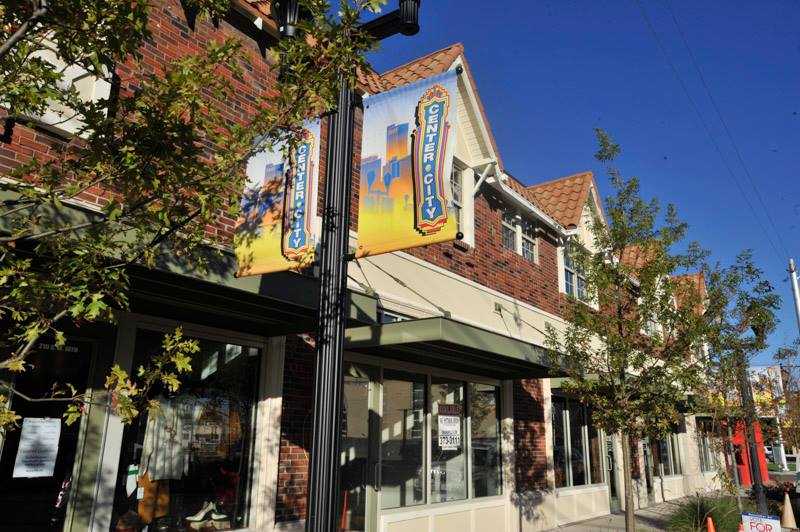
I’ve been enjoying the changes I see occurring in downtown Amarillo.

We all know about the construction underway: the Xcel office building, the Embassy Suites Hotel, the parking garage.

Another element is taking shape. It’s potentially the deal-maker for downtown’s revival.

It involves the continued development of urban residences.

The recently Lofts on 10th have received some recognition for their creativity. Other residences have been completed in an old warehouse not far from City Hall. The Eagle Center at the corner of Seventh and Tyler has housed downtown residents for years.

Where does this end? Does all this portend a growing new demographic among Amarillo’s population, which now sits at 200,000 … and growing?

My wife and I recently returned from Germany and The Netherlands, where one at times is hard-pressed to find single-family dwellings in the middle of great cities. There, urban life is a long-standing reality.

It has led to the “gentrification” of many neighborhoods, according to our German friends, who note that formerly run-down neighborhoods have become places that ooze with charm.

Sure, gentrification comes at a price. In many American cities, it drives up the cost of real estate and makes such property less affordable to those who cannot pay the cost of living in high-dollar downtown lofts or condos.

Amarillo’s transition — as I see it — appears to be well under way.

The ballpark construction will begin soon. Xcel Energy’s new office complex is entering its final stage of construction. The convention hotel will open soon, as will the parking garage.

Amarillo voters will get a chance to vote on seven propositions aimed at financing several key construction projects; one of them involves the Civic Center, which many foes of the ballpark said needs dramatic improvement.

It’s invigorating to see the changes that are afoot in a city that at times has resisted it.

‘Interim’ city manager going to stay?

10057352_G

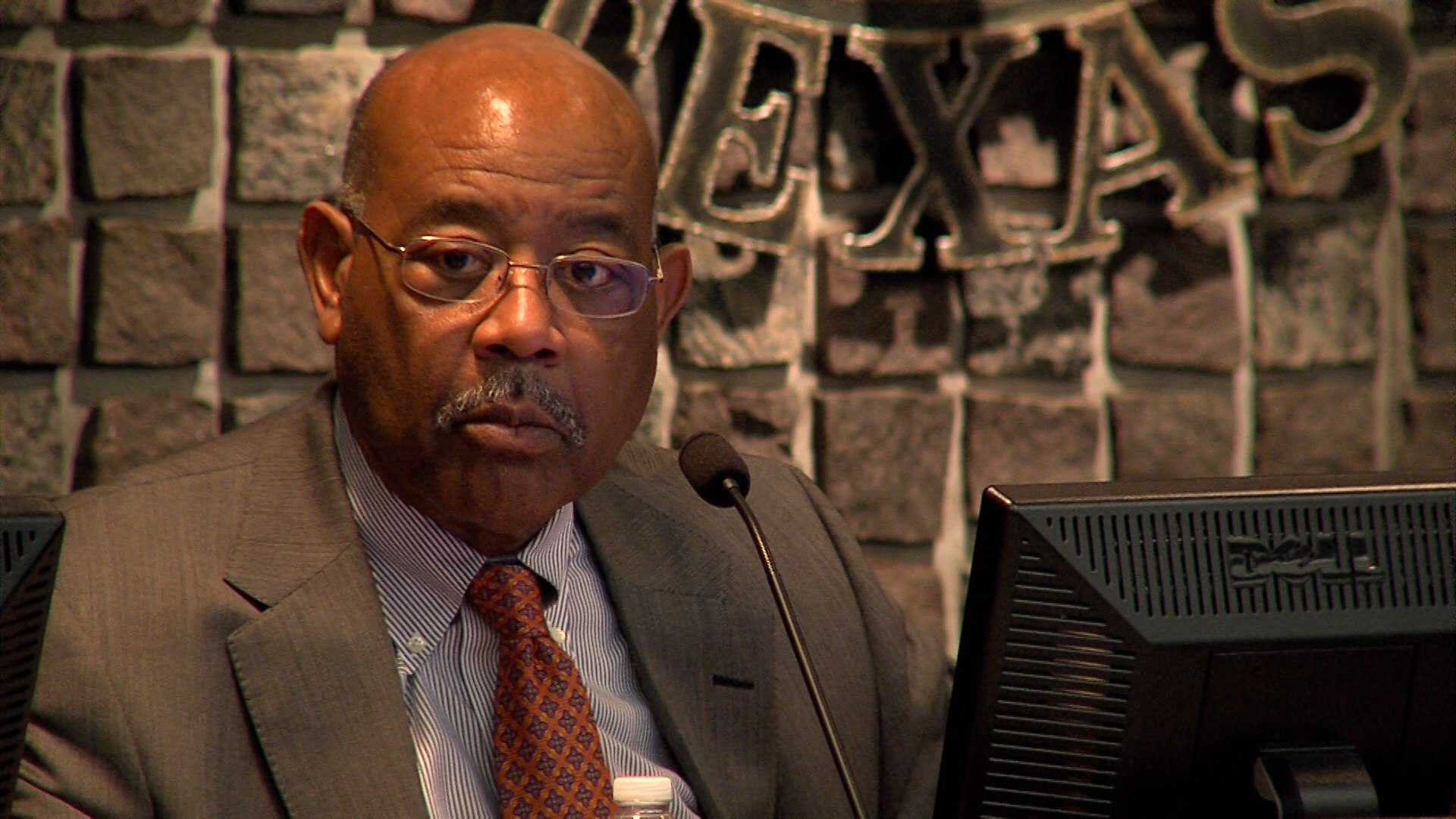
I cannot shake this feeling that Amarillo’s supposedly “interim” city manager is in it for a longer haul than he or the Amarillo City Council is willing to acknowledge.

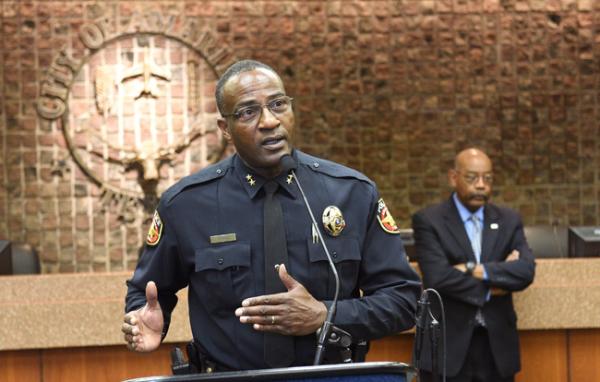
Terry Childers announced a big hire the other day when he appointed Ed Drain as the city’s new chief of police. Drain had been brought aboard as “interim police chief” from the Plano Police Department.

Drain took some recommendations offered to make the Amarillo PD a better unit and enacted them. Perhaps the most notable reform has been a re-emphasis on community policing, namely the use of bicycle patrols.

Good deal, yes? Of course it is.

Back to Childers.

The police chief appointment is a major obstacle that the city manager has just cleared. Does he just pack up and leave the administration of the city — and its appointment of the city’s top cop — to someone else? My gut tells me no.

My gut — along with my occasionally reliable trick knee — also tell me that the City Council is quite happy with the way Childers is running the city.

Recall that the city embarked on a city manager search. It collected some resumes from a nationwide job posting. Looked them over — I am going to presume — and then tabled the search.

Am I the only one inclined to think the City Council is decidedly less interested now in looking for someone other than Childers to operate the city’s government machinery?

I’m wrong more than I’m right.

Something, though, tells me that Terry Childers is here to stay a lot longer than he and/or his immediate employers are letting on.

‘Interim chief’ becomes the permanent PD boss

chiefdrainpresser1_091216%20-%2015654026%20-%20chiefdrainpresser1_091216

So, you thought Ed Drain would take over the Amarillo Police Department for a short time, repair some of the broken parts and then return to the Dallas Metropolex, did you?

It ain’t happenin’, folks. Police Chief Drain has the permanent job, meaning he’s likely staying in Amarillo for as long as he wants to stay.

Some of us thought that might be the case when interim City Manager Terry Childers appointed Drain to the interim top cop post.

I won’t mention any names, but … you know who I am.

I’ll be candid: I had a favorite within the police department who I thought would make an excellent choice to be its new chief. I’ll keep that to myself.

Drain, though, is an impressive fellow. I particularly like his emphasis on community policing, his insistence that cops on the beat interact more up close and personally with the people who they swear to “protect and serve.”

I also like his decision to reinstate the bike patrols as part of the community policing initiative.

I don’t know the new police chief. I’ve heard him speak just one time — so far. I hope to hear more from him.

Now … as for the gentleman who selected him — Childers — I think it’s fair to ask whether he, too, is going to shed the “interim” tag in the months ahead.

The City Council already has tabled the search for a permanent city manager. Childers is making his mark known at City Hall. Yes, he got off to a bit of a rocky start with that unfortunate briefcase/9-1-1 matter. He’s said he’s sorry and has moved on.

I’m acquainted with Childers only a tiny bit more than I am with Drain. But I also am impressed at least with the public perception of him as a hands-on municipal administrator.

So, the “change” we knew was coming to City Hall has been felt by a key city department.

That ol’ trick knee of mine is telling we might be seeing more of it … involving one of the key players in this latest critical appointment.

I might be wrong.

Then again … let’s all stay tuned.

No motor vehicles allowed?

nuremberg street

NUREMBERG, Germany — Let’s think way, way, way outside the box for a moment … or maybe two.

Amarillo is trying to redesign, reconfigure and reinvent its downtown business district. City political and civic leaders have this idea of turning it into something of an entertainment district keyed in part to a couple of venues: the Globe-News Center for the Performing Arts and the to-be-built multipurpose event venue.

The thought occurred to me today while strolling through a much older city than Amarillo: Why not try something really radical, something that has met with some success in a place such as, oh, Nuremberg?

This city known as much for a series of trials that occurred here after World War II as it is for its astounding beauty and ambience has developed a pedestrian area that is full of people on foot.

No cars allowed along many city blocks within this area. It’s, um, pretty damn quiet during the peak business hours. The serenity is almost palpable.

I haven’t even begun to think how Amarillo might pull this off. How does the city cordon off, say, Polk Street from 11th Avenue to 5th Avenue, turning it into essentially a pedestrian mall? What kind of storefronts would be developed there? Eateries, craft shops, after-hours watering holes? Where would we allow people to park their vehicles?

Ideas pop into my noggin constantly. They have done so here as my wife and I are enjoying time with friends.

I know what many of you are thinking. How does Amarillo pull something like that off? How do we ask Texans who love their pickups, SUVs and assorted gas-guzzlers to park their vehicles outside this zone?

I must assure you that Germans love heir motor vehicles, too. Trust me when I tell you that traveling along the no-speed-limit autobahn is a unique kind of “thrill.” Yes, it’s an acquired taste to be zipping along at roughly 80 mph only to passed as though we’re standing still by motorcyclists and automobiles going — oh, I don’t know — 110 or 120 mph!

“You get used to it,” my friend Martin told us. I asked about the speed of motor traffic and he thought I was unnerved to the point f wanting off the autobahn. “Do you want me to get off?” he asked. “No, it’s OK,” I said.

Still, the Germans here manage to park their cars and ride the train into this shopping and eating district. They manage to enjoy themselves just fine.

Do we impose a never-drive zone that it’s in effect 24/7?

Do we make it an after-hours zone, say, from 5 p.m. until 2 a.m. daily?

I don’t know. I’m just tossing this one out there for you to consider.

If I’m all wet, full of buffalo bagels, living in a pipe-dream world, well, you are welcome to tell me so.

However, I am not yet willing to toss aside any ideas for what I believe can lead to an even better downtown district for Amarillo, a city I’ve grown to love.

Public safety: it’s important at many levels

13578011

“SHALL the City Council of the City of Amarillo, Texas, be authorized to issue general obligation bonds of the City in the principal amount of $20,080,000 for permanent public improvements and public purposes, to wit:  acquiring, constructing, improving, renovating, expanding and equipping public safety facilities; such bonds to mature serially or otherwise over a period not to exceed twenty-five (25) years from their date, to be issued and sold in one or more series at any price or prices and to bear interest at any rate or rates (fixed, floating, variable or otherwise) as shall be determined within the discretion of the City Council at the time of issuance or sale of the bonds; and whether ad valorem taxes shall be levied upon all taxable property in the City sufficient to pay the annual interest and provide a sinking fund to pay the bonds at maturity?”

Proposition 2 on the Nov. 8 Amarillo municipal election ballot

I don’t know this to be a stone-cold fact, but it’s probably true.

Ask any resident of any city of significant size about the issue that concerns them the most, they well might answer it has something to do with police and fire protection.

If the city is going to provide top-flight law enforcement and fire protection services, then it falls on the residents who demand it to pay for it.

Makes sense, yes?

Sure it does!

Proposition 2 proposes to spend $20 million on improvements to police and fire services.

It seeks to add new fire stations, replacing current stations that no longer are functional. It seeks to spend nearly $500,000 on assorted “police service improvements.”

This proposition likely will get voters’ endorsement when they go to the polls on Nov. 8. The city has pitched seven ballot measures at residents, asking them to support them all at a cost of more than $340 million. The public safety element is but a fraction of the total cost.

However, public safety always remains at the top of voters’ concerns about the level of government they get from City Hall.

http://amarillo.gov/pdf/CIP_list_for_ballot_resolution.pdf

My hope is that this proposition gets the voters’ wholehearted approval in November.

If we are going to insist on top-of-the-line public safety services, we have to be ready to pay for it.

Streets need work all over Amarillo

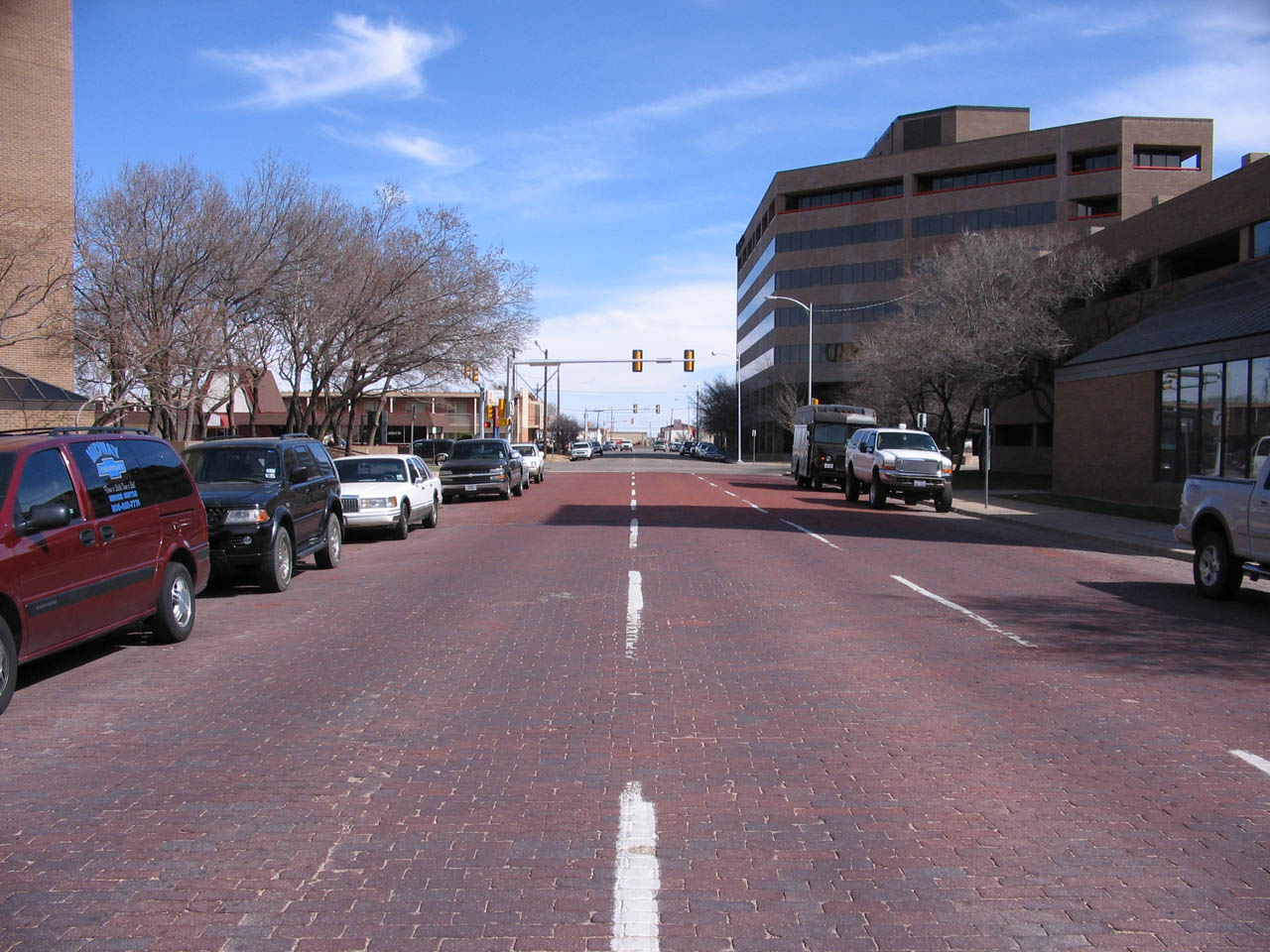
Amarillo_Tx_-_Brick_Streets

“SHALL the City Council of the City of Amarillo, Texas, be authorized to issue general obligation bonds of the City in the principal amount of $89,495,000 for permanent public improvements and public purposes, to wit:  acquiring, constructing, improving and maintaining streets, thoroughfares, alleyways and sidewalks within the City including related storm drainage improvements, traffic signalization and signage, street lighting, traffic management equipment, creek erosion, bridge and culvert improvements and utility relocations and the acquisition of land therefor, such bonds to mature serially or otherwise over a period not to exceed twenty-five (25) years from their date, to be issued and sold in one or more series at any price or prices and to bear interest at any rate or rates (fixed, floating, variable or otherwise) as shall be determined within the discretion of the City Council at the time of issuance or sale of the bonds; and whether ad valorem taxes shall be levied upon all taxable property in the City sufficient to pay the annual interest and provide a sinking fund to pay the bonds at maturity?”

Proposition 1 on the Nov. 8 Amarillo municipal ballot

Those of us who drive motor vehicles need streets that don’t rattle us as we make our way across our city.

Am I overstating the importance of this issue? I don’t think so.

Proposition 1 on the city’s municipal ballot on Nov. 8 is the most expensive single item to be decided by the city’s voters.

The price tag exceeds $89 million.

Streets have become a significant gripe among many of the city’s 200,000 residents. Proposition 1 seeks to repair the city streets.

Major arterials will be repaved. Streets in every quadrant will be repaired. The city plans to advance construction along Helium Road as the state transportation department plans to extend Loop 335 beyond Soncy Road.

http://amarillo.gov/pdf/CIP_list_for_ballot_resolution.pdf

The city also plans improvements to its street signalization. I totally and wholeheartedly endorse this idea, given the nonsensical delays motorists often face at intersections. I have one specific request: Remove the traffic signal coming out of the driveway at the Globe-News Center for the Performing Arts, which often turns red on Buchanan Street, stopping motorists for no reason.

The city is putting seven of these propositions on the ballot. Voters will be asked to vote on them individually. If they all pass, then the city will do all the projects.

Street repair and rehabilitation are vital to our city’s health and well-being. This proposition puts forward a significant investment toward that end.

It is my hope that Proposition 1 gets the voters’ wholehearted endorsement.

‘Quality of life’ at stake with parks proposition

thompson park

“SHALL the City Council of the City of Amarillo, Texas, be authorized to issue general obligation bonds of the City in the principal amount of $22,250,000 for permanent public improvements and public purposes, to wit:  acquiring, constructing, improving, expanding, renovating and equipping neighborhood park and recreation facilities of the City and the acquisition of land therefor; such bonds to mature serially or otherwise over a period not to exceed twenty-five (25) years from their date, to be issued and sold in one or more series at any price or prices and to bear interest at any rate or rates (fixed, floating, variable or otherwise) as shall be determined within the discretion of the City Council at the time of issuance or sale of the bonds; and whether ad valorem taxes shall be levied upon all taxable property in the City sufficient to pay the annual interest and provide a sinking fund to pay the bonds at maturity?”

* Proposition 4 on the Nov. 8 Amarillo municipal ballot

It’s called “quality of life.”

The term usually describes occasionally hard-to-define public infrastructure needs.

Although communities do not require parks, or recreational venues to function, residents become used to having them available and being able to use them whenever they wish.

Amarillo voters are going to decide this November whether to spend nearly $22.3 million to improve parks and recreation infrastructure throughout the city.

Is this one worth supporting? I believe it is.

The city is putting seven propositions on the ballot. This is the second in a series of commentaries I’d like to offer on the propositions.

The largest single expenditure will occur with construction of a recreation center in the North Heights neighborhood. The city has identified that center as a major need in a neighborhood where residents occasionally have expressed the belief that City Hall doesn’t care as much about them as it does about residents in other parts of the city.

The list of all the projects can be found on the link here:

http://amarillo.gov/pdf/CIP_list_for_ballot_resolution.pdf

Parks matter for a city’s quality of life. Amarillo has a population now of about 200,000 residents. We have enjoyed steady, moderate growth for decades. New residents are still coming to Amarillo to take jobs, to build lives for themselves and their families and to enjoy the amenities the city has to offer.

We don’t cry out for good parks and recreational opportunities the way we do, say, for police officers to respond quickly or for firefighters to arrive immediately to protect us.

If we’re going to let parks go to seed, or not support the community centers that become the lifeblood of neighborhoods, then ponder this: What would Amarillo be like without any of them?

We might not always be able to define issues that give us a good “quality of life,” but most of us know when those things aren’t available for us to enjoy.

Expand and improve Civic Center? Absolutely!

ama civic center

“SHALL the City Council of the City of Amarillo, Texas, be authorized to issue general obligation bonds of the City in the principal amount of $83,430,000 for permanent public improvements and public purposes, to wit:  constructing, improving, expanding, renovating and equipping civic center facilities and the acquisition of land therefor; such bonds to mature serially or otherwise over a period not to exceed twenty-five (25) years from their date, to be issued and sold in one or more series at any price or prices and to bear interest at any rate or rates (fixed, floating, variable or otherwise) as shall be determined within the discretion of the City Council at the time of issuance or sale of the bonds; and whether ad valorem taxes shall be levied upon all taxable property in the City sufficient to pay the annual interest and provide a sinking fund to pay the bonds at maturity?”

* Proposition 5 on the Nov. 8 Amarillo municipal ballot

That might be the longest sentence ever written in English. Ever!

But it speaks directly to an issue that has been on the top of Amarillo residents’ minds ever since, oh, we began talking about building the multipurpose event venue across the street from City Hall.

Amarillo City Council has put forward seven ballot propositions. This one, No. 5, deals directly with the Civic Center.

This is the first in a series of blog posts — as I promised earlier — commenting on the propositions coming to us this November.

The city asks residents to spend $83 million and change to improve, rehabilitate and “expand” the Civic Center.

Those who objected to the MPEV said the Civic Center ought to be a higher priority for the city than building a new ballpark. They cited the city’s lack of convention meeting space. Meanwhile, pro-MPEV forces argued that the new venue would be a great attraction for people to venture downtown for an evening of entertainment — which doesn’t argue directly against Civic Center improvements.

The Civic Center is a decent venue for conventions. Sure, it could stand some improvements. The Cal Farley Coliseum isn’t exactly a first-rate sports venue. It’s cramped, with limited seating for hockey and indoor football, although fairness requires me to say that neither the hockey team or the football team play to many sellout crowds during their respective seasons.

Still, an $83 million price tag would seem to do quite a bit for the Civic Center, which has been standing along Buchanan Street since the late 1960s.

Here’s our chance, then, to improve this venue to make it an even better draw for convention business.

Hey, we’ve got that five-star Embassy Suites hotel going up across the street. The folks staying there ought to be able to do their business in a first-cabin convention center as well.

Meanwhile, City Hall asks for some tough decisions, too

vote1

So, perhaps you thought your tough decisions begin and end with the vote for president of the United States.

Hmm. Wrong!

Amarillo City Hall has put forward a package of seven ballot propositions. They total nearly $340 million. If we approve them all, our municipal property tax rate will increase a few cents per $100 assessed valuation on our property.

What we’ve got here is a comprehensive list of projects covering a multitude of areas involving the service that our city provides.

Here’s the link that summarizes them:

http://amarillo.gov/pdf/CIP_list_for_ballot_resolution.pdf

The package of measures represents a significant change in the process of governing at City Hall. The list is almost mind-numbing.

The list includes projects set for streets, public safety, municipal facilities, parks, the Civic Center, athletic facilities and the vehicle fleet.

My guess would be that every single one of Amarillo’s 200,000 residents partakes in at least one of those municipal services. Thus, we have a vested and tangible interest in ensuring we get the most of them.

This is a fascinating method of securing public support for these services. If voters approve all of them, they all get done — over time.

Voters, though, have the chance to decide which of these projects are the most important. If they don’t want to improve the city’s park network, they can vote no on that proposition. If voters think they’re safe enough and do not want to improve police and fire protection, well, you can say “no” to that one, too. Hey, if you like the condition of the streets, you can reject that one, too.

Here are the proposals as presented by the City Council:

http://amarillo.gov/pdf/Resolution_Callilng_November_Election_16.pdf

The total price tag, I should add, was winnowed down from an original wish list of nearly a billion bucks.

Amarillo’s elected and senior administrative leadership have boasted for as long as I can remember — and I’ve been observing City Hall for more than 21 years — about the city’s famously low municipal tax rate.

The city also carries relatively little debt, unlike other cities of comparable size around the state.

City Hall has done a thorough job of examining areas that need improvement. It has asked us — the taxpayers — to dig a little deeper to pay for them. It’s reasonable to ask those of us who partake of the services offered to pay for them.

Those agents of change who took office in the spring of 2015 promised to do things differently than what has happened before. I’ve been critical of some of the changes brought by the City Council.

This one, though, represents a positive — and proactive — new direction.

***

In the weeks ahead, I’ll be looking at some of these individual propositions and offering a comment or two on them. Until then, study up.

Is an Amarillo baseball deal at hand?

ballpark

“Amarillo Councilman Randy Burkett said he expects his city’s leaders will sign an agreement with Elmore Sports Group in late September or early October.”

— From an Amarillo Globe-News Facebook post

What prompts Councilman Burkett to make such a bold prediction? Lubbock missed a deadline to put a proposed tax increase on the November ballot that would pay for construction of a new baseball stadium.

Lubbock’s late entry into the baseball franchise hunt appeared for a moment to hinder Amarillo’s own quest.

Thus, the deck now appears cleared for Amarillo to negotiate aggressively to bring the Double A minor-league baseball franchise to the High Plains. The franchise currently does business as the San Antonio Missions.

The Missions are planning to vacate the Alamo City, which is angling to bring in a Triple A franchise.

I am not privy to the goings-on at City Hall. I just sit out here in the peanut gallery hoping for the best.

And “the best” appears, if Burkett is correct, to be taking shape.

Amarillo is set to begin making room for its downtown ballpark. Crews will begin demolition of the old Coca-Cola distribution building across the street from City Hall. Once the lot is swept clean, then the plan is to build the multipurpose event venue that voters endorsed with their November 2015 referendum vote.

So, if an agreement is about a month away, then the franchise that now plays hard ball in San Antonio will bring its act to Amarillo — hopefully soon.

Then the city can have a legitimate minor-league baseball franchise to root for in a shiny new ballpark. It would be a significant improvement over the half-in, half-out bunch that splits “home” games between Amarillo and Grand Prairie and plays half of its “home” schedule at a rat hole ball park at the Tri-State Fairgrounds.

Amarillo can do better than that.