Tag Archives: MPEV

New ballpark: not a new concept for city

ballpark

Amarillo is considering a downtown ballpark that could be home to a minor-league baseball team.

Some individuals — maybe many of them — think the city and Potter County have an adequate venue for baseball on the edge of the Tri-State Fairgrounds.

I believe they are mistaken.

City officials once considered a study on the feasibility of building a new ballpark to replace that trash heap once known as the Dilla Villa. Then-Mayor Debra McCartt wasn’t too keen on the idea of spending public money on such a study. The city manager at the time, Alan Taylor, had the idea that if you “build it they will come.”

That was a decade ago, in 2005.

The city’s governing board has changed from a commission to a council. Mayor McCartt is no longer in office, being succeeded by Paul Harpole, who happens to have bought into the idea of a public investment in a project that will do the public much good.

At issue now is whether voters will endorse a proposed multipurpose event venue. They’ll decide the matter in a citywide referendum on Nov. 3. The issue at hand is this: Do we develop an MPEV that includes a baseball park or not?

I say “yes!”

I offered an opinion on the concept of a downtown baseball park in a column published Aug. 14, 2005. I wrote that the nation is full of examples of how projects such as the MPEV — as it’s currently configured — have delivered “enormous payback” to cities that build them.

My favorite example is in Oklahoma City, where a downtown ballpark has helped revive Bricktown. Now, I understand fully that Amarillo is less than half the size of OKC. I keep returning to the notion of that “economies of scale” can work for Amarillo, just as it has done in Okie City.

Let’s not operate in a climate of fear over a concept that might be new to this city, but is far from new in other communities that had the will to march forward.

Let’s think big about the MPEV

Amarillo MPEV

Let us take a moment — or maybe two — to consider some possibilities for a venue that Amarillo officials want built in the city’s downtown district.

It’s called a multipurpose event venue, but “MPEV” has become its signature.

The MPEV is on the Nov. 3 ballot. The ballot language gives voters a narrow choice: whether to allow it to proceed with a “ballpark” included in it design. We will be asked to vote “yes” or “no.”

Critics of the MPEV, estimated to cost about $32 million, say the ballpark element restricts its use. I believe that’s nonsense.

So, we could move the baseball activity that’s been occurring at the Potter County Memorial rat hole, er. stadium for the past few years into a gleaming new downtown stadium.

That’s it? That’s all we can see for this venue? Hardly.

The weather, contrary to many other naysayers, shouldn’t detract from other activities. Why, for example, can’t we have outdoor concerts? Don’t other communities welcome acts to perform outdoors? Aren’t there sufficient numbers of entertainers who would like to play outdoors in downtown Amarillo on a cool autumn evening?

And let’s get real here. We all have appreciated the pleasant temperatures we see even during the summer when the sun goes down along the High Plains. Our altitude — nearly 3,700 feet above sea level — helps make those evenings a reality.

OK, so the winters get chilly around here. And yes, spring can be a bit unpredictable — weather-wise.

The planners who’ve proposed this project haven’t re-invented the wheel. Other communities have enjoyed success with downtown ballparks that have been used for various other activities when they aren’t hawking hot dogs, peanuts and cold beer at ballgames.

What they’re pitching, though, is a new concept for this city. The MPEV will work if it’s given the chance — and if we start thinking expansively about the many uses available to it.


Why not play ball at MPEV?

Amarillo MPEV

Jon Mark Beilue might have laid out what could be a pivotal argument for approving construction of a multipurpose event venue — as it’s currently configured — in downtown Amarillo.

The stellar Amarillo Globe-News columnist — and a friend of yours truly — noted in an essay: “I would bet all the change in my pocket that no less than two years after construction, independent baseball would be replaced with AA Texas League affiliated baseball. From there, the MPEV could be designed in such a way as to draw other events that are the other half in making the venue succeed and attracting downtown crowds to added retail.”

The MPEV is coming up for a vote on Nov. 3. It headed to the ballot on a narrow 3-2 Amarillo City Council vote, with the three newest council members voting to place the issue on the ballot.

The crux of Beilue’s column was that the new guys “whiffed” on common sense, and that they had their mind made up long before taking the vote.

But I’m intrigued by the notion of what might happen if the MPEV design gets voter approval this fall.

As has been noted before — in this blog and in many other forum — Potter County Memorial Stadium, aka the Dilla Villa and now the Thunderhead Park, is a dump. It’s hardly more than a piece of fecal matter as far as athletic complexes go.

Is it unreasonable to believe that a brand new, shiny, state-of-the-art venue could become a magnet for the kind of minor-league baseball organization that Beilue and others visualize for the city?

My answer is “no,” not in the least.

Beilue writes: “Neither I nor most others are married to a baseball stadium as the signature piece of an MPEV, but it’s the most logical. The MPEV needs an anchor tenant, and baseball fits that.

“A Hollywood Bowl design has appeal, but its events would be in direct competition with the Globe-News Center for Performing Arts and Amarillo Civic Center Complex. Baseball is a unique alternative that would draw thousands.”

I refuse to heed the naysayers who insist that Amarillo “isn’t a baseball town.” It hasn’t been a baseball town for years largely, in my view, because that rat hole at the Tri-State Fairgrounds is a lousy place to play — or watch — a baseball game.

The ballot measure states: “Should the Multi-Purpose Event Venue (MPEV) to be constructed in downtown Amarillo include a Baseball Stadium at the approximate cost of $32 million?”

It works for me.

Millennial movement a plus for the city

Amarillo Millenial

Win or lose when the ballots are counted this fall on Amarillo’s proposed multipurpose event center, I see a victory in at least one important sense.

This campaign will have energized a voting demographic that historically is more prone to sit these events out than take an active role.

The MPEV has captured the imagination of a group calling itself the Amarillo Millennial Movement. It comprises young people who claim they are committed to supporting the downtown Amarillo revitalization project as it’s been presented.

AMM favors the MPEV design that currently includes a ballpark for minor-league baseball. It favors the downtown project’s three tiers — which also includes a convention hotel and a parking garage. The latter two items no longer appear to be in jeopardy, as the Amarillo City Council this week approved the go-ahead on the construction.

The MPEV remains an open question. But if AMM can get itself mobilized, it hopes to persuade enough of Amarillo’s voters to support the project as it stands.

Why is this a victory for the city? Because for longer than any of us can remember, young voters as a bloc haven’t been energized enough to organize into a positive force for change. It’s not just an Amarillo phenomenon. This voter lethargy has permeated communities all across the nation.

Many of us heard the naysayers suggest that the young adults are being used. They’re puppets of some well-heeled, deep-pocketed interest group that wants this project to proceed because of some mysterious enlightened self-interest.

My reaction to that? Big deal.

Have you tried to tell a young person to do something when he or she doesn’t want to do it or they lack at least some measure of commitment to the task? Anyone who’s ever reared children into adulthood knows that is a virtual impossibility.

AMM says it wants the downtown project to proceed. It has developed a campaign logo. It is using its members’ considerable social media expertise to spread the word.

That a group of young residents would take the time to become involved in the political process is good news for an old hand — such as yours truly — who occasionally has lamented young Americans’ seeming lack of interest in civic affairs.

Once this campaign ends, it will be my hope that members of the millennial generation keep their interests high … and stay involved.


Ballpark … or no ballpark?

I’m still trying to wrap my head around the debate over whether to put a ballpark near the heart of downtown Amarillo.

It’s called the multipurpose event venue. MPEV, for short.

It’ll be up for a key decision on Nov. 3. The city will ask voters if they want the MPEV to include the ballpark. If they say “no,” the ballpark won’t be built; a “yes” vote, of course, means what it says.

I believe the ballpark is a good deal. It can be a potentially great deal if we use our imagination, employ some creativity and relearn how we can enjoy the downtown district.

I keep hearing numbers about the cost of the MPEV. It’ll be around $32 million. The city plans to issue bonds to pay for it. It plans to retire those bonds with hotel-motel tax revenue and lease payments from the tenant who agrees to run the place. Bill Gilliland and Laura Street, a pair of big-hitter fundraisers, told the City Council they have received pledges totaling around $2 million from private contributors; there might be more in the wings.

Amarillo’s political/business/civic brain trust isn’t reinventing the wheel with this downtown ballpark concept. Cities all across the country — big cities and mid-sized cities, just like Amarillo — have enjoyed varying degrees of success with downtown ballparks.

There’s nothing particularly original or groundbreaking in the city’s effort to revive its downtown district.

Now, for the record, I’m not going to suggest that Amarillo can copy cities such as Oklahoma City in developing a downtown ballpark. The OKC project was paid for with a public tax levied specifically to raise money for the construction of that city’s ballpark in its Bricktown district. And I am acutely aware that OKC is a much larger city.

If we step back, though, we need to understand that no one with a lick of sense is suggesting that Amarillo’s downtown project can function on the same level as the one in OKC. It can, though, function nicely at its own level.

The MPEV as it’s been presented does represent a step forward for the city and presents a fascinating opportunity for the city to progress to some next, and perhaps largely still undefined, level.

Indeed, this project requires a leap of faith. I am prepared to take that leap.

Mayor Harpole hamstrung by state law

harpole

I had the distinct pleasure today of watching Amarillo Mayor Paul Harpole pull his punches so tightly he almost hit himself in the face.

He stood before the Rotary Club of Amarillo and talked about all the projects that are on-going throughout the city that have nothing to do with downtown redevelopment. But then he would remind Rotary Club members that, yes, there’s this thing called downtown revitalization that’s got him all fired up.

Indeed, he seemed wound tighter than a cheap watch today as he blazed through his luncheon program talking about highway access improvements, Loop 335 expansion, utility installations, drainage excavation, improvements to interstate access.

But you see, state law is kind of quirky. As mayor, he is not allowed to advocate for issues that are set to be voted on in an election. He presented himself today as mayor, which meant only that he could give us information about downtown revitalization.

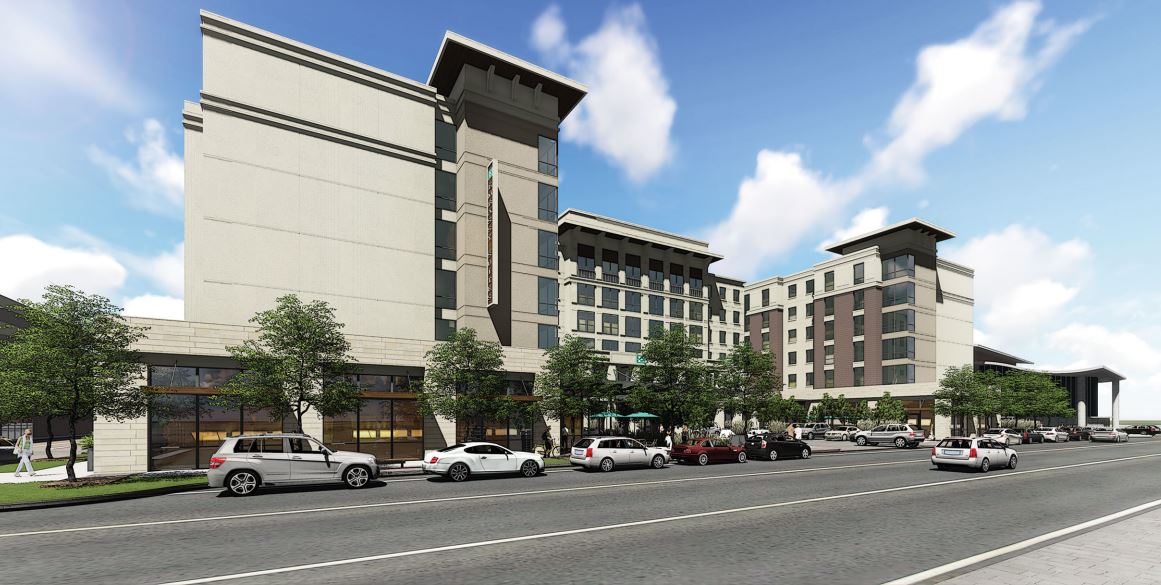
You could tell — heck, it’s been all over the media — that he’s solidly behind the effort to revive downtown Amarillo. The package that’s been presented will proceed with a downtown convention hotel and a parking garage. During his presentation today at the Rotary Club meeting, Harpole showed slides of what the downtown district will look like when it’s done. He believes a key component to the city’s effort remains the multipurpose event venue — in its proposed configuration, which includes a ballpark.

But that state law prohibited him from proclaiming loudly and proudly what he really thinks of the MPEV.

That’s OK, Mr. Mayor. I got the message.

MPEV debate to turn on ballfield

Amarillo MPEV

It now appears that the Amarillo municipal election referendum this November is going to turn on a specific issue.

Should the city build a multipurpose event venue that includes a ballpark?

I say “yes!” With emphasis.

So, the MPEV-with-ballpark has at least one vote. I’m guessing it’ll get many more when the time comes to vote on it.

But the question came to me today from an Amarillo Millennial Movement member who wanted to know how they can sell the MPEV as it’s been proposed during the next 90 days. Honestly, I have never planned a campaign strategy and I don’t intend to do so now.

But I’ll just say that I am hearing from friends, acquaintances and others who want to talk about that they think the ballpark isn’t needed. They think the rat hole stadium at the Tri-State Fairgrounds is sufficient. It isn’t.

I happen to believe that a downtown venue for some minor-league baseball is a capital idea. And, yes, it can — and must — be used for other events. What might those events be? I will rely on the marketing geniuses around the city, the Panhandle and even the state to figure that out.

Outdoor concerts? Sure. A flea market … maybe? It’s been done.

Perhaps local high school teams could play ball during their regular season. There might even be an open date or two — or perhaps more — for the West Texas A&M University baseball team. Or perhaps the WT women’s softball team. Or maybe even some local high school softball teams.

I understand fully that these events don’t often draw more than a handful of fans. However, is that the way it has to be?

The world is full of opportunities.

I was heartened to hear from the newly elected City Council members this week that they favor an MPEV in some incarnation. They remain skeptical of the ballpark element.

I will continue to argue that a ballpark is a feasible attraction for downtown Amarillo. However, it’s going to require some creativity and some marketing genius to make it work as well as it can for the city.

If voters say “no” in November, my next-best hope is that the city can come up with a Plan B in a hurry and keep its downtown revival project moving forward.


Some sensibility returns to City Council

amarillo hotel

Well, just when some of us — me included — thought the Amarillo City Council had driven itself into the proverbial ditch, common sense reared its head at City Hall.

The council voted 3-2 Tuesday to proceed with construction of a downtown convention hotel and an adjacent parking garage.

I’m beginning to breathe a bit more easily with this news.

Joining the common-sense majority was new Councilman Elisha Demerson, who voted along with Councilman Brian Eades and Mayor Paul Harpole to begin work on the twin projects.

Councilmen Mark Nair and Randy Burkett voted “no” on the garage-hotel tandem project, saying they oppose the idea of using public money to compete with private, for-profit enterprise.

This, though, is a classic public-private partnership. Any major economic development effort ought to include some public investment. The city wants to kick in $5 million to help develop retail space in the parking garage — but it will get that money back when it fills that space with successful retailers.

Who benefits from the increased business and the revenue it generates? Let me think. Oh yeah … the public!

The biggest of the three-pronged downtown revival project, the multipurpose event venue, remains in question. Voters will decide on Nov. 3 whether to build an MPEV that includes a ball field. Interestingly, all five council members say they support the concept of a downtown MPEV, but three of them — Demerson, Burkett and Nair — disapprove of the ballpark being part of it.

Therein lies the crux of the disagreement … that and the idea that the city would issue public bonds to build it.

But here’s where — in my view — their anti-MPEV argument falls apart: The city will retire the bonds with revenue derived from guests staying at that downtown hotel, guests at other hotels all across the city and lease payments from whoever agrees to run the MPEV.

The vote Tuesday also provides Potter County with some much-needed parking space and opens up retail opportunities. Imagine for a moment the possibility that retail business could return to the downtown district. Doesn’t that possibility whet the appetites of those who seek to make downtown an attraction instead of a stop along the way to somewhere else?

I am somewhat encouraged by the reason that prevailed at City Hall.

Let’s proceed now with a reasoned, rational and responsible debate on the merits of the MPEV.

Is the city working well? I say ‘yes!’

The debate over the future of Amarillo’s downtown redevelopment effort has been underway for some time now.

I think I understand the divide in our city over whether the project that’s on the table is a good or bad thing for our city.

It runs between those who think the city is going to hell because of poor management and those who believe the city is functioning quite well.

Count me as one of the latter. I had faith in the city’s governing leadership prior to the May election. That faith was shaken when two incumbents got beat and a third one, Mayor Paul Harpole, was re-elected by a relatively narrow margin.

The city has proposed building the multipurpose event venue that’s been referred to the voters for their decision in a November election. The city also has agreed on a deal to build a convention hotel and a parking garage. If the MPEV goes down, does that mean the hotel goes away, too? Developers have pledged to finance the deal themselves. City officials pledge no increase in property taxes to pay for it.

Throughout much of this debate we’ve heard chatter about mismanagement, incompetence and the general overall well-being of the city. What about that?

Has the city been mismanaged? Are our leaders grossly incompetent? I do not believe either is the case.

Yes, there have been mistakes. The city has stumbled a bit on occasion. It also has corrected the mistakes that created the missteps.

Competence? I stand by my belief that the previous City Council comprised individuals who knew what they were doing as they were crafting — with considerable input and comment from the public — its downtown revival blueprint.

Mistakes? Sure. Wallace Bajjali — the one-time master developer that went belly-up without warning — is a big one. But was the city left holding the bag for money pledged for work that was undone? No. Wallace Bajjali had done what it had promised to do for the city before the two principal owners had their falling out and disbanded the company.

The downtown revival project remains sound in my mind and can work well for a community that continues to rock along economically.

Which brings me to the final point. As near as I can tell, Amarillo remains a city in good financial shape. Our tax rate is low; our bond rating is as good as it gets; our infrastructure is being improved constantly.

Can we do better? Sure. No city anywhere on the planet is being run to absolute perfection.

Someone on social media has declared that I have a “vendetta” against the three new council members — and maybe that individual is speaking for others who might share that view. My concern simply is that I didn’t harbor the ill will toward the former City Council that seems to have developed among quite a few of our city’s residents.

And yet at least one of the new council members has taken office with an apparent chip on his shoulder and he plans to bring immediate “change” to a city government that was being run to my satisfaction.

I will be waiting along with the rest of my fellow Amarillo residents to see the results of the change that has arrived at City Hall.

I’ll just say that my confidence in the new regime isn’t as solid as it was in the old one.


Young people rally behind MPEV

My path crossed those of two women today. Both are friends. One is a retired businesswoman, the other is an elected Potter County official.

I spoke to them separately, but the subject of our conversations was the same: the multipurpose event venue that’s been in the news lately.

The retired business owner seems to be quite against the MPEV. She calls it “a ballpark.” Yes, it is that. It’s also — as the name suggests — potentially much more. Indeed, its very name — “multipurpose event venue” — connotes a place where much more than baseball can be played.

The MPEV is going to a vote of the people this November. My retired businesswoman friend thinks it’ll go down in flames, that voters will reject it because they see no future for a ballpark in downtown Amarillo. The Amarillo City Council is under no legal obligation to follow the dictates of the voters, but it certainly faces a serious political obligation if it goes against the voters’ will. Thus, the referendum becomes a de facto binding event.

It’ll fail at the polls this November if those who support it do not start a major sales campaign to educate Amarillo residents about the possibilities that this event can bring to the downtown district.

Which brings me to the other friend with whom I spoke this afternoon.

She told me she supports the MPEV. She also thinks it’s likely to lose at the ballot box this November, but said the election results could be close.

But she offered a glimmer of hope. It rests with the involvement of the city’s young residents, specifically those who belong to a group called the Amarillo Millennial Movement.

AMM has formed specifically to be champions for the city’s comprehensive downtown revival effort. It puts its message out on social media — Facebook, Twitter and maybe other outlets.

My elected official friend is quite thrilled — as I am — that young residents are becoming engaged in this process. “They usually sit these things out,” she told me, adding that the involvement of this group — and perhaps other young people — might be decisive at the polls in November.

I hope she’s right.

They’ve spoken out to the Amarillo City Council, making the case that downtown Amarillo needs to be a place that attracts young people to it and keeps young residents from moving away.

Time will tell if they can organize their enthusiasm into a meaningful political force of nature.

My hope there as well is that they can.