Tag Archives: MPEV

So … why are pledges for MPEV suites a bad thing?

MPEV

Here it comes. Some conspiracy theorists are now putting out allegations that businesses pledging money up front to use luxury suites at the proposed multipurpose event venue in downtown Amarillo are, um, buying votes.

Let’s take a breath, eh?

First, I want to make an admission. I got ahead of myself in an earlier blog post about the MPEV suites when I wrote that they’d been “sold out.” Although I noted in my blog post that no money had changed hands, the headline indicated the suites had actually been sold. My mistake.

Here’s the earlier post

Back to today’s issue at hand.

A leading opponent of the MPEV, David Kossey, wondered why the suites are being “sold” or “reserved” prior to the citywide vote on the MPEV, which is set for Nov. 3. He said that normally, the suites would be put up for the public to decide whether to purchase the suites. The implication is that businesses are pushing their way to the head of the line.

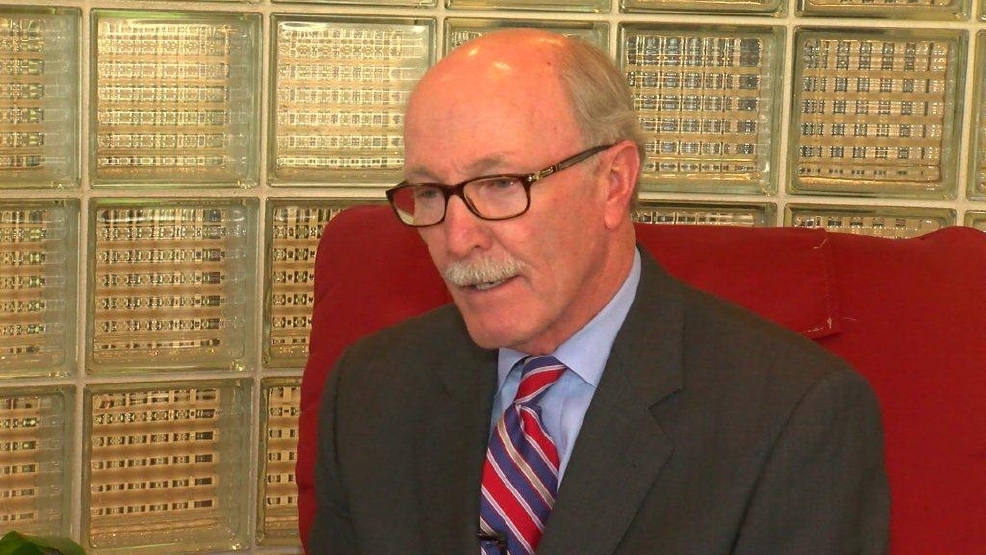
The co-chair of the pro-MPEV political organization, Vote FOR Amarillo, Paul Matney, told NewsChannel 10: “We’re finding out that businesses want to support the ballpark by committing to a suite. There’s no contract and this is not a commitment to an operator, just simply to the idea.”

So, I’ll pose this question. Why is the commitment from business interests in a venue that they want built a bad idea?

The $32 million MPEV construction will be financed with revenue bonds that the city will repay through a variety of funding sources. Hotel occupancy tax is one of them; rental revenue is another.

And, oh yes, revenue from the selling of these luxury suites is yet another payback method.

MPEV suites gobbled up

The interest expressed by business owners is what it is: a commitment to a concept they believe will benefit the city and the region. Is there some of what I like to call “enlightened self-interest”? Sure there is. They want to provide their business customers/clients with some quality entertainment. So what?

The bottom line is the bottom line. They’re helping finance an entertainment complex that its supporters believe will spur greater economic activity in the city’s downtown district.

That is a bad thing? No. It’s a very good thing.


A mind has changed on the MPEV

amarillo MPEV

A most interesting message came to me this evening.

It was from a businesswoman I’ve known for many years. She and I listened the other day to Paul Matney make the case for the multipurpose event venue that’s going to be on the Nov. 3 Amarillo ballot.

Voters are going to be asked whether to approve the MPEV and its ballpark design. My businesswoman friend had opposed the MPEV. Then she changed her mind. She told me that Matney’s presentation made her reconsider her opposition to the MPEV.

It reminded me of something the late Republican state Sen. Teel Bivins of Amarillo once told about his former Texas Senate colleague, Democrat Carl Parker of Port Arthur, was able to do … which was to change senators’ minds simply by the force of his own debating skills while arguing his case on the floor of the Senate.

It’s a rare thing to watch happen, Bivins said, but Parker was able to accomplish the seemingly impossible.

I don’t know that I’d ever witnessed such a compelling presentation, either before I heard Matney’s presentation. Then again, he was preaching to the converted already … that would be me.

Matney’s passion for whatever cause that’s on his radar can be a wondrous thing to see and hear. The former Amarillo College president became an ardent proponent of the school he led and he spoke with fluid eloquence about AC whenever he was given the chance.

He apparently has developed the same fluidity as he campaigns across Amarillo on behalf of the MPEV and the years-long effort to remake the city’s downtown business district. The MPEV with its ballpark design can play a huge role in downtown’s revival and Matney is delivering that message with stunning efficiency.

Believe me when I say that my friend whose mind has changed on the MPEV is not one to be pushed around easily.

I believe she might not be alone among those who are rethinking their view on this important project.

Matney gets fired up about MPEV

matney

It’s next to impossible to listen to Paul Matney make the case for whatever project on his radar and not feel some sense of buy-in.

I’ve known Matney for as long as I’ve lived in Amarillo. That’s more than 20 years. I have listened to his pitch for Amarillo College, which he led as president until he retired a year ago. His AC spiel was polished, passionate and on-point.

Matney has turned that passion now to a Nov. 3 non-binding referendum facing Amarillo voters. You’ve heard about it, yes?

It’s the multipurpose event venue, which is part of the three-pronged “catalyst project” that’s been developed for the city’s downtown business district.

Matney broke out of his chains today while speaking to the Rotary Club of Amarillo.

The MPEV includes the much-discussed “ballpark.” The ballot measure asks voters if they want the MPEV built as it’s been presented.

Matney’s view? Not just yes, but hell yes! (OK, he didn’t say it quite that way, but that was the message.)

It’s a $45 million project, combined with a parking garage. The city will issue revenue bonds to pay for the MPEV construction and will retire the debt with hotel occupancy tax revenue collected by visitors who come to Amarillo.

City and business leaders are breaking ground Friday on a $45 million convention hotel to be built downtown; the developer of the Embassy Suites is footing the bill for the hotel’s construction … and that, too, got Matney’s juices flowing today.

Matney believes in the MPEV and predicted that its construction will put Amarillo on the “baseball radar” for an organization looking to locate a team. Oh, but what’s wrong with the Potter County-owned ballpark at the fairgrounds? Matney didn’t say it precisely, but I’ll say it here: It’s a dump.

Matney did say that Potter County shouldn’t spend another nickel on improvements to that stadium. Amen to that, Mr. President.

Matney presented his brief remarks as someone “who was born here, educated here, lives here, worked in higher education here, has retired here, will die here and will be buried here.”

The MPEV, he said, could play host to a wide variety of events that could attract thousands of folks into the downtown district.

So, the campaign for and against the MPEV will continue. I’ve known Paul Matney to be a man of high integrity and honor.

The political organization that he has joined to support passage of the referendum could not have found a better spokesman for this worthy project.

As he noted in talking about Xcel Energy’s own plans to build a new office complex downtown and the company’s struggle to replace key employees who are reaching retirement age. “Xcel is struggling to find people to fill those spots,” Matney said, “so this is a quality-of-life issue.”

Melissa Dailey, the head of Downtown Amarillo Inc., had to walk the straight and narrow in her remarks to the Rotary Club about the MPEV. As a public employee, she is limited to speaking only about the facts. No campaigning  allowed, right, Ms. Dailey?

That’s fine. She turned it over to Paul Matney who — as a “civilian” — is allowed to speak from the heart.

He did so today.


City Council now gets to do some heavy lifting

atkinson

The Amarillo City Council decides on a single personnel choice. The council gets to choose the one person who runs the city’s massive machinery.

That person, the city manager, then makes all the other key hires: police chief, fire chief, city attorney, assistant city manager … all of ’em.

Well, now the City Council gets to make the one selection the city charter empowers it to make.

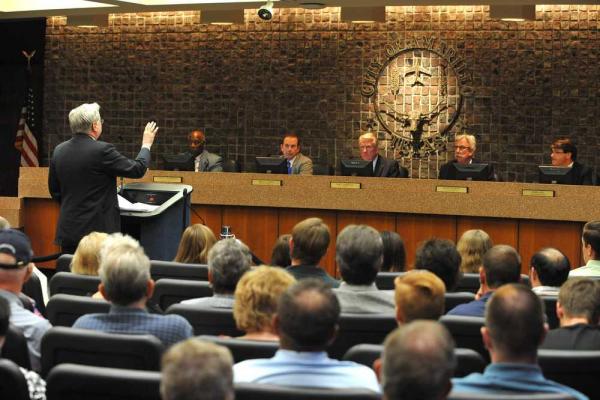
Jarrett Atkinson has resigned as city manager. For the life of me, I don’t know why he’s drawn the criticism he has received from at least two of the new members of the City Council. But he has and the council is in position to make that criticism.

The council now gets to scour the landscape for a worthy successor and I believe quite strongly that we are likely to witness a serious demonstration of the divisions that exist on the five-member governing council. The municipal chasm is likely to dissuade senior administrator from within City Hall to seek the top job. Thus, the city might look high and low, hither and yon for the next city manager.

The three newest members of the council appear wedded to some skepticism about plans for advancing the future of the city’s downtown district. They managed to engineer a citywide non-binding referendum that will decide the future of the multipurpose event venue; the vote will occur on Nov. 3.

They dislike the MPEV as presented.

The other two council members favor the project.

Back to the issue at hand: What kind of city manager is the council going to hire? Will the new city chief executive officer need to pass a litmus test that requires him or her to adhere step by step with what the bosses on the council want?

The city has been blessed with relatively few city managers over the course of the past 52 years. John Stiff served in that post for two decades before retiring in 1983. John Ward succeeded him and he served another 20 years before moving to the private sector in 2003. Alan Taylor was a relative short-timer in the post before he retired. Now it’s Atkinson who’s leaving, again after a short period of time.

In the aggregate, though, steady administrative leadership has blessed Amarillo for more than a half-century.

That stability now appears to have been torn apart by the fractiousness we’re hearing among City Council members — and by a reckless call for Atkinson’s resignation by a new council member, Mark Nair, immediately after he took office.

Pay attention, gentlemen: You need to think carefully about who you hire to run the city.

We’ve made a lot of progress in Amarillo over the course of many years. We are moving forward today. The next municipal CEO needs to be mindful of where we’ve been, where we are and where we’re going.

The referendum will decide the future of the MPEV before the city finds a new manager. Still, my own preference would be a city manager willing to think big about how to revive the city’s downtown district.

Wish granted: Atkinson quits manager post

ama city council

Amarillo’s three newest City Council members took office this spring with guns blazing.

One of them, Mark Nair, took his hand off the Bible on which he swore to serve the city and called immediately for City Manager Jarrett Atkinson’s resignation.

Cooler heads prevailed. For a brief period.

Atkinson didn’t quit. He stayed on and declared he was happy the city was moving ahead. I guess he wasn’t as happy as he said.

Atkinson tendered his resignation late Monday. The council may decide today when he’ll serve his last day.

This is an unhappy development for our city.

I happen to be an Amarillo taxpayer who believes Atkinson received mistreatment at the hands of the new council majority.

Let’s look briefly at a few things.

  • Amarillo maintains a famously low municipal property tax rate.
  • The city continues to enjoy excellent credit ratings by associations that that make those determinations.
  • Construction is booming all over the city. Homes are being built. Commercial property is being developed. The city, working with state highway planners, is improving our traffic infrastructure.
  • And, yes, downtown’s rebirth is proceeding.

The city’s chief executive officer doesn’t deserve all the credit for these developments. Nor does he deserve the blame for the political unrest that produced a new City Council majority whose aim now appears to be to stall — if not stop — the city’s planned effort to revive its downtown district.

The new fellows — Nair, Randy Burkett and Elisha Demerson — all pledged to “change” the way things got done at City Hall.

Well, gentlemen, you’re about to get your wish.

City Attorney Marcus Norris resigned. Assistant City Manager Vicki Covey retired.

Now the city has lost its chief executive officer as the council argues among its members over whether to keep funding Downtown Amarillo Inc., which to date has been a vital component in the city’s effort to reshape its downtown district.

Let’s see how this plays out as the city now begins its search for a manager to take control of the municipal wheel.

Council members make precisely one hire. It’s the city manager.

Good luck, guys, in your search for someone willing to step into this maelstrom.


Case builds for approval of MPEV

amarillo MPEV

Roger Cox is a man of strong feelings … and he possesses the ability to express them with great effectiveness.

The Amarillo lawyer has done so with an essay published in the Amarillo Globe-News. His topic: the multipurpose event venue and the ballot measure set for voters’ decision on Nov. 3.

Making the case for MPEV

Cox’s essay is on point at many levels, but the one point that resonates most clearly with me is the funding mechanism that will operate the MPEV once it’s built.

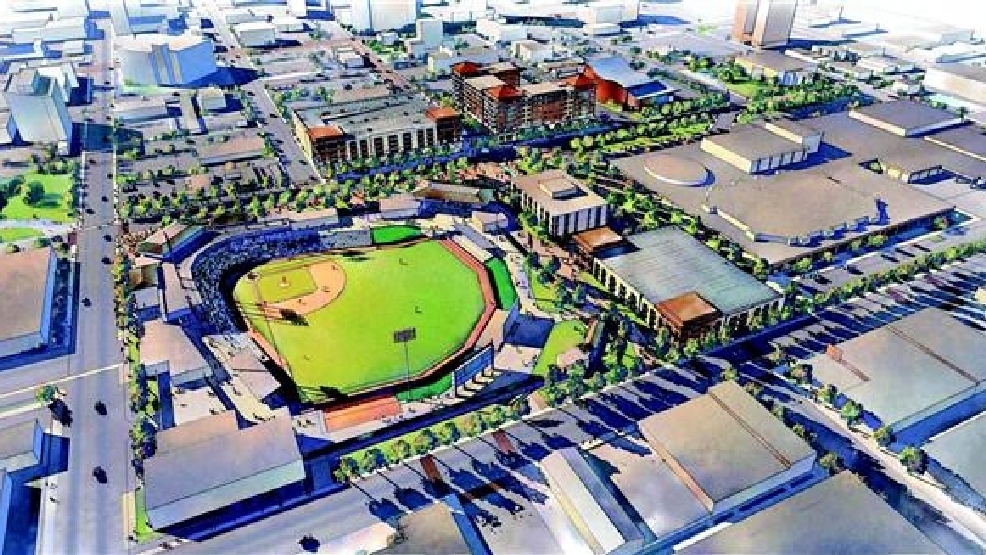
The structure would cost $32 million to build. It’s intended to include a ballpark and would be used for a variety of activities designed to attract people to the downtown district.

Cox writes: “As a landlocked city, we are what we build. People come to Amarillo not for the mountains, lakes or coastline but because of the public facilities, entertainment and other features that we and our predecessors have built.”

He notes as well that city government relies heavily on sales tax revenue to fund the services it provides residents — and visitors. The MPEV, he reckons, will generate more sales tax revenue through the goods and services purchased by visitors who come to Amarillo.

He writes: “So anything that generates sales tax, especially paid by visitors from other communities, is OK by me. Most local retailers will tell you that anywhere from 30 percent to 50 percent of their business comes from out of town — ditto for sales tax. It doesn’t matter whether that money comes from Dallas or Dumas, it spends the same.”

Allow me, then, to add that those who come here from distances too far to travel in just a single day would generate additional revenue from the hotel occupancy tax that would then would be used to maintain the MPEV.

Planners have pledged until they’ve run out of breath that the MPEV, the downtown convention hotel (where officials are about to break ground) and the proposed parking garage will not result in an increase in property taxes.

There’s been a bit of trickery involved with the ballot language. The vote will decide whether to build an MPEV that includes a ballpark. If voters say “yes,” then the city moves forward; if they say “no,” then the project stops.

As Cox notes: “There is no Plan B. A negative vote sends our city back to the drawing board.”

More from Cox: “Will a baseball stadium in downtown Amarillo be a panacea? Of course not. But it is a major piece of a larger puzzle.”

I join my friend Roger Cox in endorsing this proposal.


Positive message goes out on MPEV

matney2

Paul Matney is a positive man.

He spent his lengthy and distinguished public life telling the community that our glass was half full, not half empty. I’m sure he’s said a negative thing a time or two — or maybe three. In public, though, he offers a serene sense of optimism.

Taking the high ground

A group that Matney chairs has begun airing a 30-second spot on TV and on social media extolling the virtues of the proposed $32 million multipurpose event venue — which includes a ballpark — that Amarillo voters will decide on Nov. 3.

I’ve heard Matney say — again in public — that Vote FOR Amarillo will not resort to negative campaigning to sell the MPEV to the skeptics out there.

I believe he intends to be faithful to that pledge.

My hope is that the other side can do the same, although realistically it is impossible to argue against something without saying something negative about it.

I heard Matney over the course of many years stand before audiences and sing the praises of the educational institution he led. Amarillo College has enjoyed a remarkably high public standing in Amarillo while other public institutions — Amarillo City Hall, Randall and Potter counties, even the Amarillo public school system — occasionally have taken broadsides from constituents who are disaffected at some level.

Matney, of course, doesn’t deserve all the credit for AC’s high standing.

Look, I’m not a Pollyanna. I get that politics can be tough. It can get negative. The late U.S. Sen. Lloyd Bentsen called politics a “contact sport.”

I do hope, though, that the MPEV campaign that’s unfolding doesn’t drive a huge wedge between disparate community elements.  I am heartened to see that one side of that campaign has pledged to take the high ground.

If the other side is destined to go negative, then my hope is that they do so with honesty and integrity … and with an absence of demagoguery.


MPEV fight: Goliath vs. David

amarillo MPEV

Two groups have formed to carry the fight forward on Amarillo’s multipurpose event venue, which will be decided Nov. 3 in a non-binding municipal referendum.

Under normal circumstances, I’d be pulling for the underdog in such a contest, the one with little money, name ID or significant political backing.

Not this time.

In one corner is Vote FOR Amarillo, which is campaigning in favor of the $32 million MPEV, ballpark component and all. In the other corner is Amarillo Citizens for Tomorrow, which opposes the MPEV design.

VFA vs. ACT. There you have it.

As my friend Jon Mark Beilue reported in the Amarillo Globe-News on Sunday, the differences between the organizations go well beyond their respective views on the MPEV.

For example:

  • Paul Matney, a highly respected — and admired — former Amarillo College president and community leader, is leading the VFA effort; ACT doesn’t appear to have anyone leading it.
  • VFA has registered as a political action committee; ACT has not.
  • Matney and Wendi Swope are serving as spokespersons for VFA; ACT hasn’t designated anyone to speak for the group.
  • VFA has secured the backing of dozens of key community leaders, business groups and civic organizations; ACT calls itself a “grassroots organization.”

I am not going to denigrate the grassroots aspect of ACT’s political base. However, it is important — to me, at least — that a political action group is marching forward with critical backing from a diverse base of business and civic interests.

VFA wants the MPEV to proceed as it’s been presented. The ballpark will be more than a ballpark, Matney and others have declared. It could play host to a number of outdoor activities that could attract visitors to a revived downtown district.

One of the more curious arguments being offered by ACT has been its contention that hotel-motel tax revenue that would pay for the MPEV’s maintenance and operation would be “exhausted in a few years,” forcing the city to increase property taxes to pay for future Civic Center improvements and expansion. I’m not quite sure what one has to do with the other.

Even if the city were to expand and dress up the Civic Center first, it would do so with certificates of obligation or perhaps submit the proposal to voters for their decision on whether to approve a bond issue election. Either way, property taxes would come into play.

I continue to support the MPEV as it’s been developed and presented. Moreover, I will continue to put my faith in an effort led by someone with the credibility that Paul Matney has earned through his many years of service to his hometown.


MPEV ballot language becomes an issue

ballpark

Amarillo voters are going to decide a non-binding ballot measure that says the following:

“Should the multipurpose event venue (MPEV) to be constructed in downtown Amarillo include a baseball stadium at the approximate cost of $32 million? A ‘for’ vote would be in favor of including a baseball stadium in the project; a ‘no’ vote would be against having a baseball stadium as part of the MPEV.”

The ballot measure language, as I read it, appears to be quite restrictive.

But if you’ll allow me this tiny bit of nitpicking, the ballot measure’s language also is a bit imprecise. The opposite of a “for” vote would be an “against” vote, not a “no” vote.

But I digress …

The ballpark element has become the focal point of the discussion on the MPEV. Indeed, the MPEV proposal exists because of the ballpark.

MPEV ballot measure

So, if we are to believe that a vote against the MPEV doesn’t doom the project, we are being told that the MPEV has a secret component that someone is going to unveil if the measure goes down in the Nov. 3 election.

I happen to support the MPEV and I will vote “for” the project when Election Day rolls around. I believe in the ballpark aspect of the MPEV and I also believe that the venue can be used for a wide variety of events — not just baseball games.

The language used in the ballot measure quite clearly appears to the work of those on the City Council — comprising a majority of the governing body — who oppose the MPEV. They dislike the ballpark; they oppose the manner in which the project was developed; they want the city to go in another direction than the one it has taken in its effort to rebuild, revive and renew its downtown district.

That’s their call.

The ballot measure as it is written, though, must be seen for what it is: an effort to torpedo a project cobbled together over a period of several years by elected and appointed city officials and residents of this community.

If there is a Plan B, then let’s see it … now.


MPEV campaign aims at older voters

ballpark

I’m officially an old man now … not that I’m complaining.

A campaign flier arrived in the mail Wednesday. It comes from “Vote FOR Amarillo,” the organization formed to promote approval of a Nov. 3 ballot measure to decided the fate of the proposed multipurpose event venue slated for construction in downtown Amarillo.

“Dear Seniors” is how it’s addressed. The note is signed by none other than past Amarillo College President Paul Matney, who’s my age. He’s a longtime friend and is a key member of this political organization.

The pitch is pretty straightforward, but in actuality Matney is preaching to the choir, so to speak, when he offers these tidbits, which include:

The MPEV can be a successful venue for a number of activities, such as concerts, church services, charity walks, health fairs, car shows, fireworks displays. He didn’t mention it, but yes, baseball games, too.

Here’s my favorite pitch, though. “Property taxes will not be used to build the MPEV and ballpark. Rather, Hotel Occupancy Taxes and private dollars will be used. Visitors to our city are funding this. Not our residents.”

This last message, though, needs to go to non-seniors, folks who aren’t yet 65 years of age. You see, my property taxes are frozen, as the state grants that privilege to homeowners 65 and older. I would hope Vote FOR Amarillo would be aggressive in informing non-old-folks of the reality that property taxes aren’t going to pay for this venue, estimated to cost around $32 million.

The flier’s aim is to promote voting by mail, which is now available to older residents.

Although I appreciate the effort made to inform me of that procedure, I’m going to pass. I intend to wait until Election Day to cast my ballot.

I’ve been on board with this project from the beginning. Nothing has come up to make me change my mind.

However, I intend to stay with my often-stated preference for waiting until the very last day to cast my vote — in case something should arise.