Category Archives: science news

Remembering a thrilling era of adventure

My sappiness came through once again this evening.

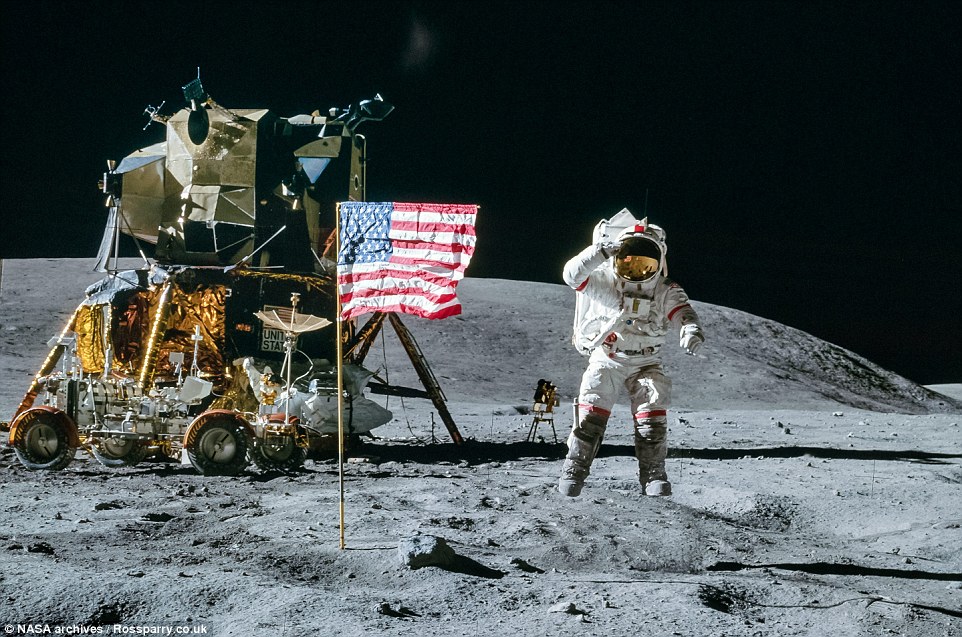
I just watched a PBS broadcast, the third part of a series called “Chasing the Moon.” It told the story of the Apollo 11 mission to land on the lunar surface, an event that occurred 50 years ago this month.

On July 20, 1969, Neil Armstrong and Edwin “Buzz” Aldrin stepped off a space ship onto the moon’s surface and took what Armstrong called “one small step for (a) man, one giant leap for mankind.”

My eyes got wet. I swallowed hard. I found myself smiling at the TV as I relived the images we had seen a half-century ago.

I remembered how I felt at the time in the summer of 1969. I felt proud. I was thrilled that we had kept President Kennedy’s pledge to “land a man on the moon and return him safely to the Earth” by the end of the 1960s. The president didn’t live to see it happen, but the program proceeded even after the young president’s shocking death.

I do wish we could regain that spirit of adventure. I fear we have lost it forever. Indeed, as the PBS program noted, interest in the moon missions began to dissipate almost immediately after Armstrong, Aldrin and Michael Collins finished their final parade in the final foreign capital. They were treated as the heroes they were.

Then the money dried up. Sure, we conducted a few more missions, including that harrowing Apollo 13 mission that came too close to tragedy.

Maybe that thrill will come back to us if and when we prepare to launch humans to Mars.

Watching the PBS broadcast tonight, though, reminded me of how I used to swell with pride at our technological know-how and the courage of the individuals we would hurtle into outer space.

I am hoping to feel it again.

No doubt about it: There’s life out there — somewhere

It can be said of many retired people that we have too much time on our hands and too much time to fill our heads with goofy thoughts.

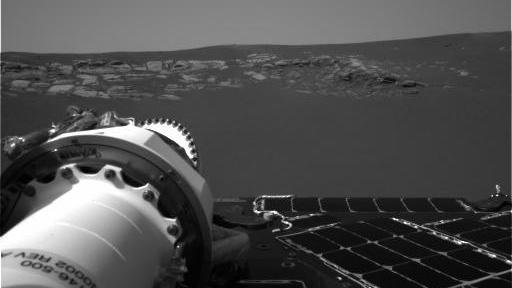
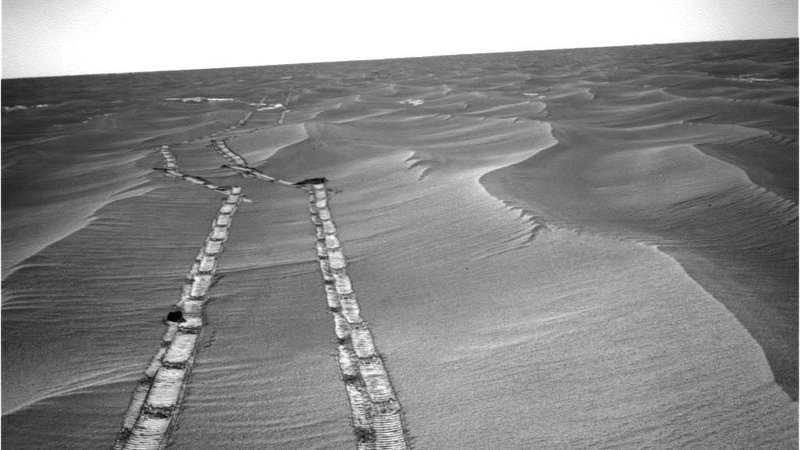
So, when NASA announced the demise of the Mars rover Opportunity the other day, I was filled with just a touch of sadness, but also with gratitude that the 90-day mission lasted 15 years and that NASA was able to collect mountains of data from the Red Planet.

My wife joked that Opportunity didn’t spot any “little green men” traipsing around the Martian surface..

Then I began thinking as I’ve done my entire life. I believe with every fiber of my being that there is life “out there, somewhere, deep in the void.”

I know what the Bible says about God creating humankind in his image. And I believe those words. I also believe the Great Creator was capable of placing life well beyond little ol’ Earth, an insignificant speck in the vast expanse of space.

I cannot even begin to grasp the size of the universe. I mean, “forever” is, well, a distance that none of us can fathom. I’ll just leave it at that.

Therefore, my limited understanding of statistical probabilities tells me that somewhere out there — way, way beyond anything we’ve ever laid eyes on — there must be a planet orbiting a star that has atmospheric conditions capable of sustaining life.

What does it look like? Beats me. Would that life necessarily be oxygen/nitrogen breathing life? Not necessarily. Does that life necessarily mean it is more advanced than we are? No. It might be mere vegetation. Or some sort of creature we cannot define.

Has this life visited Earth? I don’t believe for one second that we have been seen up close by any extraterrestrials.

Opportunity bit the Martian dust after fulfilling its mission far beyond what scientists had hoped it would accomplish. It didn’t see anything. Just remember: Even a journey of tens of millions of miles into “deep space” hardly constitutes a journey that covers the expanse of our universe.

Look at this way: How many grains of beach sand would it take to fill the oceans? Yep, it’s likely even bigger than that out there!

Opportunity declared dead; mission more than accomplished

That had to be the longest 90 days in human history.

A machine that landed on Mars 15 years ago was intended to be on duty for three months. Then the rover named “Opportunity” just kept on collecting data.

Yes, for 15 years the rover traipsed across the Martian surface sending data back to NASA scientists who had launched the ship.

Opportunity went silent eight months ago. NASA tried for most of the past year trying to awaken the rover. It was unable to do so.

This week, NASA “called it,” declaring Opportunity officially dead. The space agency won’t try any more to resuscitate the machine.

Mission accomplished, Opportunity

I have to say that as much as I love the notion of human beings traveling into space, I am mighty impressed with the work being done these unmanned probes that NASA launches.

They fly into the sun, they orbit Venus and Mercury, they fly to the farthest reaches of our solar system, probing Jupiter and Saturn, the asteroid belt. They send back amazing data and make incredible discoveries — such as evidence of water on Mars!

Opportunity performed its mission . . . and then some!

All that said, I hope I am still around to watch the first human beings thrown off from Earth and toward Mars.

That, I believe, would be a seriously “giant leap for mankind.”