Category Archives: education news

Some answers, please, Texas Tech regents

So, now there appears to be a bit of suspicion associated with the announcement that Texas Tech University System Chancellor Bob Duncan is retiring at the end of the month.

The Tech Board of Regents voted 5-4 to seek “new leadership” in the chancellor’s office.

That hardly constitutes a consensus. Still, Duncan decided to go after regents completed an executive session.

Here is how AGN Media reported it.

I am going to say a good word or two about the chancellor.

First, he has done well by the university he has attended and represented in the Texas Legislature — and then led as its chancellor for the past four years. I am a big fan and supporter of this man who, while serving in the Texas Senate, emerged almost every legislation session as one of Texas Monthly’s top legislators.

He has been an adamant proponent of the proposed Tech college of veterinary medicine planned for Amarillo. That’s a big deal, man!

There reportedly have been reports of financial impropriety. Tech regents and administrators have pushed back on those reports. They say there’s nothing wrong.

Still, the regents want “new leadership.” I believe the public deserves a more complete explanation of what they want, of what they expect and where Duncan fell short.

They’ll need to make the case that the university needs a new man at the top of the administrative totem pole.

I will continue to wish Chancellor Duncan all the very best and I’ll offer him, yet again, a word of thanks for the leadership he gave to a major Texas institution of higher education.

Memo to Tech: Keep the vet school moving ahead

If I had a chance to ask the candidates who seek to become the next chancellor of the Texas Tech University System a single question …

It would go like this: Will you ensure that Texas Tech continues to proceed full force with establishing a college of veterinary medicine in Amarillo?

Whoever seeks the office that Bob Duncan is vacating with his retirement at the end of this month had better answer it the right way. That would be an emphatic “heck, yeah!”

Duncan, who built a stellar career in law, then in the Texas Legislature and then as Texas Tech’s chancellor, has decided to go on down the road. He turns 65. He wants to scale it back.

The chancellor has done very well for the school where he earned his undergraduate and law degrees. The school’s endowment has grown to more than $1 billion under Duncan’s tenure as chancellor, which speaks to the success he enjoyed as a fundraiser for the university.

Back to my original point.

Duncan has become an articulate champion for Tech’s next great system addition, the vet school in Amarillo. This project, which has the full backing of the Amarillo City Council and the Amarillo Economic Development Corporation, will be a boon to veterinary medicine in Texas, not to mention to the Texas Panhandle, which will benefit greatly by delivering a top-quality education to students who want to serve their communities.

The vet school holds tremendous promise for large-animal veterinary care. Given the Panhandle’s reliance on livestock and horses, that is — as one might think — a very … big … deal.

The vet school is gaining valuable momentum, much of it pushed forward by Chancellor Bob Duncan.

The next chancellor, whoever he or she is, must carry that momentum forward.

As for Chancellor Duncan, I want to join the chorus of those who thank him for his service to the state, to his beloved university and to the Texas Panhandle.

Godspeed, sir.

Texas Tech preparing to enlarge its Panhandle footprint

Texas Tech University really wants to build a school of veterinary medicine in Amarillo. For that the entire Panhandle should be grateful to the Lubbock-based university system.

Two committees comprising Tech regents have approved a degree plan for the school and a design for the way they want it to look.

It’s going to be erected near Tech’s health sciences center in west Amarillo. It’s going to cost more than $80 million over five years to operate; construction will cost around $89 million. The Amarillo Economic Development Corporation, with the blessing of the Amarillo City Council, has committed around $69 million in public money to lure the veterinary medicine school to Amarillo.

The school isn’t a done deal just yet. Tech’s regents, along with Chancellor Bob Duncan, are acting as if it is.

That’s fine. The Texas Legislature will be able to weigh in next year.

However, Tech has made the case for a new school of veterinary medicine. It wants to build it in Amarillo, cementing its commitment to the Panhandle.

Read the Amarillo Globe-News story here.

Tech will build this school over the objection of the Texas A&M University System, which has the heretofore only vet school in Texas. A&M officials don’t want Tech to build the school. The reasons why escape me, given that the state is large enough to field enough students for both veterinary medicine schools.

The Tech vet school is going to specialize in large animal veterinary medical care.

This is a huge boon to the Panhandle. My perch from some distance away doesn’t lessen my own support for this worthwhile and stunning advance in the region’s economic well-being.

Get set for another key court decision on being gay

Step up, Stacy Bailey. I think you’re about to become a national celebrity and a lightning rod for a highly emotional talking point.

Bailey once taught in an elementary school in the Mansfield (Texas) Independent School District in Arlington. Then she got suspended by the school system. Why? Because she showed her students a picture of her wife.

The Mansfield ISD is empowered to suspend or even fire employees based on their sexual orientation. Oh, brother. This needs to be litigated and the courts need to do what it did for the issue of gay marriage, which the U.S. Supreme Court ruled in 2015 that same-sex couples can marry in all 50 of our United States.

Texas is one of 28 states that allows employers to take such punitive action.

As Fox News reported: The school district released a statement saying they are and have always been “an inclusive, supportive environment for LGBT staff for decades.” Action was taken against Bailey, they say, because allegedly “her actions in the classroom changed.”

Bailey was removed from the classroom after a parent complained that she showed a picture of her and her then-girlfriend and now-wife to her students.

Read the entire Fox story here.

I am unaware of how the MISD defines how her “actions in the classroom changed.” If the “change” involves merely showing students a picture of the teacher and her wife, then I believe the Mansfield district has a serious problem on its hands.

The U.S. Supreme Court legalized gay marriage on the basis of the Equal Protection Clause stated in the U.S. Constitution. To my way of thinking, “equal protection” applies to Stacey Bailey. She and her spouse are entitled to be married and to live together just like all Americans.

How in the world does that affect her ability to teach children?

Fox News reported this about the Civil Rights Act of 1964: The statute says, “It shall be an unlawful employment practice for an employer… to discriminate against any individual with respect to his compensation, terms, conditions, or privileges of employment, because of such individual’s race, color, religion, sex, or national origin.”

“The questions is whether ‘sex’ covers sexual orientation and gender identity issues,” attorney Sandra Mayerson told Fox News.

If the court system doesn’t rule in Bailey’s favor eventually, my hope then rests with Congress and whether our nation’s lawmakers will have the courage to insert the words “sexual orientation” into the Civil Rights Act.

It’s only right.

Teachers aren’t ‘militia’

Texas Lt. Gov. Dan Patrick’s juxtaposition of “teachers” with “militia” got me thinking a bit today.

So, I looked up the term “militia.” Here is what I found:

A military force that is raised from the civil population to supplement a regular army in an emergency; a military force that engages in rebel or terrorist activities, typically in opposition to a regular army; all able-bodied civilians eligible by law for military service.

This morning, Patrick — a conservative Republican — said on ABC News’s “This Week” that “teachers are part of a well-run militia.”

Actually, the way I read the definition that I found, they are nothing of the kind. They aren’t military, or paramilitary.

Patrick’s statement was in response to questions about the Santa Fe High School massacre that killed 10 people — eight of whom were students. Patrick wants school teachers to be armed. That is a wrong-headed answer to the scourge of gun violence in our public schools.

The U.S. Constitution’s Second Amendment speaks of a “well-regulated militia.” I cannot find — no matter how hard I look — any link whatsoever between the founders’ intent in crafting that clause to the idea that militia includes public school teachers.

Teachers are hired to educate. They aren’t hired to take up arms, even in an emergency. We “regulate” militias because we ask our military reservists, for example, to perform functions for which they are trained. Do we train teachers to set up perimeters around our schools and then stand guard with loaded weapons?

No. Teachers enter their profession exclusively to be positive influences on our children, to educate and occasionally nurture them.

So, let’s stop this loose talk about arming teachers. And for crying out loud, let’s also implore at least one high-profile Texas politician — Lt. Gov. Patrick — to stop equating teachers with militia.

Time to ‘harden’ our schools?

It turns out that Santa Fe (Texas) High School had an award-winning safety program … that didn’t prevent a gunman from killing 10 people and injuring 10 others.

As the Texas Tribune reports: The school district had an active-shooter plan, and two armed police officers walked the halls of the high school. School district leaders had even agreed last fall to eventually arm teachers and staff under the state’s school marshal program, one of the country’s most aggressive and controversial policies intended to get more guns into classrooms.

They thought they were a hardened target, part of what’s expected today of the American public high school in an age when school shootings occur with alarming frequency. And so a death toll of 10 was a tragic sign of failure and needing to do more, but also a sign, to some, that it could have been much worse.

The school district hadn’t yet put guns in teachers’ hands.

All of this has provoked some thought.

We put entrants into county courthouses through security scanners. Same with airports.

I’m wondering now whether it’s time to place the same level of protection around our students and teachers that we do around county employees and airport staff and passengers.

Yes, it will cost lots of money. Each state in this nation, not to mention the federal government, should dig deep into pockets to find it. So should school districts.

I see this as part of a comprehensive plan to curb gun violence. I still believe there’s a legislative solution out there to be discovered that pass constitutional muster. That, too, must be found. I no longer am going to accept the idea that any legislative remedy is going to violate the Second Amendment guarantee of the right to “keep and bear arms.”

That’s not enough. If we’re going to send our children to school where they are supposed to learn in a safe environment, then it is time for government at several levels to step up. We need to protect them — and not with additional guns hidden in teachers’ drawers in the classroom!

We need more cops patrolling these schools, state-of-the-art security technology and detection systems that can spot a firearm a mile away.

Our children need the protection they deserve. They are our treasure. Our future. If we love them, then we need to demonstrate it. Now!

Vet school plan ‘coming together’

The late actor George Peppard once portrayed a TV character, Hannibal Smith, on the series “The A-Team,” who was fond of saying he loved it “when a plan comes together.”

Well, ladies and gents, a Texas Tech University plan is coming together for Amarillo and the rest of the Texas Panhandle.

The Texas Tech Board of Regents has authorized Tech President Lawrence Schovanec to execute an agreement with the Amarillo Economic Development Corporation sets aside as much as $69 million to help finance construction of a school of veterinary medicine in Amarillo.

Is that cool? Or what? Of course it is!

AEDC delivered a monumental pledge to Texas Tech to help move the vet school program forward. Tech is planning to build a vet school in Amarillo that will cost an estimated $90 million. It will be located near Tech’s existing campuses near the medical center complex in west Amarillo.

This is huge deal for Amarillo. And for Tech. And for the future of large-animal veterinary medicine in the Texas Panhandle.

The project ran into some resistance from another university system, Texas A&M, where its leaders didn’t want Tech to proceed. A&M has the state’s only school of veterinary medicine and I suppose they wanted to keep its monopoly on that form of higher education.

Texas, though, is a large and diverse enough state to accommodate more than a single school of veterinary medicine. Thus, Tech’s plan is a good fit for Texas, not to mention for the Panhandle.

As the Amarillo Globe-News reported about the May 8 decision by the Amarillo City Council to proceed with the project: “This investment by the EDC ensures the vet school will happen and also challenges industry and community partners to join in the success of making this vet school happen,” Amarillo Mayor Ginger Nelson said at the time. “The timing of Amarillo’s investment before the legislative appropriations request will increase the momentum of private fundraising and hopefully assist the legislative funding request. Funding for the project will come from annual tax revenues, which is sales tax, recognized by the EDC. The estimated annual economic impact for the veterinary school of medicine will be $76 million annually to Amarillo.”

Yep, a huge plan is coming together. Hannibal Smith would be proud.

Texas teachers don’t lack political clout

Teachers are protesting in several states, some of which are among the most reliably Republican-red in the nation, such as Oklahoma and West Virginia.

Texas teachers won’t join them, as they are barred from doing so according to a 1993 law that forbids such demonstrations.

I am essentially neutral on the issue of whether teachers should be allowed to strike. However, I would prefer, as state Sen. Kel Seliger, R-Amarillo, told the Texas Tribune, that they remain in the classroom. “The goal is to ensure we don’t have the sort of stoppages that would constitute a detriment to the school day and the school year. So the focus is on the students,” Seliger said. “Teachers need to be in the classroom. The public expressions of opinion are very important. … If teachers want to demonstrate, they should absolutely demonstrate but it shouldn’t interfere with the school day.”

Still, the lack of the ability to strike doesn’t leave Texas teachers powerless. They can exercise their power at the ballot box. They can organize in favor of candidates who are favorable to their needs, such as better pay and retirement benefits, better insurance coverage to enable them to protect their families.

According to the Texas Tribune: “What we’re focused on are the elections. We’re urging our members, and all other educators, to get out and vote and to vote for education candidates,” said (Clay) Robison, the Texas State Teachers Association spokesman. “Vote for candidates who will vote to increase funding, decrease testing and vote against vouchers.”

“What the Legislature will listen to this year is votes,” he added.

This is not a simplistic solution. It is meant to reveal that ballot-box power can be an effective means to achieve political ends.

We’ve got an election coming up this fall. If teachers are concerned about the future of their profession and the children they serve, then they have the power to make it more right.

Tillerson for UT chancellor? Hey, why not?

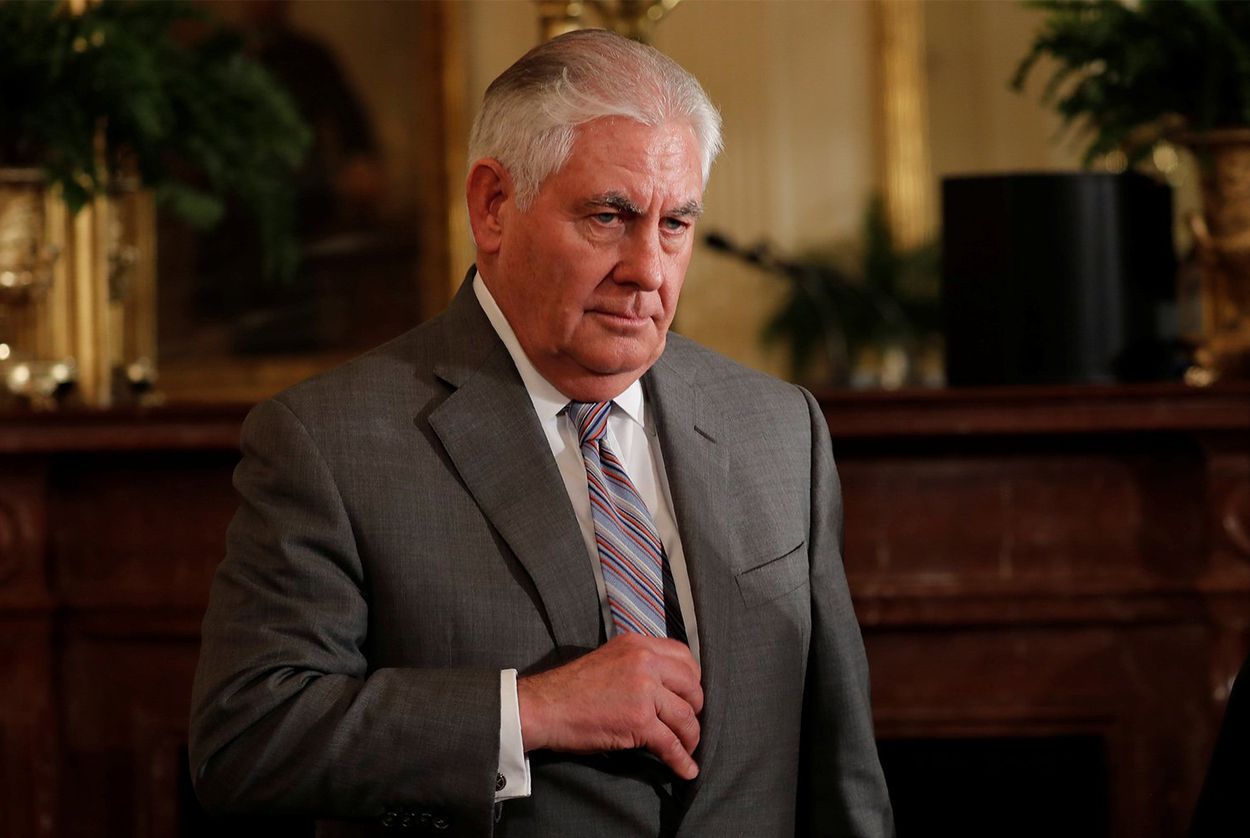
This will sound like I’m damning someone with faint praise, but that’s not my intent. The Texas Tribune is reporting that Rex Tillerson, the soon-to-depart secretary of state might be under consideration to  become chancellor of the University of Texas System.

To which I would add: Why not pick Tillerson? He’s worked already inside arguably the most dysfunctional government system on Earth; that would be the executive branch of the U.S. government. He’s cut his teeth on chaos, confusion and controversy. So, whatever troubles afflicting the UT System Board of Regents would be easy for him to handle.

The UT Board of Regents has had its fill of its own brand of chaos of late. One of the regents had been targeted for possible ouster because of alleged meddling in the affairs of the UT-Austin campus. The board at times has seemed as though its members don’t get along, don’t work cohesively.

The current chancellor, William McRaven, is set to retire for health reasons. I wish McRaven could stay on. I like the man’s background: U.S. Navy admiral, SEAL, former commander of the U.S. Special Forces Command. He’s a no-nonsense flag officer, who happened to oppose legislation approved last year to allow guns on college and university campuses.

Tillerson bleeds burnt orange. He graduated from UT before heading off to pursue a highly successful business career that culminated in his becoming CEO of ExxonMobil. Then he got the call from Donald Trump to become secretary of state. That gig didn’t work out too well.

I don’t blame Tillerson so much as I blame the president for the dysfunction that highlighted (or lowlighted) Tillerson’s tenure at State.

A Texas university system chancellor’s main job is to raise money for the system. Tillerson is well-positioned to fatten the UT System’s already bulging cache of endowments. Plus, he’s been baptized already in a system that exudes dysfunction.

Hey, the UT job would be a piece of cake!

The ‘next generation’ is stepping up

I am not inclined to bemoan the future of our country based on the behavior of those who comprise “the next generation.” I have sought over many years to give my younger fellow Americans the benefit of the doubt that they’ll step up when it counts the most.

We are witnessing the next generation doing precisely that as it relates to its fear and concern over gun violence.

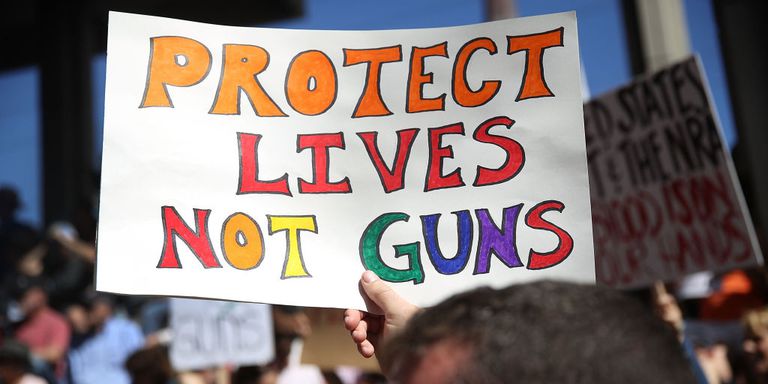
A lot of Panhandle students are going to march this weekend from Ellwood Park to the Potter County Courthouse. They are part of a national movement called “March For Our Lives.” I read today that national organizers are expecting as many as 1 million marchers from coast to coast.

The Amarillo march is being organized out of Caprock High School, with students seeking to generate interest in communities far beyond Amarillo.

The catalyst is that slaughter in Parkland, Fla., on Valentine’s Day. A gunman killed 17 students and staff members at Marjory Stoneman Douglas High School. This massacre was merely the latest in a horrifying string of such mass murders.

It has energized a generation of Americans. Some of them have become media stars. They have spoken with remarkable eloquence about their fear and their desire to see political leaders take action against gun violence.

These young people have taken the point in organizing these marches. They are giving older folks — such as yours truly — greater faith that our country is being taken over by responsible citizens. They are energized by what they deem to be a crisis. They are taking action. They are engaging in activities that signal good citizenship.

These concerns about “younger generation” go back many thousands of years. Quotations attributed to the Greek philosopher Plato lament how badly children behave, how disrespectful they are of their elders and how “they riot in the streets, inflamed with wild notions. Their morals are decaying. What is to become of them?”

Today’s youngsters make me proud and affirm my faith that our country will find its way well into the future.