Category Archives: education news

They’re shutting down … maybe for the rest of the academic year

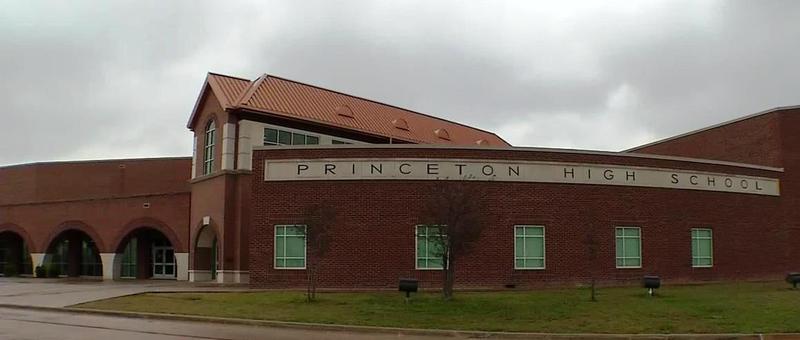
The Princeton Independent School District, where my wife and I live, has made a critical command decision in the wake of the coronavirus pandemic.

The school system is shutting down at least until May 4.

How does that affect us? We have no children or grandchildren in the Princeton ISD schools. However, nearby in the Allen ISD, our young granddaughter is home for an extra week, along with her brother. I haven’t heard whether Allen ISD is going to follow Princeton’s lead.

This is what we need to expect in school systems around the country as we all worry — without panicking, we should hope — about the impact of this health crisis on our lives.

Donald Trump today took a decidedly more sober and serious tone when discussing the impact of the coronavirus pandemic. He recommended that Americans avoid gatherings of 10 or more individuals, to pay careful attention to “social distancing.” The president announced the implementation of testing of Americans free of charge.

The tone today was a remarkable change from what we heard just a day or two earlier, when he was blasting Democrats and the media for their respective roles in handling this crisis. Today was much different and I daresay much more “presidential.” I am left only to say: It’s about damn time!

But closer to home in North Texas, we are feeling the impact and are preparing for the “worst case” that medical pros tell us is on its way.

Spring break while WHO declares a pandemic among us? Well …

When someone speaks to me and asks that his or her comments are off the record, I will honor that request … even when the individual tells me something of extreme significance.

That said, I spoke today with a Texas state legislator whose name will remain my secret. He told me was meeting in Austin with state education agency officials on the topic of the Covid-19 outbreak and its potential impact on the Texas public education system.

Get a load of this:

Millions of Texas students are on spring break this week; thousands of Texas teachers are on break, too. Many thousands of students, their families and teachers are going to travel abroad during this time. They will return home late this week and are slated to return to school next week.

This legislator is concerned about the impact that the Covid-19 will have on the system, namely whether it would be wise to allow students and teachers back into classrooms when they might potentially have been exposed abroad to those who are carrying the coronavirus germs.

Hmm. I asked the legislator: Do you think the Texas Education Agency is going to close our schools? This legislator doesn’t think so.

Here, though, is the question I would ask someone in authority: Wouldn’t it be prudent to close Texas’ public school system for two weeks to examine all those who traveled abroad to see if they had been exposed to coronavirus carriers and then extend the school year two weeks at the end of the academic year?

The World Health Organization today declared the coronavirus outbreak to be a pandemic, which means it’s beyond epidemic status, that it’s now a worldwide threat to potentially every human being on Earth. The virus is reported in 142 countries, killing more than 4,000 victims worldwide.

Italy has shut down. There might be more nations that follow the Italians’ lead. I don’t expect the United States of America to join them. Still, there well might be some drastic measures on tap to deal with those who ventured perhaps too close to where the coronavirus is doing its worst.

Strengthen, do not denigrate, public education

An interesting blog entry showed up on my Facebook news feed that I want to share with you. It comes from a young man who is an avid supporter of public education. His entry is written as an open letter to Donald J. Trump.

It starts this way: In your State of the Union speech last week you said, “for too long, countless American children have been trapped in failing government schools.”

He goes on with this: I suppose that sentiment isn’t surprising for a man who appointed the least qualified Secretary of Education in history.  Neither you or Ms. DeVos have ever spent any meaningful time in America’s outstanding PUBLIC schools.  You call them “government schools,” because that somehow ties our education system to the dysfunction in Washington, D.C. that you preside over.

Read the rest of the blog post here.

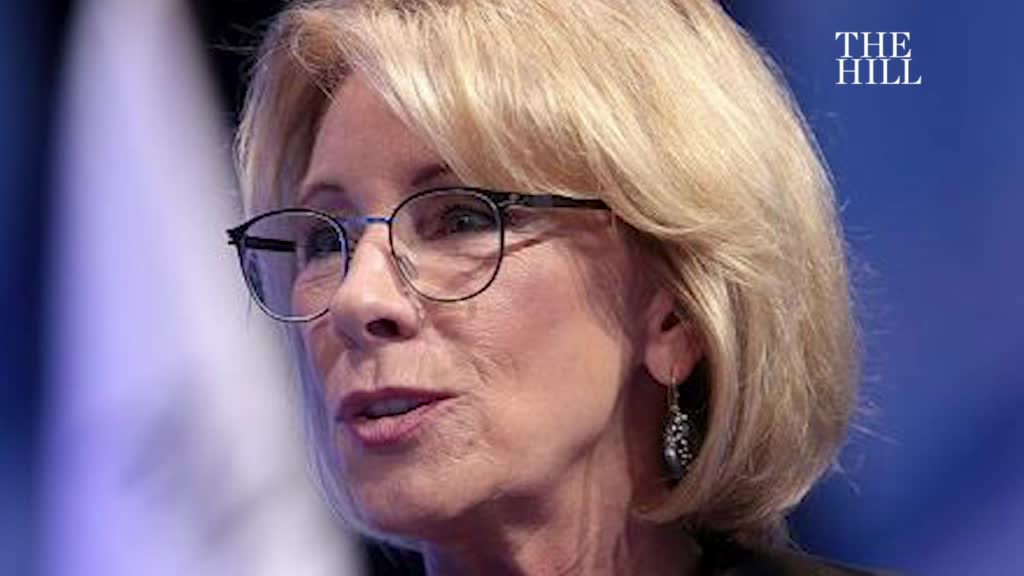
I want to endorse the principle that Patrick J. Kearney posits in his blog, which is to endorse public education and to declare that I share his view that Education Secretary Betsy DeVos is as unqualified in her job as the man who nominated her is in the job he occupies.

DeVos became education secretary in 2017 after the Senate voted in a 50-50 tie to confirm her; it fell, then, to Vice President Mike Pence to cast the tie-breaking vote to confirm her, the first time that has occurred in a Cabinet confirmation vote.

I heard the president use the term “government schools” and I found it off-putting. He tossed that term out there to somehow separate the “government” from the “public” that pays for it. I am one American who sees the government and the public as being the same thing. Thus, when we speak of public education, we speak of an educational system that serves the public.

Our public schools are not to be feared. They shouldn’t be considered candidates for a political whipping. Are there problems with public education? Of course there are. The cure for those problems is not to take money from the public treasury and send it to private institutions.

Furthermore, I agree with the blogger whose entry came to my attention, who believes that Donald Trump would do well to visit a public school classroom and see for himself the great job that our public educators are doing for our children.

‘Pro-choice’ does not equal ‘pro-slavery,’ Mme. Education Secretary

Get an ever-lovin’ grip, U.S. Education Secretary Betsy DeVos!

The education boss who was confirmed by a tie-breaking vote in the U.S. Senate in 2017, has equated being “pro-choice” on abortion to being in favor of owning slaves.

To which I say … What the f***?

She spoke at a Washington, D.C. event for Colorado Christian University and made the absurd comparison, that a woman’s decision to terminate a pregnancy is akin to decide to put human beings in bondage.

This is one of the more apples-and-oranges comparisons I’ve seen in a good while.

You see, slave owners’ health was not an issue when they decided to purchase human beings and enslave them. A woman who decides she can no longer carry an unborn baby to full term quite often faces potentially mortal health issues. Yes, I get that some women make that decision for many more cavalier reasons than that. However, to equate these two matters — slave ownership and abortion — is irresponsible in the extreme.

The Hill reported: “(Lincoln) too contended with the pro-choice arguments of his day. They suggested that a state’s choice to be slave or to be free had no moral question in it,” DeVos said, the outlet reported. “Well, President Lincoln reminded those pro-choices (there) is a vast portion of the American people that do not look upon that matter as being this very little thing. They look upon it as a vast moral evil.”

I’m trying to wrap my head around her alleged logic. I can’t quite get there.

I’ll just have to conclude that she is equating one issue with another utterly unrelated one. I think Secretary DeVos is reaching way beyond her grasp.

Farmersville ISD going it alone in superintendent search

BLOGGER’S NOTE: This blog post was published originally on the KETR-FM website, KETR.org.

Farmersville Independent School District trustees have decided to take a leap of faith.

They are placing their faith in their own ability to find, screen and select a superintendent of schools for the district.

I wish them all the luck in the world as they march down this trail.

Superintendent Jeff Adams announced in October his intention to retire from a job that pays him more than $200,000 annually. He runs a district with 1,500 students attending classes on four campuses. He will leave office as soon as the district finds a new superintendent, which he hopes will be before the end of the academic year.

As he told trustees the other evening during a board meeting, “You don’t to be stuck with me for another year.” He plans to stick around long enough to help his replacement settle into his or her new job

The norm for school boards is to hire a “head-hunter” firm to do the search. Farmersville ISD chose to go it alone, to solicit applications, get rid of the also rans initially, winnow the field down to a more manageable number. They intend to conduct two rounds of interviews, perform home visits with the semi-finalists and then announce a lone finalist for the top administrative job no later than March 5.

It’s a tall order. All the trustees have day jobs or are retired from their careers.

Board President Tony Gray told me that one of the trustees’ concerns about hiring a consultant was that many times the consulting firm “already has someone in mind” when they start the search. Perhaps I should have reminded him that communities often have the very same perception when local boards conduct such searches themselves. I didn’t go there.

Gray said the board hired an outside firm when it hired Adams in 2000.

I want to offer a veiled endorsement of the process that the Farmersville ISD board is taking in its search for a superintendent.

Gray insists that Jeff Adams will play no active role in selecting the next superintendent. He will be available to offer advice and counsel to the board. Indeed, Adams even offered the other evening to “dig up dirt” on potential candidates just to ensure the school district isn’t hit with any unpleasant surprises.

I don’t know enough about the district to make a judgment on the wisdom on the trustees’ decision to conduct this search themselves. They’ll save some money. They need to move quickly. They know the district, its students, its faculty and staff and the political lay of the land.

Furthermore, as Tony Gray said to me, voters elected them to be “leaders.”

They now are going to seek to lead the school district into a new era that will be defined in part by the individual they choose as the next superintendent of schools.

May they choose wisely.

Farmersville ISD enlists its own police force

Blogger’s Note: This blog item was published initially on KETR-FM’s website.

As a new resident of Northeast Texas, I am still climbing a fairly steep learning curve concerning local government agencies.

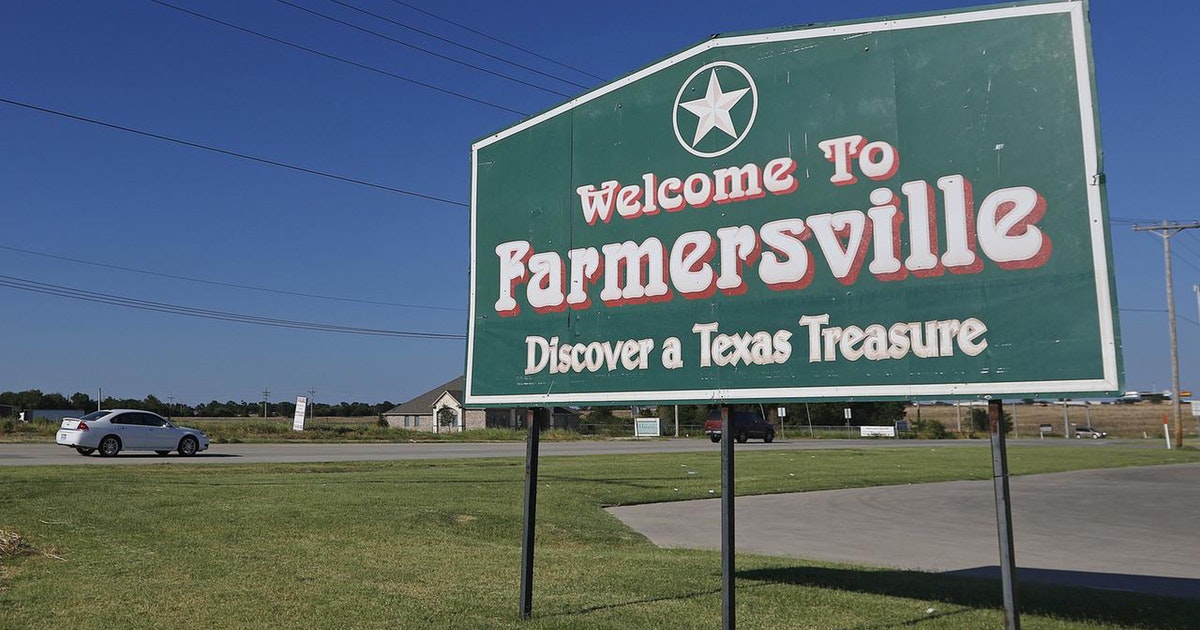
Such as the Farmersville Independent School District, which sits about 8 miles east of where we live in Princeton. I learned something about Farmersville ISD that I want to share here.

The tiny school district has a full-time police department on duty. Yes, the Farmersville Police Department suits up each day to protect the students, faculty and support staff on all four of the FISD campuses, as well as at its other offices.

Farmersville ISD enrolls slightly more than 1,500 students. They attend all 13 grades, including kindergarten. I was struck by the presence of a police officer in full regalia at a recent school board meeting; then I noticed the patch on his left arm – Farmersville ISD Police Department.

During a brief break while school trustees met in executive session, I introduced myself to the young man in uniform. He is Brian Alford, the chief of police for Farmersville ISD’s police department.

We chatted about school lockdown policy. I asked him about his police background. Alford told me he served previously with the Farmersville Police Department, with the Collin County Sheriff’s Office and was a military police officer for five years in the U.S. Army. The man brings a solid law enforcement record to his post as FISD police chief.

I still am struck by the existence of a full-time police department, paid for with FISD money. Chief Alford said he has four officers working full time for the department. He also wonders why other school districts, such as Princeton ISD, doesn’t employ a full-time police department. Princeton ISD, Alford told me, uses municipal police officers to provide campus security.

Is there a rash of crime on Farmersville ISD’s campuses? I don’t believe that’s the case. Heck, perhaps it’s the existence of a full-time police department that deters troublesome students from acting out in a potentially violent manner.

I mentioned to the chief that I came to North Texas from Amarillo, which also does not have a full-time police force on its school district payroll. Amarillo educates about 33,000 students each year. It, too, uses municipal police officers and Potter County sheriff’s deputies to maintain safety and order on its campuses.

So … I am learning new aspects of our new community all the time. I believe the Farmersville ISD police chief is a conscientious fellow. He is dedicated to protecting and serving his constituents. I will accept the notion that perhaps the presence of the police force deters possible problems on campus. Is it the right formula for every independent school district? That’s up to each of them to decide for themselves.

I thought I had heard it all … then came this

I lost count long ago the number of public government hearings I have covered as a reporter. Over the span of many years in the trenches, I thought I had heard everything there was to say in a public meeting of elected officials and senior public administrators.

Then came what I heard Monday night in little ol’ Farmersville, Texas.

I was attending a school board meeting of the Farmersville Independent School District on behalf of the Farmersville Times, one of the weekly newspapers I work for on a freelance basis. The board convened the meeting, then went into private session to discuss matters exempted from public view by the Texas Open Meetings Act.

The audience left the meeting room. We waited outside. Then the door opened and the board reconvened the open meeting. I returned to my seat, with notebook and pen in hand.

The board and the superintendent began discussing the search for a new superintendent who will succeed the gentleman, Jeff Adams, who will retire at the end of the current year.

Adams went through much of what was discussed in private session. He talked about timetables and assorted aspects of the search for candidates. Then he said, the following: He offered to “dig up dirt” on the applicants if there was any dirt to be found.

I don’t recall flinching or reacting in any visible manner. I didn’t see any such reaction from the school trustees.

However, I have slept on it overnight. I am now a bit startled by what the superintendent offered to do on behalf of the board.

I don’t recall ever hearing a senior government administrator, let alone an elected official, ever make such an offer.

I haven’t discussed this directly with Adams. Nor with any of the trustees. I am left to wonder about the motivation for agreeing to do such a thing, or to saying it in public. The trustees and the superintendent surely knew why I was there and that my note-taking didn’t cease when I heard the superintendent make the “dirt digging” offer.

I won’t pass judgment on the wisdom of the offer. I merely want to assert that I thought I had heard everything … until Monday night.

Kinda strange.

UT hazing case brings disgraceful behavior front and center

Blogger’s Note: This blog post appeared originally on KETR-FM’s website.

I guess I missed out on a lot of “fun” while attending college back in the day.

The “fun,” had I joined a fraternity at Portland (Ore.) State University, would have included hazing. You know, things that involve sleep deprivation and assorted other forms of what would qualify as “torture” if it was being done to soldiers captured by the enemy on the battlefield.

Nicholas Cumberland died Oct. 30, 2018 after being hazed at the University of Texas by the Texas Cowboys, a fraternal group that UT-Austin has suspended for six years. Cumberland died in an automobile accident. He had been subjected to the kind of activity that clearly should be considered torture. The university has just released a report detailing the incident and the punishment it has leveled against the organization linked to the tragedy.

I find this kind of activity to be reprehensible. I’m an old man these days, long removed from my own college days. I was a young married student when I enrolled at Portland State. I lived with my bride and would go home each day after class. Thus, I avoided being sucked into the kind of activity that fraternities do to their members.

As KTRK-TV reported: “Cumberland was paddled so hard, he had ‘significant bruising on his buttocks nearly a month after the Retreat and car accident,’ records allege.”

Yes, the young man was on a “Retreat” when the vehicle he was in rolled over.

We hear about this kind of thing all the time. It’s certainly not unique to UT-Austin, or even to any public college or university in Texas. My hope would be that university educators and administrators everywhere in this nation would be alarmed enough to examine how their own fraternities conduct themselves.

A report by the UT-Austin Dean of Students Office notes that the Sept. 29, 2018 retreat included students bringing, among other things, “copious amounts of alcohol.” They also brought a live chicken and a live hamster, presumably to arrange for the frat pledges to kill the animals in bizarre fashion.

I get that I didn’t get to experience the full breadth of college life back when I was trying to get an education. I had seen enough already, having served a couple of years in the U.S. Army, including a tour of duty in Vietnam. So, I wasn’t a totally green homebody when I enrolled in college upon my return home.

I still cannot grasp the “benefit” accrued by hazing students to the point of killing them.

Perhaps the death of Nicholas Cumberland could prompt university officials to take a sober look at certain aspects of campus life and whether some elements of it result in campus death.

Public education needs an advocate at Department of Education

South Bend, Ind., Mayor Pete Buttigieg got a big round of applause and cheers tonight when he said this during the Democratic joint appearance with nine other presidential candidates.

He said if elected he would “appoint a secretary of education who actually believes in public education.”

The man Buttigieg wants to replace, Donald Trump, decided to select someone with no interest in public education, no direct experience with public education and no affinity for the needs of those involved with public education.

Education Secretary Betsy DeVos needed Vice President Mike Pence’s tie-breaking vote to get confirmed by the U.S. Senate.

I happen to agree with Buttigieg, that the next president must find someone who believes in public education to run the Department of Education.

I haven’t seen or heard a thing from DeVos that suggests she has any authentic commitment to the nation’s public schools, its public school students or its public school teachers. So far she appears to be some sort of place holder at the Education Department.

Her answers to congressional questioners sound vacuous and lacking any detailed understanding of the struggles that educators wage each year just to get ready to teach our nation’s children. Although I am aware that local communities bear the financial brunt of funding our school systems, how can the education secretary stand aside while teachers have to spend so much of their own money just to purchase supplies for their students to use in their classrooms?

The strength of our public education system must assume a greater role among the discussion points of the Democratic field of presidential contenders … and with the president of the United States.

Good teachers? Priceless

I feel compelled to state something in public that I told some family members this week, which is that you cannot pay good educators enough money.

There. I said it. I mean it from the bottom of my heart.

Texas recently enacted a $5,000 annual pay raise for all public school teachers. Other states have done the same thing over many years, seeking to incentivize individuals looking for careers as educators in our public school systems.

I have noted already in this blog that the good teachers are among society’s most valuable — and least appreciated — human resources. I also have noted that I am not wired genetically for that kind of work; I substitute-taught for part of a school year in the Amarillo Independent School District and learned right away that I am not cut out for it.

I believe good public educators deserve to be treated as what they are: heroes, comforters, guidance counselors, life coaches, big “sisters” and “brothers,” protectors.

I stand in awe of the self-discipline they exhibit. I am amazed at the patience they demonstrate daily. I admire their dedication to working with children, many of whom come to school daily with monstrous chips on their shoulders. I am astonished at how much they have to do with their own money because public school systems do not have the money to buy things such as, oh, pencils and paper. 

I want to salute all those teachers who are dedicated to ensuring our young people get the top-quality education they deserve, enabling them to cope better in what we all call “The Real World.”

Indeed, public educators have their own “real world” challenges to face down every day they stand before their students and renew their pledge to educate them.

You all are heroes.