Category Archives: environmental news

Fire, then water — and mud — bring devastation

I am beginning to believe that southern California is the most dangerous place in the world to live.

Fire destroyed hundreds of thousands of acres of property, including homes and businesses. People fought valiantly alongside first responders to save their belongings and those of their neighbors. Their heroism has become the stuff of legend.

The infamous Santa Ana wind died down eventually, giving firefighters a chance to extinguish the flames.

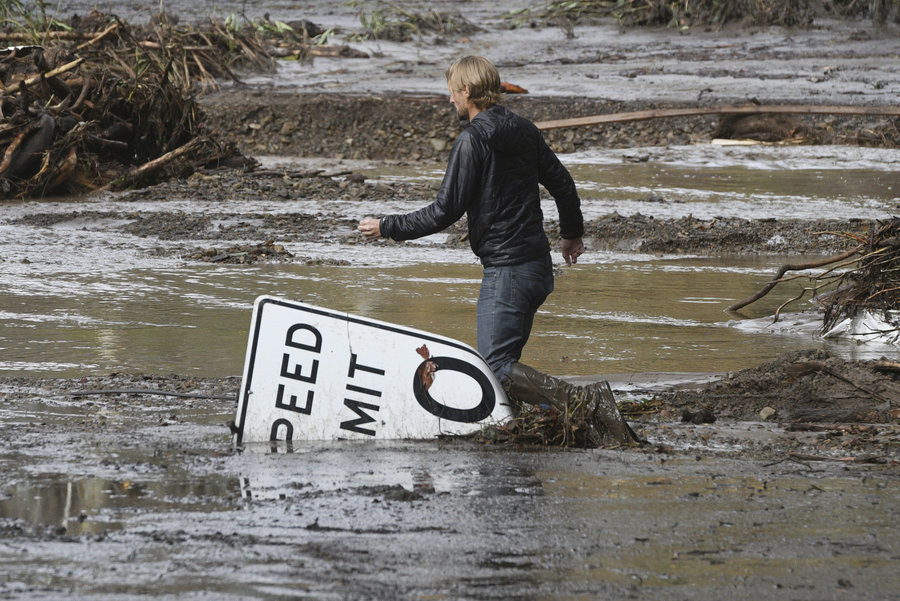
Now we have this: torrential rain and mudslides that have torn through Santa Barbara County.

It poured off of mountainsides into neighborhoods. It ripped homes off their foundation. It buried homes, motor vehicles and, tragically, people.

How do the rest of react to these tales of despair and misery?

It breaks our hearts. I am trying only to imagine how one copes with the threat of such devastation, let alone how they deal with its actual consequence.

We are going to hear about more heroism in the days to come as we watch this region seek to fight against these irresistible forces. It won’t make me feel any better about the misery that has overwhelmed our fellow Americans.

I am left only to pray for those who are coping with the tragedy that has swept over them.

Hey, the drought has returned!

Eighty-three days and counting …

It’s been that long since Amarillo has experienced any measurable precipitation. You and I know what that means. The drought has returned to the Texas Panhandle.

Weather forecasters are spending a good bit of time talking about the threat of wildfire. They are right, of course. The grass is plentiful from rain that fell through much of the summer of 2017. It’s now bond dry. It has become prime fuel to ignite killer fires.

It goes without saying: Take great care to avoid torching the land; don’t toss cigarette butts out of your car; avoid dragging metal chains under your vehicle; no outdoor grilling, particularly in the ever-present Panhandle wind.

There’s another concern that troubles yours truly: water waste.

Do not waste water. We have no need to wash our motor vehicles. Check for leaky faucets and sprinkler heads. Indeed, reduce lawn-watering during the winter months when local grass goes dormant.

I remember when we were cheering the rainfall in 2017, which finished with a rain-average surplus over normal. But we’ve gone nearly three months now without any measurable rain or snowfall.

It’s a potentially dangerous period out there. Let’s be so very careful. Shall we?

Texas coast remains in dire peril

I want to give a shout out to my former neighbors along the Texas Gulf Coast.

They are working diligently to preserve one of the state’s most underappreciated resources: its beaches.

The Texas coast is in peril. It is disappearing before our eyes. It has been disappearing for, oh, many decades. I took an interest in the coast when I moved there in 1984 to take up my post writing editorials for the Beaumont Enterprise.

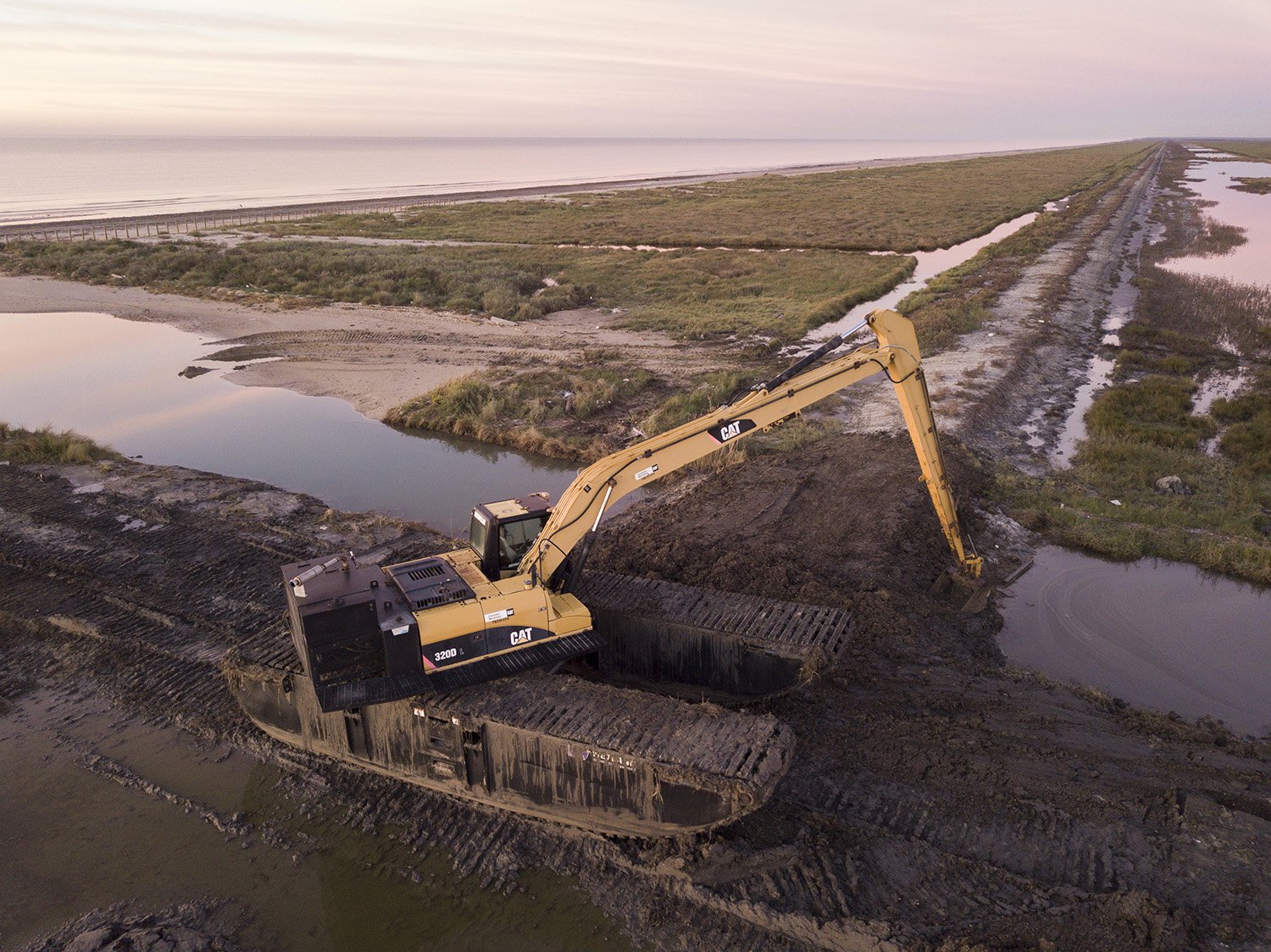
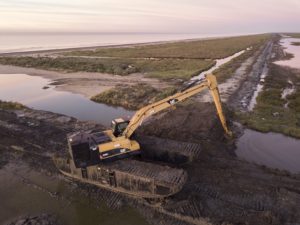
The Texas Tribune reports that Jefferson County officials are working with a consortium of industry officials, environmental activists, outdoorsmen and women and others to protect the coastal wetlands from drastic erosion.

According to the Tribune: Subsidence, sea level rise and storm surges have all contributed to significant land loss, averaging 4 feet per year along the state’s coastline, according to the Texas General Land Office. In some places, more than 30 feet of shoreline disappears underwater annually.

Todd Merendino, a manager at the conservation-focused group Ducks Unlimited, said sand dunes used to line the shore near the Salt Bayou marsh, forming a crucial buffer between the Gulf of Mexico and the millions of dollars’ worth of industrial infrastructure that lie inland. The dunes are “all gone now,” he said.

“One day, you wake up and you go, ‘Wow, we got a problem,'” Merendino said. “And it’s not just an isolated problem where one swing of the hammer is going to fix it.”

The problem has inspired a coalition of strange bedfellows in Jefferson County. Local leaders, environmental activists and industry representatives are working together to execute a variety of projects — some bankrolled by BP oil spill settlement funds — to rehabilitate the marsh and protect the area’s industrial complex.

The massive deep freeze that is paralyzing the Deep South and the Atlantic Seaboard notwithstanding, the worldwide climate change that produces rising sea levels is a major culprit.

Gulf Coast officials are seeking to build a berm along the coast at the McFaddin Wildlife Refuge. I’ve been there. It’s a jewel along the coast. It’s a haven for all manner of waterfowl. It is a gorgeous part of the coastal region.

It’s also vanishing.

Here is the Tribune story

The Texas General Land Office once placed coastal preservation near the top of its public policy agenda. I am unaware of where that issue stands today. The GLO has welcomed the likes of David Dewhurst, Jerry Patterson and now George P. Bush as land commissioner since Mauro left the office in the late 1990s. I trust they, too, are committed to saving the coastline for future generations of Texans to enjoy.

I am heartened to hear about the hard work being done along the coast. It’s good, though, to bear in mind that Mother Nature can take whatever she wants, whenever she wants.

At least the state is not going to give it away without a fight.
Seven words CDC won’t allow?

Wherever he is, the late comedian George Carlin must be laughing his a** off.

Carlin once made famous those “seven words you can’t say on TV.” I won’t repeat them here. Many of you know them already.

Now we have the Centers for Disease Control being told not to use seven supposedly hot-button words in future budget proposals.

Oh, my. What is the world coming to?

The CDC’s banned words are: fetus, diversity, transgender, vulnerable, entitlement, evidence-based and science-based.

You can’t say it

I want to focus on one of those banned words: science-based.

What in the name of hocus-pocus is going on here? I mean, we’re talking about the Centers for Disease Control, aren’t we? Doesn’t the CDC deal directly and wholly with science? I do not understand this directive. I do not grasp why the CDC — of all agencies — would get this kind of directive from on high.

Critics of the Trump administration have alleged that it is being run by science-deniers. Here’s one example: They deny the existence of climate change despite mounting scientific evidence that Earth’s climate is changing, that it is getting warmer.

So now the CDC is being told it cannot use “science-based” terminology?

What in the world would George Carlin do with this bit of idiocy?

Climate change made Harvey wreckage worse? Who knew?

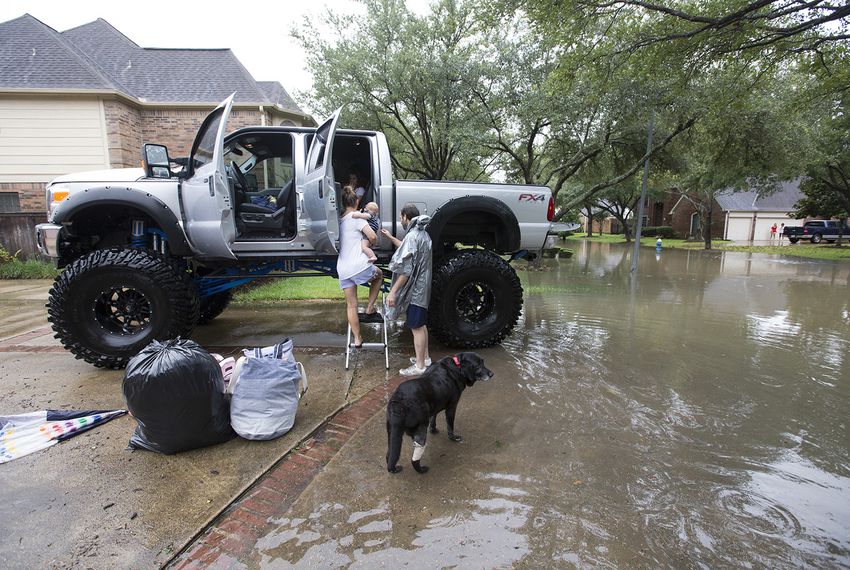
Imagine my (non)surprise to read that independent analyses have concluded that climate change likely worsened the misery that Hurricane Harvey brought this summer to the Texas Gulf Coast.

The rainfall that inundated the coast totaled 50 inches in a 24-hour period; it set a continental U.S. record for most rain to fall during a single day.

Get a load of this: Researchers say that climate change — or you can call it “global warming” — worsened the rainfall by about 15 percent.

Not that a 15-percent increase created the tragedy that brought so much suffering to Houston, the Coastal Bend and the Golden Triangle. A 40-inch rainfall would have done plenty of damage, too … correct?

According to the Texas Tribune: ” … two independent research teams, one based in The Netherlands and the other in California, reported that the deluge from Hurricane Harvey was significantly heavier than it would have been before the era of human-caused global warming. One paper put the best estimate of the increase in precipitation at 15 percent. The other said climate change increased rainfall by 19 percent at least, with a best estimate of 38 percent.”

Read the Tribune story here.

However, the federal government keeps insisting that climate change is a “hoax,” that it’s a made-up creation of “fake news” and the Chinese government, which is trying to undermine the U.S. fossil fuel industry.

It’s no hoax. We can debate its cause. I happen to believe human activity has contributed to climate change. To call it a phony story, though, puts millions of Americans in extreme peril.

Remember our drought? It never really left

Our Texas Panhandle TV weather forecasters keep telling us the latest measureable precipitation fell on the High Plains way back in October.

That tells me something quite ominous: The drought that many folks thought was over during our wetter-than-normal summer season has reared its head. In my view, we never really had put the drought behind us.

We’re still about 6 inches above normal precipitation year to date, thanks to the drenching we received earlier this year. That’s all fine and dandy.

But here’s the hard truth: water remains at critically low levels.

I walked into City Hall just about four days ago and noticed the city’s “Every Drop Counts” daily water-use gauge over the first-floor elevators. On that day, the goal was set at 29 million gallons; the actual water use for the day totaled 40 million gallons. Let’s see, that’s an 11 million gallon water-use-goal deficit. Not good, Amarillo.

I harp on this on occasion, and I am aware I might sound like the proverbial “broken record.” Too bad. It bears repeating.

We cannot be squandering our water resource. Sure, the wet spring and summer was welcome. It helped produce bumper crops; it kept our playas full; it helped feed the cattle that fuel our agriculture-based economy.

But we all know this truth: Rainfall is a cyclical event. It flows — and, yes, it ebbs.

It is ebbing at the moment. Those weather forecasters dare not predict when we’ll get any measureable rain- or snowfall. They keep telling us that weather forecasting in the Texas Panhandle is a best-guess endeavor.

Until that day comes — and beyond — how about taking better care of our water?

How do humans cope with nature’s wrath?

The question keeps popping into my noggin when I watch and read reports of fire such as the blaze that is terrorizing southern California.

How do human beings hope to cope with the wrath that Mother Nature can bring to us?

I’ve lost track of the acreage destroyed by the fire whipped by the ferocious and relentless Santa Ana wind. It’s in the many hundreds of thousands of acres. It covers many hundreds of square miles. Media reports tell us it’s larger than the cities of Los Angeles, New York, San Francisco. It could be that it’s larger than all of them combined.

I heard just prior to the weekend that the calming wind gave firefighters a break, that they gained ground on the fire. Then the wind kicked back in, setting the firefighters back on their heels.

Yet the firefighters keep at it. Thousands of them are battling this blaze. They’ll stay in the fight for the duration, until the last ember is extinguished.

I heard also they have come from many states to fight these fires. My wife and I caught a glimpse earlier this year of how firefighters rally to fight a common foe. We traveled in October to Oregon, driving through California from Needles all the way to the Oregon border. We saw smoke, but no flames from the fire that erupted in California’s famed Wine Country.

We visited with firefighters mustering at a Nevada County,  Calif., site to fight a blaze burning near Grass Valley. They came from far away to lend a hand. En route north along Interstate 5 we saw a Seattle Fire Department truck heading home, with Old Glory waving proudly in the wind. They epitomize the best of the human spirit.

I suppose I have just answered that question about coping with nature’s awesome wrath.

The human spirit can rise to any occasion.

‘Climate change’ anyone?

I am acutely aware that one cannot pigeonhole weather forecasting into neat categories.

What’s more, I also know that trying to predict what Mother Nature brings to any region is a crapshoot even in the best of circumstances.

But what in the world is going on this week?

Here we are in the Texas High Plains region. We’re tinder dry. It’s cold, but we’re continuing this dry pattern that’s beginning to cause the TV weather forecasters some anxiety.

Then we get news that snow is blanketing regions of this state and points east. It’s snowing this week in regions where (a) it hardly ever snows and (b) the snow is supposed to fall long after it blankets the Texas Panhandle.

We remain snow free. The Texas Gulf Coast is under several inches of snow. My friends along the Coastal Bend, Houston and the Golden Triangle are bundling up and driving ever so slowly and cautiously in conditions with which they are totally unfamiliar.

Is all of this a symptom of climate change? I’ve long argued that one cannot take a single weather event and equate it with whatever might be happening globally. I usually argue that it’s best to argue climate change by seeing the big picture.

This very weird reversal right here in big ol’ Texas, though, seems to suggest to me that we might be witnessing one element of a much bigger weather story.

Happy Trails, Part 61

Now, wait just a doggone minute!

My wife, Toby and Puppy and I are holed up at an RV park on what I have described as the Texas Tundra, where it’s plenty cold.

Wait! I awoke this morning to learn that snow is falling down yonder in that so-called “warm climate” area of Texas. Corpus Christi? Snow. The Golden Triangle (where my wife and I raised our sons)? Same thing.

One of our dear friends in Beaumont has referred to it all as the meteorological “weirdometer.” It’s snowing where it ain’t supposed to snow, but it’s still dry where it does snow, she says.

Yeah, that’s weird, kid.

Climate change? Is it really and truly changing? Aww, I won’t go there … this time.

Our retirement journey has taken a strange turn. Our intention is to spend much of the winter pulling our fifth-wheel RV to “sunny and warm” climes relatively close to home while we try to sell the house where we lived for 21 years.

Maybe we’ll make it happen. Eventually. It’s just a good thing we have no immediate plans to hit the road for points south.

We have to wait for the snow to clear out.

Good grief! Weird!

Climate change portends more ‘Harveys’

Hurricane Harvey once would be considered the storm of a lifetime.

Not any longer, according to a new study published by the Massachusetts Institute of Technology. The MIT report suggests that by the end of this century, storms of the magnitude of Harvey could occur once every five-and-a-half years.

The study was put together by Kerry Emmanuel, a professor of atmospheric sciences at MIT. According to Texas Monthly:

“It’s very, very easy for people—even scientists—to get confused by this. You have to be very careful with what you mean by the event,” Emanuel says. The study looks at both Harvey-like storms hitting the greater Houston metro area (which he forecasts will go from a 2,000-year-storm to a 100-year-storm), as well as storms of that size making landfall anywhere in Texas, which is how we get to the 5 1/2 year number.

What do you suppose is the cause for this increasing frequency? Let me think about that for a moment. There. Time’s up. I am pretty certain we’re talking about climate change.

The deluge brought by Harvey dumped 50 inches of rain in a 24-hour period on Houston and the Golden Triangle this past summer. And that event came after Harvey roared ashore at Rockport with killer winds and immense tidal surge.

It will take years for the Texas Gulf Coast to recover fully from the storm. Texas officials have enlisted Texas A&M University System Chancellor John Sharp to oversee the rebuilding of the coastal region from the Coastal Bend to the Golden Triangle. Think of what might await such an effort years from now. No sooner would the work be done than it might occur again.

Read the TM story here

The Texas Monthly piece I’ve posted with this blog entry doesn’t mention climate change/global warming explicitly. I have mentioned it here. I only can surmise as much to explain why the level of storms thought to occur once in a century might take place with such frightening frequency.

This is a terribly ominous trend for the coastal regions of our state.

The question now presents itself: What in the world are we going to do to either protect our coastal region from such destruction?

There’s also this: What are we going to do to reduce the number and ferocity of these storms?