Tag Archives: MPEV

Do we call it ‘MPEV,’ or something else?

They’re going to start construction soon on Amarillo’s newest attraction soon.

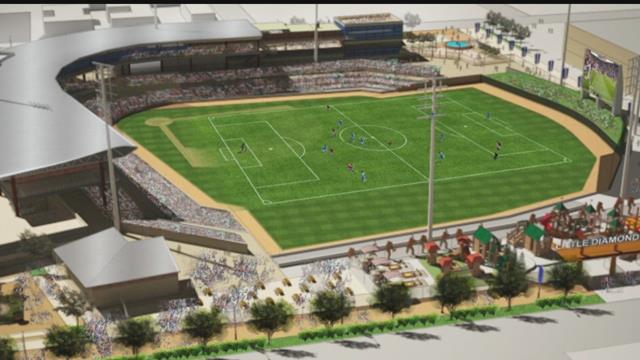
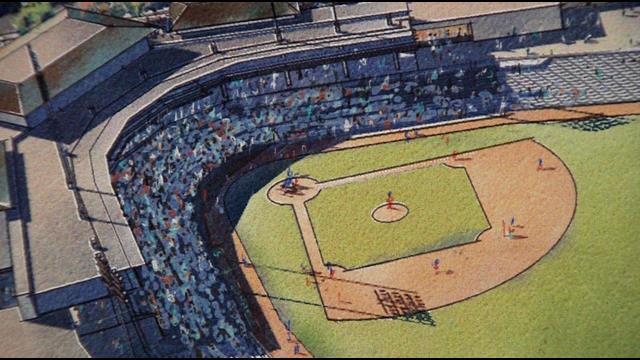
It’ll be built downtown, across the street from City Hall. It’s going to be home to a AA baseball team that’s moving here from San Antonio. The team intends to open its 2019 season at the place that’s come to be known colloquially as the “MPEV.”

MPEV stands for multipurpose event venue. It’s a descriptive term, given that it also will play host to many other community events other than baseball.

Some residents refer to it as The Ballpark. Critics have attached unflattering names to the structure. “Boondoggle” comes to mind. I don’t consider the construction and opening of the MPEV as a negative occurrence.

It’s going to cost about $40 million. Amarillo’s voters approved a non-binding referendum in November 2015 on the MPEV back when the price was a “mere” $32 million.

Here’s a thought, however, on what kind of name ought to go on this new venue. Why not honor someone by putting his or her name on the building?

I’ll begin the discussion with this name: Tony Gwynn.

Who is this man? He once played baseball in Amarillo, back when the city was home to the Gold Sox. The Gold Sox were a farm team for the San Diego Padres, which interestingly enough, happens to be the Major League Baseball team affiliated with the new outfit that’s coming here. He only played 23 games in Amarillo in 1982.

Gwynn eventually got called up to the Big Leagues. He did quite well. He compiled a .338 lifetime batting average, got more than 3,000 base hits, played in a World Series with the Padres — and comported himself with class, grace, good humor and dedication during his storied MLB career. He was elected to the Baseball Hall of Fame on the first ballot.

Gwynn died in 2014 at the age of 54, which means there is no way he can sully his stellar reputation.

Tony Gwynn Park. It has a nice ring. Don’t you think?
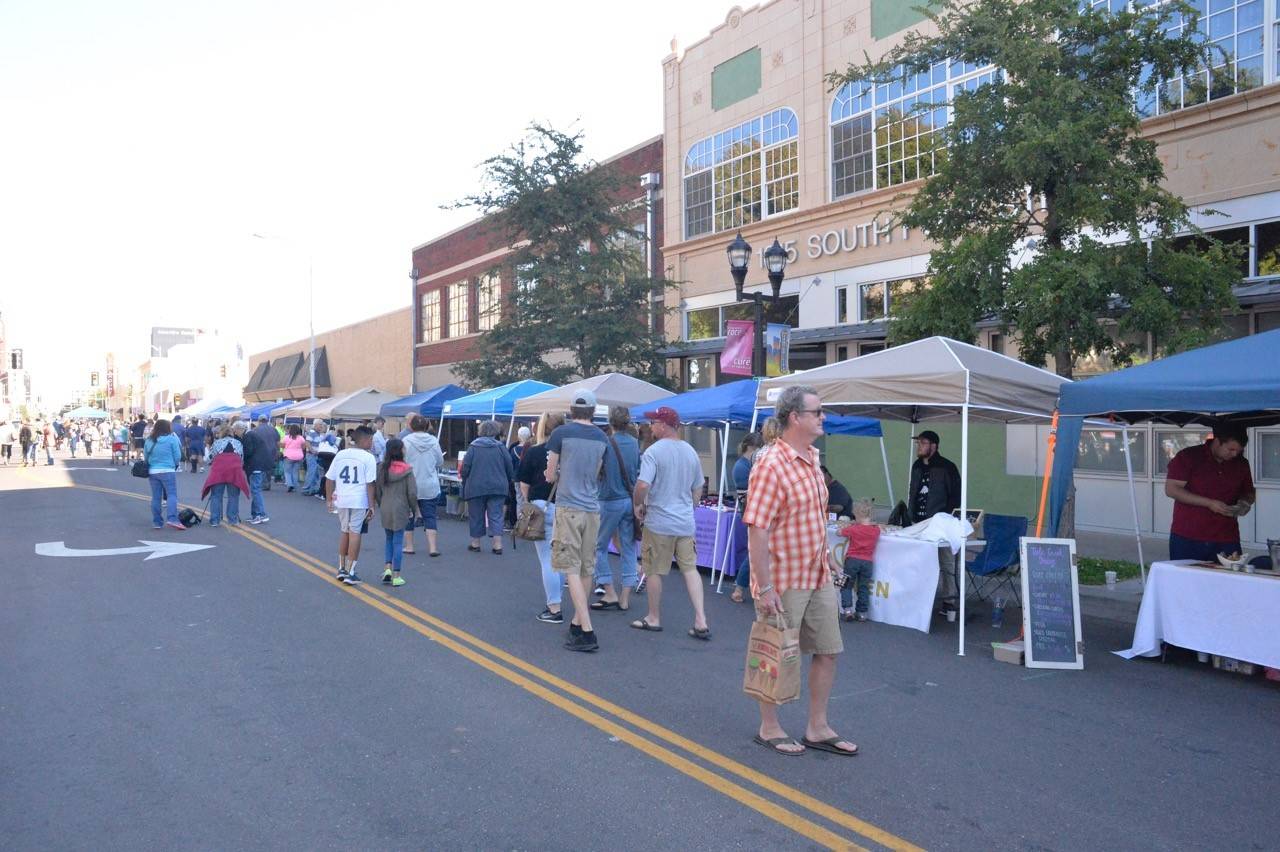
A glimpse of Amarillo’s future?

I acknowledge readily that I don’t get out as much as I should.

Retirement has turned me into a bit of a homebody, except when my wife and I hitch up our RV to the back of our pickup and hit the road for points hither and yon.

Today, we did venture out. We went downtown. We met our son at Amarillo’s Community Market that was up and running in front of the Chamber of Commerce building at 10th Avenue and Polk Street.

I have high hope that today we might have gotten a glimpse of Amarillo’s future. It’s one that bodes well for the city’s health.

They’re going to break ground pretty soon on that ballpark/multipurpose event venue across the street from City Hall. The MPEV will need to get done in a hurry, in time for the 2019 minor-league baseball season. They’ll toss out the first pitch in April 2019 when the city’s new AA baseball team takes the field.

What’s in store for the future of the city? The MPEV won’t just be a ballpark. The “multipurpose” element of the structure tells me they have plans to play host to events such as, oh, the Community Market and other events where folks from Amarillo and points beyond can enjoy themselves.

As we meandered around the downtown area today we noticed lots and lots and lots of construction under way. A bit north on Polk, they’ve gutted an old retail store to make room for new shops. Farther west on 10th we noticed the old Firestone structure has been gutted out, too, in anticipation of more loft dwellings.

Yes, we have that Embassy Suites hotel about to open. The parking garage is all but done.

The hundreds of folks with whom we mingled today ought to be sure to keep coming back downtown once all those projects are completed.

I’ve said before in this blog that downtown Amarillo bears little resemblance to the district my wife and I first saw when we arrived here in early 1995. Indeed, the central district on this day looks a bit more spry than it did just two or three years ago.

The not-so-good news for us is that we likely won’t be Amarillo residents when all this work is done. We plan to relocate downstate. It’s not all bad as far as we’re concerned. That RV we own travels pretty well in this direction and we intend to be frequent visitors to the city we’ve called “home” for the past two-plus decades.

We believe we got a glimpse of what lies ahead for the city’s downtown district — and we are going to look forward to seeing it come to pass.

Amarillo has a ‘walking problem’

A retired college administrator manages routinely to put pressing public matters into their proper perspective.

Take it away, former Amarillo College President Paul Matney.

Matney is an avid supporter of the downtown Amarillo ballpark/multipurpose event venue. He spoke eloquently and passionately about it leading up to the November 2015 non-binding referendum in which voters approved its construction.

He took note Wednesday morning of the $45 million ballpark’s construction, which is scheduled to commence early in 2018, while discussing some issues at a focus group session involving potential activities for older Amarillo residents.

Matney knows a thing or two about parking, given his many years affiliated with AC, where parking — particularly at its main campus on Washington Street — has been a chronic issue for students over many years.

He spoke of public concerns stated about downtown parking once the MPEV is built. He took particular note of the 750-space parking garage that’s being completed on Buchanan Street across from where the MPEV will be erected. He also noted that downtown Amarillo has more than 2,000 parking spaces within three blocks of the MPEV. He didn’t mention the on-site parking that will be available once the MPEV is built … so I’ll do it here.

Matney then quoted one of his AC presidential predecessors, who once said, according to Matney, that “Amarillo doesn’t have a parking problem; it has a walking problem.”

Bingo! Ba-da-boom!

You got it, Mr. President!

The MPEV will continue to have its critics. I understand their concern, even though I fear they aren’t looking at the bigger picture. They look at potholes in the street wonder why the city won’t fix them when it is devoting so much attention to the MPEV and other downtown projects. It’s kind of an apples-oranges deal.

I do believe, though, that the pro-MPEV contingent of business, civic and political leaders need to keep Paul Matney’s phone number on their speed-dial. When questions arise about the MPEV, just call him and ask him for his take on them.

He’ll set anyone straight.

Older residents need to be heard, too

Once upon a time — not too many years ago — a so-called “movement” arose in Amarillo that purported to speak for young residents.

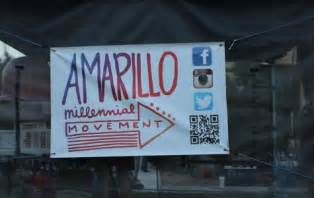
It was called the Amarillo Millennial Movement. Its mission was to promote a downtown entertainment venue that ostensibly would be a reason for young Amarillo residents to continue living here. The venue was put to a vote in November 2015 referendum — and it passed.

AMM then vanished. It’s gone. It was a flash in the pan.

Two years later, the city is now targeting the other end of the age spectrum. Older residents are getting to have their feelings known about what they want their city to provide. The old folks don’t have a catchy name, but they are being heard by City Hall, where staffers are beginning the process of developing an action to assist elderly residents in finding ways to spend their time.

The multipurpose event venue, by the way, will be built. Construction will begin soon. The AMM no longer exists, but the MPEV is likely to become a big part of elderly residents’ lives in Amarillo, too.

Don’t you love the symmetry?

There was a meeting this morning at the Panhandle Regional Planning Commission conference room downtown. It was called by Linda Pitner, senior services coordinator for the city. The meeting comprised a focus group of mostly retired men who live in Amarillo. Full disclosure: I was one of those focus group members.

The meeting was called to collect ideas, concerns and suggestions from these individuals on an array of issues, which included: what we do in our spare time; the city’s offering of activities geared toward “active adults”; what residents should expect of the city.

It was a lively discussion. It produced a lot of ideas for the facilitator, Jill Jackson Ledford, who came here from Charleston, S.C., to assist Pitner in the development of the potential action plan. The discussion covered bike trails, mass transit, the MPEV and other downtown improvements; it included discussion of the role of community churches in people’s lives and also included suggestions on how the city can develop more effective “clearing houses” to disseminate information to city residents.

One forum participant, retired Amarillo College President Paul Matney, told of how the Amarillo Senior Citizens Center offers the usual array of traditional activities for elderly residents. He cited bingo, quilting, line dancing and dominoes. Those “active adults,” Matney said, need more than that; they deserve more than those kinds of static activities.

Pitner told the group that men traditionally do not respond well to surveys. Amarillo’s female residents did respond to surveys sent to them, Pitner said. Thus, the men came together today for this focus group.

Where does the city go from here? What happens to the information gathered? The facilitator is going to compile a detailed report. She’ll present it to Pitner, who then will take it to the city manager, who will present it to the City Council.

It’s a long-term process. The current council might act on it. Or it could hand it off to the next council that will take office after the May 2019 municipal election. The decision ultimately will come from council members on how — or whether — to implement any and/or all of the elements contained within the report.

I do not expect this effort to meet the same fate as the Amarillo Millennial Movement. That is, my sincere hope is that it doesn’t disappear into oblivion.

WT making the turn in downtown Amarillo

I surely understand that much of the attention focusing on downtown Amarillo’s revival centers on that new ballpark/multipurpose event venue.

It’s a big deal, to be clear. They’re going to start busting up concrete in a few months and by April 2018, the MPEV will be open for business as the city welcomes the AA minor-league baseball franchise set to play hardball at the venue.

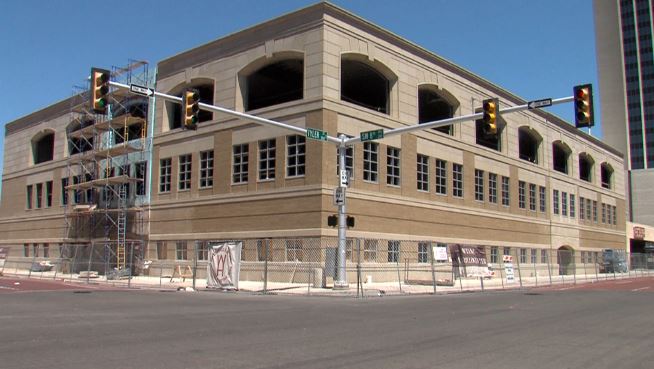
Oh, but wait! Something else really big is coming along in the city’s downtown district. It’s at the corner of Eight Avenue and Tyler Street. West Texas A&M University is finishing up Phase One of its new Amarillo Center.

WT purchased the old Commerce Building a couple years ago. Then Texas A&M University System regents allocated money to gut the old structure and turn it into a downtown campus.

I’ll be honest: When I first heard about WT moving its Amarillo classrooms from the Chase Tower to the Commerce Building, I envisioned a fairly quick and simple turnaround. WT would tear the guts out of the building, add some new rooms, reconfigure the floor plan a bit, hook up the electronics and then open the doors for college students.

Oh, no. It’s a lot more complicated than that.

WT has essentially rebuilt the structure. Yes, it’s the same framework. The exterior, shall we say, bears zero resemblance to the Commerce Building. Phase Two construction is going to commence soon.

Read about it here.

It’s a beautiful addition to the downtown district’s physical appearance.

Is it a totally positive development that lacks any downside? Not exactly.

You see, WT is going to vacate several floors at the 31-story Chase Tower, which already has seen a large portion of its building go dark with Excel Energy’s relocation into a new office structure on Buchanan Street. Roughly half of the Chase Tower will be vacant when WT starts classes at its Amarillo Center.

That ain’t good, man.

I did receive assurances, though, from Aaron Emerson, a partner in Gaut Whittenberg Emerson commercial real estate agents that they are shopping the Chase Tower aggressively for new tenants; moreover, Emerson told me he has great confidence that the building will be reoccupied.

I’ll hope for the best on that matter.

As for the new WT downtown Amarillo campus, I welcome the university’s increased profile in the city’s central business district.

Too many people? Nice problem to have for downtown

I hear they had a nice time in downtown Amarillo this weekend.

There was that annual Route 66 festival; they had a community market near the Chamber of Commerce building; and they had the annual Fourth of July fireworks show that was moved from John Stiff Memorial Park into the downtown district.

Lots of people. Lots of traffic. Presumably a headache or two.

What a nice problem to have for the downtown business and entertainment district.

Does this portend a brighter, livelier and more bustling future for the city’s central district? One can hope.

I’ve been to downtown events before. The annual Chamber of Commerce barbecue always has been a load of fun. The Center City block party has provided a good share of music as well.

I thought a little this weekend about how downtown can continue to prosper and, as a result, how the rest of the city can glean benefit from the kinds of activity that took place this weekend.

My wife and I just returned from a three-week road trip that took us through Memphis and Nashville, Tenn., on to Washington, D.C. It was in Nashville and then the nation’s capital where we saw just how choked it can get, where cities can perhaps overbook events in a restricted area.

I’m thinking of what we saw in Nashville, where we spent some time encamped at an RV park just north of the city.

Nashville played host to two big events simultaneously the week we were there. One was a country music awards festival downtown, along the banks of the Cumberland River. We ventured into the city with some friends with whom we rendezvoused in Nashville. Understand, it was a weekday afternoon, middle of the week. The downtown district was packed to the hilt.

The second big event would occur that weekend; my wife and I departed Nashville beforehand. The sixth game of the Stanley Cup hockey finals series was played at the Nashville Predators arena — also downtown! I’m trying to imagine how the city was able to accommodate those two events simultaneously. Local news broadcasts wondered aloud how the city would manage as well.

Last I heard, Nashville was still standing.

I know that Amarillo is no Nashville. However, I continue to wish the best for Amarillo as it embarks on a new downtown-centered journey. They’re going to start work in early 2018 on that downtown ballpark/multipurpose event venue; they opened that long-awaited parking garage this weekend; that new downtown hotel is going to open soon; the Civic Center is booking conventions like crazy, according to one of my pals at the Convention and Visitors Council.

Where will the city put everyone when they have multiple events occurring at the same time? I have no idea. I’m quite sure the city will figure it out. Hey, they can call their colleagues in Nashville for plenty of advice.

Let’s still call it an ‘MPEV’

I get scolded from time to time by readers of this blog. One of them scolded me mildly because I keep referring to the still-to-be-built sports and entertainment facility as a “multipurpose event venue.”

He wants the upcoming downtown Amarillo site called a “ballpark.”

I believe I’ll take his suggestion/edict under advisement, but for now I’ll continue to use the MPEV reference.

The MPEV is going to be home to a AA minor-league baseball franchise. The city recently announced the relocation of that franchise from San Antonio to Amarillo. The San Antonio Missions — as the team is now called — plan to play ball in Amarillo beginning in April 2019, which means the planners here need to get cracking. They need design plans approved and construction to begin immediately … if not sooner.

The strategy, though, puts many other events in the MPEV. Plans call for the venue to play host to myriad other activities that have nothing to do with balls and strikes, home runs, hot dogs and beer. Yes, the baseball team will be the primary tenant of the MPEV, but not the only one — if the grand plan is developed fully.

Thus, MPEV remains to my way of thinking a suitable term of art to refer to this upcoming venue.

I always appreciate constructive criticism.

For now I’ll pass on the latest suggestion on how we ought to refer to the MPEV.

Amarillo mayor is talkin’ baseball

Amarillo Mayor Ginger Nelson is sounding mighty pleased these days, with good reason.

The city scored a big win this past week with an announcement that a minor league baseball franchise is pulling up stakes and relocating to the city she has helped govern for the past few weeks.

The San Antonio Missions will play ball at the new ballpark/multipurpose event venue to be built in downtown Amarillo. They’ll start their 2019 season in April of that year and the plan is for them to stay possibly for decades, depending on the number of contract extensions they sign.

OK, we don’t yet know the name of the new team, but a couple of things jumped out at me as I watched Nelson’s TV interview this past weekend.

* She credits the weather as being a big selling point for the Elmore Group deciding to move the Missions to Amarillo. That’s a bit of a surprise. Nelson said the weather from “April to September” is ideal for evening baseball. Low humidity, “downtown wind,” placid temperatures after the sun goes down all worked in Amarillo’s favor to luring the team here.

But … but … but what about those infamous spring winds, Mme. Mayor? Isn’t there a standing joke here about how, if you don’t like the weather, “just wait 10 minutes”? Let’s hope for the best on that one.

* Nelson also answered a valid question about the cost of the multipurpose event venue and how it’s going to cost more than that what the non-binding referendum in November 2015 called for. That measure pegged the price at $32 million; the current price tag is $45.5 million. “That’s an apples and oranges” comparison, Nelson told KAMR’s Jackie Kingston.

The referendum presumed an “independent baseball team” would be playing at the MPEV. The Missions are a major league-affiliated minor league AA team, which she said will provide a much better entertainment product for fans to enjoy.

See the interview here.

I am in the mayor’s corner in celebrating the pending arrival of this new entertainment feature to Amarillo. I’ve noted before, but I believe it bears repeating: I see no downside in the city’s effort to its downtown district.

What became of this Amarillo ‘movement’?

When you see the word “movement” attached to a political activity, you ought to get the feeling of a groundswell, an initiative with staying power.

I thought recently of a “movement” that surfaced in Amarillo in 2015. It was called the Amarillo Millennial Movement. Do you recall it, too? Good on ya if you do.

The AMM is gone. It vanished into thin air seemingly the moment that city voters in November 2015 approved a non-binding referendum calling for construction of the multipurpose event venue in downtown Amarillo.

Its co-founder was a young woman named Meghan Riddlespurger, who followed her friend and mentor Melissa Dailey to Fort Worth; Dailey was forced out as director of Downtown Amarillo Inc. When Dailey hit the road, the AMM’s co-founder hit the road with her.

The ostensible idea behind the AMM was to energize the city’s younger residents, to encourage them to stay in Amarillo rather than bolt for greener pastures, more opportunity, greater career choices. AMM got excited about the MPEV and a few of those young folks — their numbers aren’t exactly clear to me — became involved in the pro-MPEV campaign.

It’s troubling to me that AMM isn’t around today to relish the news that came out about the pending start of the 2019 Texas League baseball season, which will include an Amarillo-based team affiliated with the San Diego Padres of the National League.

The Local Government Corporation managed to finish the deal. The LGC persuaded the San Antonio Missions to come here in time for the 2019 season. The ballpark where they’ll play must be done on time for them to throw out the first pitch.

We’re focusing on the baseball element. The team that will play at the ballpark will be its primary tenant. There will be other events at the MPEV/ballpark. That’s what I always understood was the focus behind AMM’s mission, to generate youthful exuberance to attend the various other entertainment-related events at the venue.

Riddlespurger has spoken publicly about the negativity she experienced while leading this AMM effort. That was one major reason why she decided to leave Amarillo. Interesting, yes? She helps found an organization that urges young residents to stay home, then she bails on the city to pursue a career opportunity.

Hey, I don’t blame her for seeking to advance her own future.

The Amarillo Millennial Movement, though, is a “movement” in name only. AMM is no longer around to witness the culmination of its greatest political triumph.

My hope springs eternal. Perhaps another group can rise up and join the marketing effort that will be required to ensure that the MPEV/ballpark attracts the activity it must to make it worth the effort to build it

No time for delay on MPEV

I remain a strong supporter of Amarillo’s efforts to reshape its downtown district.

That strategy took a giant leap forward this week with the announcement that organized minor-league baseball is returning to Amarillo. The San Antonio Missions are moving their AA franchise to Amarillo and they intend to play their Texas League hardball schedule in the brand new multipurpose event venue.

The return of organized/affiliated minor-league baseball fills a 37-year void. I’ve heard a lot of cheers around the city since the announcement was made. I share the enthusiasm not only for the baseball team’s pending arrival, but for what it bodes for downtown’s future as the community keeps moving its revival forward.

Here’s the thing, though, that gives me a minor case of heartburn: The team will play ball beginning in April 2019, when the season starts.

I ventured downtown today for a noon meeting and drove past the still-vacant lot across Seventh Avenue where the MPEV will be built. There’s nothing going on there.

The ballpark will have to be built, polished up and ready to go in less than two years.

What that means to me is that there is no time to fiddle around here. No time for dawdling. No time for delay.

We’ve all witnessed major construction projects get hung up along the way. Contractors have trouble with certain subcontractors; the weather can play havoc on construction schedules; shipments of material get hung up along the way.

The MPEV is set to cost around $45.5 million. Hotel occupancy tax revenue is supposed to fund most of it. I have faith that the funding mechanism has been well-considered. I also have faith that the Panhandle’s baseball-loving community is going to fill the estimated 4,500 ballpark seats to watch their new team play hardball.

I will be waiting with bated breath for the design to be finalized and for work to begin. Don’t make us wait too long, though.

The clock is ticking.